Photo by Giggetto al Portico d’Ottavia
Italians do eat better
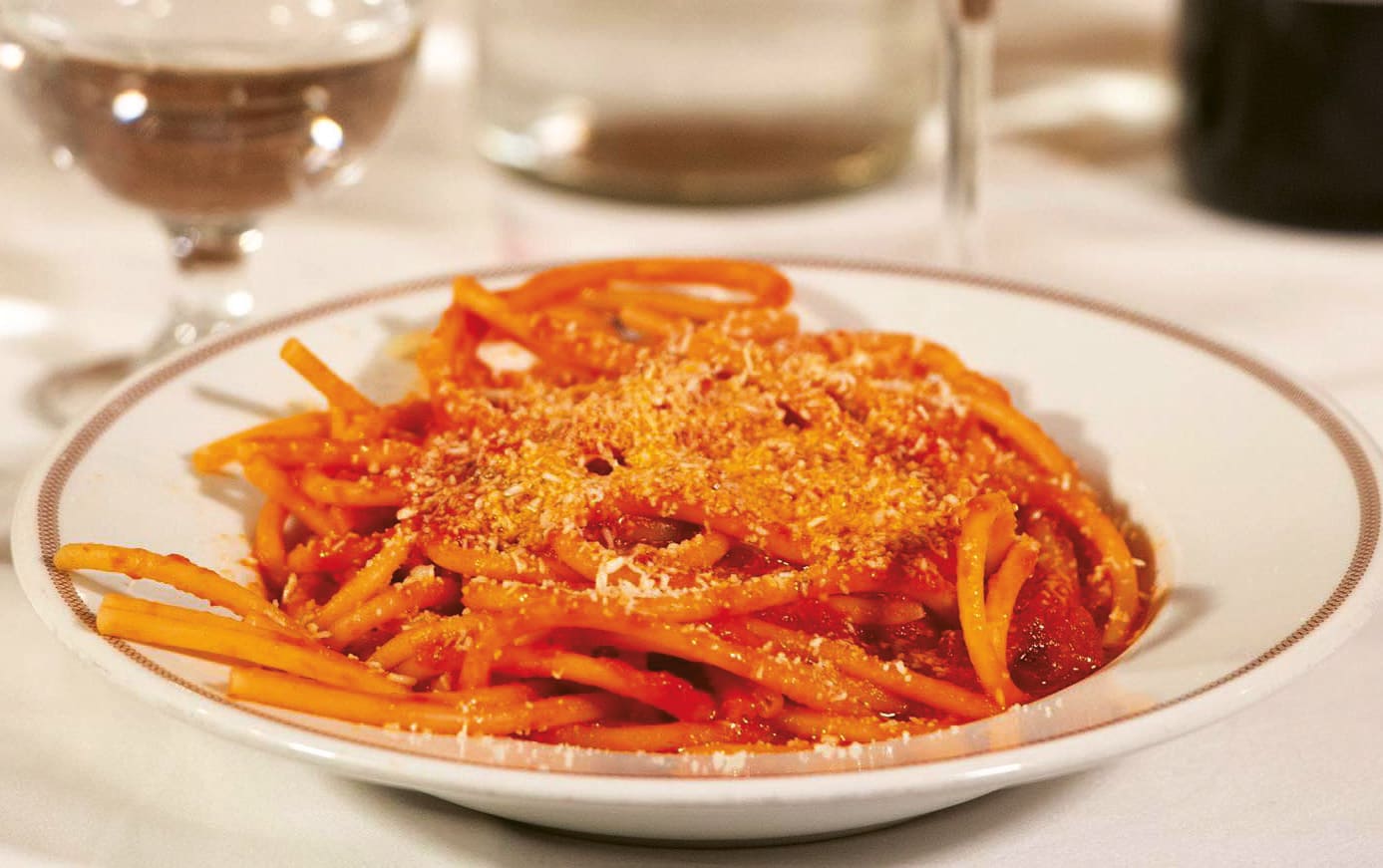
Italian cuisine is celebrated around the world for good reason, and it’s not just about what Italians eat but also how they eat. At first some of the customs may seem rigid; how-ever, you’ll soon discover that there is a rhyme or reason behind everything Italians do when it comes to food. The following guide should help you make the most of your culinary experiences while in Italy. For breakfast, or colazione, you may need to modify your expectations slightly since eggs, bacon, and pancakes are not part of the standard cuisine. Instead, you can expect to see locals standing up inside one of the city’s many bars, enjoying a cappuccino and a cornetto an Italian croissant. You can have a sit-down breakfast, but your bill will likely double from the table surcharge. Next, lunch or pranzo. For lunch on the go, try pizza al taglio-pizza by the slice. Other quick options include a panino or tramezzino, trapiz-zino (a corner of pizza used like a pocket for various stuffing), a salad, or a combination of fried items, or fritti, such as suppli or arancini fried rice balls filled with mozzarella, meat, or vegetables). Though increasingly less common, it’s still sible to have a multiple-course, sit-down meal at lunch. An Italian menu may seem complex at first, but you’ll soon come to recognize the different sections, which are the same for lunch and dinner-antipasto, primo piatto, secondo piatto, contorni, and dolci. The most common choice for a primo piatto is a plate of pasta, while the secondo piatto is generally meat or fish. For contorni, or side dishes, you’ll often find options for salads and vegetables. Dolci, or desserts, are often made in-house and are a must-try. Finish off your meal with a digestivo, a liquor made with herbs. At last, dinner, or cena. You’ll likely find a greater variety of dishes on the dinner menu than at lunch, but the order of the dishes is still the same. Spaghetti alla carbonara, tonnarelli ca-cio e pepe, bucatini all’amatriciana (pictured above), penne all’arrabbiata (spicy), are just a few names representing traditional Roman pasta dishes. If you want to know more about how to eat like a true Roman, refer to our glossary of gastronomic terms. Last, but certainly not least-gelato. There are endless opportunities to indulge in a cone or cup of your favorite flavors around Rome, an experience you won’t want to miss.

Gastronomic terms commonly used in rome
Roman cuisine has always followed a strictly observed timetable: Thursday, for example, is the day for gnocchi, served with a sauce of meat and tomato or cheese and pepper; on Friday, ravioli filled with ricotta and spinach, or cod stew prepared with tomato, pine seeds and raisin. Saturday is the turn of tripe flavored with typical Roman wild mint, while on Sunday dig into a mouthwatering plate of tagliatelle or lasagne made in different tasty ways.

Photo by Giggetto al Portico d’Ottavia
- Abbacchio alla romana – Pieces of suckling lamb cooked until brown, then roasted in a sauce of garlic, rosemary, vinegar and anchovy.
- Bruschetta – Slices of homemade bread, cooked over embers or in the oven, flavored with garlic, sprinkled with oil and salt, and served in various forms, the most popular being with tomato and basil.
- Bucatini all’amatriciana – Long, tubular pasta with a sauce of guanciale (pork cheek), tomato, olive oil, chili pepper and sheep’s cheese.
- Bucatini alla gricia – Basically all’amatriciana without tomato.
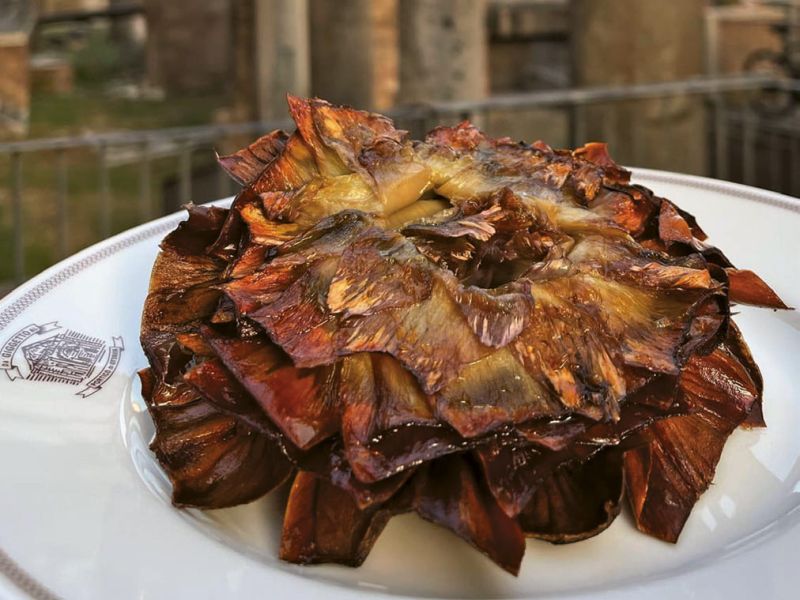
- Carciofi alla giudia – Artichokes open like flowers, cooked in hot oil until crisp (pictured top left).
- Cicoria – Green bitterish leaves, can be savoury – cooked in a pan with garlic, or all’agro – boiled and seasoned with oil, salt and lemon.
- Coda alla vaccinara – Oxtail and cheek stew with celery, lard, garlic, pepper, salt and white wine.
- Coratella – Lamb offal (heart, liver and lung) cooked with sliced artichokes, onion, white wine, lemon, parsley, salt and pepper.
- Costarelle di abbacchio a scottadito – Lamb cutlet basted in roasting fat and lard, cooked on the grill and eaten with hands (literally “burn your fingers”).
- Crescione – Salad with a strong taste, rare and highly valued.
- Fior di latte – Fresh cheese, similar to buffalo mozzarella, but made from cow’s milk.
- Panzanella – Stale bread soaked in water with tomato, oil, salt, vinegar and minced basil.
- Pajata – Part of the intestines of a suckling calf, served with rigatoni or alla cacciatora (with garlic,
rosemary and vinegar).

Photo by Giggetto al Portico d’Ottavia
- Pesce all’acqua pazza – A sauce of water, cubed tomato, oil, garlic, chilli pepper, and parsley cooked primarily with sea bass.
- Pollo con i peperoni – Chicken pieces basted in roasting fat and stewed in tomato and garnished with red and yellow pepper, the colors of Rome.
- Porchetta – Roasted pig, sliced and usually served with other specialties from Ariccia in the Castelli Romani.
- Puntarelle – A particular type of green, seasoned with a garlic and anchovy sauce.
- Rughetta – A characteristic herb of Rome, very bitter and sharp tasting.
- Saltimbocca alla romana – One of the most celebrated Roman dishes: skewered veal roll stuffed with ham, and flavoured with sage and butter.
- Spaghetti cacio e pepe – Pasta sauce consisting of a creamy emulsion of water, grated pecorino cheese and pepper.
- Spaghetti alla carbonara – Pasta sauce made of eggs, pecorino cheese, pepper a and bits of guanciale.
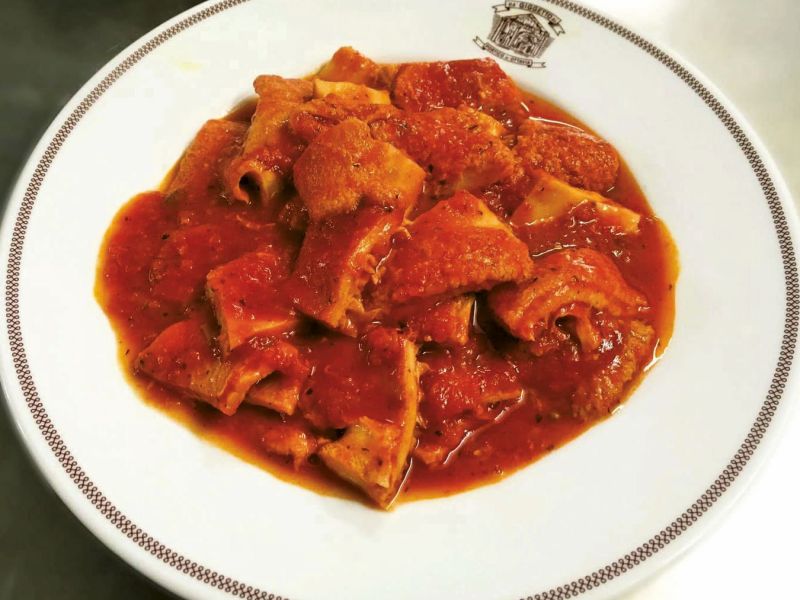
- Trippa alla romana – Cow’s stomach (tripe) cleaned, cut into strips and slow cooked with herbs and tomato (pictured top right).
- Tozzetti – Sweet rectangular cookies made from a mixture of sugar, flour, almonds, toasted nuts, aniseed and Sambuca, served with Vin Santo, a strong sweet wine.
- Visciole – Sour cherries with dark red color. The jam is used for the famous crostata (ricotta cheese tart).
- Zuppa di arzilla – A typical soup made with ray fish and broccoli.