Rome’s ancient guardians
The storied history of the Aurelian Walls
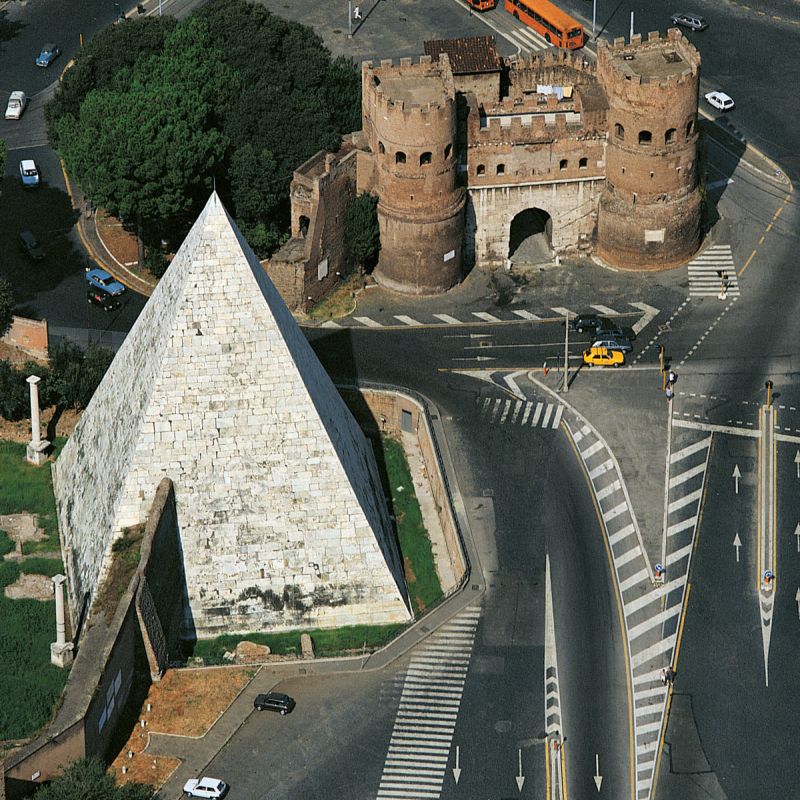
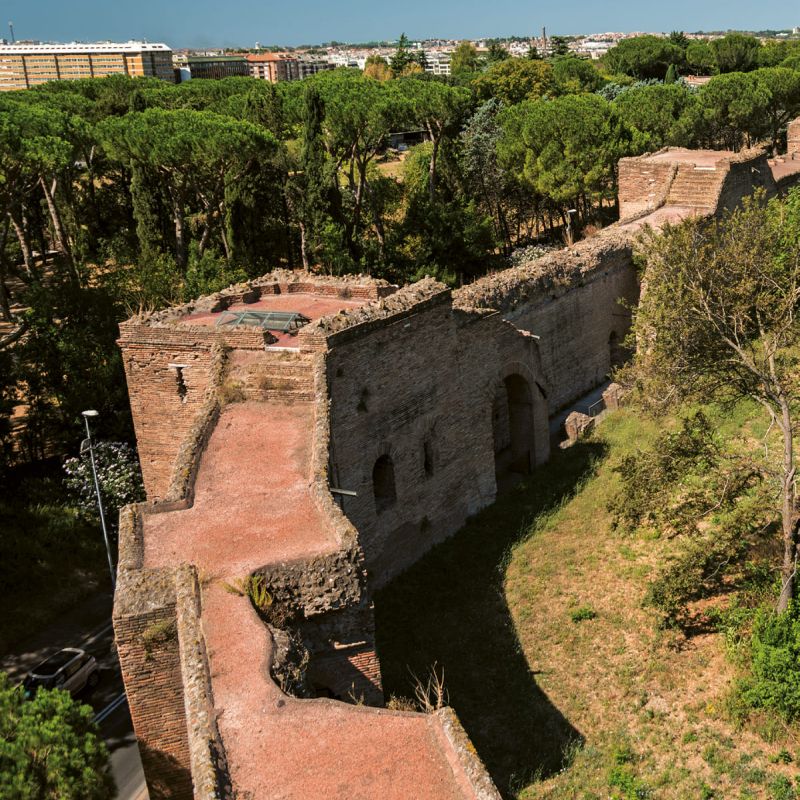
The Aurelian Walls, built between 270 and 275 AD under Emperor Aurelian, span nearly 12 miles and represent a key feat of Roman engineering and defense. Constructed in response to growing threats from barbarian invasions, the walls were a symbol of Rome’s declining imperial power, signaling that even the Eternal City required protection. At first, the walls stood 10 to 13 feet tall, with a deep moat adding an extra 20 feet. They incorporated elements from earlier structures like aqueducts and the Pyramid of Cestius, blending practicality with grandeur. The Aurelian Walls were reinforced over time, with successive emperors raising their height and adding battle- ments for defense. These battlements allowed sol- diers to defend the city using missile weapons, while the walls themselves were nearly impenetra- ble. However, the gates, though secured with heavy iron, remained vulnerable. In 410 AD, the walls were breached during the Sack of Rome by the Visigoths, but this was due to internal betrayal, not a failure of the walls. For over a millennium, the walls largely stood intact. Their final breach occurred in 1870, at Porta Pia. This event marked the end of Rome’s status as a defended city, and the Aurelian Walls, after 1,600 years, ceased to serve their original purpose. Today, the Aurelian Walls remain one of the most striking reminders of Rome’s ancient might. Although weathered by the passage of time, they still stand tall and proud, a visible testament to the city’s ability to endure and adapt. As Rome cel- ebrates its 2778th birthe- day, the walls continue to evoke awe, a silent wit- ness to the cycles of rise and fall that have shaped the Eternal City. Learn more at the Museo delle Mura (Porta Metronia). museodellemura.it