Saint Peter’s Chains
At San Pietro in Vincoli, sacred relics meet Michelangelo’s awe-inspiring Moses
By Andrea Werther
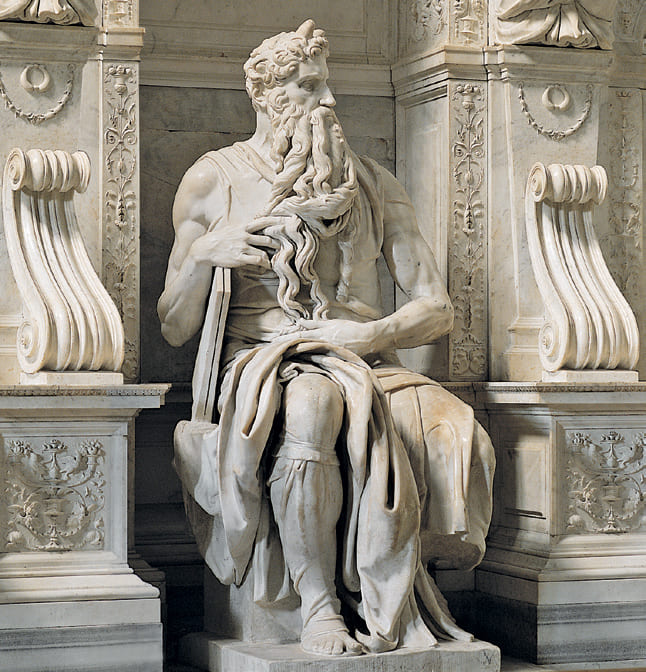
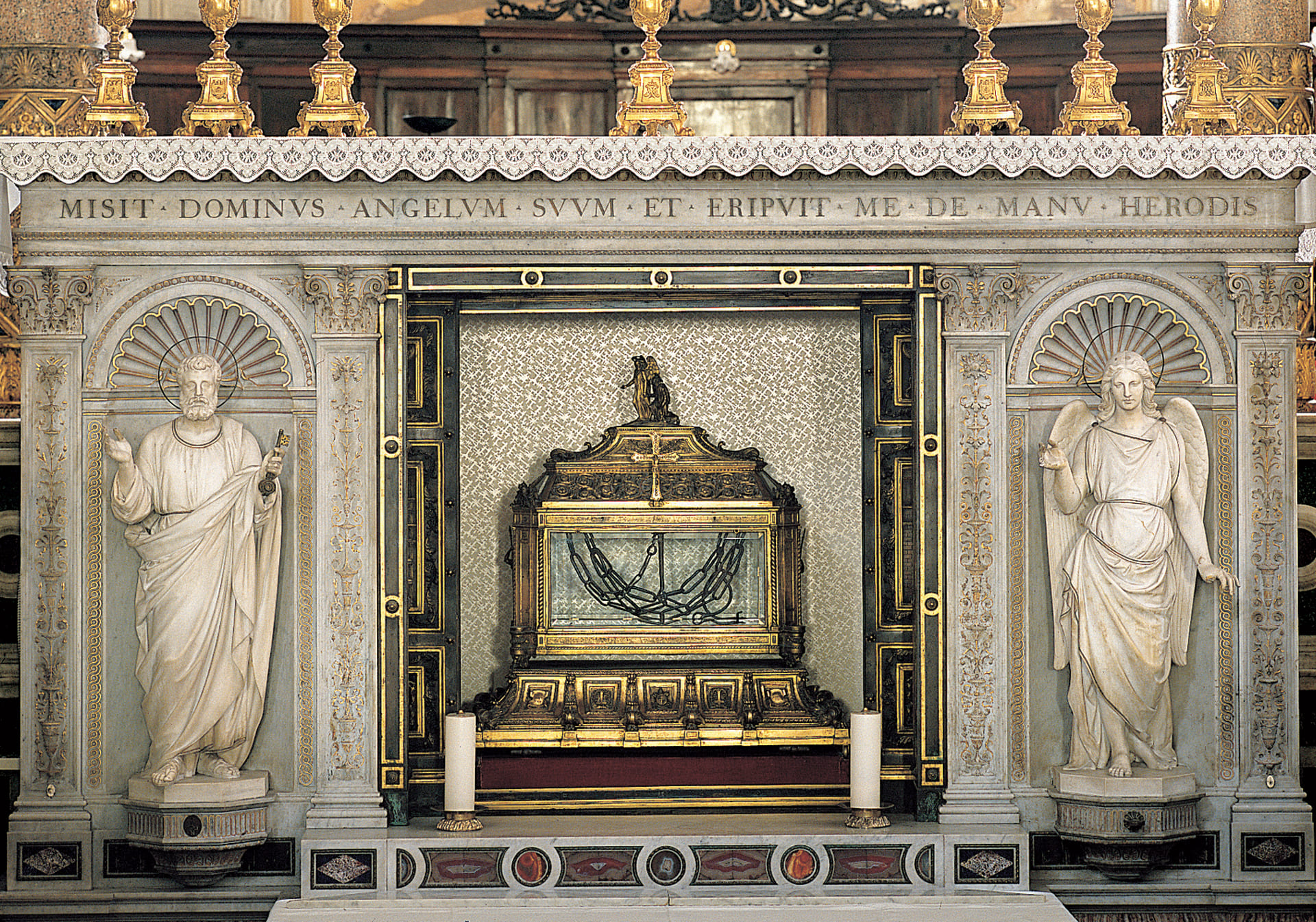
Tucked away on a quiet hill near the Colosseum, the small basilica of San Pietro in Vincoli (Saint Peter in Chains) offers one of the city’s most unforgettable experiences. The church’s name refers to the chains believed to have bound Saint Peter when he was imprisoned in Jerusalem. According to tradition, these sacred relics (pictured above) were later sent to Rome, where they were miraculously fused with a second set of chains that had held Peter during his Roman imprisonment. These joined chains are now displayed beneath the main altar in a beautifully ornate gold and crystal reliquary. Every year on August 1st, a special ceremony marks the miracle of their reunion— a tradition the church has upheld for centuries. But relics aren’t the only treasure here. San Pietro in Vincoli is also home to one of the greatest sculptures of the Renaissance: Michelangelo’s Moses. Originally commissioned as part of an ambitious tomb for Pope Julius II, the statue was meant to be one of more than 40 figures. However, delays, changes in plans, and political shifts meant the final tomb was far simpler than intended.
Still, Moses alone is a masterpiece. Seated with the Tablets of the Law under one arm and an intense expression of divine fury on his face, Michelangelo’s Moses is often said to radiate such life that the sculptor, legend has it, struck the statue’s knee and exclaimed, “Why don’t you speak?” Visitors today can still see a small mark said to have been left by his hammer.
Flanking Moses are statues of Leah and Rachel, symbols of action and contemplation, both virtues that reflect the dual paths of spiritual life. These, along with the tomb’s architecture, blend spirituality and humanism in true Renaissance fashion.
lateranensi.org/sanpietroinvincoli