Stone Narratives
Rome’s imperial history, frame by frame
By Claudio Lozzi
In Rome, some of the city’s most compelling stories aren’t told on the screen but carved in marble and lifted toward the sky.
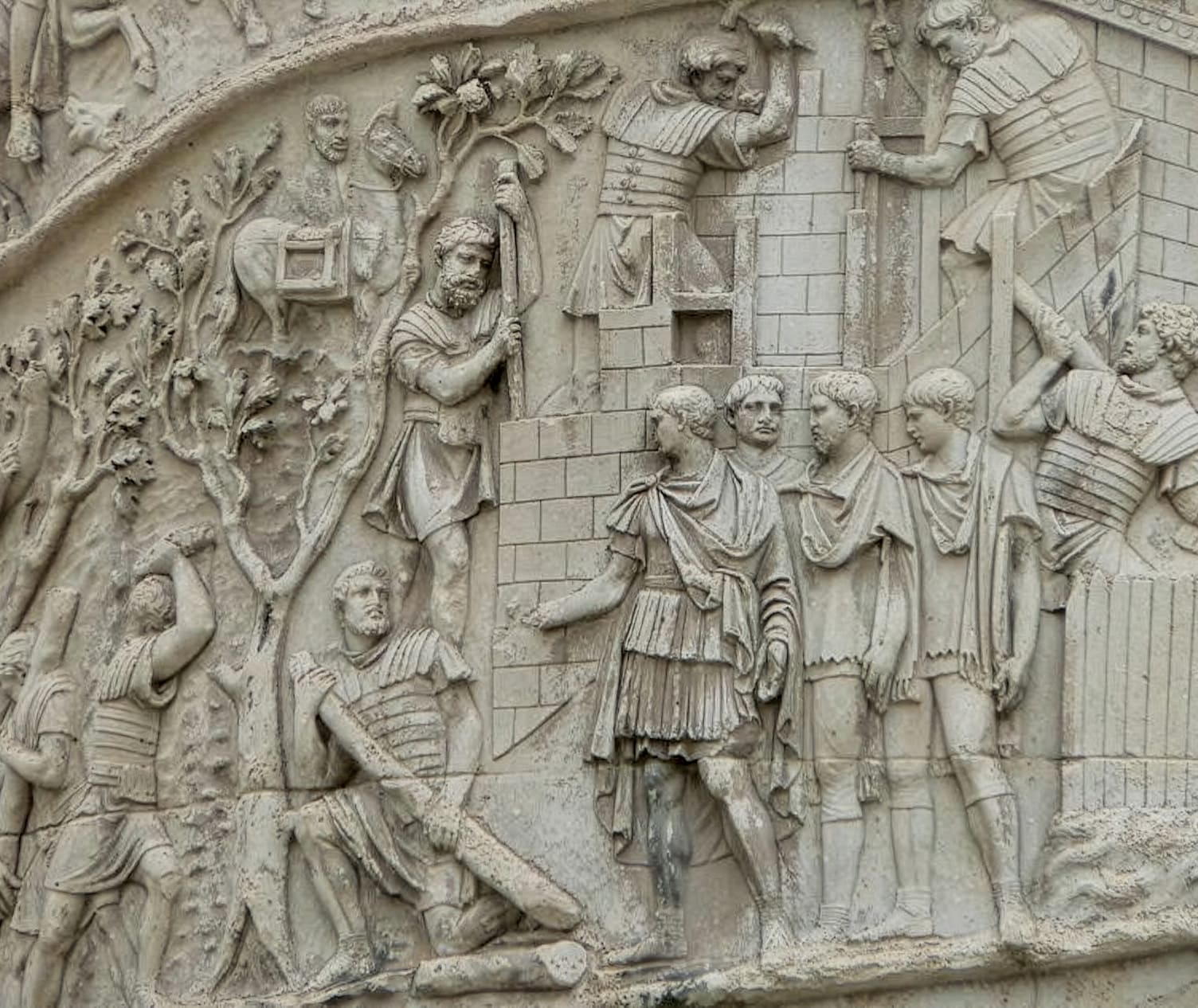
For a truly cinematic experience, start with Trajan’s Column, the ancient world’s most ambitious “film reel,” spiraling upward in the Imperial Fora. Erected in the early 2nd century AD, this 80-meter monument commemorates Emperor Trajan’s victorious campaigns against Dacia (modern-day Romania) through a continuous band of sculpture that wraps around the shaft 23 times. Designed by the great Apollodorus of Damascus, the column originally burst with color and detail, transforming military history into a lively visual chronicle.
Even today, the scenes remain astonishingly vivid: Roman engineers building a bridge across the Danube, legions marching out to war, naval units and cavalry assembling, and fierce clashes with Dacian and Germanic tribes. The sequence ends with Trajan’s triumph and the dramatic suicide of the Dacian king Decebalus. Though the column once stood between two libraries that allowed close-up viewing, modern visitors can still appreciate its intricacy—especially with the help of binoculars or an illustrated guide. A fascinating theory by art historian Salvatore Settis suggests that ancient viewers read the reliefs not in a dizzying spiral but in four vertical “strips,” each maintaining the story’s chronology.
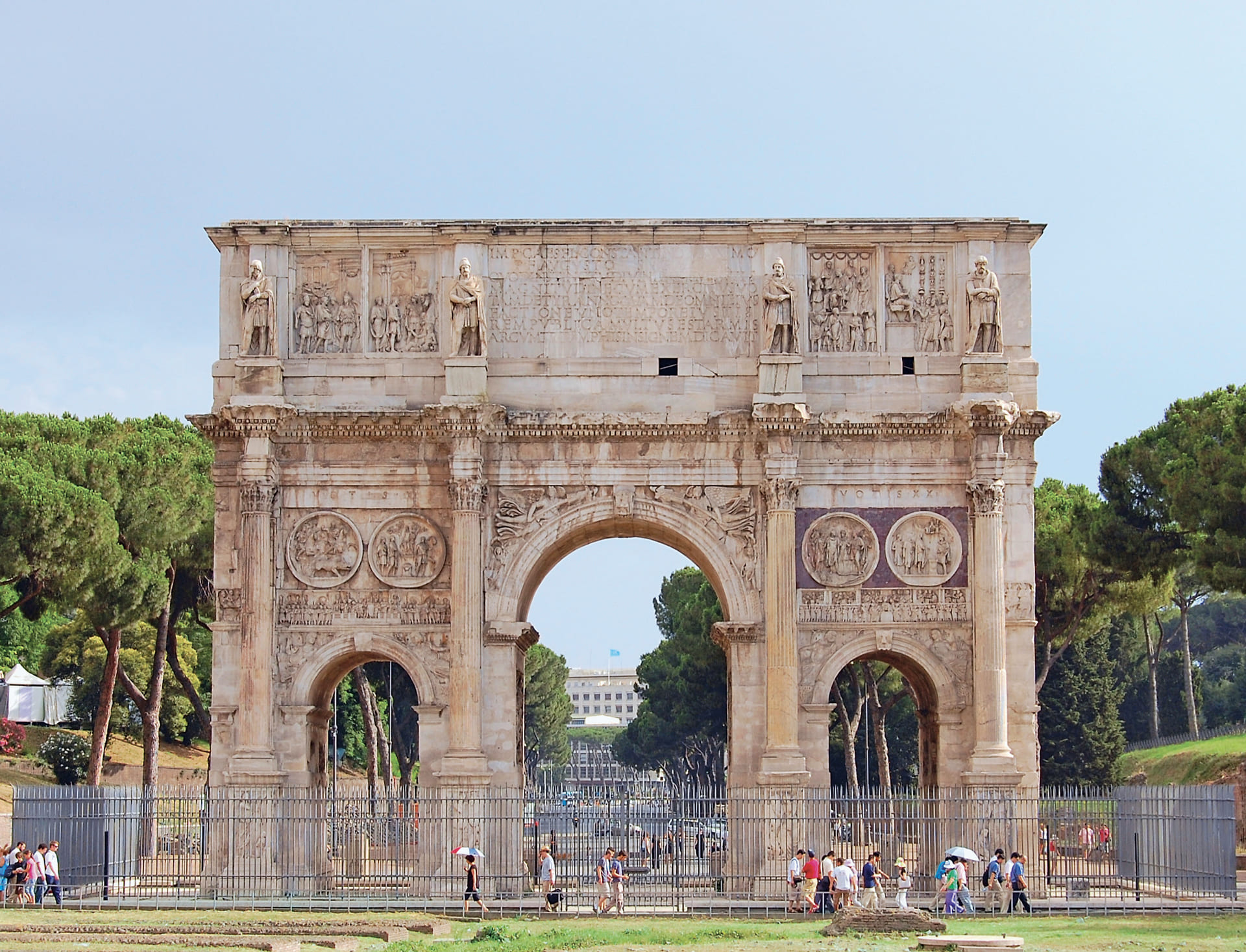
A short walk toward the Colosseum brings you to another monumental storyteller: the Arch of Constantine. Though dedicated in 315 AD to celebrate Constantine’s victory over Maxentius, the arch is a creative blend of old and new. Its sculptural fragments were lifted from earlier imperial monuments, and among these borrowed masterpieces, the figure who emerges as the true star is Marcus Aurelius. Scenes show him delivering speeches, granting clemency, conducting rituals, and confronting defeated leaders—an artistic reminder of Rome’s long tradition of military power and philosophical rule. The arch becomes a stone scrapbook of Rome’s imperial memory, seamlessly merging different eras into one triumphal gateway.
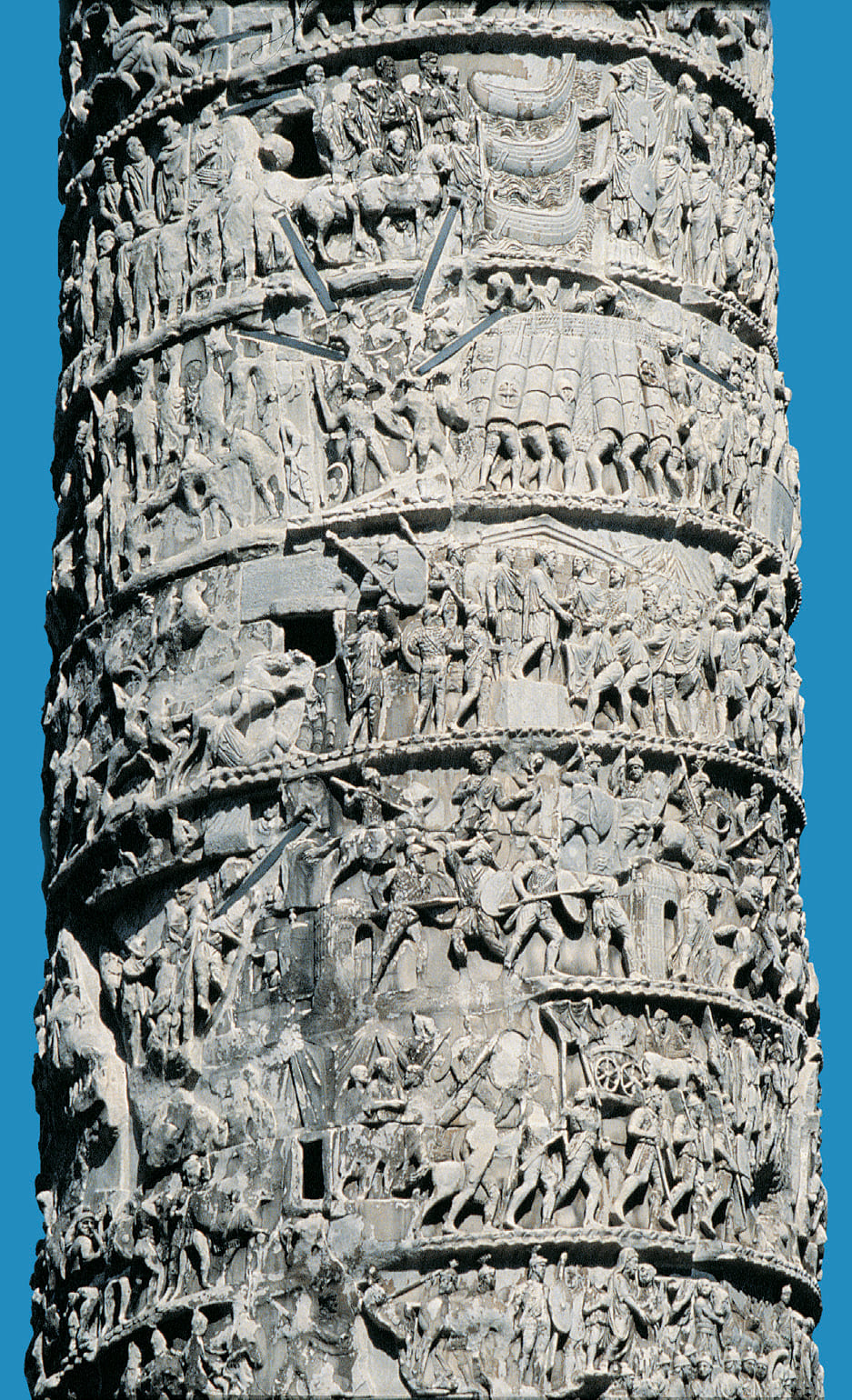
Follow Via del Corso north and Marcus Aurelius reappears—this time on his own monumental stage. The Column of Marcus Aurelius, standing in Piazza Colonna, was erected around 180 AD by his son Commodus to honor the emperor’s campaigns against northern tribes. Its 116 sculpted episodes, though stylistically rougher than those on Trajan’s Column, vibrate with movement: soldiers battling through forests, storms, and river crossings. The emperor, always shown frontally to emphasize his authority, once stood atop the column in bronze; today, a later statue of St. Paul crowns it. In the Middle Ages, visitors even paid a fee to climb the 190-step interior staircase—a testament to its enduring draw.