
Cartier and Myth
The Maison’s iconic creations in conversation with Greco-Roman art
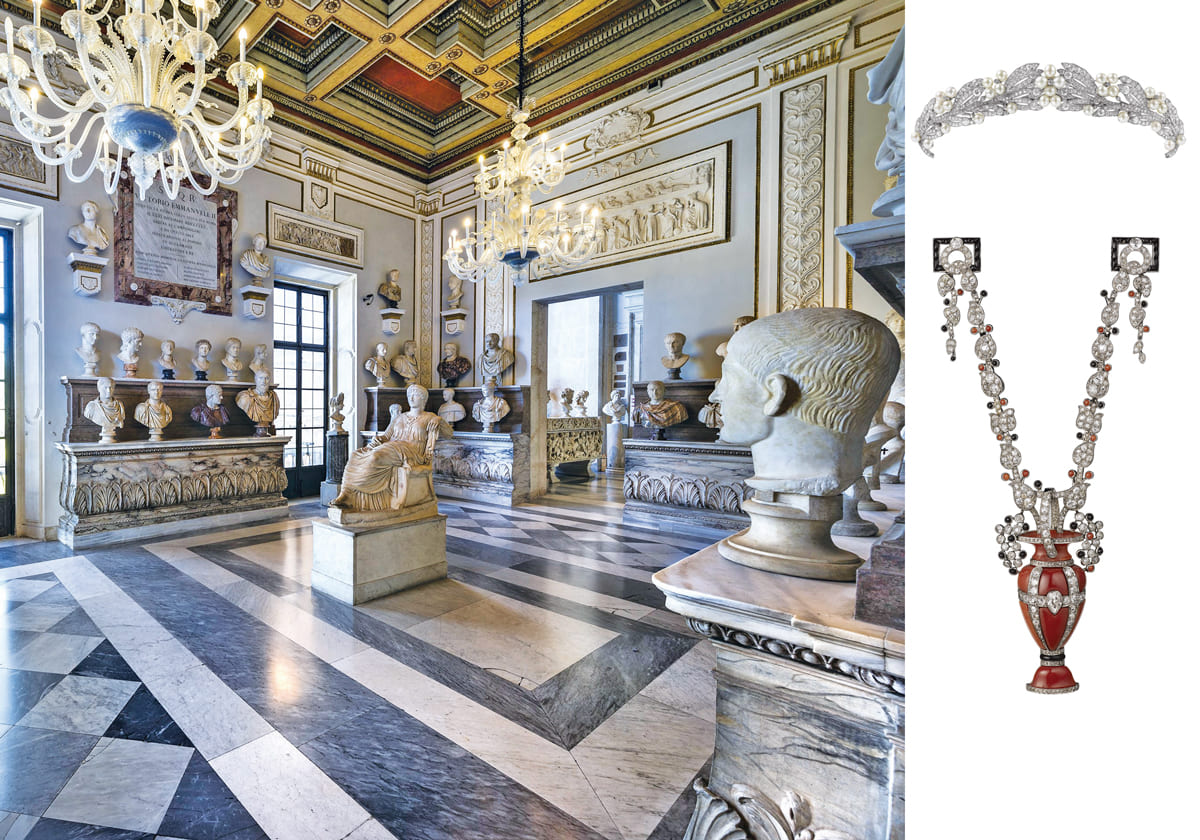
Until March 15, Cartier’s creations are presented vis-à-vis the marble sculptures from Cardinal Alessandro Albani’s collection — in the heart of the Capitoline Museums’ Palazzo Nuovo — together with a selection of remarkable ancient pieces.
Cartier and Myth, the first exhibition to be hosted in the 17th-century palace of the Capitoline Museums, looks at how the Maison has repeatedly turned to classical antiquity for inspiration in shaping its most iconic jewelry designs. The show highlights the influence of Greco-Roman motifs and the stylistic evolution of the early 20th century, when a renewed vision of classical art emerged.
One section in particular focuses on jewelry- making techniques rooted in Roman craftsmanship, tracing the use of classical motifs and their reinterpretations during the first half of the 20th century. The section examines Cartier’s mastery of technique and artistry, revealing how references to the Roman era shaped the Maison’s creations. By comparing Cartier’s works with the deities of the Palazzo Nuovo — Aphrodite and Dionysus, Apollo and Heracles, Zeus and Demeter — the exhibition illustrates how mythological themes have shaped Cartier’s creative vocabulary since the early 1900s.
Conceived as an immersive experience, the show also features audiovisual elements, olfactory installations by Cartier perfumer Mathilde Laurent, and displays of hard stones from the Maison’s glyptic workshop representing ancient deities and myths. museicapitolini.org