226620733 © Dmytro Surkov | Dreamstime
A baroque duel in stone
How Bernini and Borromini’s feud defined Rome’s architecture – By Sol Stein
The rivalry between Gian Lorenzo Bernini and Francesco Borromini is one of the most famous—and dramatic—in the history of architecture. Bernini, the darling of popes and princes, stands as one of the rare artists blessed with extraordinary fortune during his lifetime. Showered with honors, wealth, and prestigious commissions, he enjoyed enduring acclaim even after his death, consistently celebrated by official critics across centuries and borders.
The story of his great rival, Francesco Borromini, could not be more different. A misunderstood and fiercely original genius, Borromini was forced to work largely in isolation, overshadowed by his already celebrated contemporary. Plagued by bouts of depression, his life unraveled in a series of increasingly desperate acts—culminating in the burning of his own drawings shortly before his death, and finally, his suicide, committed in 1667.
If scholars often liken Bernini to Mozart—an analogy that feels fitting given his seemingly effortless genius, capable of transforming marble into flesh and light through movement and theatricality—Borromini was certainly no Salieri. On the contrary, no one captured the restless, tormented soul of the Baroque with greater originality. His architecture dares through bold geometries, vertiginous vertical thrusts, and astonishing manipulations of light, revealing a freedom of form that still feels radical today.
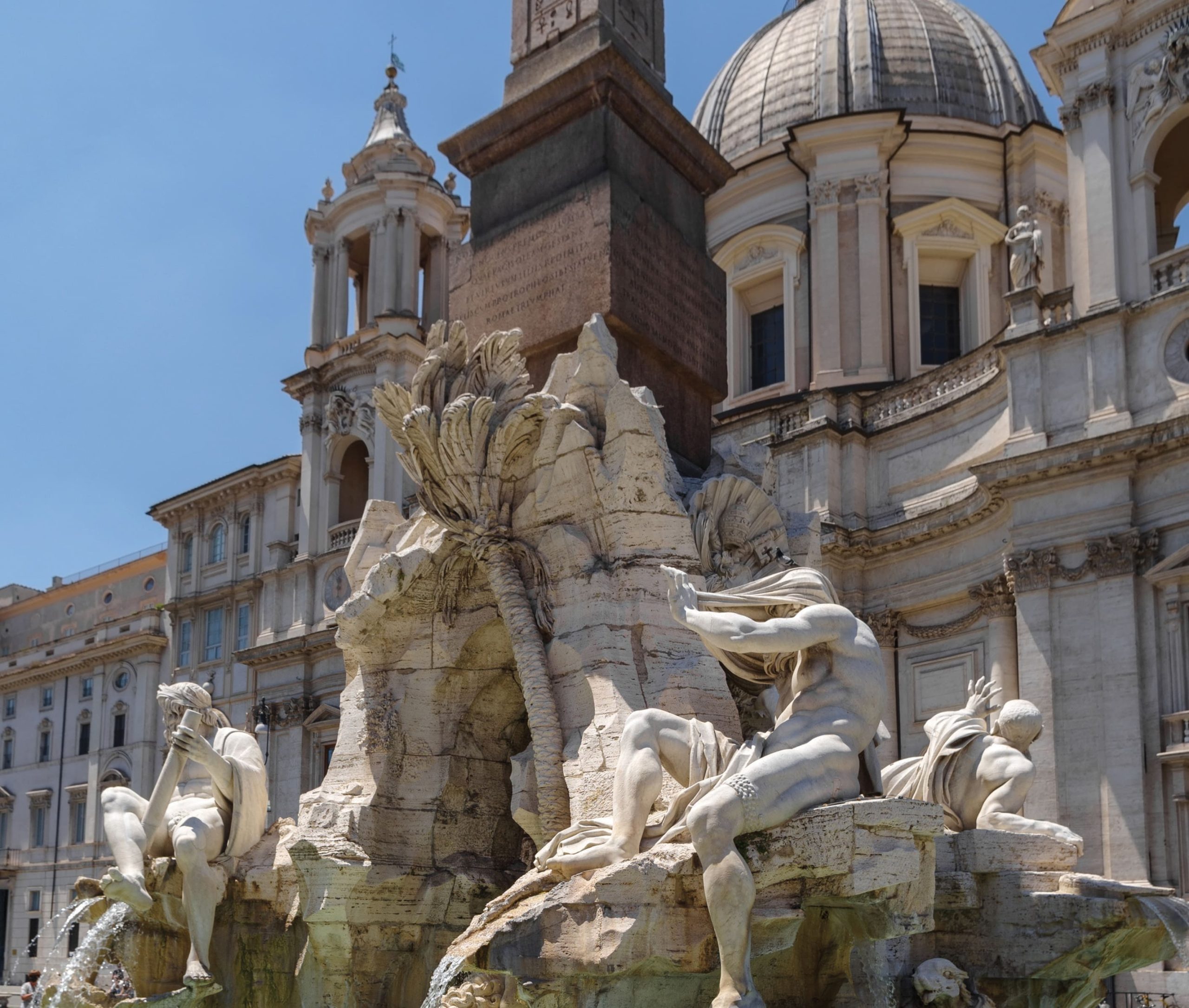
The hostility between the two masters has become legendary, fueled by anecdotes cherished by Roman folklore. The most famous event takes place in Piazza Navona. Tradition has it that the Bernini-designed statue of the Rio della Plata, part of the Fountain of the Four Rivers, raises a defensive hand toward the façade of Borromini’s nearby church of Sant’Agnese in Agone, as if fearing its imminent collapse—a sly insult to its structural integrity. In response, the statue of Saint Agnes above, her hand resting calmly on her chest, appears to reassure both the river god below and his creator with an unshakable gesture of faith.
Their contrasting artistic personalities can be experienced just steps apart on Via del Quirinale. Borromini’s San Carlo alle Quattro Fontane—small, austere, and entirely white— is one of the great masterpieces of Baroque architecture. Its intricate yet restrained dome crowns an intimate space that feels at once cerebral and transcendent. A short walk away rises Bernini’s Sant’Andrea del Quirinale, a radiant oval-plan church lavishly adorned with stucco and gold, theatrical in its luminosity and emotional appeal. Though Bernini’s church was completed more than a decade later, their proximity invites constant comparison—an architectural dialogue in stark contrast.
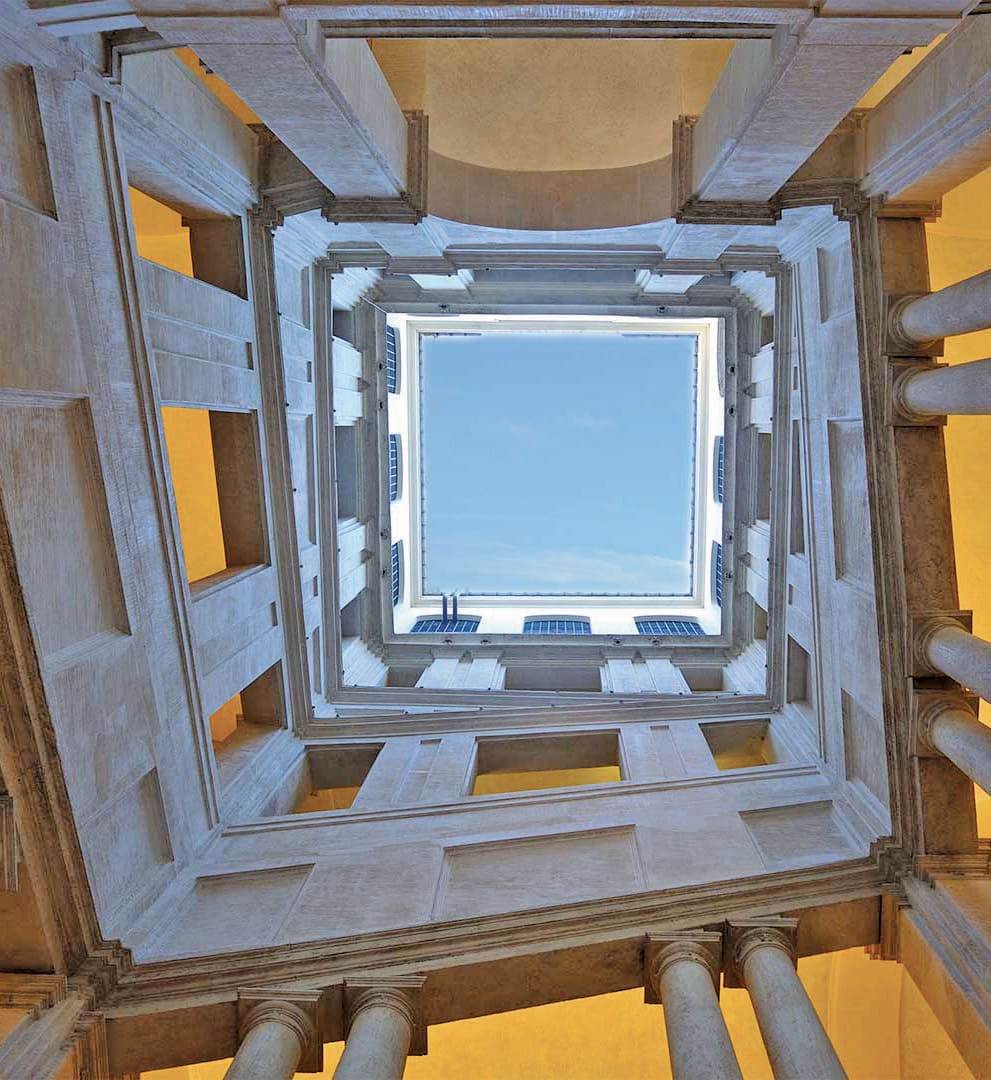
The rivalry unfolds in real time within Palazzo Barberini, where each artist designed a staircase on opposite sides of the building. Bernini’s is square, orderly, and serenely symmetrical; Borromini’s, by contrast, is a fluid ovoid spiral of remarkable elegance.
Perhaps the most mischievous episode of all took place at the Palazzo di Propaganda Fide, a commission Borromini finally won— much to Bernini’s envy. The building stood directly across from Bernini’s studio, and Borromini seized the opportunity for provocation. According to legend, he ordered his workers to labor through the night to decorate a prominent window with two enormous donkey ears, an unmistakable jab at his rival’s supposed artistic limitations. Bernini’s reply was swift and equally irreverent: the following night, he sculpted a bracket on the palazzo’s heavy frame into the unmistakable shape of a penis. Curse, challenge, or mockery? For a time, both “decorations” remained in place, silently trading insults across the street—until censorship intervened and removed them for offending public morals.
For the sake of truth, the monumental bronze canopy above the high altar of St. Peter’s Basilica, known as “Bernini’s Baldacchino,” was the result of close collaboration between the two rivals—a rare moment when competition gave way to shared mastery.
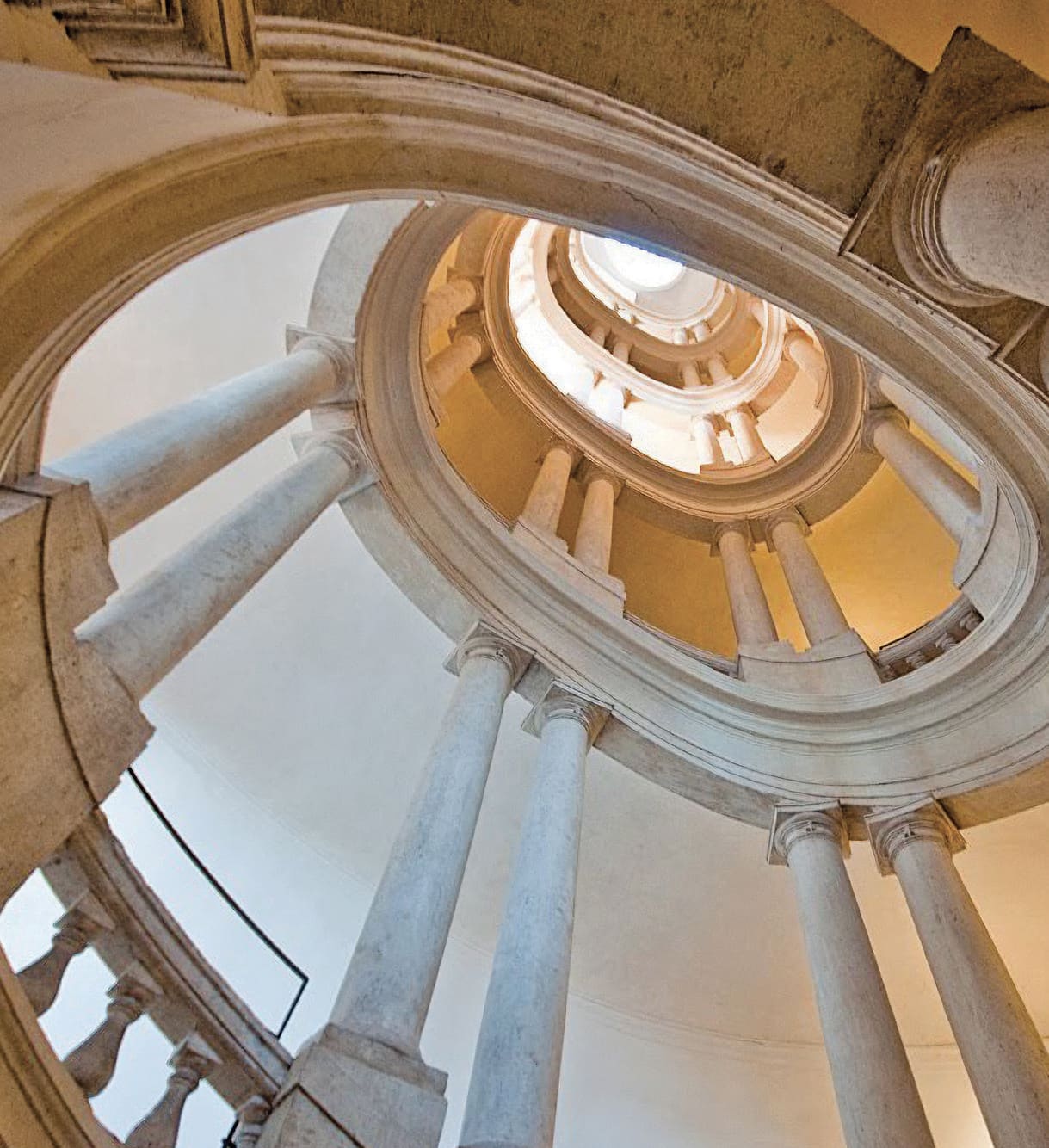
Borromini’s dynamic staircase