Shutterstock/Lena Ivanova
The seven hills that shaped Rome
Exploring myth, politics, and daily life on Rome’s mighty hills – By Sol Stein
Rome may sprawl over many hills – as any cyclist quickly learns– but its ancient heart only rested on seven, each of which shaped the city’s myths, politics, and daily life. While it’s often hard to tell which hill you are standing on at any given time, knowing the hills’ history gives a different perspective to a Rome visit, as each has its own distinctive features. Here is a short tour of the Seven Hills of Rome.
Palatine – Birthplace of an Empire
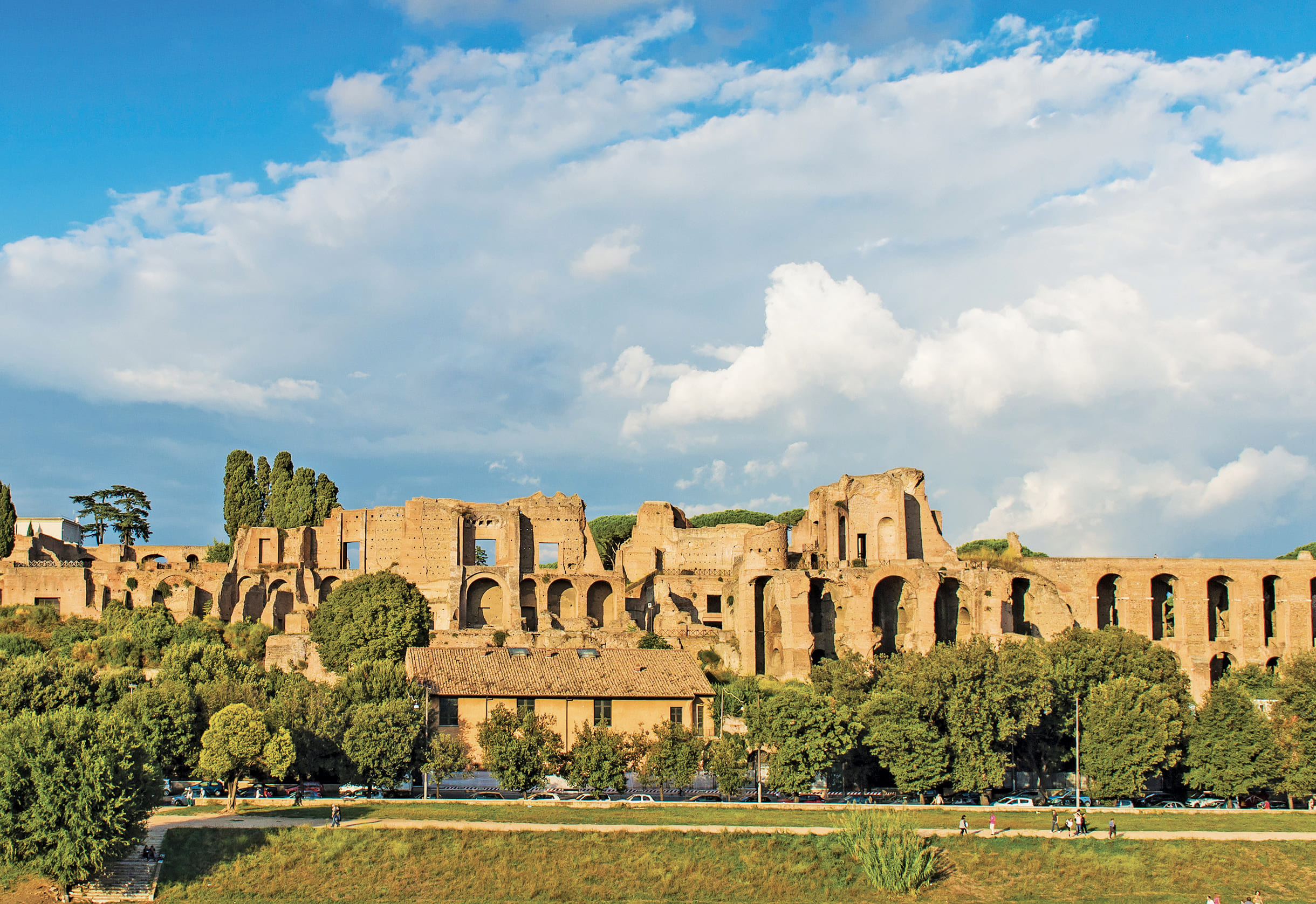
Rome’s birthplace. According to legend, Romulus founded the city here after killing his brother Remus, and archaeology confirms it as the site of the earliest settlement, the Città Quadrata. Over time, it became the most exclusive address in the empire, home to the emperors whose lavish residences gave us the word “palace.” With a Colosseum ticket, visitors can wander through vast palace ruins, glimpse surviving frescoes, and enjoy views over the Forum.
Capitoline – Power and Gods
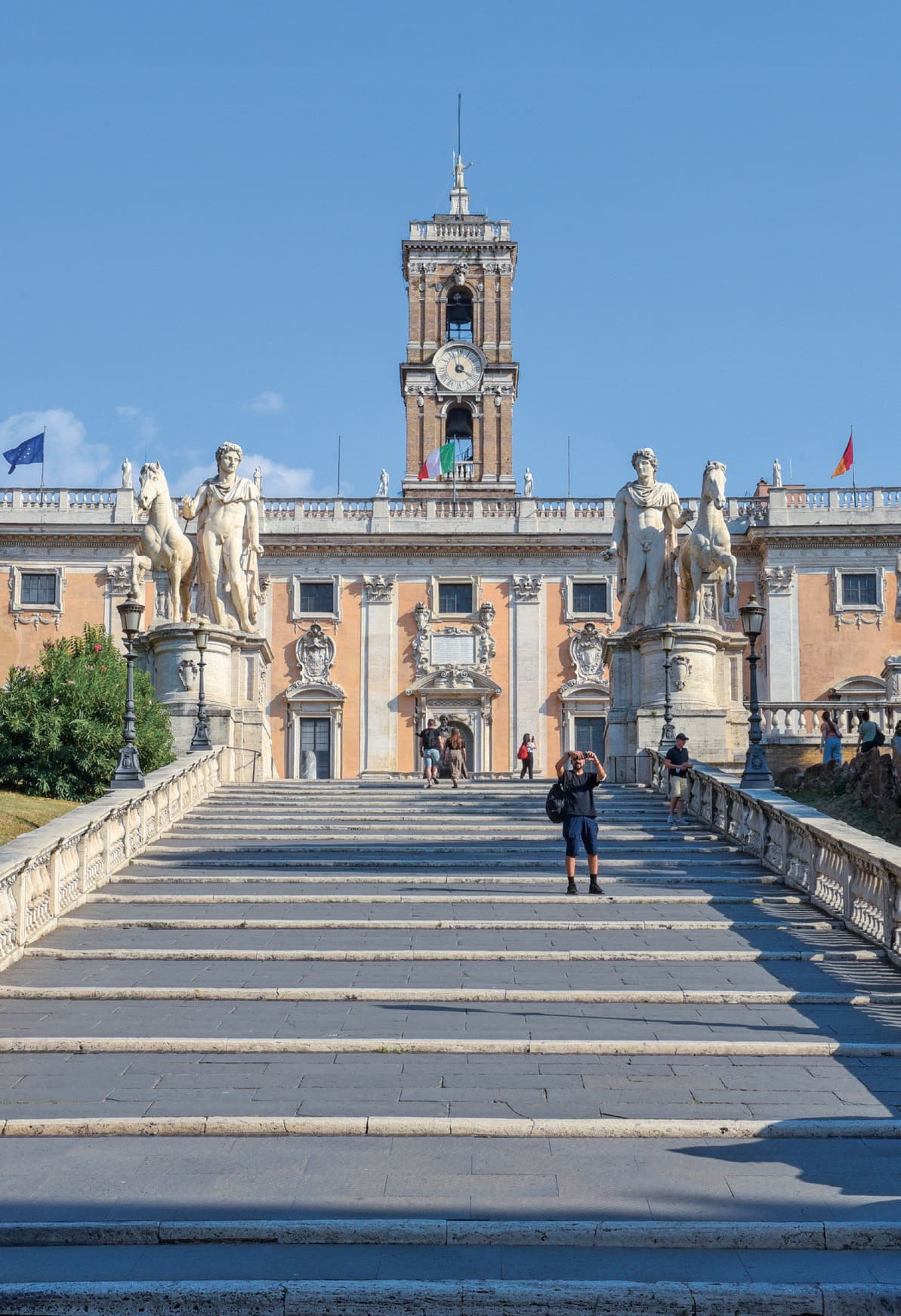
The Capitoline Hill was Rome’s religious and political center. Its summit once housed the immense Temple of Jupiter Optimus Maximus, while the sheer Tarpeian Rock served as a grim place of execution for traitors. Today, the Capitoline Museums hold some of antiquity’s greatest masterpieces, including the Dying Gaul, the equestrian Marcus Aurelius statue, and the iconic She- Wolf. Outside, Michelangelo’s elegant piazza and the nearby Vittoriano offer panoramic skyline views.
Aventine – Spectacular views
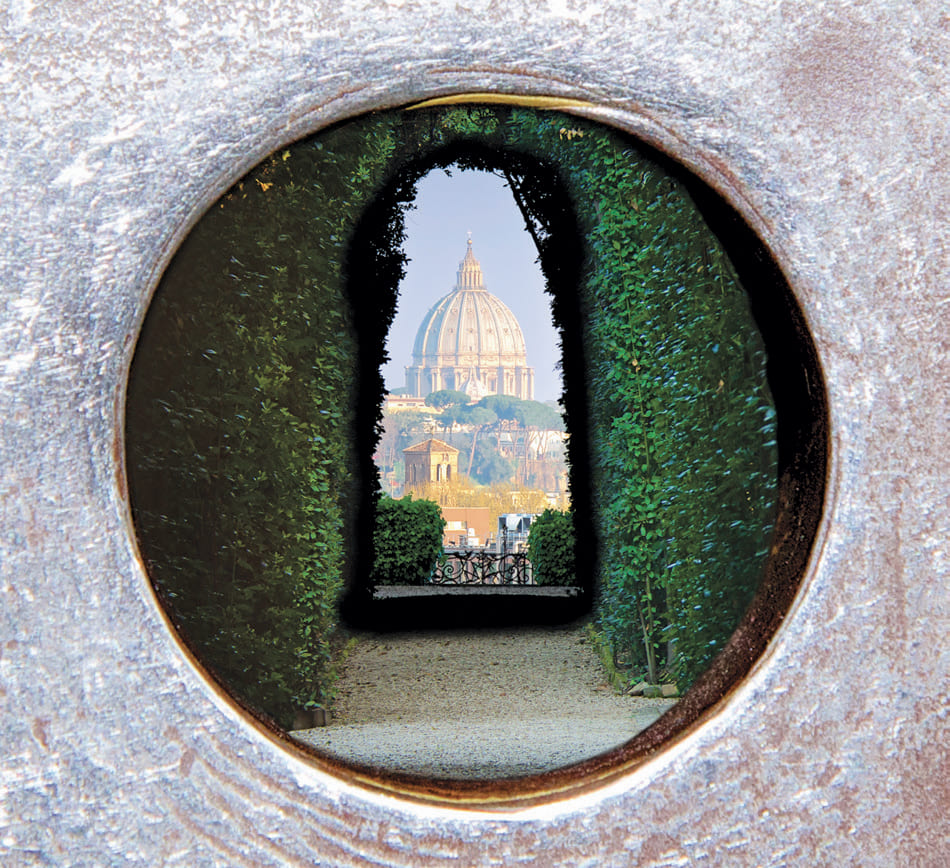
Historically associated with outsiders—and with Remus’s failed claim to power—the Aventine is now one of Rome’s calmest and most refined districts. Highlights include Santa Sabina, with its original fifth-century wooden doors, and two unforgettable viewpoints: St. Peter’s Basilica perfectly framed through the Knights of Malta keyhole, an the romantic panorama of the entire city from the Orange Garden.
Caelian – Round churches and timeless parks
Behind the Colosseum lies the Caelian, a once-aristocratic neighborhood rich in early Christian sites. Don’t miss the circular Santo Stefano Rotondo or the basilica of Santi Giovanni e Paolo, with excavated Roman houses lying beneath the church. Nearby park Villa Celimontana offers shaded paths, fountains, and scattered antiquities.
Quirinal – Presidential beauty
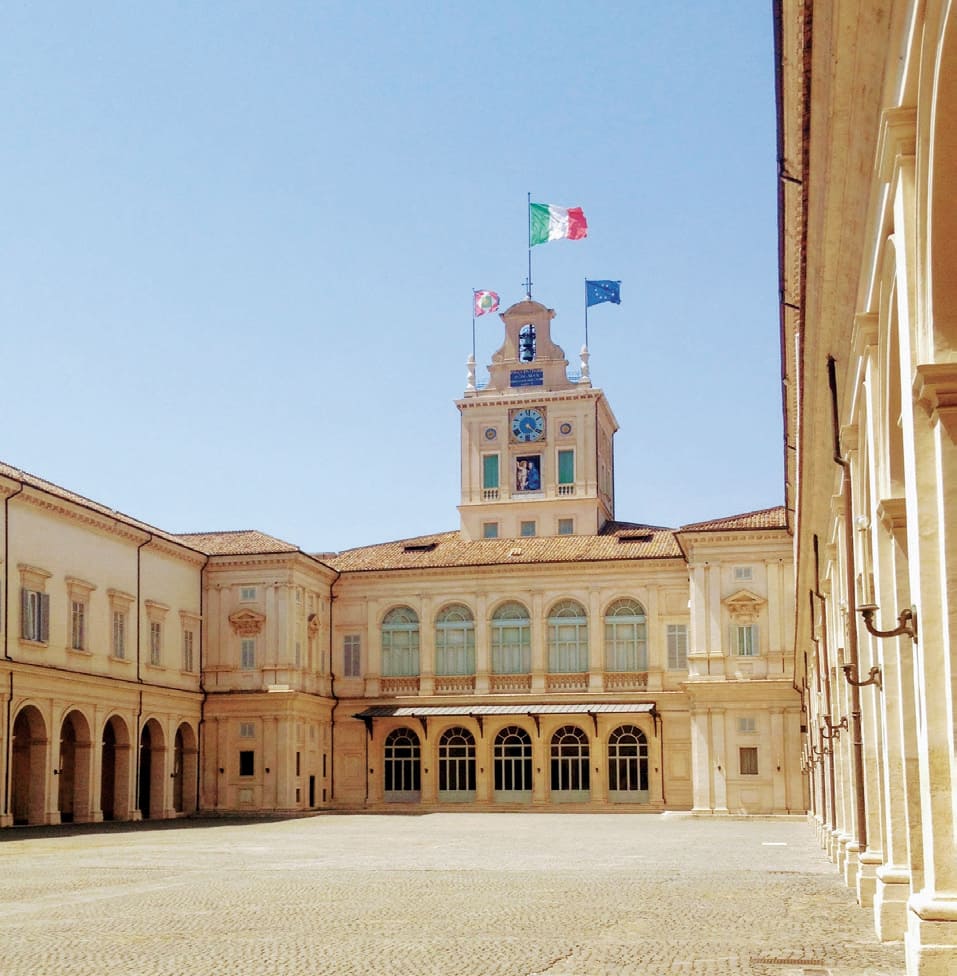
Once a Sabine stronghold, the Quirinal now hosts Italy’s presidential palace. Visitors can explore the frescoed Quirinal Palace, the exhibition spaces of the Scuderie (currently hosting a spectacular exhibition on ancient Egypt, the Pharaoh’s Treasures, www.scuderiequirinale. it), and the art-filled Palazzo Barberini. The hill also boasts two masterpieces by Rome’s most famous Baroque rivals: Bernini and Borromini (see page 13), who designed the two churches of Sant’Andrea al Quirinale and San Carlo alle Quattro Fontane, respectively.
Esquiline – From mosaics to world foods
Formerly a patrician district and now one of Rome’s most multicultural areas, the Esquiline is lively and diverse. Its bustling market (see p. 19) reflects global influences, while Santa Maria Maggiore remains its crown jewel, glowing with fifth-century mosaics—among the earliest depictions of the Virgin Mary.
Viminal – Grand stations and ancient baths
The smallest and often most overlooked hill, the Viminal is nevertheless familiar to travelers thanks to Termini Station. Its ancient highlight was the colossal Baths of Diocletian, now part of the National Roman Museum, and Michelangelo’s Santa Maria degli Angeli. Nearby Palazzo Massimo displays exquisite frescoes, mosaics, and sculpture. End your visit at Piazza della Repubblica, with its once-scandalous Fountain of the Naiads.
Capitoline
Shutterstock/Matteo Gabrieli