
Urban Trekking
When summer’s heat begins to ease, the call of the countryside can be tempting. But in Rome, nature is never far away
By Sol Stein
It’s a fact: the Eternal City boasts more green space per capita than any other European capital, making it an unexpected paradise for walkers and hikers. From panoramas to ancient ruins nestled among umbrella pines, Rome’s urban trails offer the perfect combination of nature, history, and art. Whether you’re craving wide-open parkland or a stroll through layers of antiquity, these urban trekking routes deliver unforgettable experiences without ever leaving the city limits.
Janiculum Hill
The Janiculum rewards walkers with one of the most breathtaking views in the city. Beyond its vistas, the hill is deeply tied to the history of the Risorgimento, Italy’s unification movement. Along the way, you’ll encounter the Garibaldi Ossuary Mausoleum, the Museum of the Roman Republic, the equestrian statue of Giuseppe Garibaldi, a constellation of busts honoring national heroes, and a lighthouse gifted to Rome on the 50th anniversary of Italian unification. History and scenery go hand in hand on this storied slope.
Villa Doria Pamphilj
Rome’s largest park unfolds across an impressive 184 hectares and feels worlds away from urban life. A favorite among runners and walkers alike, Villa Doria Pamphilj offers miles of trails winding through umbrella pine groves, gentle hills, tranquil lakes, and formal gardens. Along the way, you’ll spot fountains, fragments of ancient statuary, and architectural gems such as the Casino del Bel Respiro, the Arch of the Four Winds, and the Palazzina Corsini. Enter from Via di San Pancrazio, just uphill from Trastevere, and prepare to linger.
Villa Borghese
Rome’s most iconic park is a must for any urban trekker. Begin on the east side of Piazza del Popolo and tackle the steep ascent to the Pincian Terrace, where sweeping city views await. From there, the path levels out into a leisurely walk through shaded avenues lined with centuries-old trees, sculptures, gardens, and ponds. Break up your hike with a picnic on a grassy knoll or a paddle on the Garden Lake, beneath the serene gaze of the Temple of Aesculapius.
Colle Oppio Park
Directly across from the Colosseum and perched atop the vaulted remains of Nero’s Domus Aurea, Colle Oppio Park is a peaceful oasis with priceless views and surprisingly few crowds. This compact green space offers an intimate walking experience steeped in history, and serves as the gateway to the ruins of the Domus Aurea and the Baths of Trajan. Though modest in size at just 11 hectares, the park is ideal for a contemplative stroll amid art, ruins, and greenery.
The Aurelian Walls
For a walk through Rome’s defensive past, follow the monumental Aurelian Walls, built in the 3rd century AD under Emperor Aurelian. Begin at Porta San Paolo and trace the walls’ imposing route toward Porta Flaminia, passing ancient gates and monuments that have witnessed centuries of upheaval. At Porta San Sebastiano, pause for panoramic views and visit the small yet fascinating museum housed atop the walls, which brings the history and engineering of Rome’s fortifications to life.
Aqueduct Park
In the city’s southwest, near the Appian Way, lies one of Rome’s most extraordinary green spaces. This vast meadow is intersected by six ancient aqueducts: Aqua Vetus, Aqua Tepula, Aqua Anio Novus, Aqua Claudia, Aqua Julia, and Aqua Marcia, all running along with the Renaissance-era Aqua Felix. Via Appia Antica AdobeStock_226881457 As you walk beneath these towering stone arches, time seems to slip away, especially if you spot shepherds guiding their flocks across the grass. Reach the park via Metro Line A to Giulio Agricola and enter from Via Lemonia.
The Ancient Appian Way
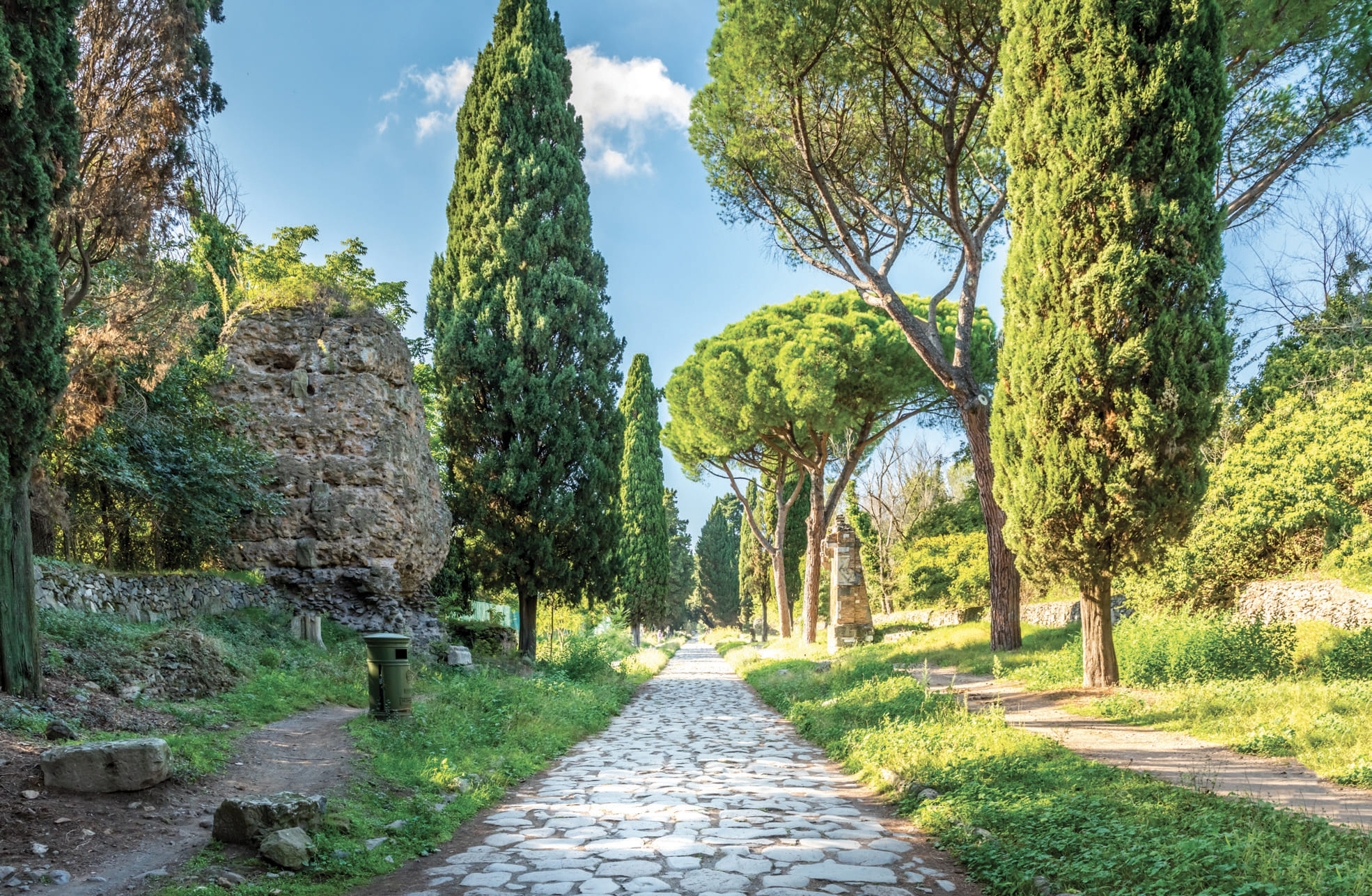
Known as the Regina Viarum, or “Queen of all Roads,” the Appian Way once stretched from Rome to the southern tip of Italy. Today, a shorter walk still delivers an extraordinary concentration of history and scenery. Start at Porta San Sebastiano and follow the ancient basalt paving stones past the Circus of Maxentius, the Catacombs of San Callisto, the Mausoleum of Cecilia Metella, and the Villa dei Quintili—masterpieces of Roman antiquity set amid open countryside just minutes from the city center.