
Of peace and power
Explore the Ara Pacis: a reminder of how
art and politics merged in ancient Rome
By Leslie Ardengo
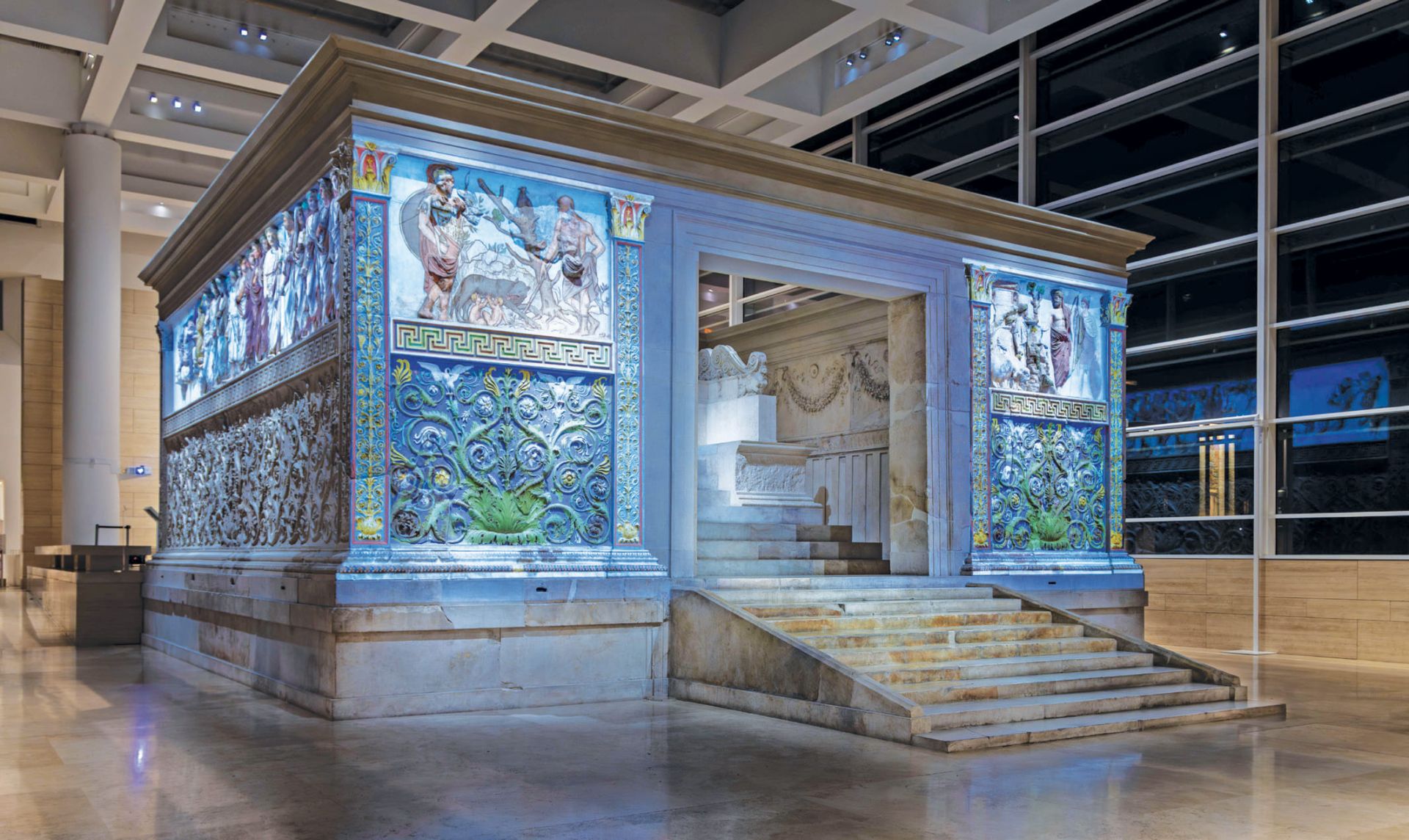
Along the banks of the Tiber and right next to the Mausoleum of Augustus stands the Ara Pacis Augustae, an altar built in 13 BCE to celebrate Emperor Augustus’s victories in Spain and Gaul, the resulting period of peace, and the stability of his rule. Encased within a modern glass pavilion designed by Richard Meier in 2003, the altar features splendorous narrative reliefs: lush garlands of fruit and flowers, processions of senators and priests, and mythological scenes linking Augustus’s reign to divine destiny.
Most impressive is the frieze of the imperial family walking together in solemn dignity, a rare, almost intimate glimpse of Rome’s ruling household immortalized in stone. The museum’s clean, sunlit design allows the carvings to be appreciated much as they would have appeared two millennia ago: gleaming, intricate, and unabashedly propagandistic. Although the altar was intended as a tribute to Augustus’s vision of a Rome at peace, it was mainly a persuasive display of who holds power and why, and a way for Augustus to show how political order and cultural flourishing went hand in hand.
Today, the brand-new multimedia project The Ara Reveals Itself offers an immersive experience — thanks to videomapping technique and with narration in your language through headphones — allowing you to discover the history of this fascinating monument that has survived to the present day. Tickets at arapacis.it.