
Rome’s eight Hill
How broken jars became a Roman landmark – By Leslie Ardengo
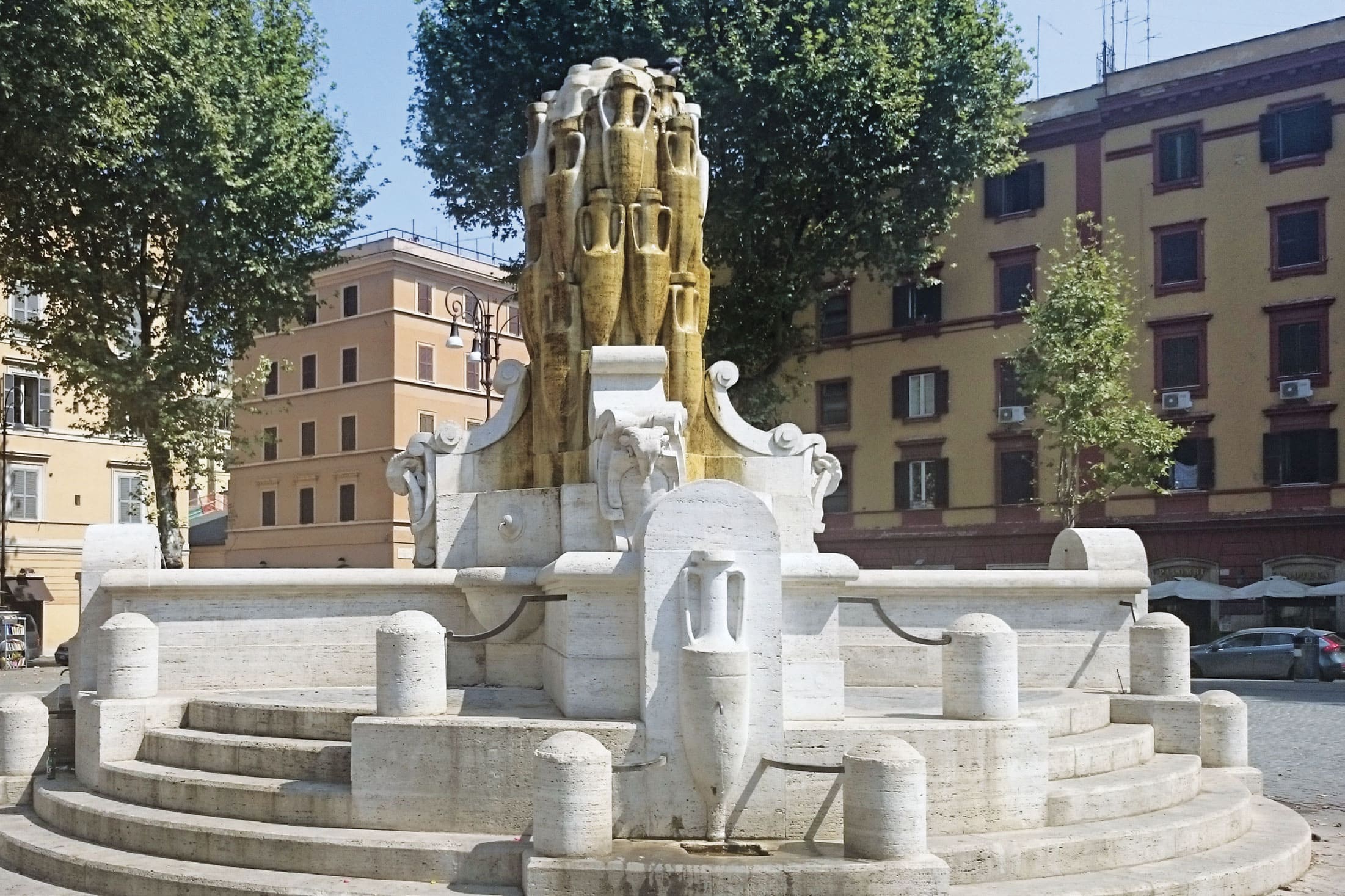
Testaccio Hill is one of Rome’s most unusual and fascinating landmarks—not a natural formation, but an artificial mound shaped by centuries of human activity. Known as Monte dei Cocci (Hill of Shards), it was created between the 1st century BCE and the 3rd century CE through the gradual accumulation of broken amphorae—earth-enware jars used to transport goods such as oil and wine—discarded at the Emporium, the city’s ancient river port. After traveling upriver from the port of Ostia, Roman merchants would unload their goods and discard the now-empty amphorae, which were considered single-use containers. These shards, known as testae in Latin (from which the name Testaccio derives), were piled systematically into what eventually became an archaeological hill. Although some fragments were repurposed for construction, the majority were simply waste, which over time formed a monument to Roman commerce and consumption. Rising about 30 meters high and spanning roughly 1,000 meters in circumference, the hill has been the site of numerous archaeological excavations. These digs have revealed that the oldest deposits date from the reign of Augustus to that of Marcus Aurelius, with later layers added between the time of Antoninus Pius and Aurelian. What truly sets Monte dei Cocci apart, however, is its transformation in modern times. Over the centuries, small houses, rooms, and even entire establishments have been carved into the mound. Today, restaurants, clubs, and artisan workshops occupy this unique setting, where exposed amphorae walls testify to a layered history made from an estimated 40 million pottery fragments. This blend of ancient waste and urban reuse has earned Testaccio the nickname “Rome’s eighth hill.” For more info: sovraintendenzaroma.it