Monuments Of Triumph
Walk through any major capital today and you may encounter echoes of Rome’s greatest architectural symbol: the triumphal arch
By Claudio Lozzi
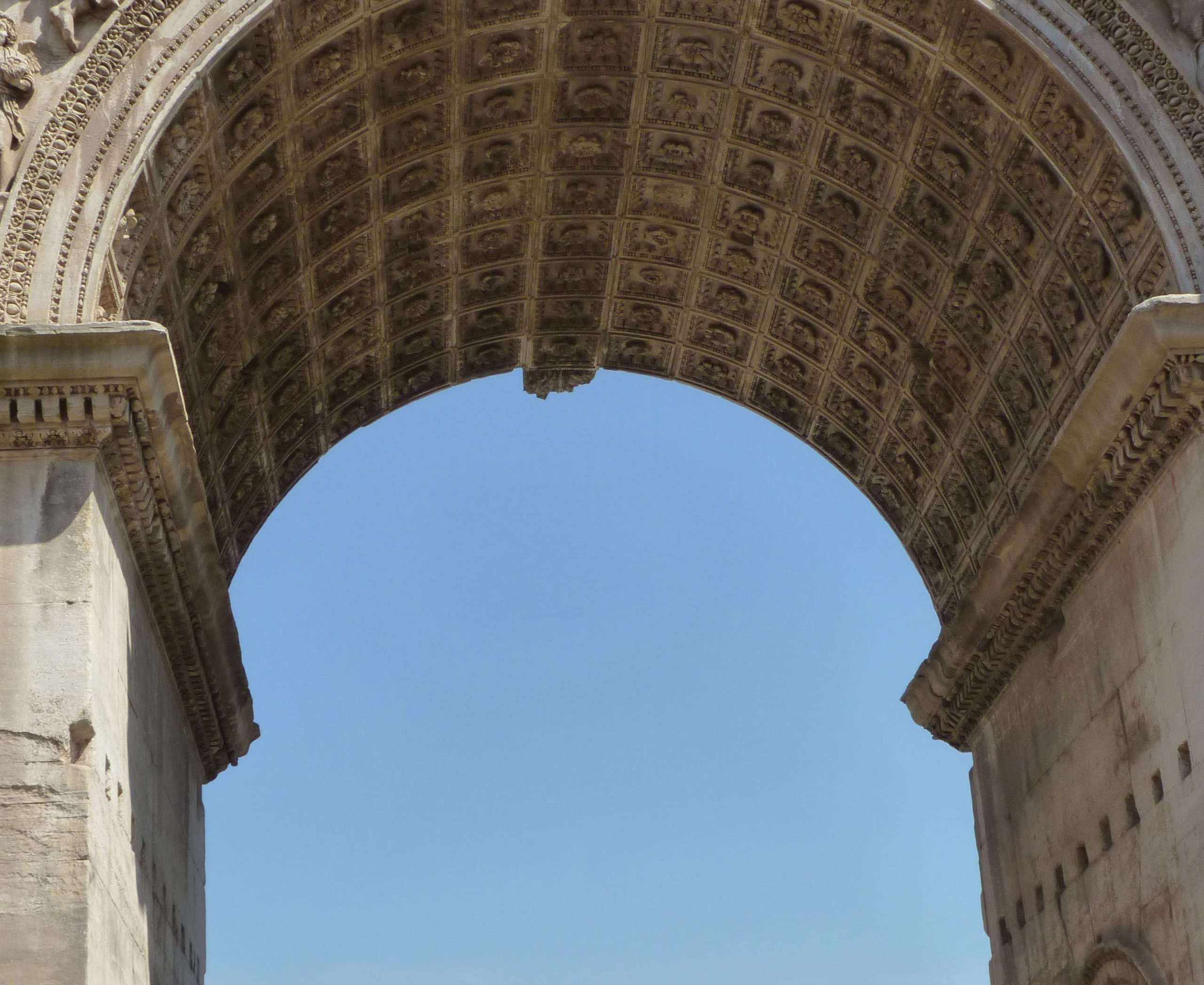
Rome’s most successful architectural export, the triumphal arch is built around a core architectural unit: one or more arches supported by massive piers and topped by an entablature. Usually free-standing rather than attached to other buildings, its simplest form consists of two solid pillars joined by a single arch, typically crowned with a flat top or an attic bearing commemorative inscriptions. The main body was often lavishly adorned with carved decorations, sculpted reliefs, and dedicatory texts.
Originally, triumphal arches celebrated victorious generals or major public events during the Republican era. Under the Empire, however, they evolved into tools of imperial propaganda. They marked military victories, accessions to the throne, memorialized deceased members of the imperial family, or stood as tributes offered by cities and colonies. Scholars distinguish between the true “triumphal arch,” erected to commemorate a triumph and the “commemorative” or “honorary” arch, usually commissioned by the emperor to celebrate himself, and finally the arches incorporated into city walls, which functioned simply as monumental gateways.
The enduring presence of great Roman triumphal arches across the ancient world has inspired rulers and nations for centuries. Even today, echoes of Rome rise in landmarks such as the Arc de Triomphe in Paris, the Narva Triumphal Arch in Saint Petersburg, and London’s Marble Arch, to name just a few illustrious examples. Even U.S. President Donald J. Trump, a fan of imperial gigantism, is planning his own triumphal arch in Washington DC.
In Rome itself only three of the original 36 arches mentioned in ancient sources are still standing:
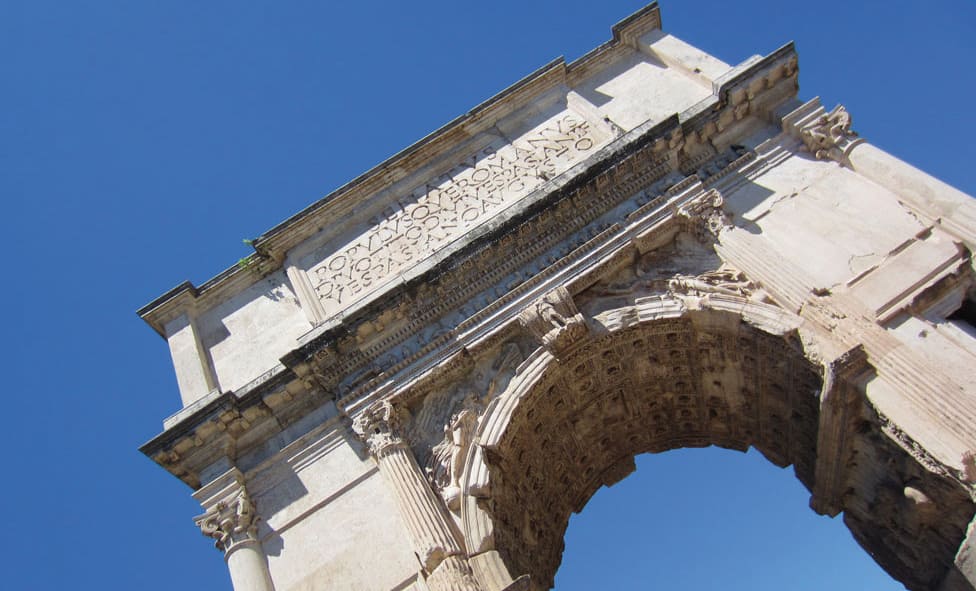
Arch of Titus (81 AD): This single-arched monument depicts Titus’s conquest of Jerusalem during the Jewish War and is both a monument to Roman victory and a lasting record of the destruction of Jerusalem.
Arch of Septimius Severus (202–203 AD): Located in the Roman Forum, this triple-arched structure celebrates the victories of the emperor and his sons, Caracalla and Geta, over the Parthians.
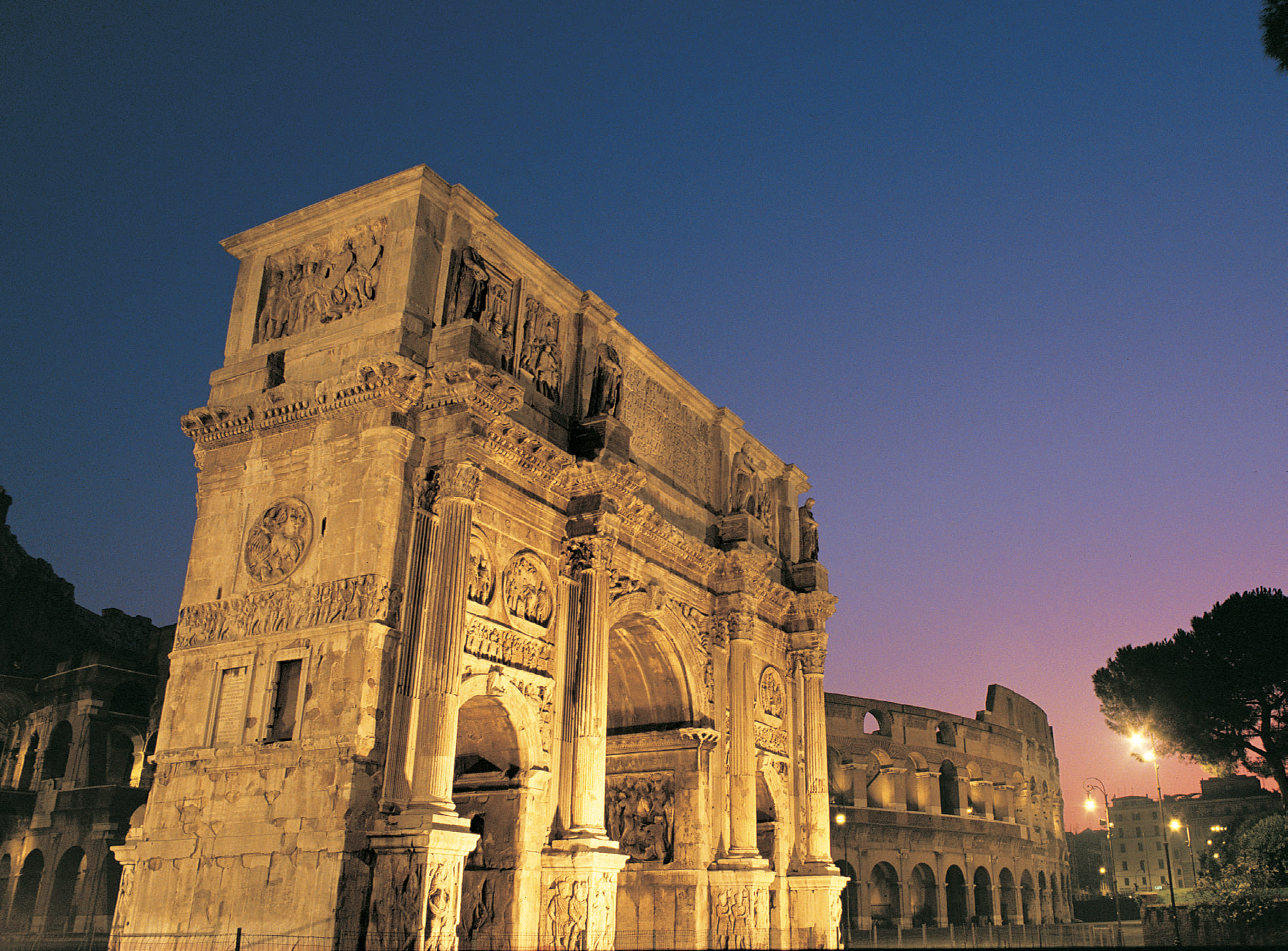
Arch of Constantine (315 AD): Standing near the Colosseum along the traditional route of triumphal processions, this is the largest of them all. With three arches, it commemorates Constantine’s victory over Maxentius at the Battle of the Ponte Milvio (Milvian Bridge). Rome also preserves several so-called “minor” arches, often serving as gateways or passageways. Among them are the Arches of Drusus, Dolabella, and Gallienus. A special mention goes to the Arch of Janus in the Forum Boarium. Smaller and square in plan, it features four supporting piers covered by a groin vault that once supported a tall attic. Built in the 4th century AD by Constantine’s sons in honor of their father after his death, it stands apart in both form and function.