
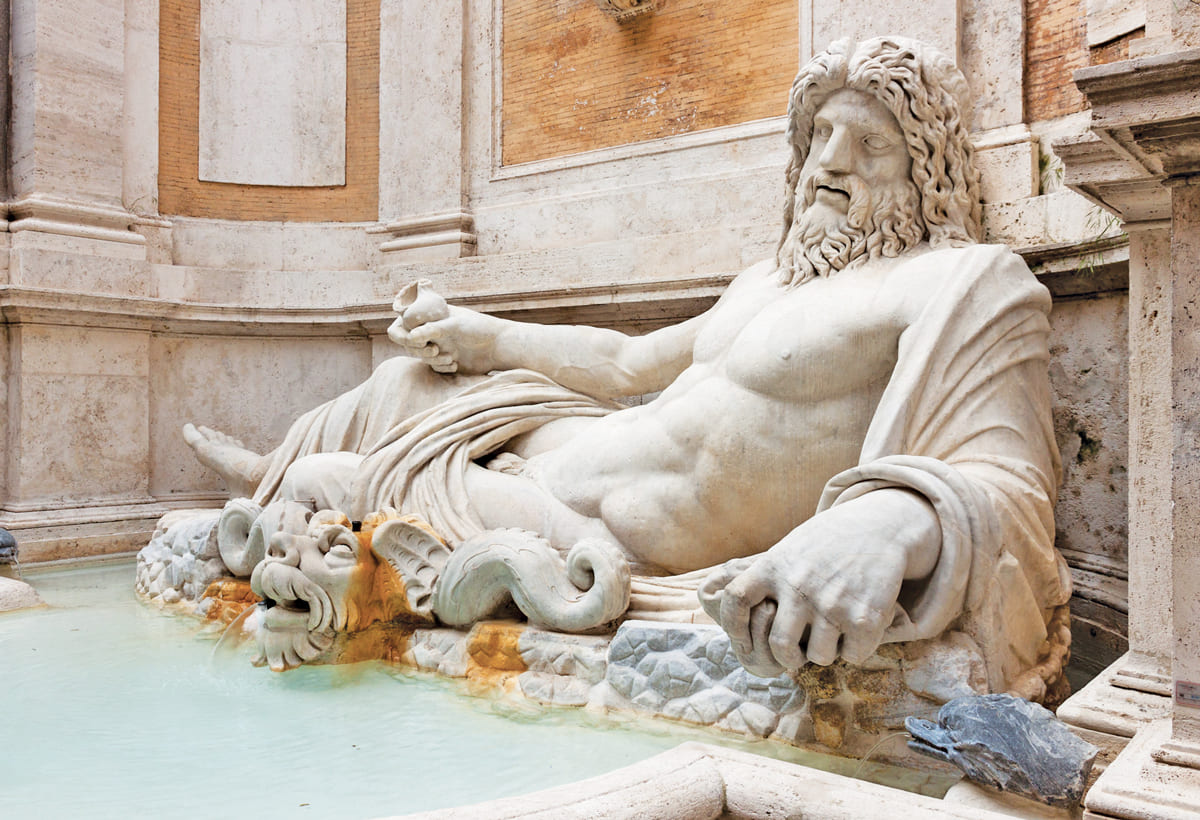
Marforio
Pasquino & Co., The Rise of Roman Satire
How a single voice inspired a culture of public mockery and political dissent
Back in 16th-century Rome, a tailor named Pasquino made his mark not with scissors and thread, but with sharp words and satirical wit. Based near Piazza Navona, Pasquino was famous for mocking the political elite, the clergy, and ordinary townspeople alike. He and his friends would spend hours ridiculing those in power, unleashing a torrent of sharptongued humor. Soon, his cutting remarks found a wider audience on the walls of the city, and so began the tradition of writing on walls, still so common in Rome today. Pasquino’s legacy lived on long after his death. A group of his friends found an old, mutilated statue—possibly of Alexander the Great or another ancient hero—and decided to turn it into a monument to their late friend. They placed it near Palazzo Braschi, and the statue quickly became a platform for political commentary. The people of Rome started leaving satirical messages on small pieces of paper (pasquinades) on the statue, turning it into the unofficial voice of the common folk. Pasquino’s statue soon became such a successful means of political expression that Romans decided it needed a friend. So they found a colossal statue of the god Mars, known as Marforio, and placed it beside Pasquino to join in the fun. Together, the two formed a dynamic duo of ridicule, delivering biting commentary on the city’s power structures. The pasquinades were both humorous and poignant, filled with wordplay and criticism, often highlighting the absurdities of political life. One of Pasquino’s most famous targets was Lucrezia Borgia, who, even in death, couldn’t escape his scorn. A message on the statue once read: “Here lies Lucrezia: daughter, wife, and daughter-in-law of the Pope.” Similarly, Pope Innocent X’s powerful sister-in-law, Donna Olimpia, earned the nickname
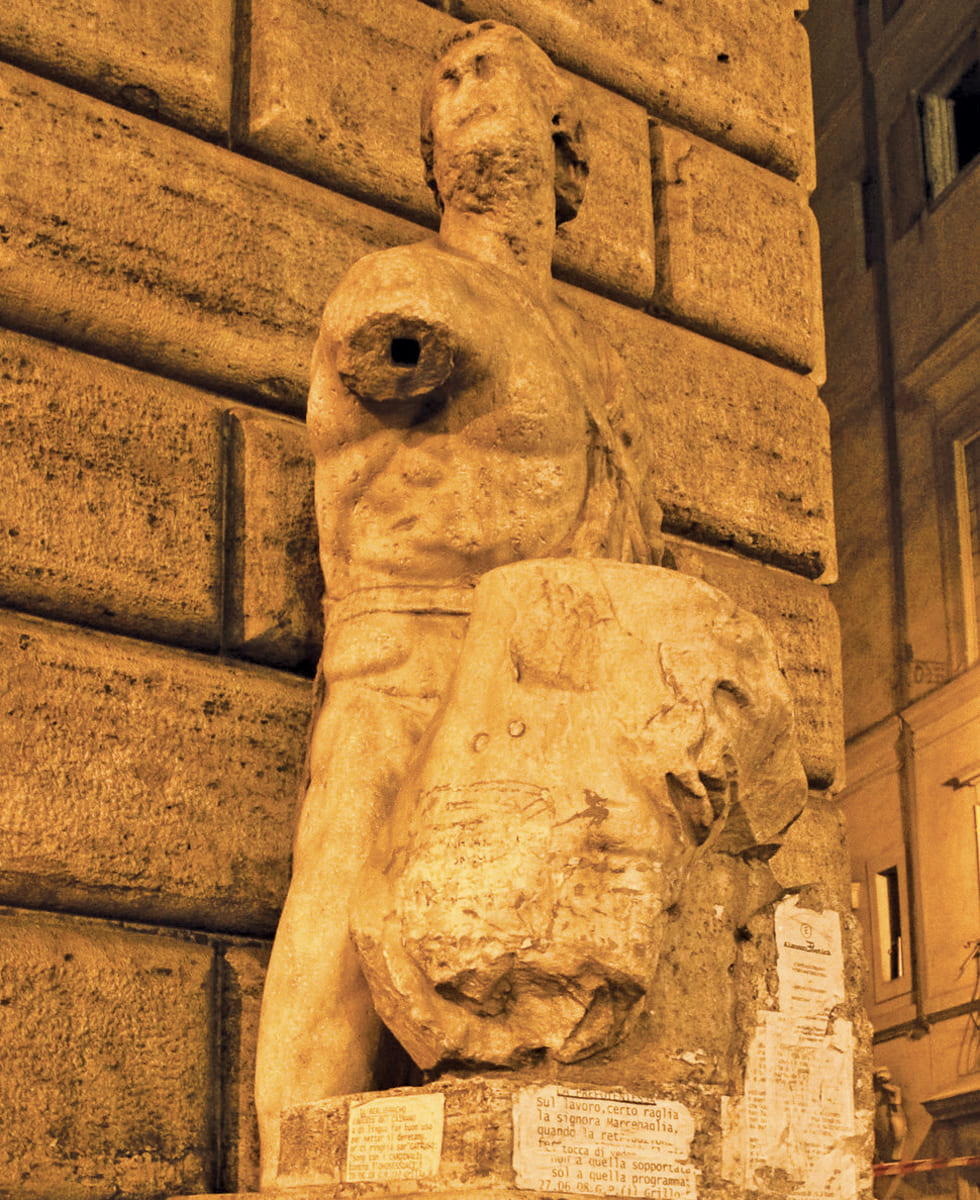
Pasquino. Flickr/Umberto Rotundo-Viditu
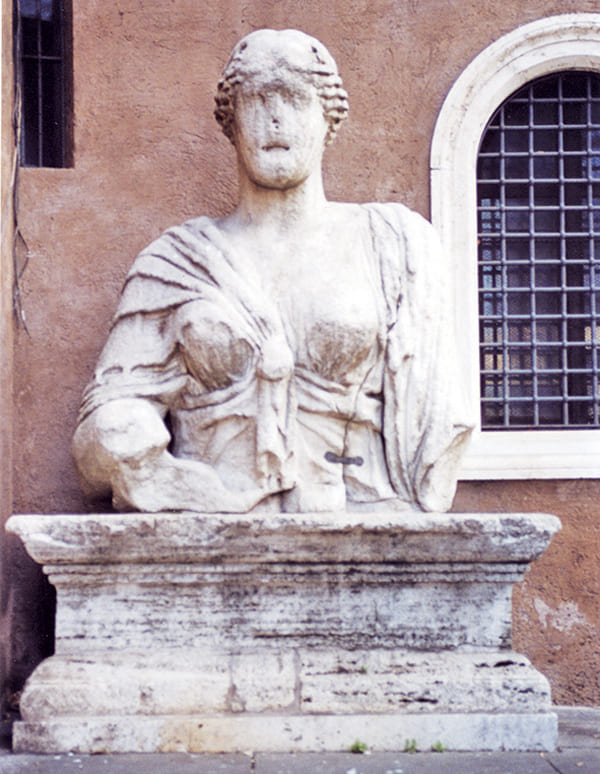
Madame Lucrezia
The wife of Christ.” Pasquino even took aim at Napoleon’s invading French troops, mocking them with the line, “Not all Frenchmen are thieves, only Buonaparte…,” a pun on Napoleon’s Italian surname Buonaparte, which Romans twisted into buona parte, ‘the bigger part (of them).’ Implying however that the actual thief was Napoleon. But it wasn’t just Pasquino and Marforio making waves. Other statues across the city joined in the conversation. Madame Lucrezia, an ancient bust of the goddess Isis, and the Babuino (a baboon statue) also became famous for their witty exchanges. Abate Luigi, a statue of a disfigured priest with a sense of humor, and Facchino, a small fountain, also contributed to the city’s lively satire. Despite numerous attempts to silence Pasquino, his satirical messages continued to appear on the city’s streets, defying censorship and challenging the powerful. Even today, his influence persists
A DIGITAL PARALLEL
The satirical dialogues of Rome’s talking statues bear an uncanny resemblance to today’s social media. Just as people in the past sought to express their opinions anonymously, today’s internet serves as a global platform for free speech— often anonymous, often irreverent. Pasquino was the original mouthpiece for the people, long before X, Facebook or Instagram existed, and his pasquinades can be seen as an early form of political graffiti. In a world where the elite tried to control discourse, Pasquino was the unfiltered voice of the masses, poking fun at authority figures in ways that still resonate today.