Author: francescocartei1985

Saint Peter’s Chains

Saint Peter’s Chains

At San Pietro in Vincoli, sacred relics meet Michelangelo’s awe-inspiring Moses
By Andrea Werther


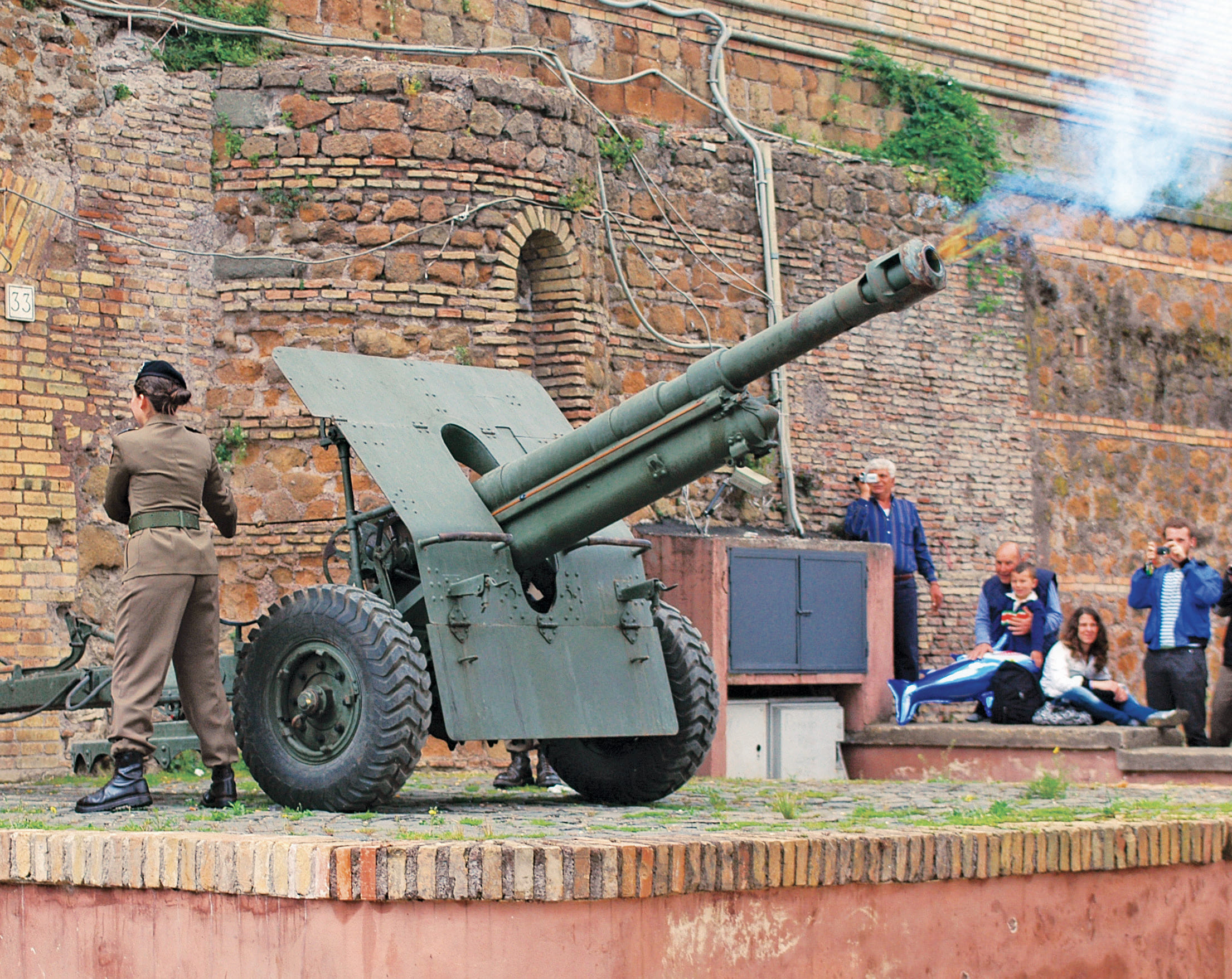
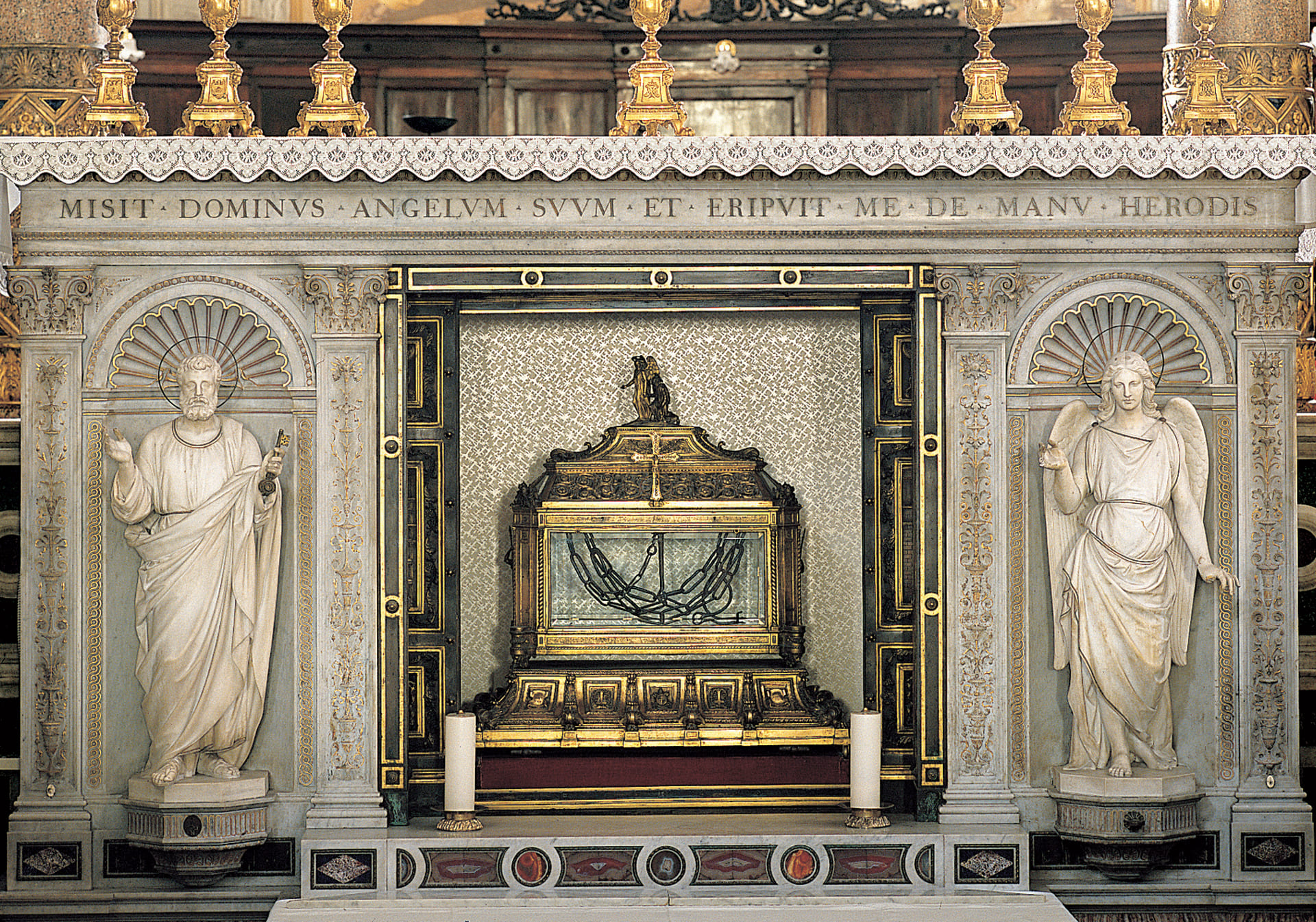
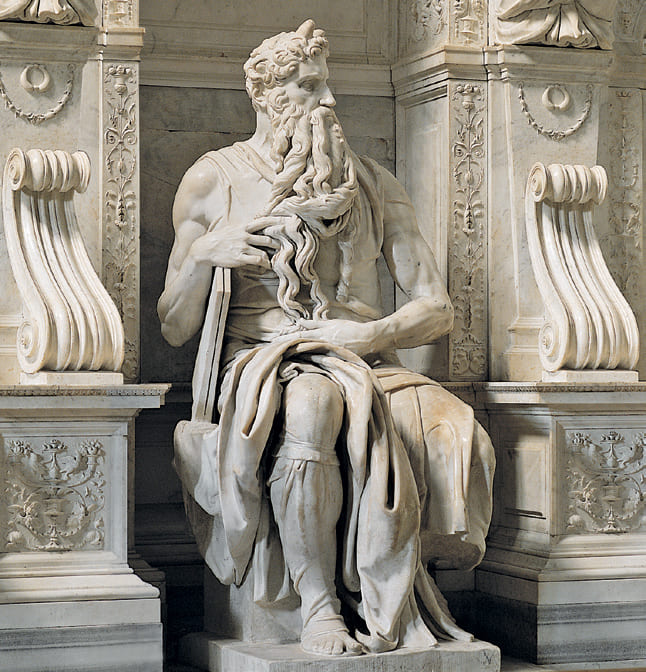
Tucked away on a quiet hill near the Colosseum, the small basilica of San Pietro in Vincoli (Saint Peter in Chains) offers one of the city’s most unforgettable experiences. The church’s name refers to the chains believed to have bound Saint Peter when he was imprisoned in Jerusalem. According to tradition, these sacred relics (pictured above) were later sent to Rome, where they were miraculously fused with a second set of chains that had held Peter during his Roman imprisonment. These joined chains are now displayed beneath the main altar in a beautifully ornate gold and crystal reliquary. Every year on August 1st, a special ceremony marks the miracle of their reunion— a tradition the church has upheld for centuries. But relics aren’t the only treasure here. San Pietro in Vincoli is also home to one of the greatest sculptures of the Renaissance: Michelangelo’s Moses. Originally commissioned as part of an ambitious tomb for Pope Julius II, the statue was meant to be one of more than 40 figures. However, delays, changes in plans, and political shifts meant the final tomb was far simpler than intended.

Still, Moses alone is a masterpiece. Seated with the Tablets of the Law under one arm and an intense expression of divine fury on his face, Michelangelo’s Moses is often said to radiate such life that the sculptor, legend has it, struck the statue’s knee and exclaimed, “Why don’t you speak?” Visitors today can still see a small mark said to have been left by his hammer.

Flanking Moses are statues of Leah and Rachel, symbols of action and contemplation, both virtues that reflect the dual paths of spiritual life. These, along with the tomb’s architecture, blend spirituality and humanism in true Renaissance fashion.

lateranensi.org/sanpietroinvincoli

Continue reading

Pursuit of perfection

Pursuit of perfection

Around 200 photographs reveal Robert Mapplethorpe’s mastery of form, symmetry, and beauty


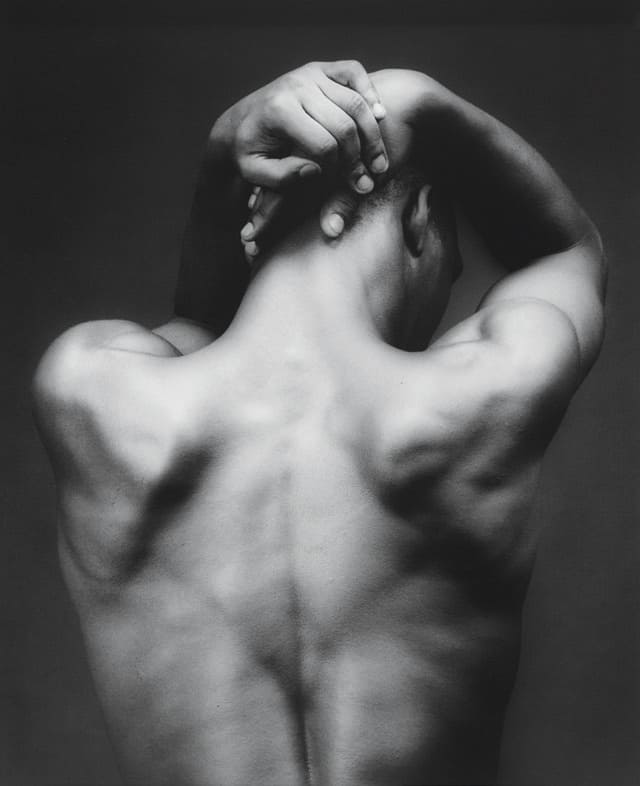
Michael Roth, 1983 © Robert Mapplethorpe Foundation. Used by permission

Born in New York in 1946, Robert Mapplethorpe is widely regarded as a master who transcended the boundaries of photography. Rather than merely capturing subjects, he sculpted space through the lens of his Hasselblad camera, transforming each image into a study of balance, symmetry, and classical harmony. His work is marked by geometric precision and an unwavering pursuit of perfection, and his images have a sculptural feel.

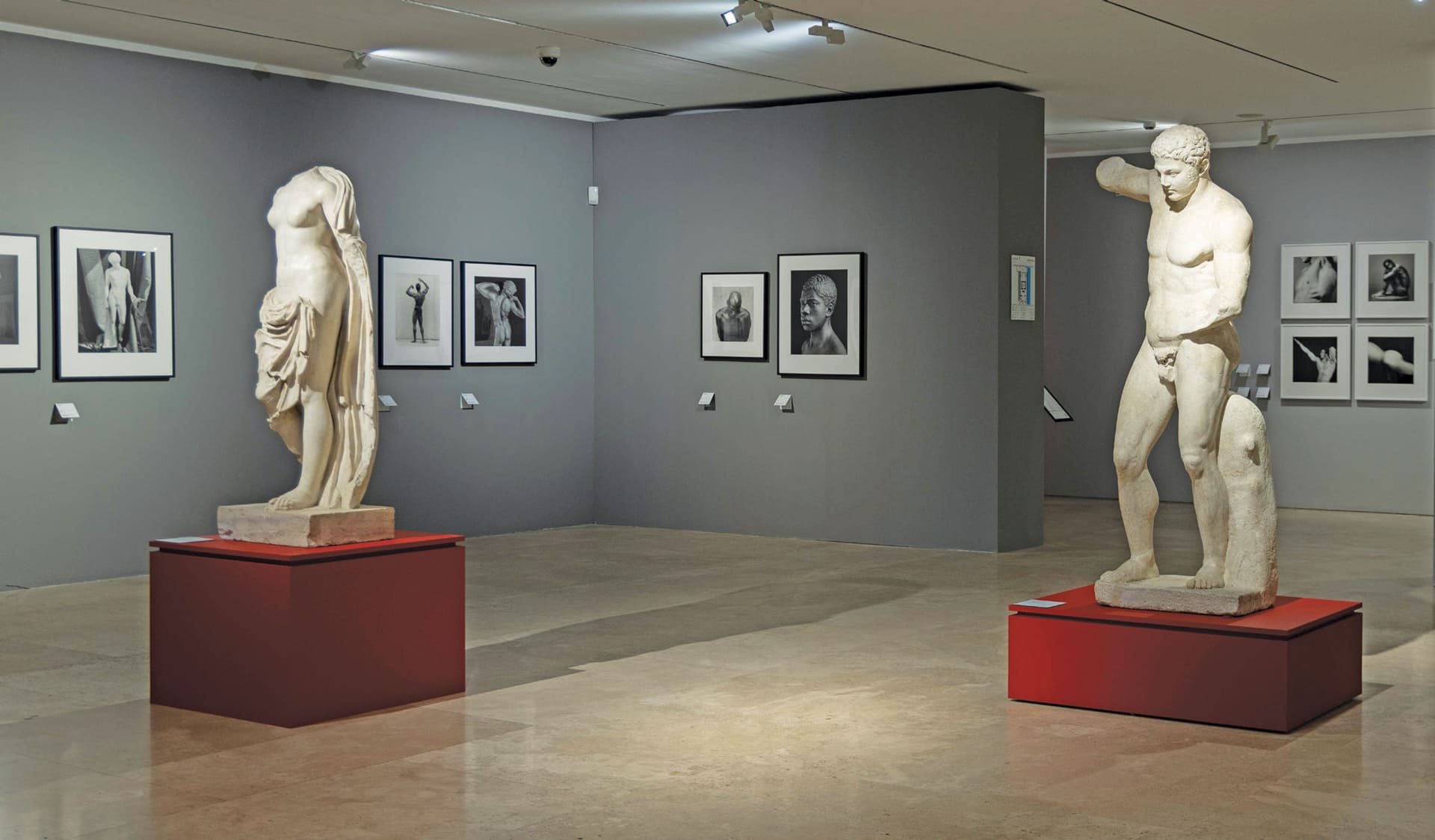
Until October 4, the Museo dell’Ara Pacis will be hosting Robert Mapplethorpe. The Forms of Beauty, an extraordinary exhibition featuring around 200 photographs that explore beauty as absolute perfection and formal rigor. Organized in collaboration with the Robert Mapplethorpe Foundation, the show offers a rare opportunity to immerse oneself in the refined and provocative vision of one of the 20th century’s most influential photographers.

What sets this exhibition apart is its focus on previously unseen material and its deep dive into the artist’s obsession with pure form. Whether portraying the human body, intimate portraits, or still lifes, Mapplethorpe applies the same meticulous attention to light, shadow, and composition. The result is a visual language that is at once sensual and austere, modern yet rooted in classical ideals. This Roman chapter marks the final stage of a large exhibition project that previously traveled through Venice and Milan, making this show a fitting grand finale.

arapacis.it

Continue reading

Summer nights at Massenzio

Summer nights at Massenzio

Santa Cecilia brings open-air concerts back to Rome’s ancient basilica


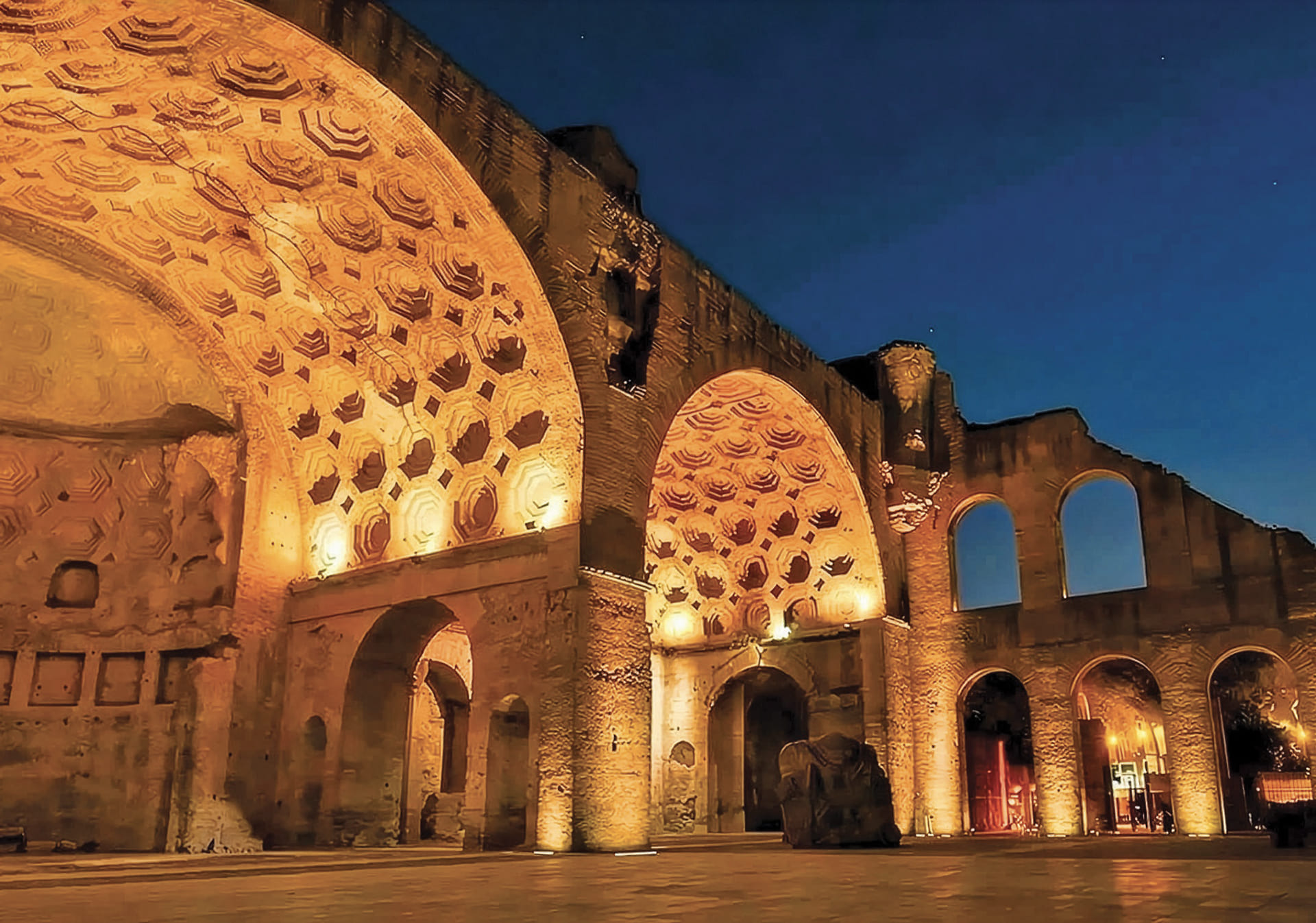
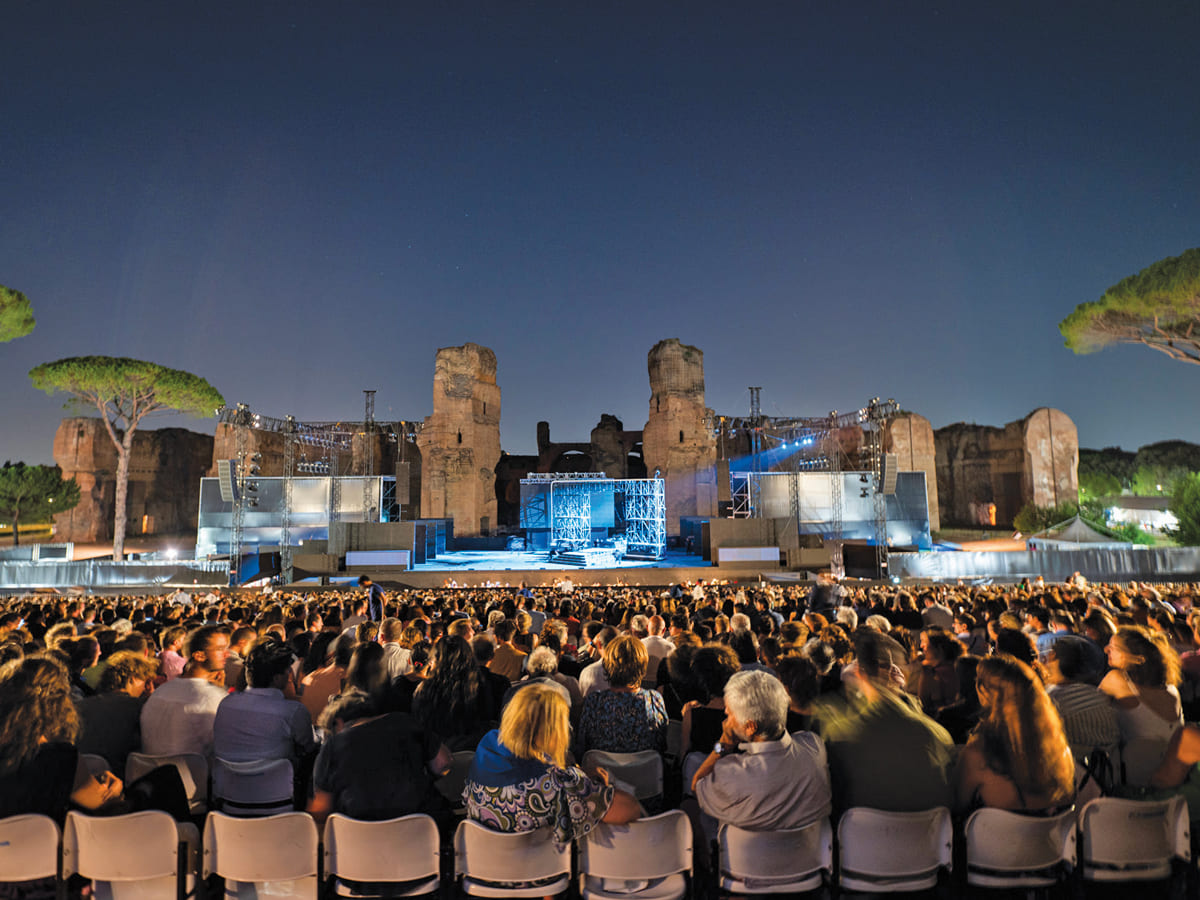
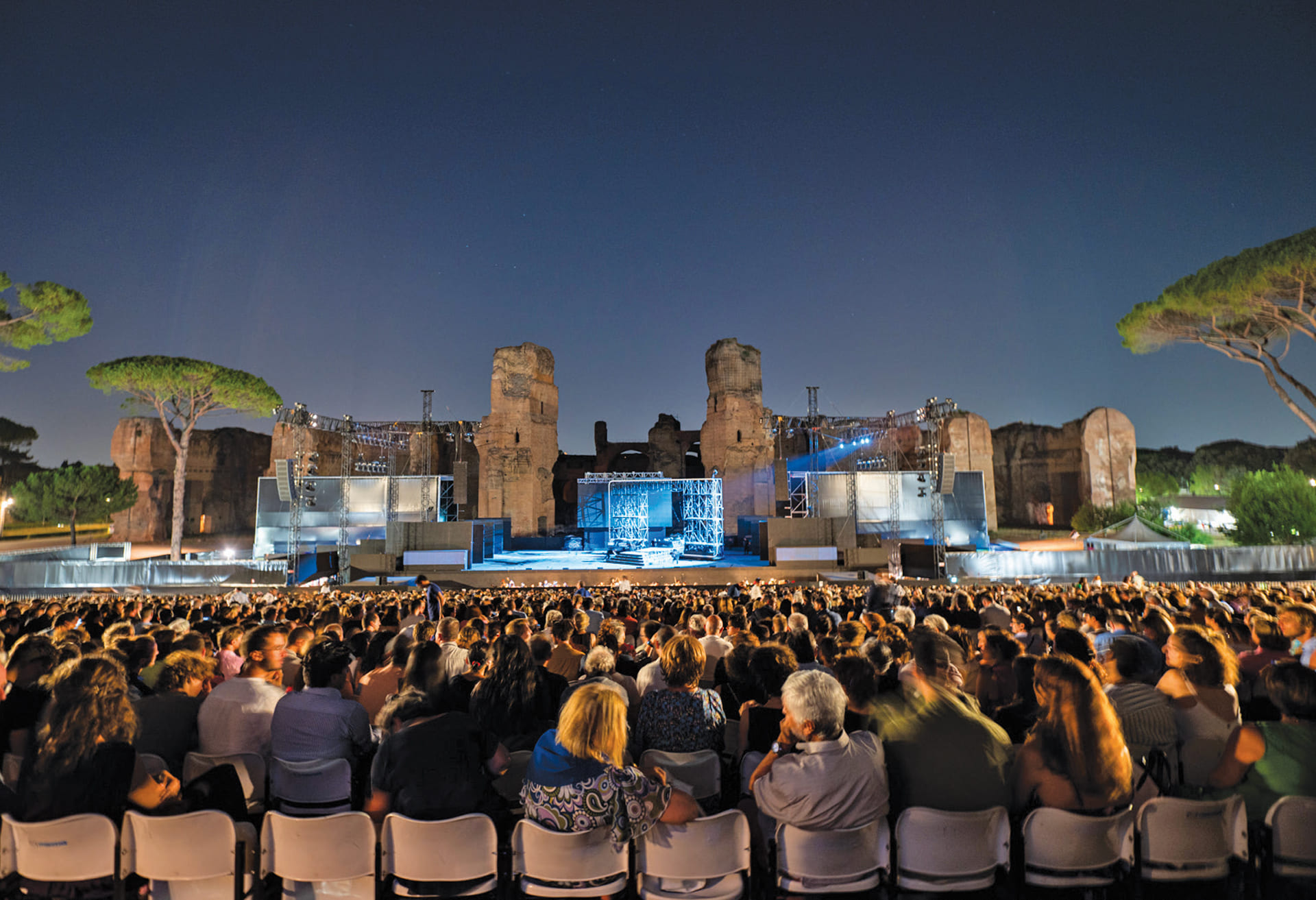
After 47 years, the summer season of the Accademia Nazionale di Santa Cecilia returns to the majestic Basilica di Massenzio for a month of open-air concerts under the Roman sky. From 2 July, an international lineup celebrates great composers— Tchaikovsky, Verdi, Gershwin, Chopin, Mozart, Handel, and Vivaldi—alongside film scores by two-time Oscar winner Alexandre Desplat.

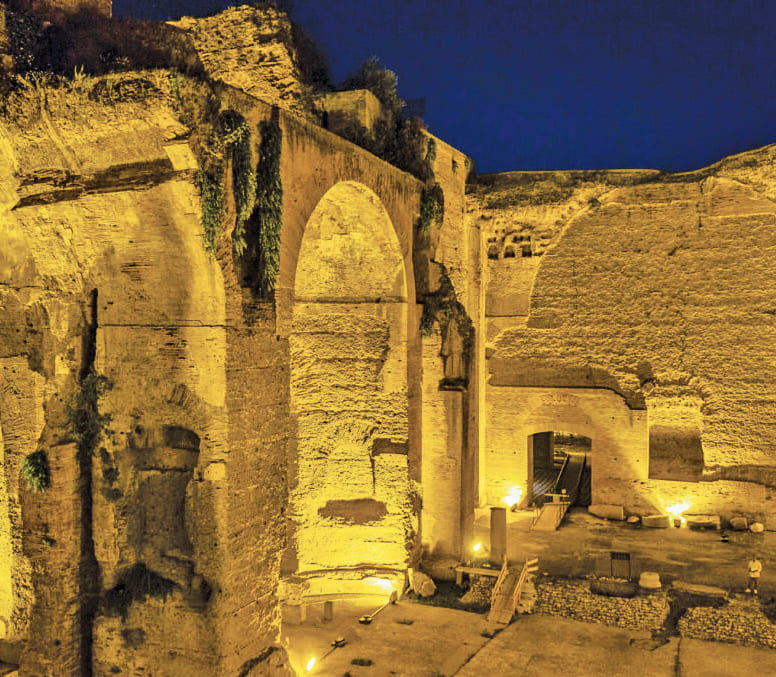
Begun by emperor Maxentius around 306 AD and completed by Constantine, the Basilica is a massive imperial building used for administrative and judicial functions, showcasing advanced Roman engineering with huge vaulted ceilings and concrete construction.

Opening night (2 July) features conductor Manfred Honeck and pianist Alexander Malofeev in an all-Tchaikovsky gala. Other highlights of the month include a genre-blending “Four Seasons Hip-Hop” (4 July) by Mourad Merzouki; Desplat conducting his own iconic film music (9 July); and a Verdi tribute (15 July) led by Diego Ceretta. Music Director Daniel Harding takes the podium on 17 July with pianist Stefano Bollani for Gershwin’s Rhapsody in Blue, paired with Maurice Ravel and Modest Mussorgsky. Pianist Martina Meola headlines a Chopin evening (21 July), followed by Mozart’s Requiem (24 July) under Jérémie Rhorer and a Baroque finale (29 July) with Concerto Köln. And with its purpose-built stage, featuring semicircular seating for a full orchestra and a choral platform in the apse, the ancient basilica transforms into a striking symphonic venue. All concerts begin at 9pm.

santacecilia.it/massenzio

Continue reading

Elegance in every object

Elegance in every object

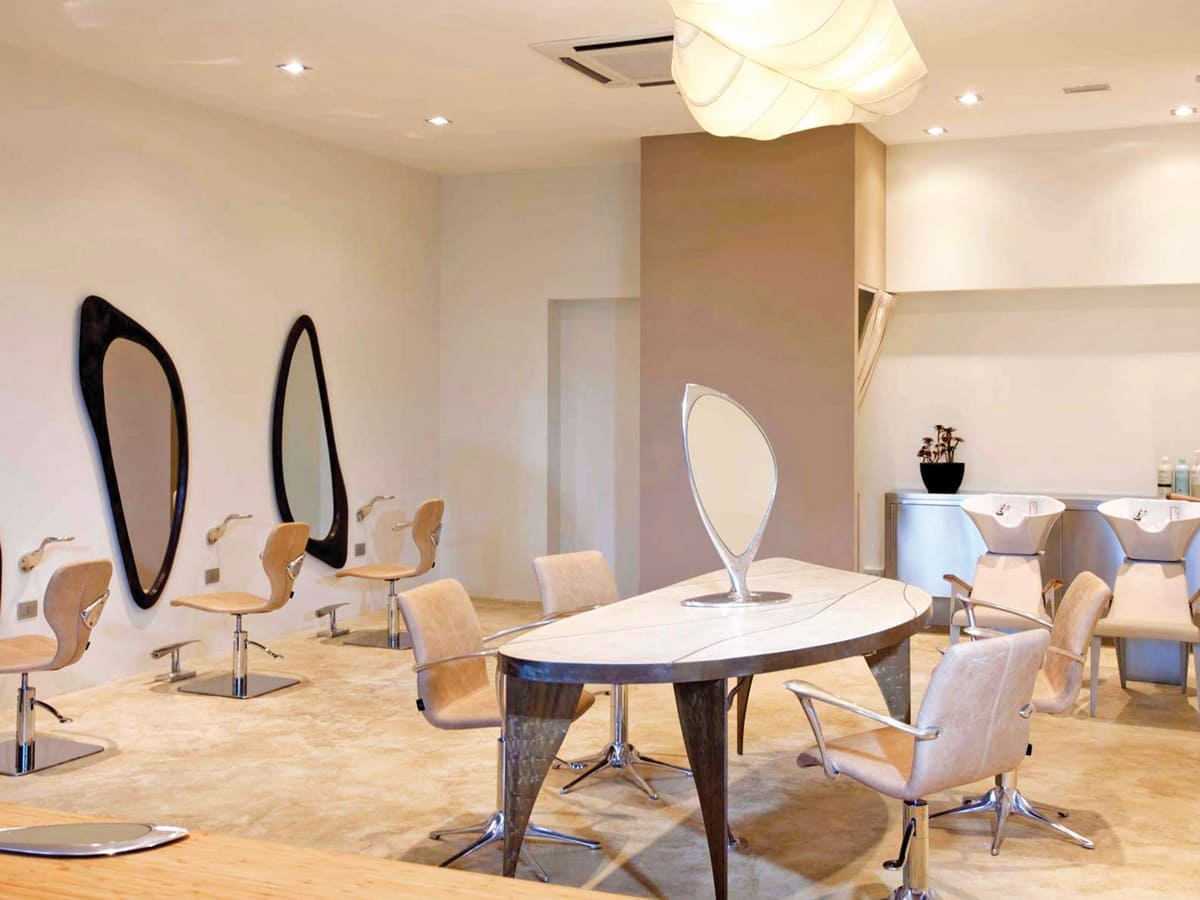
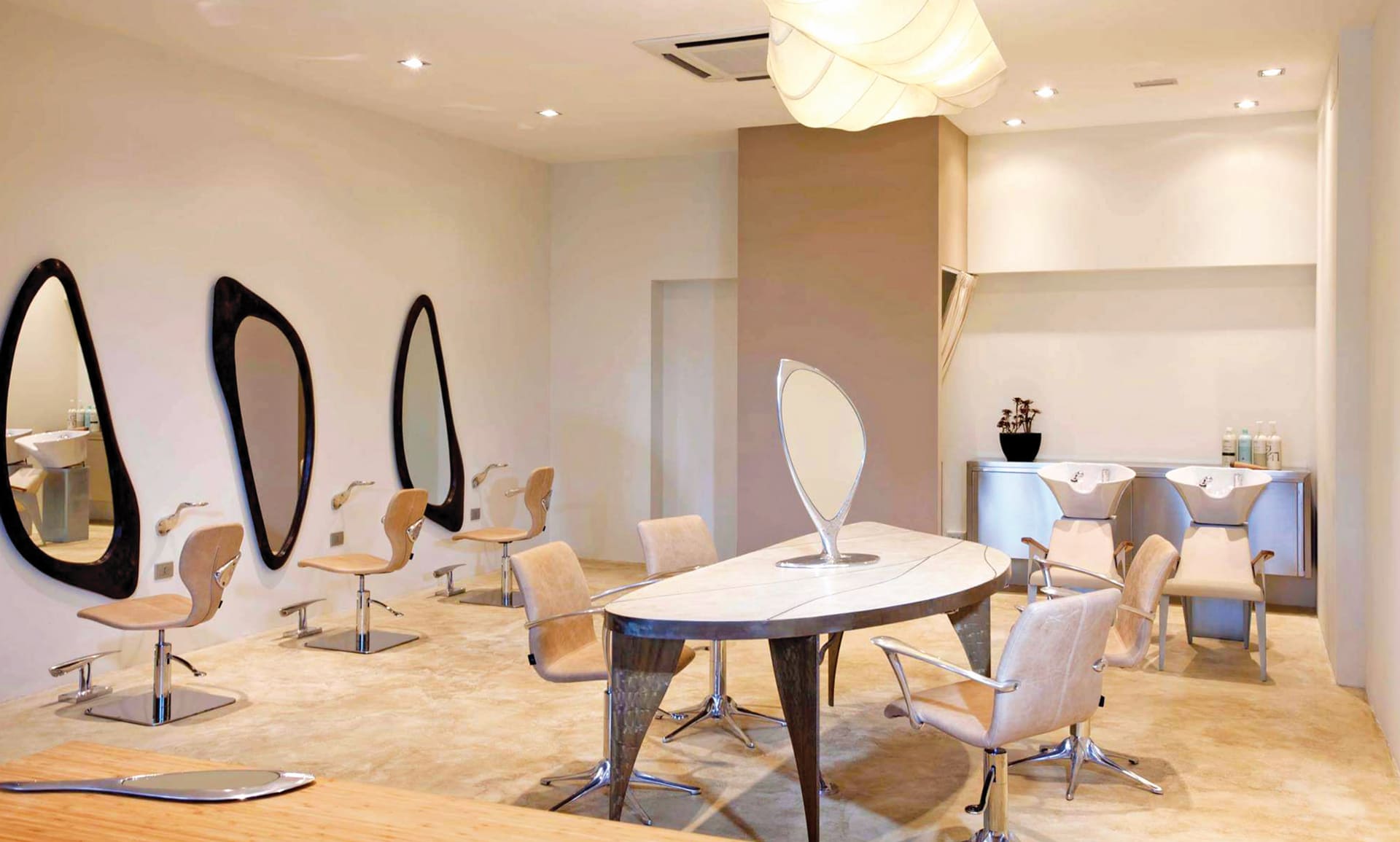
Design, craftsmanship, and elegant home furnishings meet at Vittorio Bagagli


Just steps from Piazza San Lorenzo in Lucina, interior décor shop Vittorio Bagagli stands as a refined institution of Italian design. Founded in 1855, this historic boutique has long been a destination for those who appreciate the art of living well: here, everyday objects become expressions of beauty, culture, and craftsmanship.

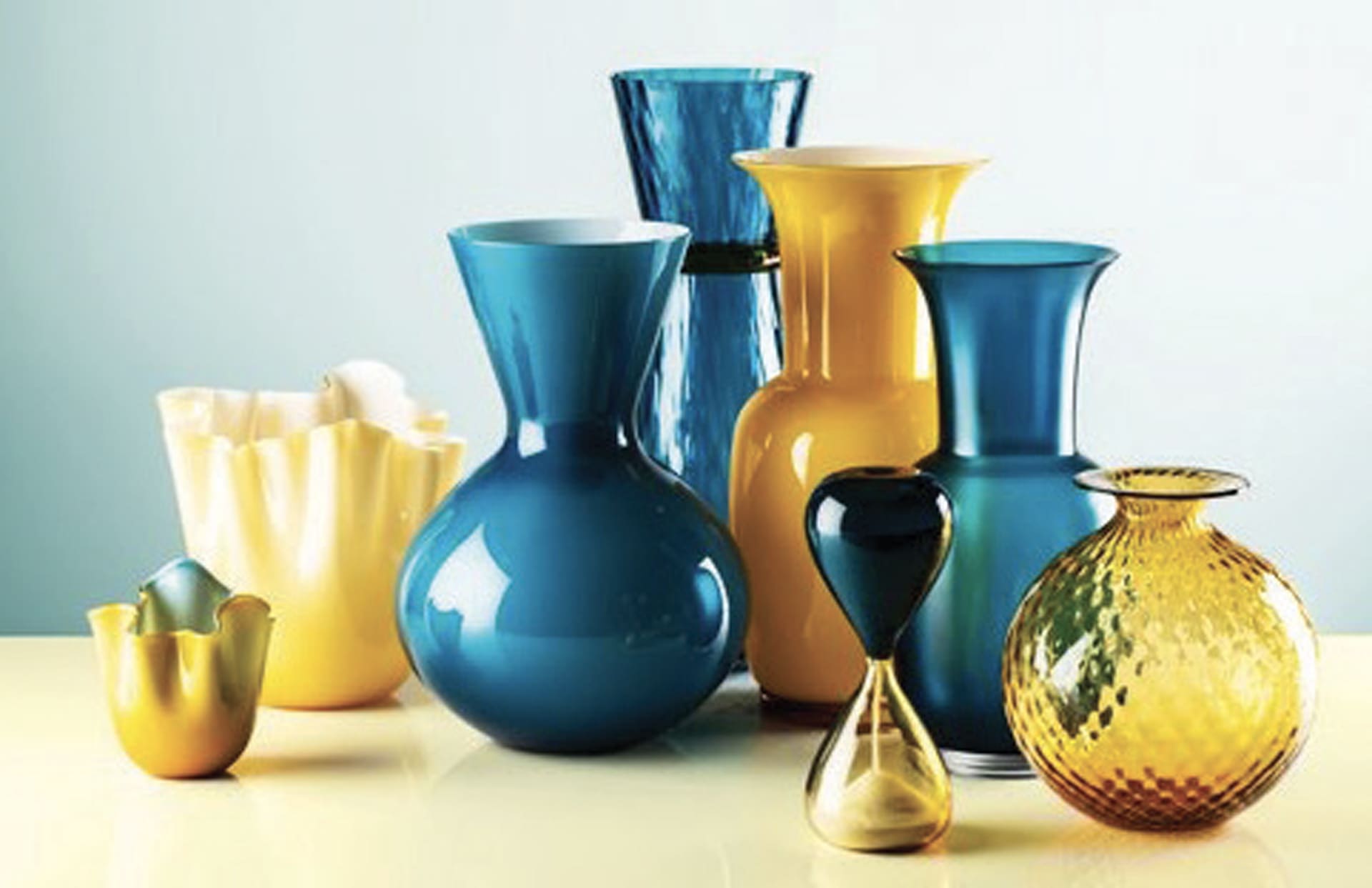
Shelves and displays reveal a dialogue between tradition and innovation: sculptural vases, luminous glassware, refined porcelain, and striking decorative pieces, each selected with a discerning eye. Materials shift from crystal to ceramic, from delicate glass to contemporary synthetics, while colors and forms play with light and space in unexpected ways.

Alongside celebrated brands, like Venini, Baccarat, Lalique, Christofle, Herend, Alessi, Rosenthal, Mario Luca Giusti, and Ginori 1735, the boutique champions the work of artisans and designers who gently push the boundaries of design, creating objects that are functional and poetic at the same time.
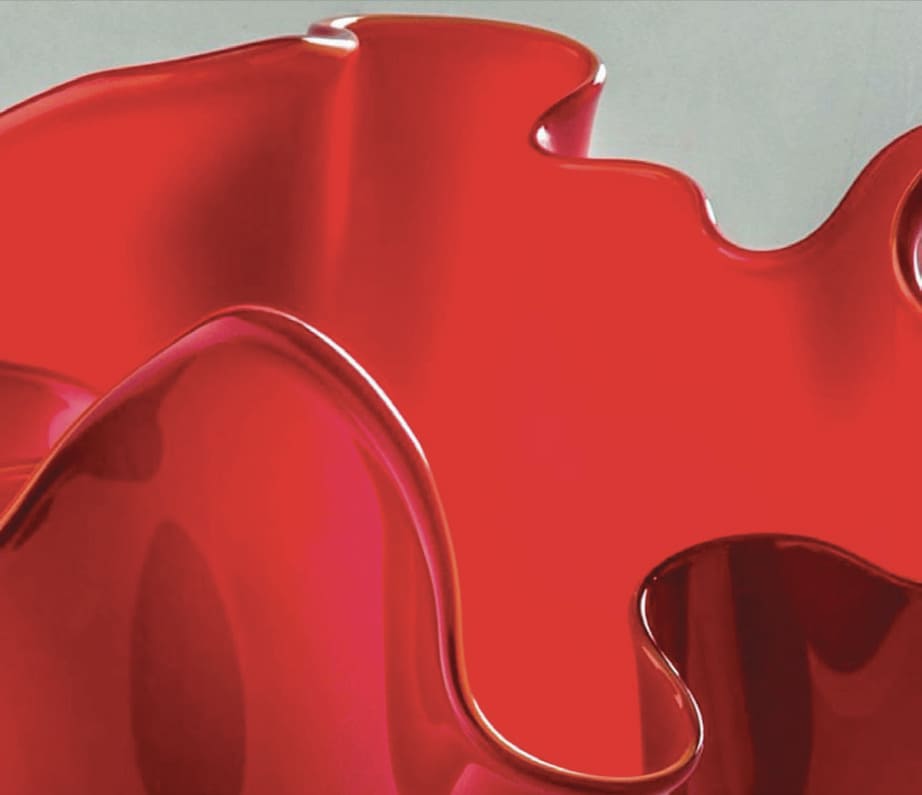
Murano glass, with its fluid shapes and vibrant tones, sits alongside the timeless elegance of fine porcelain. Whether it’s a minimalist centerpiece or an intricately decorated tea set, the objects on display invite visitors to explore, guided by a knowledgeable team. With over 170 years of history, Vittorio Bagagli celebrates the enduring allure of Italian design, where craftsmanship, creativity, and elegance meet in perfect harmony.

Via di Campo Marzio, 42. Tel 066871406. bagaglivittorio.com

Continue reading

A table above history

A table above history

Refined seasonal cuisine meets sweeping views over ancient Roman temples


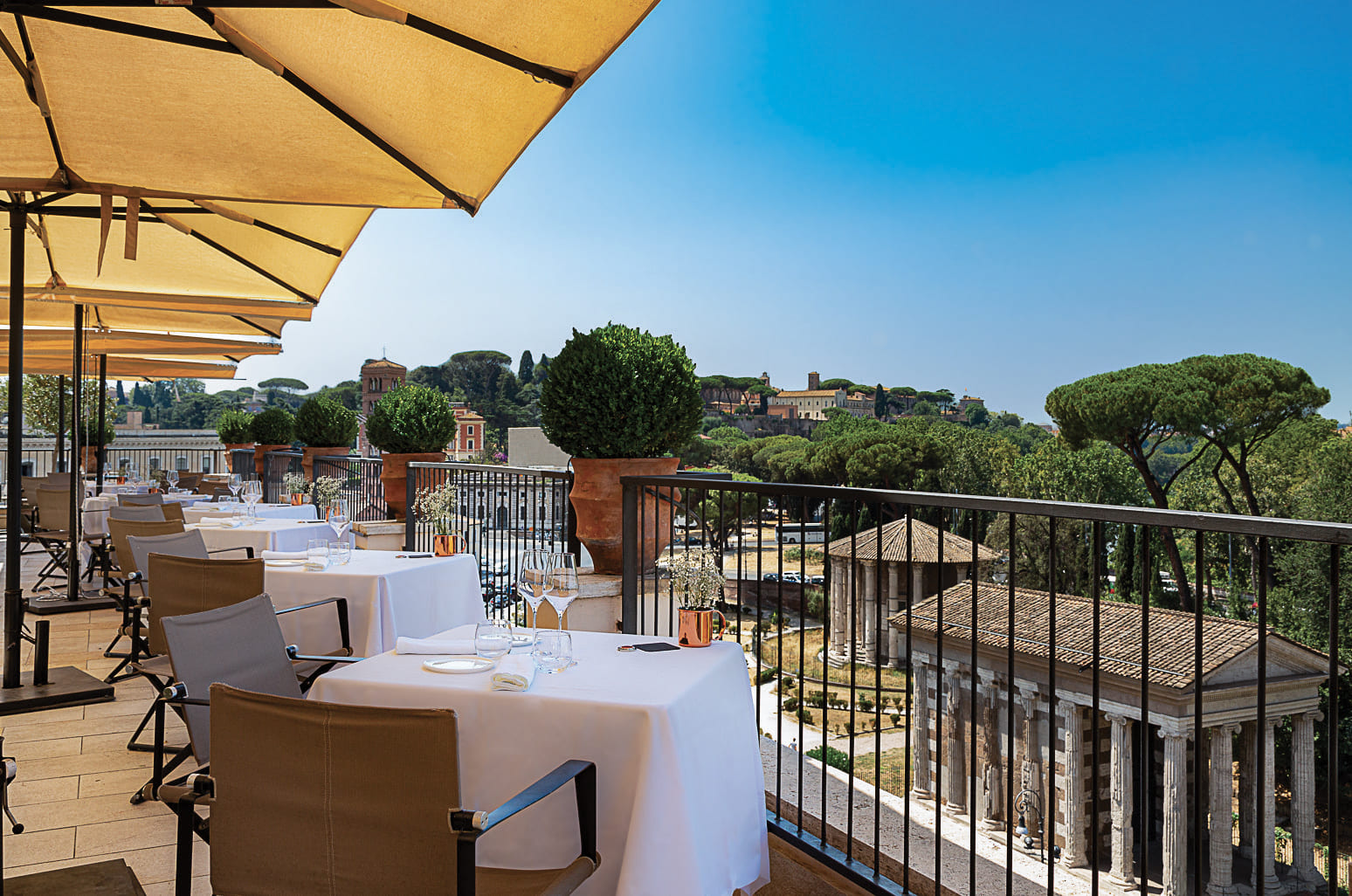
Perched atop the 47 Boutique Hotel, the 47 Circus Roof Garden offers sweeping views from its magnificent terrace over the ancient Foro Boario, framed by the Temples of Portunus and Hercules Victor. It’s a rarefied, time-suspended setting, far from the city’s bustle.

The cuisine is under the care of Chef Maurizio Lustrati, who leads the restaurant, awarded with the Due Forchette by the Gambero Rosso culinary guide. Lustrati crafts a refined, seasonal menu built on carefully sourced ingredients, treated with restraint to highlight clarity, balance, and lightness. Sustainability runs through the concept, featuring ingredients from local supply chains and 47 Hortus, the hotel’s organic estate in the Parco Regionale Marturanum, which produces the house extra-virgin olive oil served exclusively here. The summer menu celebrates Mediterranean flavors with a fresh and elegant selection of dishes. Highlights among the starters include seabass with watermelon and basil powder. First courses showcase risotto with zucchini blossoms and anchovies from the Tyrrhenian Sea, enriched by Armagnac-infused bottarga from Lazio.

The main courses offer bold, contemporary creations such as teriyaki eggplant with miso and hazelnuts. To finish, the chocolate creamy with raspberry and extra-virgin olive oil stands out as a decadent dessert.

Weekday lunches lean lighter, while aperitivo brings seasonal bites paired with cocktails. Two tasting menus (4 or 6 courses) are complemented by a cellar of over 200 Italian labels, international sparkling wines, and an extensive gin selection. The courteous and professional service completes a memorable experience, satisfying the spirit, sight, and palate.

Via Luigi Petroselli, 47. Tel 3480162378. 47circusroofgarden.com

Continue reading

Opera at the Circus Maximus

Opera at the Circus Maximus

The historic chariot-racing arena hosts a season of music against the backdrop of imperial Rome – By Claudio Lozzi


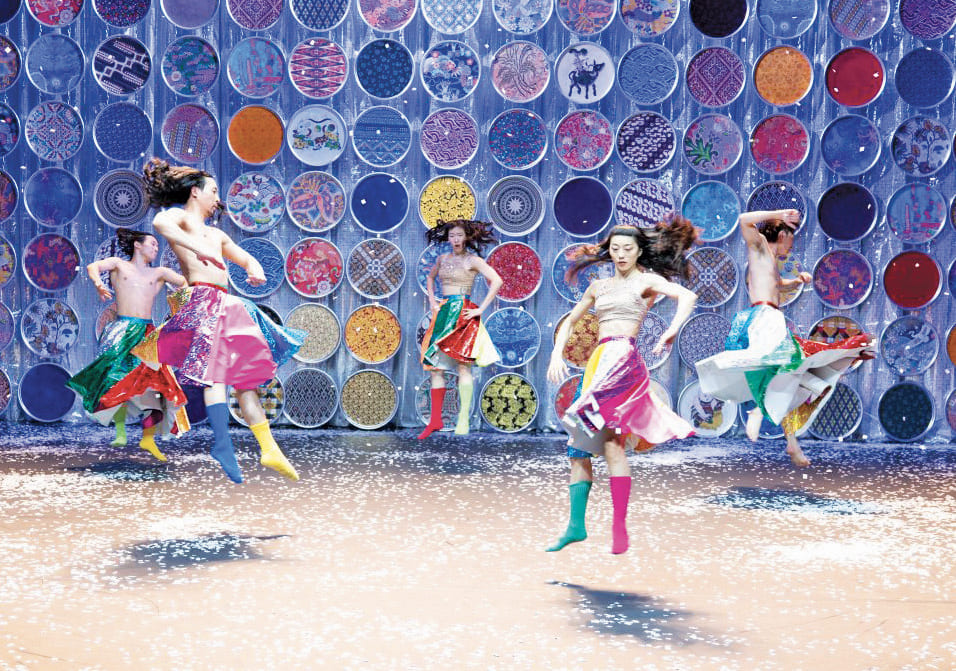
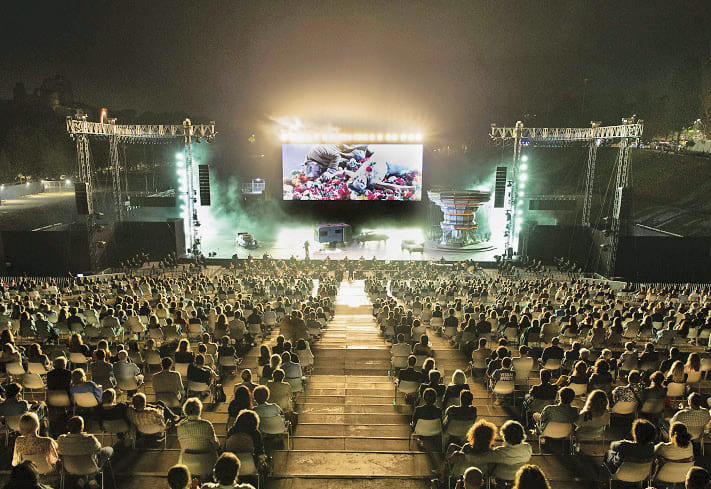
This summer, Rome’s Teatro dell’Opera brings opera, ballet, and concerts to the Circus Maximus for an open air festival framed by the evocative ruins of the ancient arena.

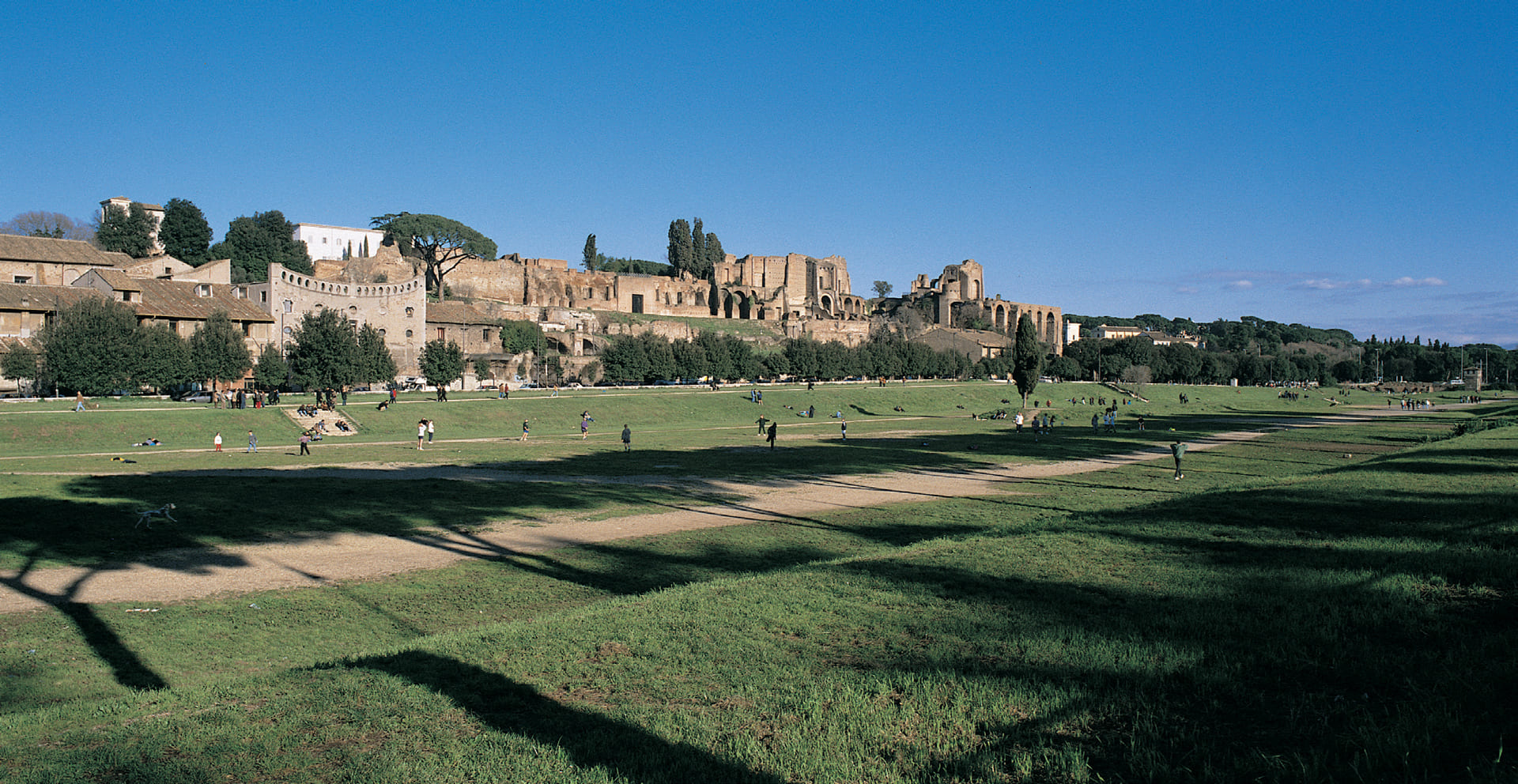
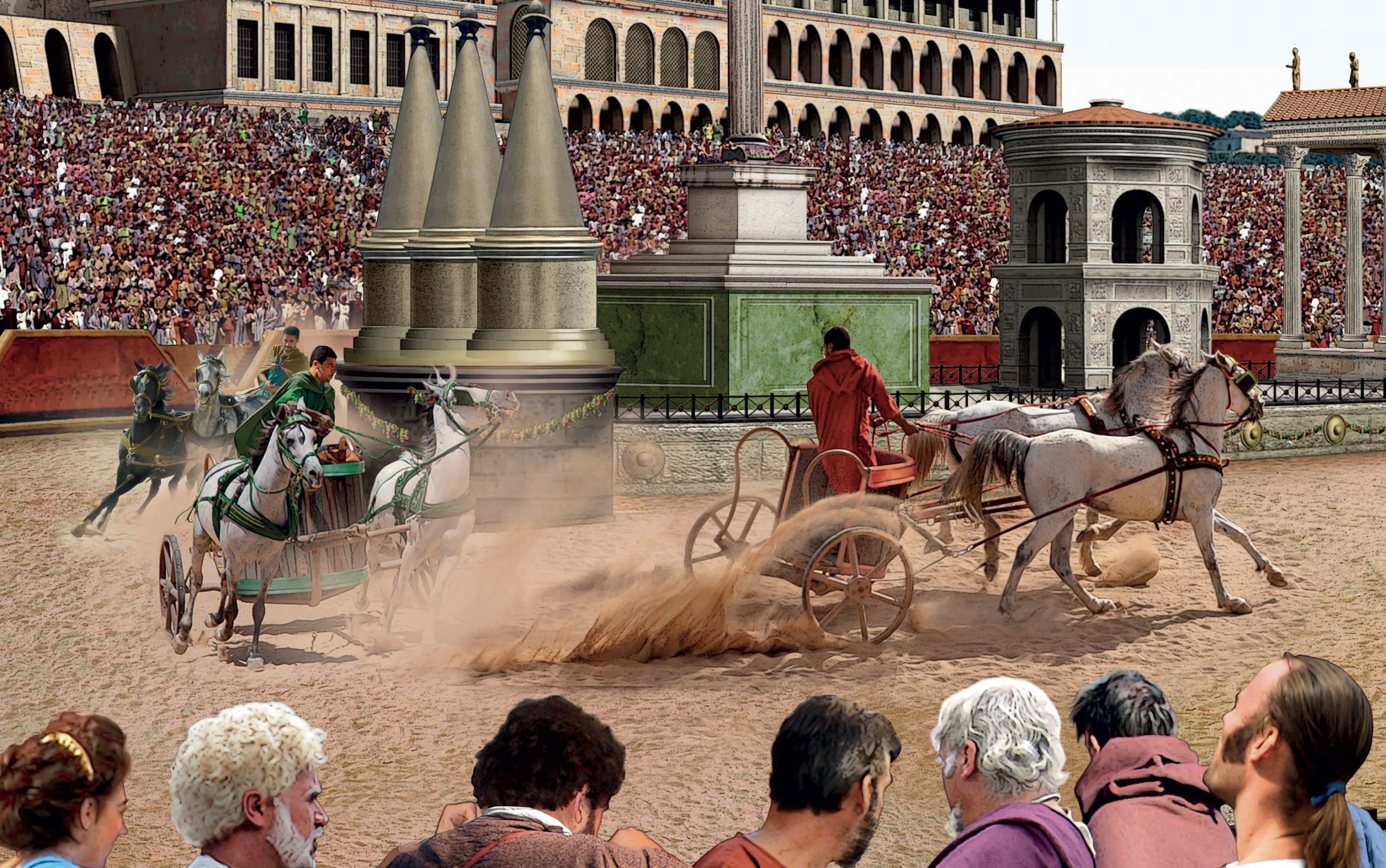
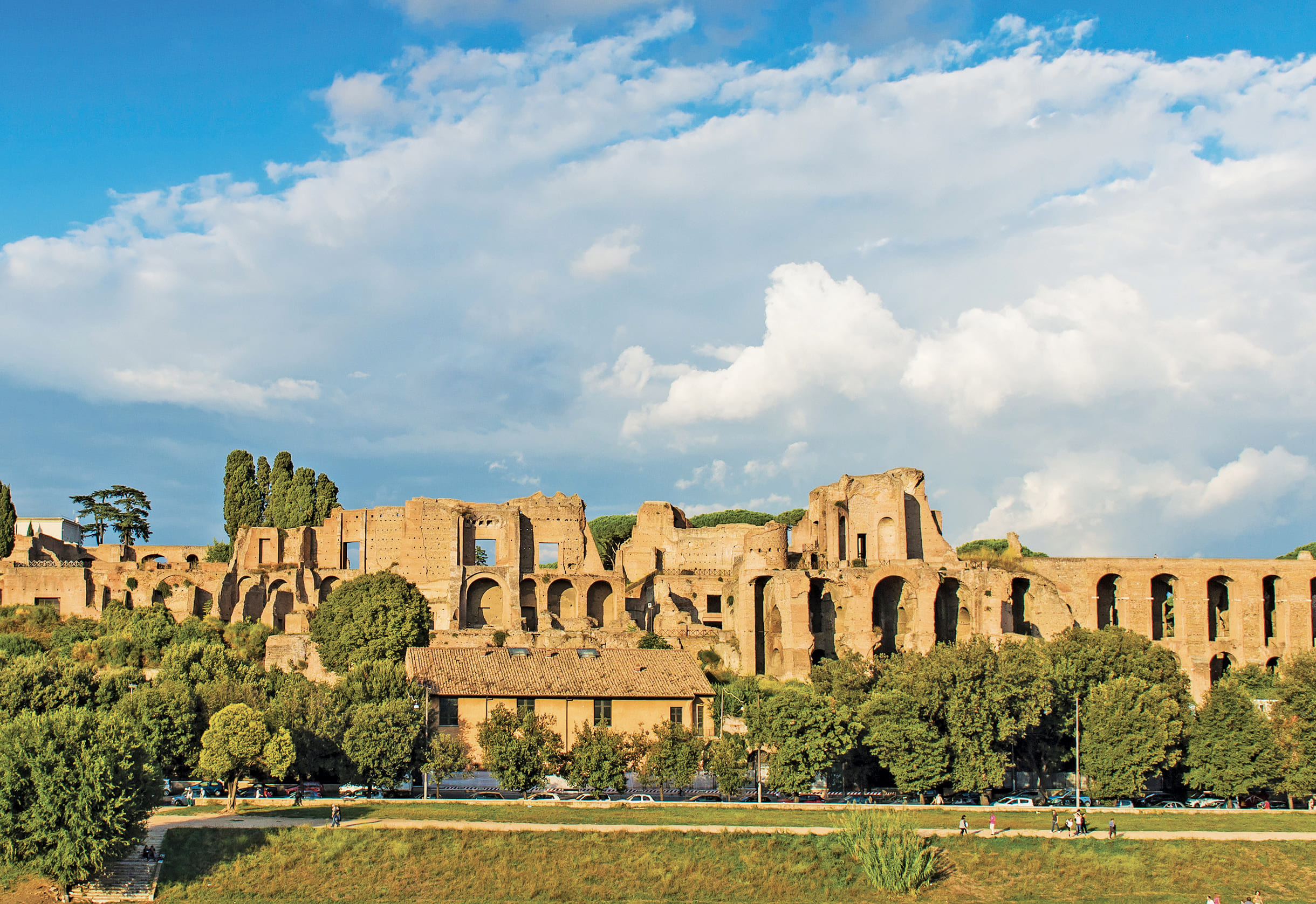
Located at the foot of the Palatine Hill, the Circus Maximus instantly conjures images of the chariot races seen in Ben-Hur (which was actually filmed at Cinecittà). In the time of Constantine, the Circus measured 600 meters in length and 200 meters in width, and could accommodate up to 300,000 spectators during competitions such as the Ludi Romani, attended by the highest authorities of the State.

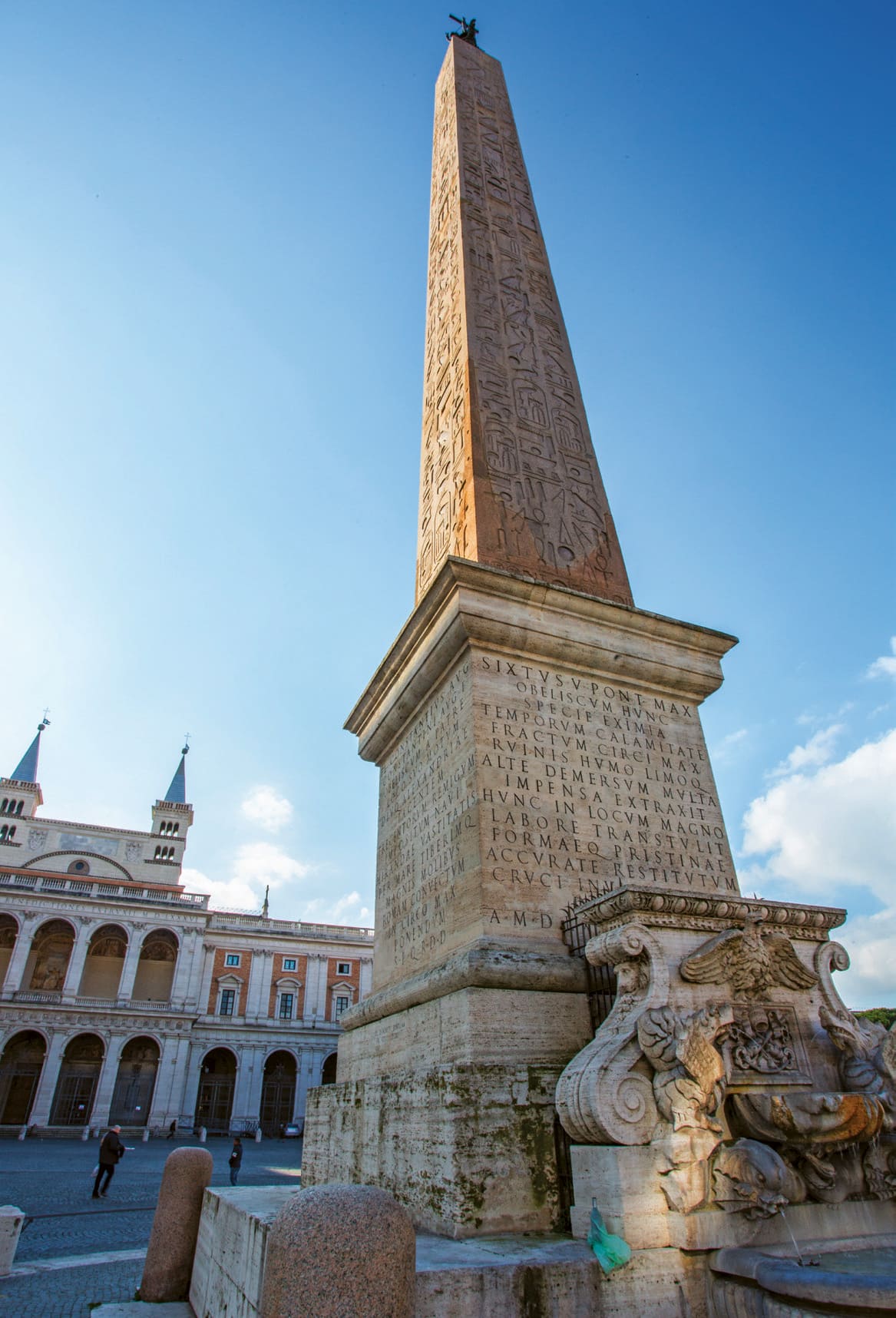
According to legend, it was here that the sacred games in honor of the god Consus (Consalia) took place, during which the Roman men’s search for wives culminated in the abduction of the Sabine women. Originally constructed in wood, the Circus was later upgraded: under Agrippa, the chariot starting gates were rebuilt in brick, and the laps were marked by seven stone eggs, later replaced by bronze dolphins. Augustus added a central spine (spina), where he placed an obelisk of Ramses II brought from Heliopolis, now standing in Piazza del Popolo. Continuing this trend, Constantius II later installed a second obelisk from Thebes (of Thutmose III), which now stands in Piazza San Giovanni. Damaged several times by fire (sometimes deliberately, as during Nero’s reign) the Circus was eventually rebuilt in marble. However, due to centuries of material stripping, it has lost most of its original features. Today, it is recognizable mainly as a vast green depression in the urban landscape, shaded by umbrella pines and bordered by the ruins of imperial palaces.

From June 29 to July 31, the arena turns into a grand stage, hosting music, visually striking performances, and cinema. At the heart of the program is Aida by Giuseppe Verdi, alongside a rich lineup ranging from dance to live music: from the Roberto Bolle and Friends gala to Romeo and Juliet, Carmina Burana, and a video installation by Anagoor. Also featured is Gladiator by Ridley Scott, presented in a “film in concert” format, with the soundtrack performed live by the Orchestra and Chorus of the Rome Opera House.

© Yasuko Kageyama-Teatro dell’Opera di Roma

Continue reading

Rome’s quiet summer

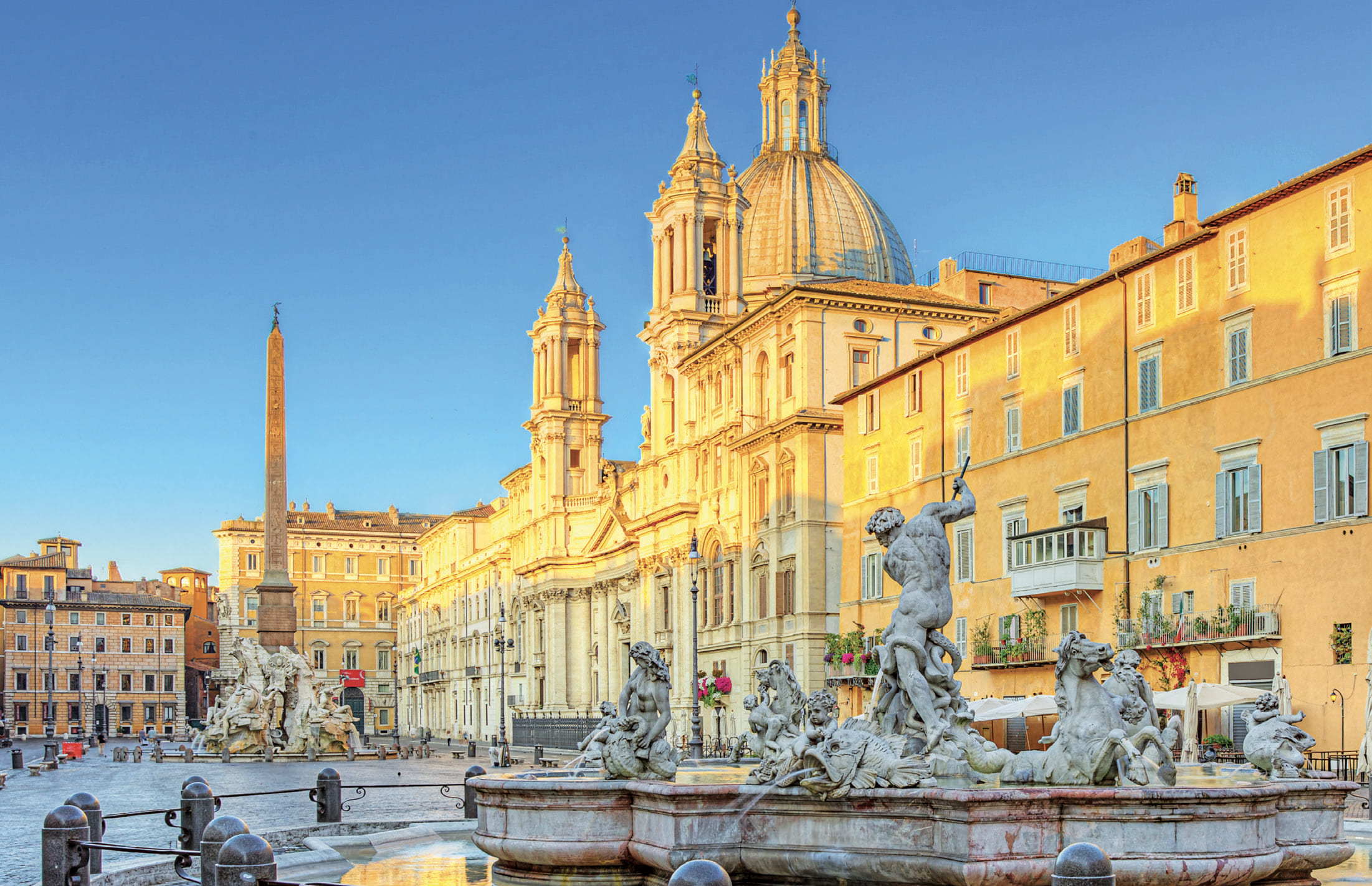
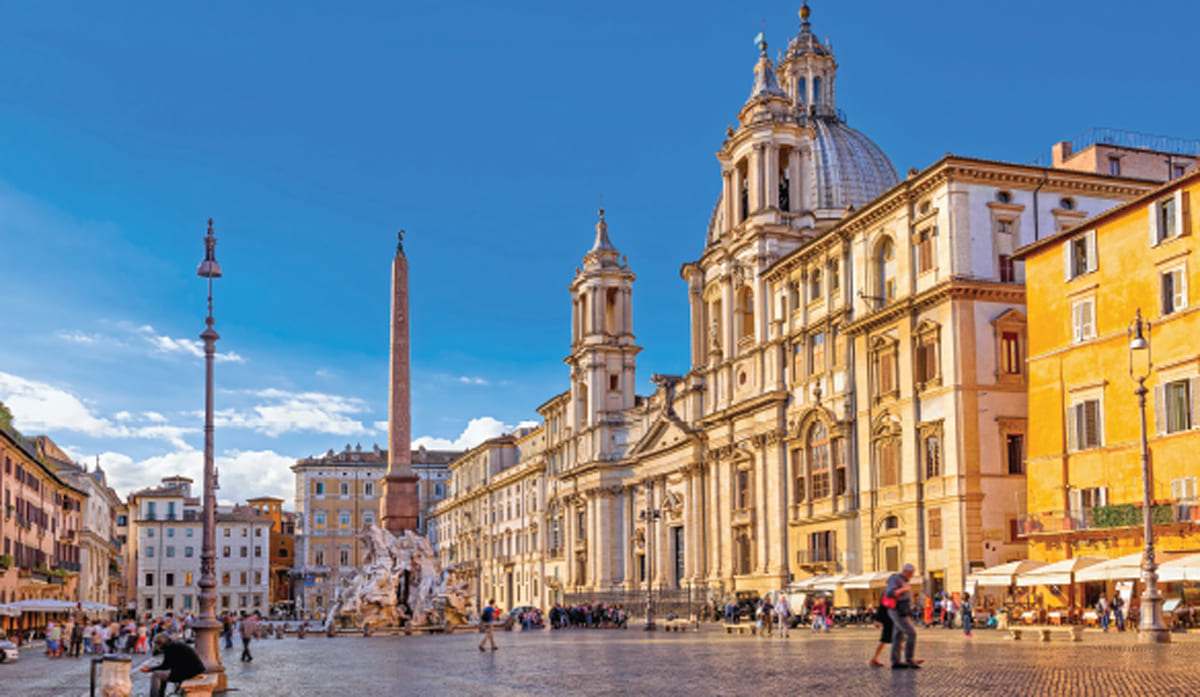
Urban desert at Piazza Navona

Urban desert at Piazza Navona

Rome’s quiet summer

From miraculous flower showers to starlit evenings along the Tiber, summer unveils a gentler, more authentic Rome – By Sol Stein


After months of crowds, clamor, and ceaseless motion, the Eternal City softens under the weight of summer heat. The streets grow calmer, the air more languid, and the Roman sun casts a slower, golden rhythm over daily life. For travelers willing to embrace the warmth, August in particular reveals a rare and intimate side of the capital, one that locals know well and visitors seldom see.

August is a month of miracles, both ancient and modern. At Santa Maria Maggiore, jasmine petals fall from the ceiling on August 5, recreating the miraculous summer snowfall that marked the church’s founding. Days later, Romans look skyward for the Perseid shower of San Lorenzo, gathering on terraces and riverbanks to watch shooting stars and make quiet wishes beneath the night sky. But perhaps the greatest marvel of all is the annual exodus, when Romans leave the city to go relax on the coast. Traffic thins, crowds disperse, and the city briefly reclaims its quiet and contemplative self.

Without the usual roar of engines and voices, Rome’s neighborhoods invite wandering in a way that feels revelatory. The winding streets of Trastevere, typically choked with traffic and buzzing with activity, become open-air corridors for exploration. In the historic center, narrow alleyways and arched passageways finally fulfill their purpose, welcoming people rather than cars. This is the perfect season for the passeggiata, Italy’s beloved evening stroll, usually nearly impossible amid the congestion of the rest of the year.

The lack of traffic and noise changes everything. Archaeological sites and historic piazzas, often overwhelmed by visitors, feel newly accessible and almost personal. Museums, usually packed and hurried, become calm sanctuaries, places where art can be absorbed slowly, without distraction or pressure.

Of course, the heat itself becomes part of the experience. In summer, mornings begin early, with soft light spilling across domes and rooftops, while afternoons encourage retreat into cool interiors, shaded courtyards, or long, leisurely lunches. Fountains offer brief relief, and gelato becomes less of a treat and more of a daily ritual. Despite appearances, however, Rome does not completely shut down in July and August. While many residents escape to the coast or the mountains, many restaurants, cafés, and shops remain open, often with a more relaxed and welcoming atmosphere. The city’s cultural heart continues to beat through Estate Romana, a citywide summer festival that fills evenings with music, openair cinema, theater, and art exhibitions. Along the Tiber, pop-up bars and riverside events create a festive, almost dreamlike ambiance as the heat of the day fades.

  • Flickr/©Lucian Nutà
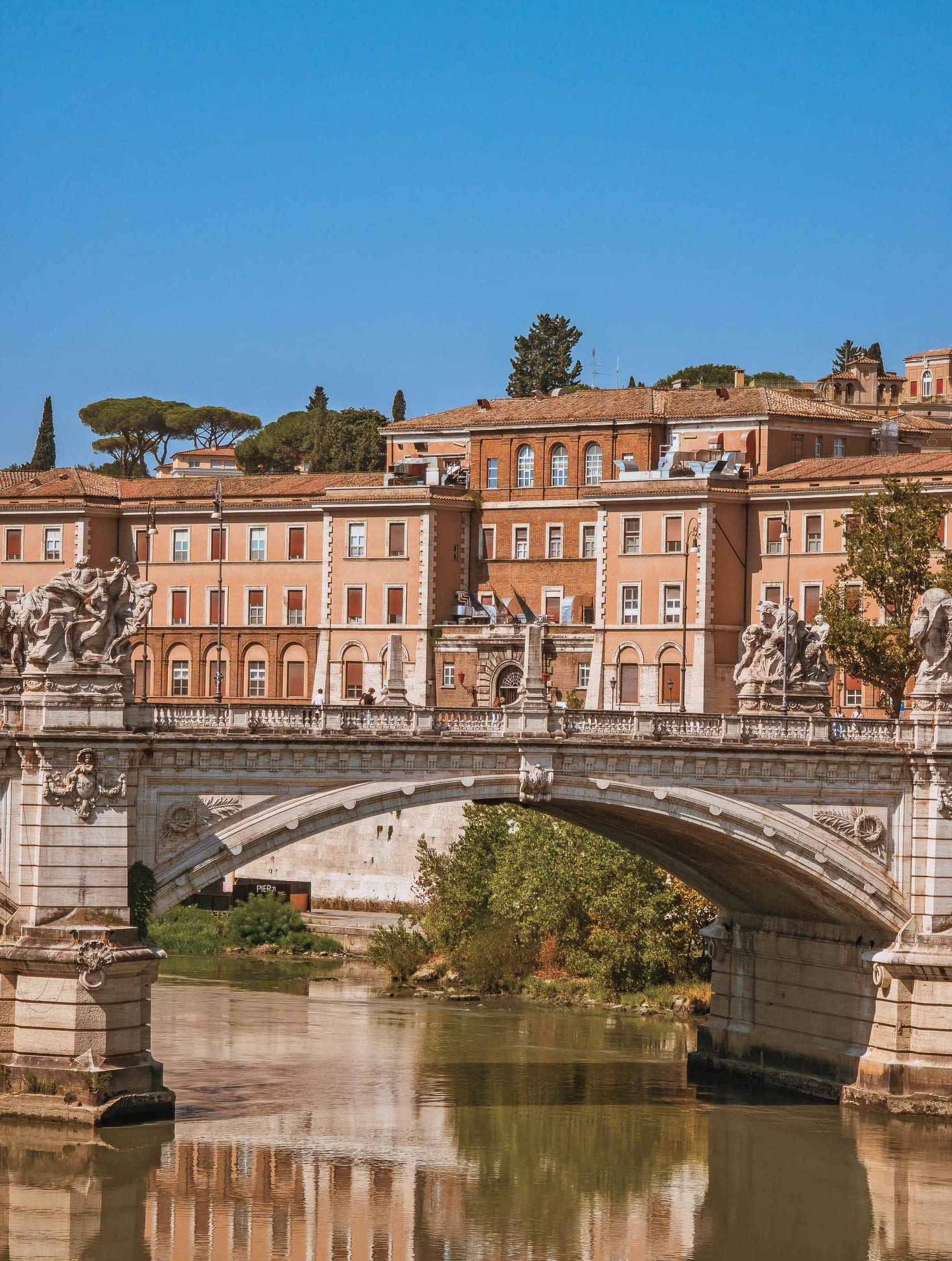
    The lazy flow of the Tiber in summer

    Flickr/©Lucian Nutà

  • shutterstock/Sergieiev
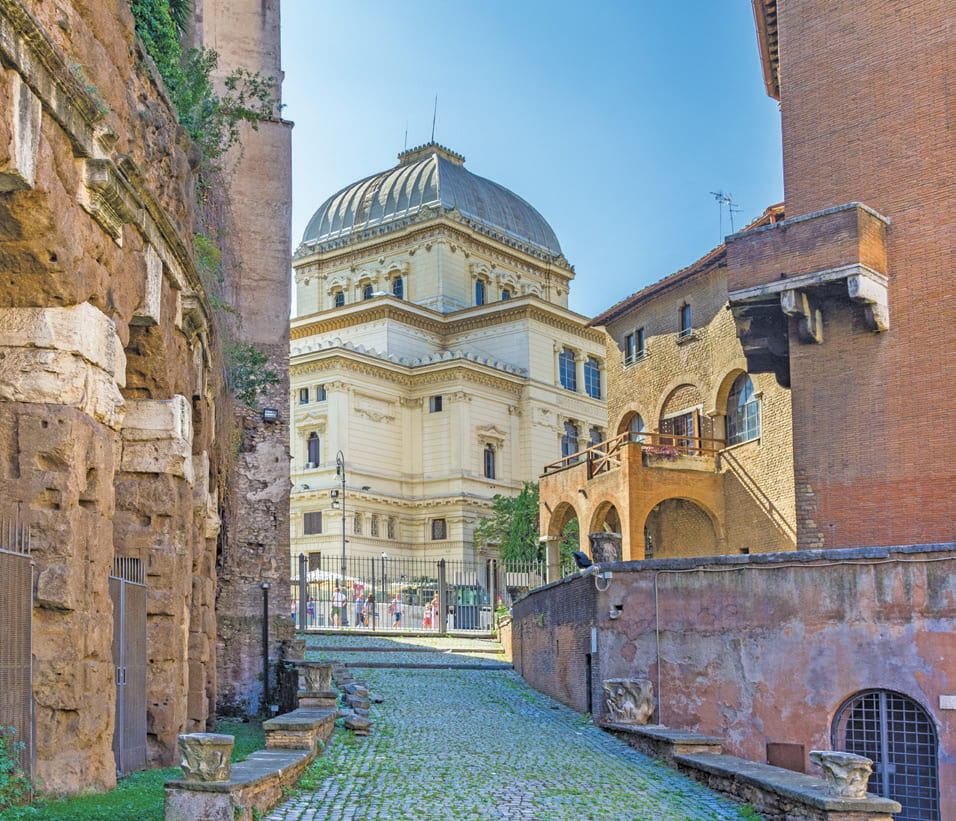
    The Theatre of Marcellus and the Synagogue

    shutterstock/Sergieiev

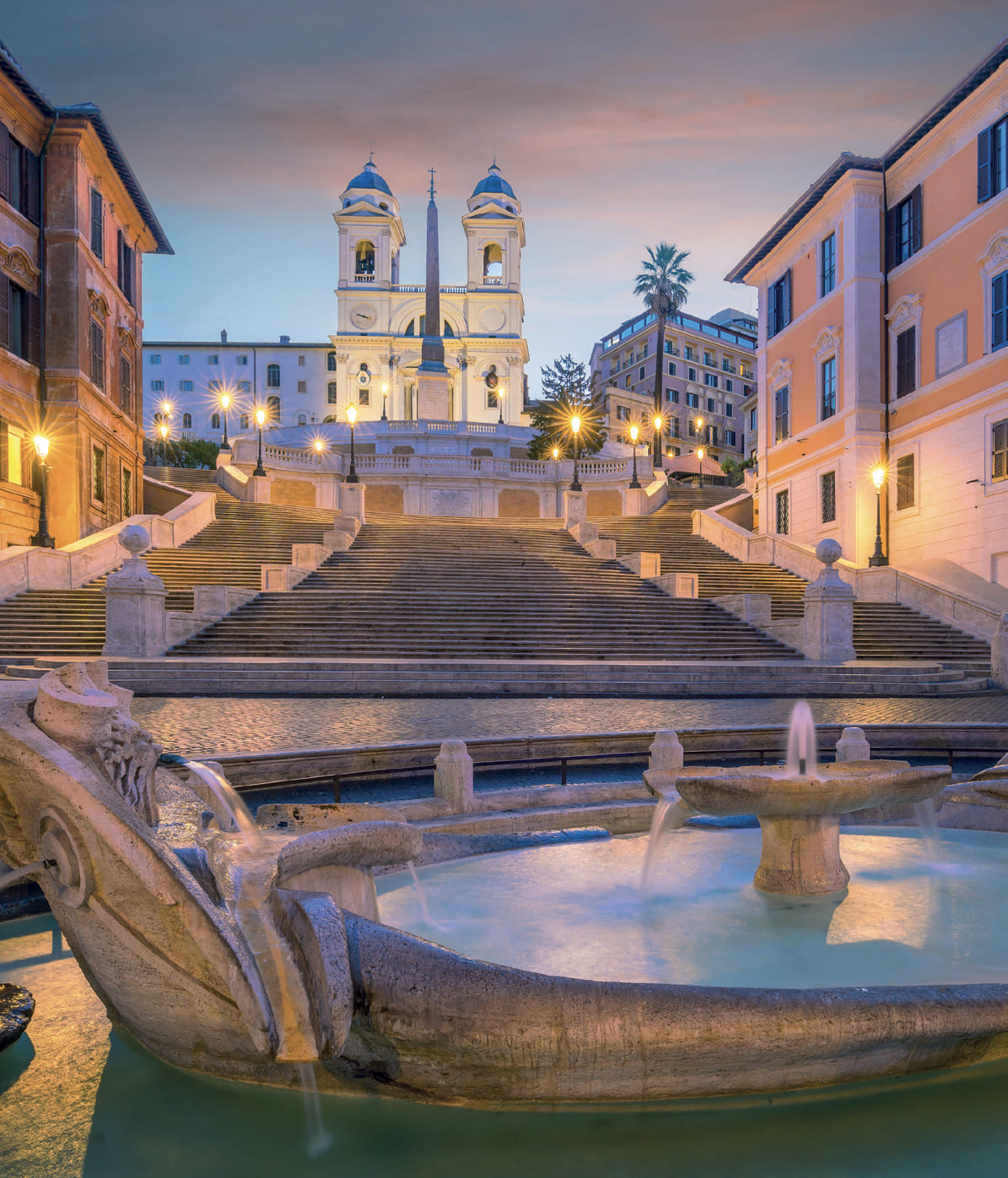
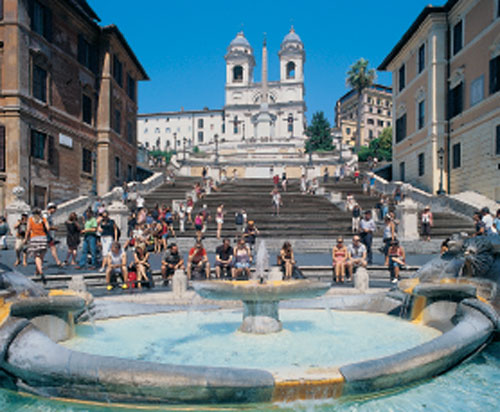
  • Trinità dei Monti, empty at night

Continue reading

What’s on this Month – July 2026

What’s on this month
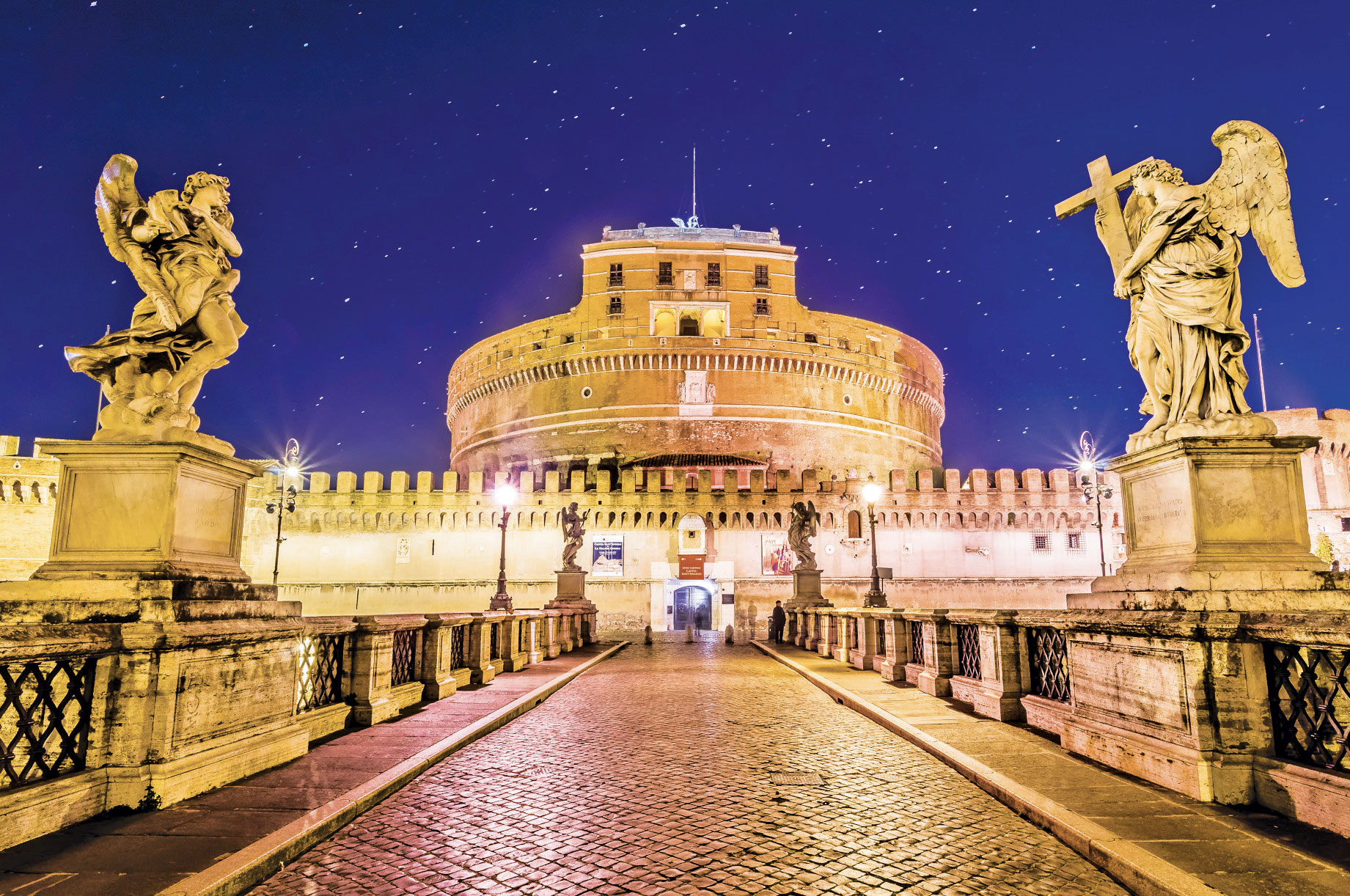
“The Angel and the Moon” at Castel Sant’Angelo, “Metamorphosis: Ovid and the Arts” at Borghese Gallery, “Magic Lanterns” at Museo Carlo Bilotti, “Angels: Messengers, Guardians and Wanderers” at the Capitoline Museums, “The Shape of Silence” at Teldi Art Gallery, “Troy and Rome” at the Colosseum Archaelogical Park, and more.

Metamorphosis: Ovid and the Arts

July–August

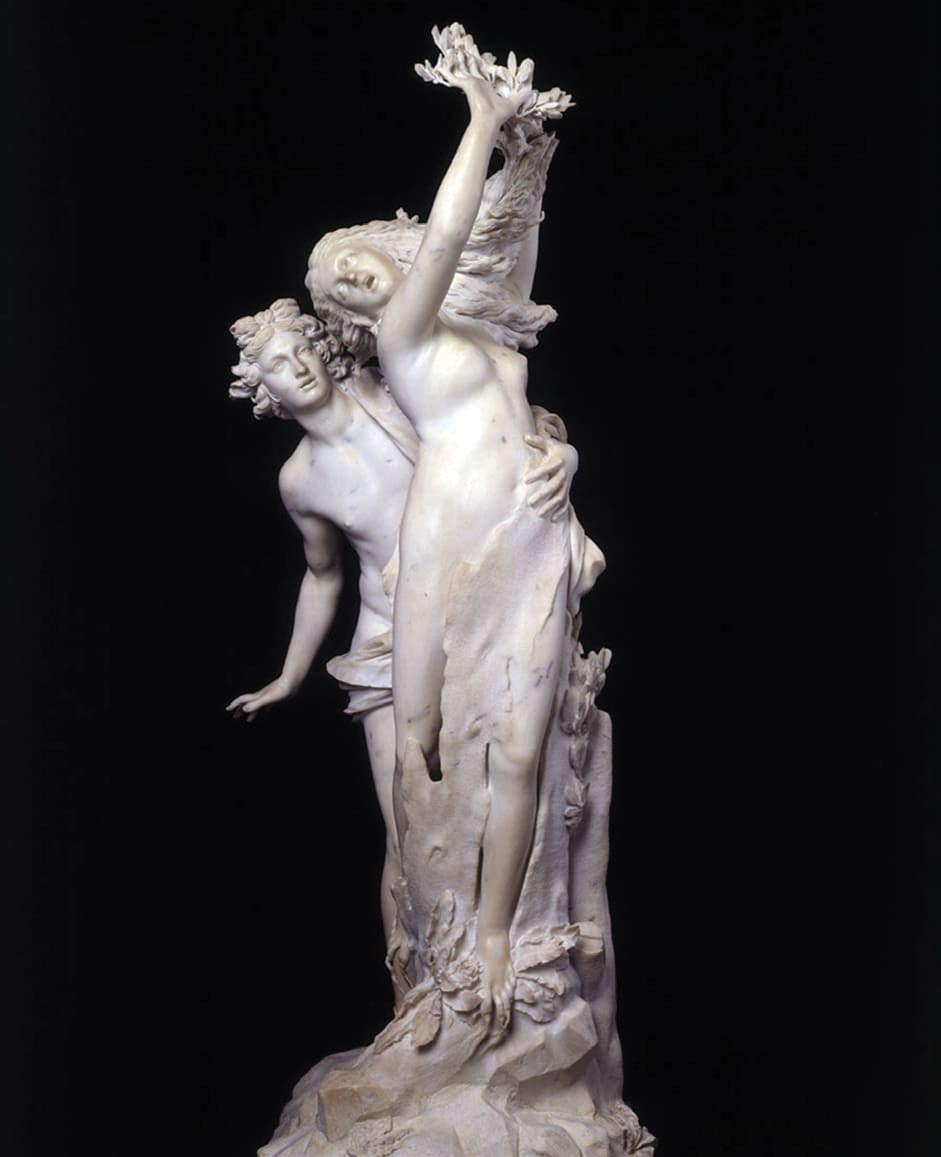
Opening at the Borghese Gallery Metamorphosis: Ovid and the Arts explores transformation as a universal idea—shaping nature, humanity, and the cosmos. Inspired by the poetry of Ovid, the exhibition presents a world in constant change, where the boundaries between human, natural, and divine are fluid and ever-shifting. The show brings together masterpieces from the Renaissance and Baroque periods through to more modern artists, including Michelangelo, Titian, Rubens, and later figures like Gérôme, Rodin, and Brâncuși. At its heart are iconic sculptures by Gian Lorenzo Bernini, including Apollo and Daphne (pictured) and Pluto and Proserpina, alongside other mythological treasures from the museum’s collection. Together, they highlight the enduring power of myth and its central role in shaping European imagination. Until Sept 20. galleriaborghese.cultura.gov.it

The Angel and the Moon

July-August

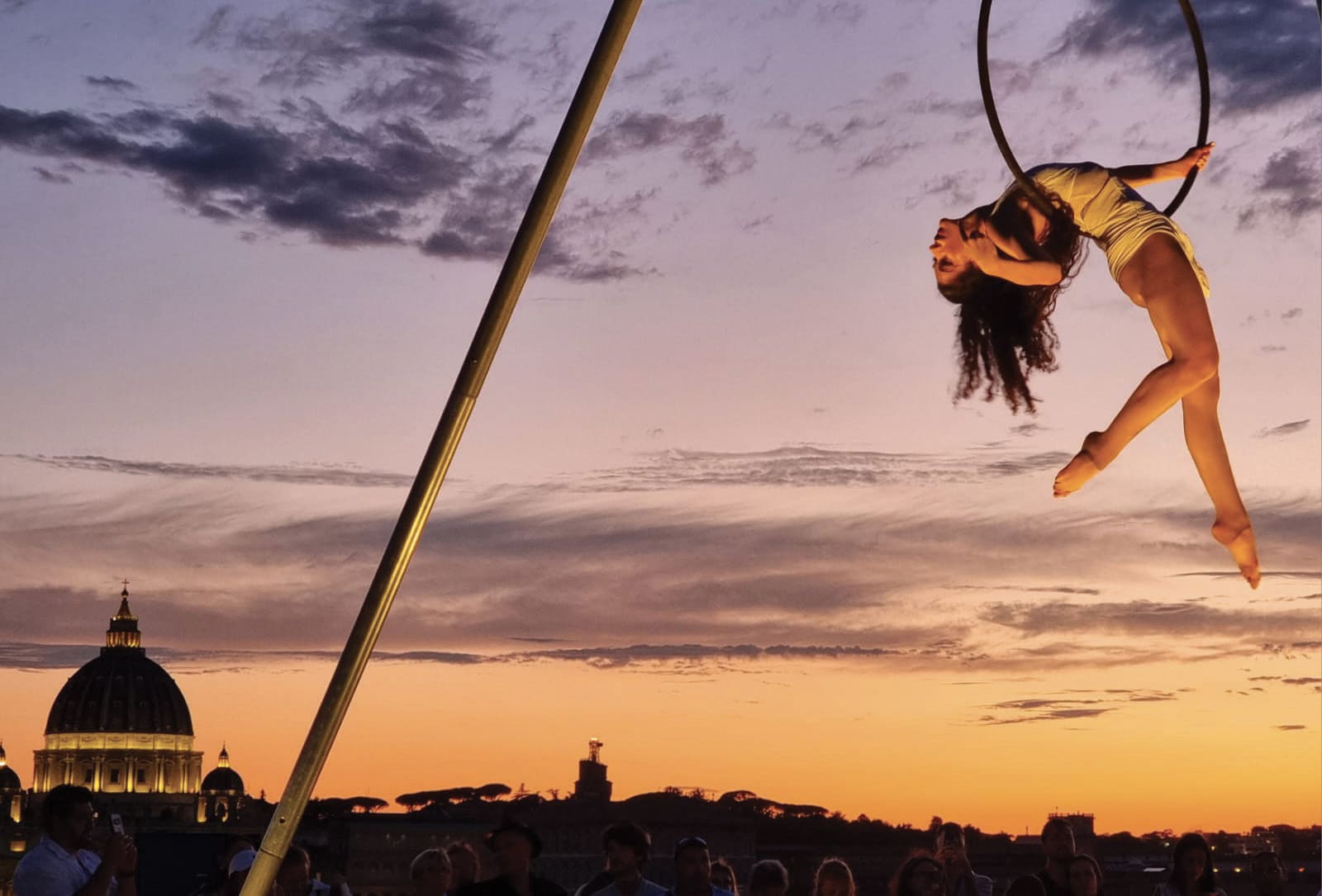
Once again, the festival L’Angelo e la Luna (The Angel and the Moon) returns to Rome with a rich programme of events revolving around contemporary circus, dance, music and theatre. The event brings together contemporary artistic languages and cultural heritage in the historic spaces of Castel Sant’Angelo. From July 2 to October 4, the festival will present 15 productions across 41 performances, featuring both Italian and international artists. Events will unfold throughout the castle’s most striking venues, including the Courtyard of Alexander VI, the Paolina Hall, the Bastion of San Matteo, the Hall of Apollo, the Courtyard of the Angel, and the panoramic Terrace. Through performances, concerts, site-specific events, dance and contemporary circus, the festival will gradually animate the entire visitor route, enhancing the castle’s spaces and strengthening their connection with the city. The result is an engaging dialogue between heritage and contemporary creativity, designed to attract an ever broader and more diverse audience. castelsantangelo.beniculturali.it
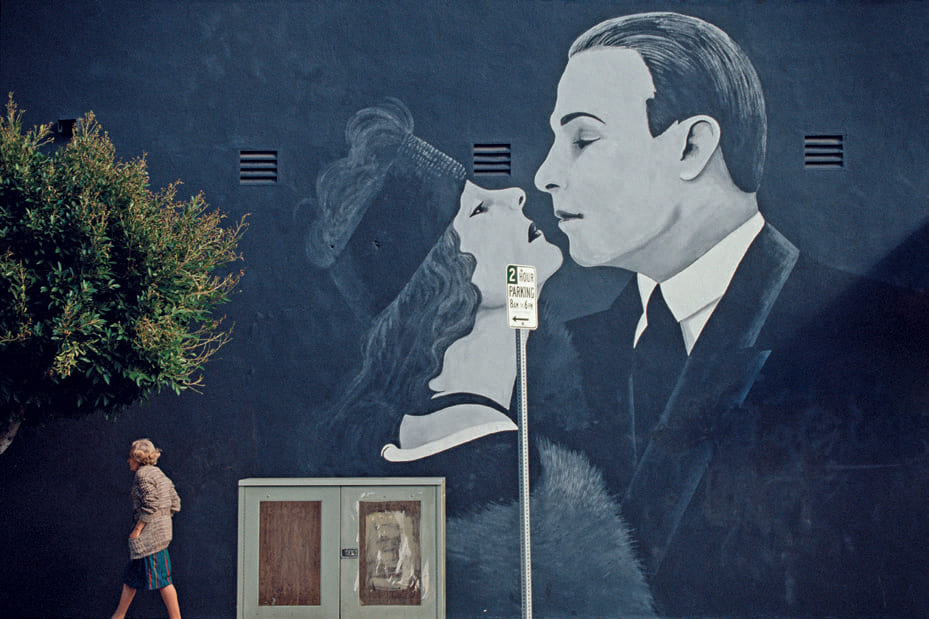
Los Angeles, 1990 © Franco Fontana

Los Angeles, 1990 © Franco Fontana

Magic Lanterns: Photographs from the Valerio De Paolis’ Collection

July–August

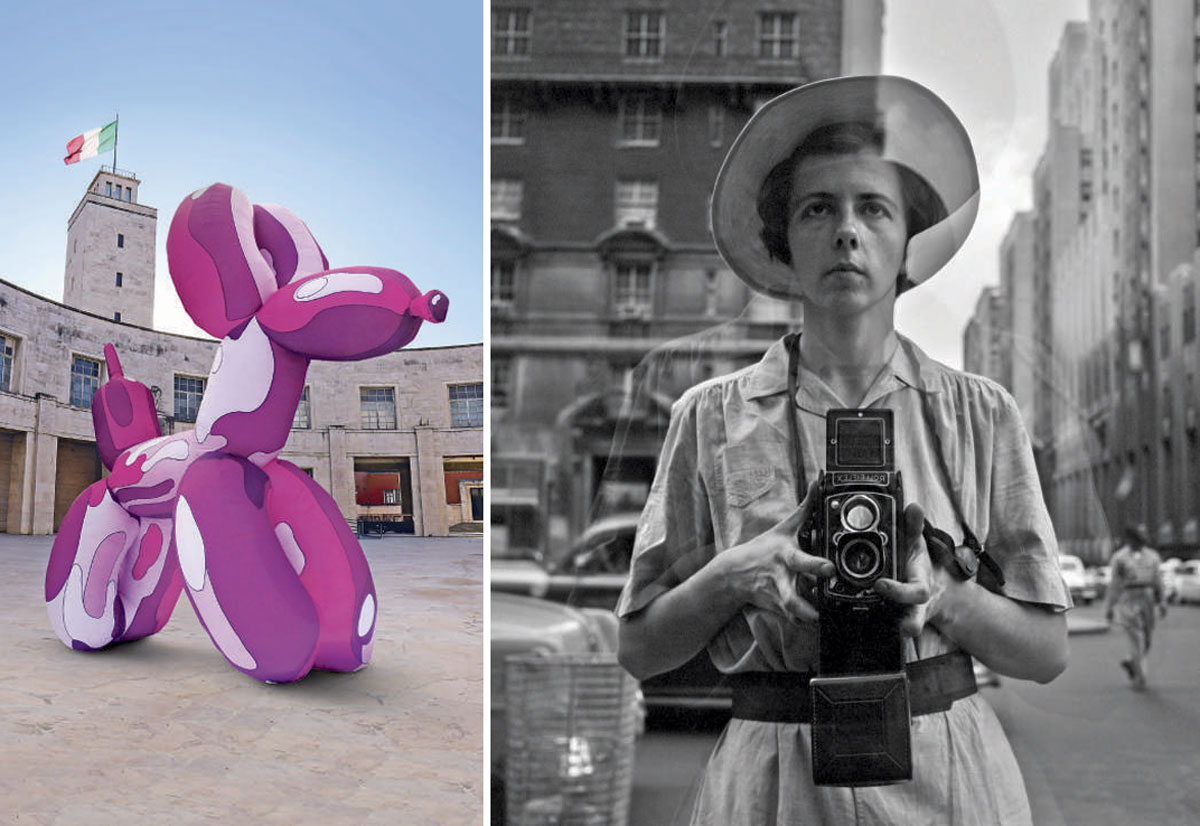
Magic Lanterns: Photographs from the Valerio De Paolis’ Collection, on view through September 6 at the Museo Carlo Bilotti – Aranciera di Villa Borghese, invites visitors on a series of visual journeys through the De Paolis Collection. Presented to the public for the first time, the collection features more than one hundred photographs by some of the leading figures of the art scene, including Nobuyoshi Araki, Gianni Berengo Gardin, Henri Cartier- Bresson, Elisabetta Catalano, Tracey Emin, Luigi Ghirri, Dennis Hopper, Mimmo Jodice, Man Ray, Herb Ritts, Mario Schifano, Franco Fontana, Cindy Sherman, Edward Weston, and Francesca Woodman. Like the shifting projections of a magic lantern, the photographs come together in a unique and emotionally charged spectacle. museocarlobilotti.it
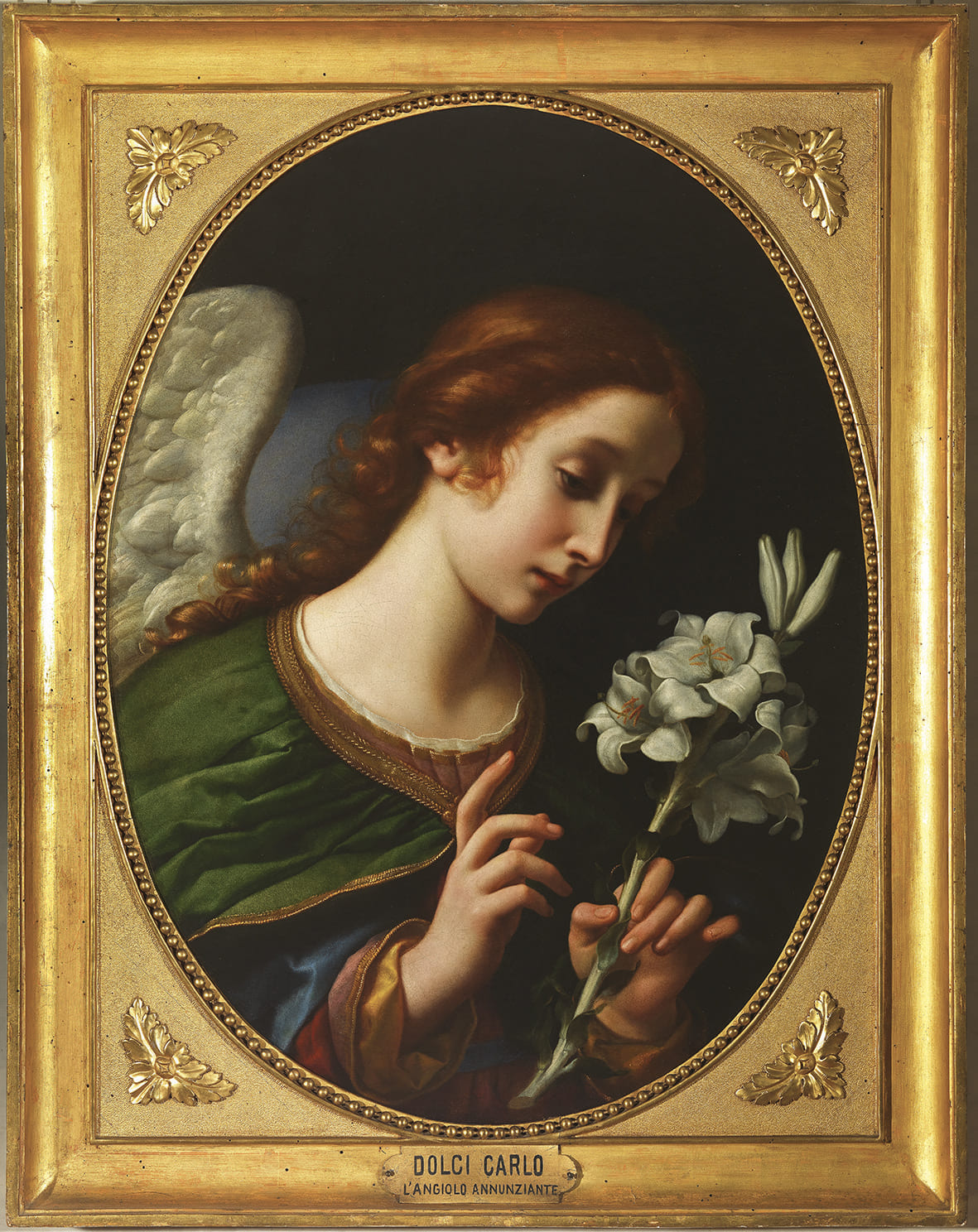
Carlo Dolci, Angelo Annunziante, olio su tela, inv San Marco e Cenacoli n 61, Galleria degli Uffizi

Carlo Dolci, Angelo Annunziante, olio su tela, inv San Marco e Cenacoli n 61, Galleria degli Uffizi

Angels: Messengers, Guardians and Wanderers

July–August

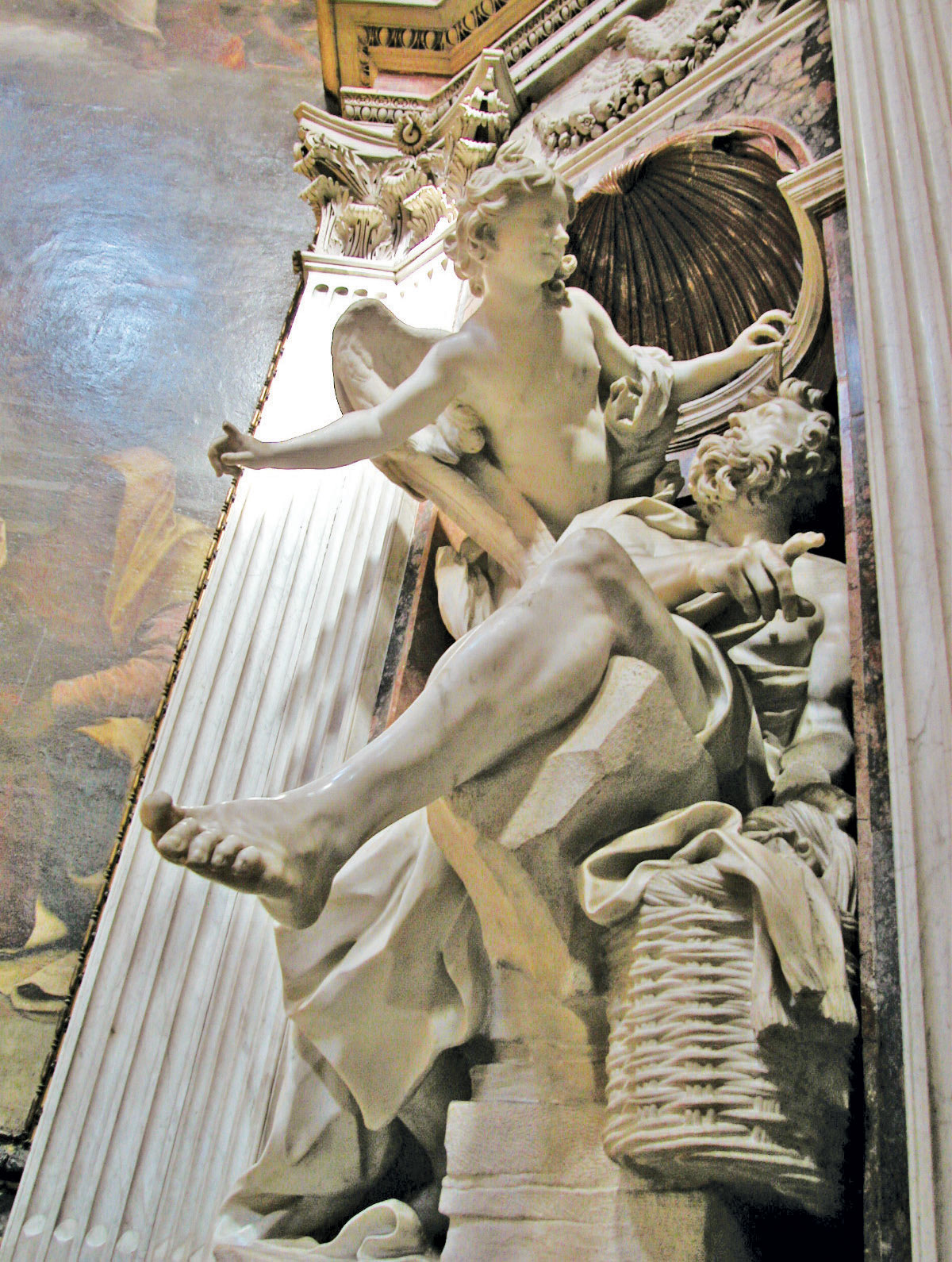
One year after the death of Pope Francis, the Capitoline Museums are honoring his legacy with Angels: Messengers, Guardians and Wanderers — Sublime Creatures from Antiquity to the Contemporary Era, on view through November 1. The exhibition brings together works from important museums and prestigious private collections that explore the theme of angels in Western art across the centuries. Ranging from sacred messengers between heaven and earth to more human, symbolic figures in modern art, the journey covers everything from ancient archaeology to 21st-century art, highlighting themes of protection, guidance and hope, values closely associated with Pope Francis’s papacy and his heritage. museicapitolini.org

The Shape of Silence

July–August

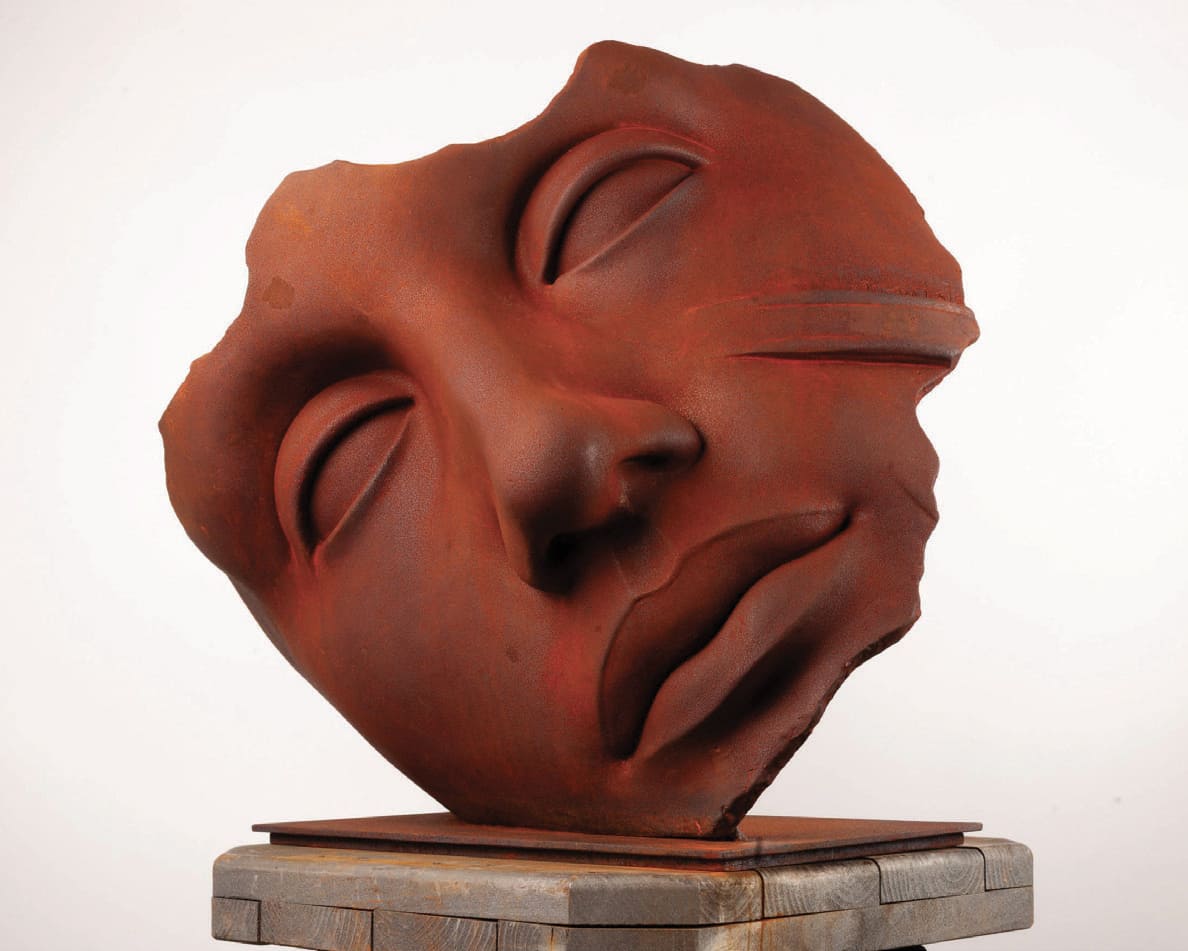
In the heart of Rome, the newly born Teldi Art Gallery presents The Shape of Silence, an exhibition dedicated to renowned Polish sculptor Igor Mitoraj. The show features 41 works that blend classical inspiration with contemporary emotion. Mitoraj’s sculptures are known for their fragmented, larger-than-life figures; symbols of strength, vulnerability, and the connection between past and present. His famous “wounded giants” explore themes of memory, time, and human fragility. Through exhibitions and cultural events, Teldi Art Gallery highlights established contemporary artists whose work experiments with modern materials, ideas, and forms of expression. Until Sept 30. teldi.it

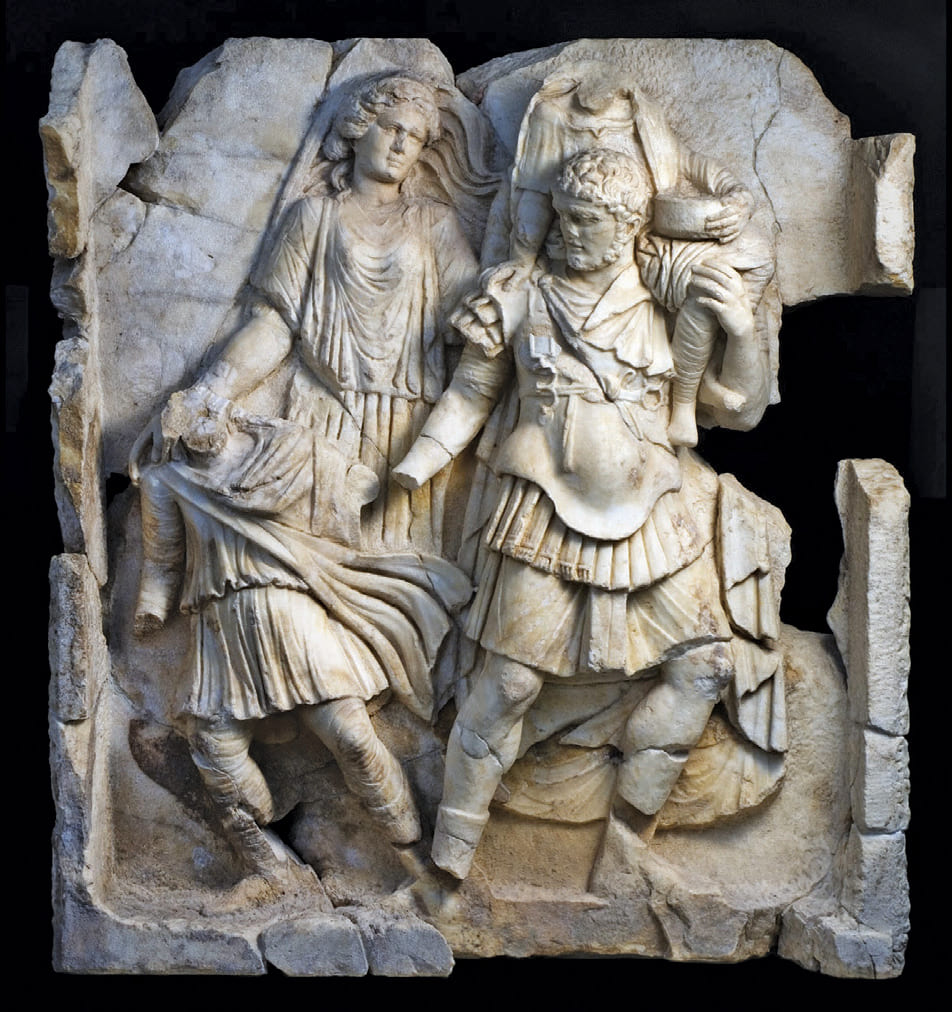
Troy and Rome: Myths, Legends, and Stories of the Ancient Mediterranean

July-August

American artist Robert Mapplethorpe (New York, 1946–1989) did not simply photograph subjects: he sculpted space through the lens of his Hasselblad camera, imbuing each image with an aura of timeless classicism, defined by geometric vision and a relentless pursuit of perfection. Until October 4, the Ara Pacis Museum hosts the exhibition Robert Mapplethorpe. The Forms of Beauty, a selection of around 200 of his photographs, each exploring the concept of beauty as absolute perfection and formal rigor. Distinguished by a series of previously unseen works, the exhibition focuses on the search for pure form, where the human body, faces, and still lifes are treated with the same meticulous attention to light and geometry. arapacis.it
Troia-e-Roma.-Miti-leggende-storie-del-Mediterraneo-antico_Afrodisiyas-2-Aineiasin- Troyadan-kaçişi

Troia-e-Roma.-Miti-leggende-storie-del-Mediterraneo-antico_Afrodisiyas-2-Aineiasin- Troyadan-kaçişi

More dates on the calendar:

Constantin Brâncuși: The Origins of Infinity. Until July 19. mercatiditraiano.it
Helidon Xhixha. Lumen ex Terra. Both Months. caseromanedelcelio.it
Robert Mapplethorpe. The Forms of Beauty. Both Months. arapacis.it
Hervé Gloaguen. À Rome la Nuit. Both Months. museodiromaintrastevere.it
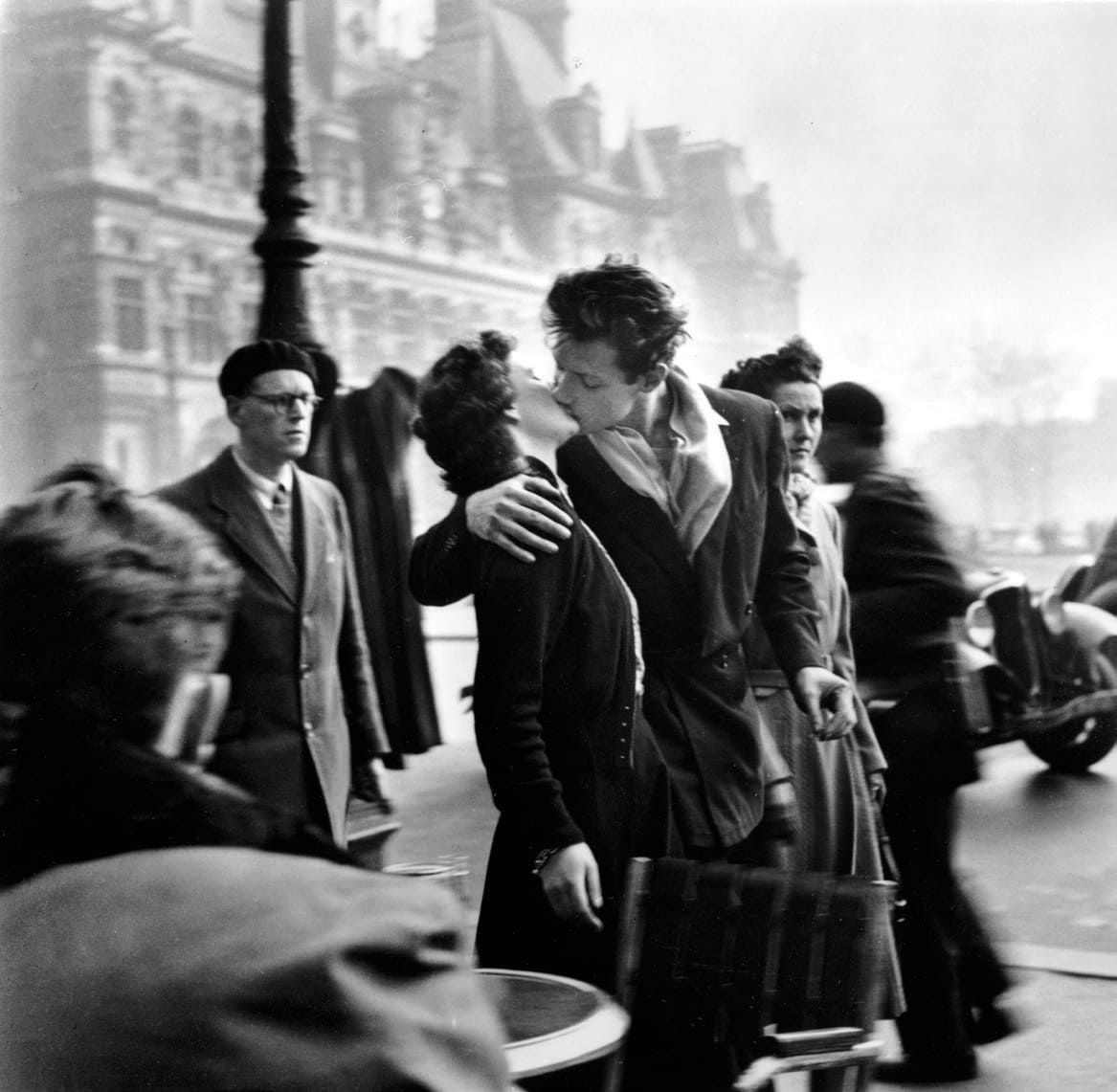
Robert Doisneau. Until July 19. Museo del Genio. arthemisia.it
Vasari and Rome. Until July 19. museicapitolini.org
Rodrigo Torres. Água Mole em Pedra Dura. Until Aug 13. rhinocerosroma.com
Fashion in the Spotlight: 1955-1975. Both Months. centralemontemartini.org
Max Peiffer Watenphul. Painter of the Bauhaus. Until Aug 23. gnamc.gov.beniculturali.it
Tragicomica. Italian Art from the Late 20th Century to Today. Both Months. maxxi.art
Flowers: Marvelous Nature. Both Months. chiostrodelbramante.it

Continue reading

Italy’s Republic Day

shutterstock/Giulio Napolitano

Italy’s Republic Day

Parades and acrobatic air displays commemorate the solemn day Italy became a Republic – By Leslie Ardengo


Every year on June 2 the Eternal City transforms into a stage of pageantry and national pride for Italy’s most patriotic holiday, the Festa della Repubblica. The celebration unfolds with a grand military parade advancing along the storied Via dei Fori Imperiali, where ancient ruins form a majestic backdrop to modern ceremonial splendor.

The emotional core of the day is reached at the Vittoriano monument, where the President of the Italian Republic pays solemn tribute to the Tomb of the Unknown Soldier. Before the eternal flame, burning without pause and guarded day and night by uniformed sentries, the nation pauses in collective remembrance, honoring sacrifice, unity, and the enduring values of the Republican Nation.

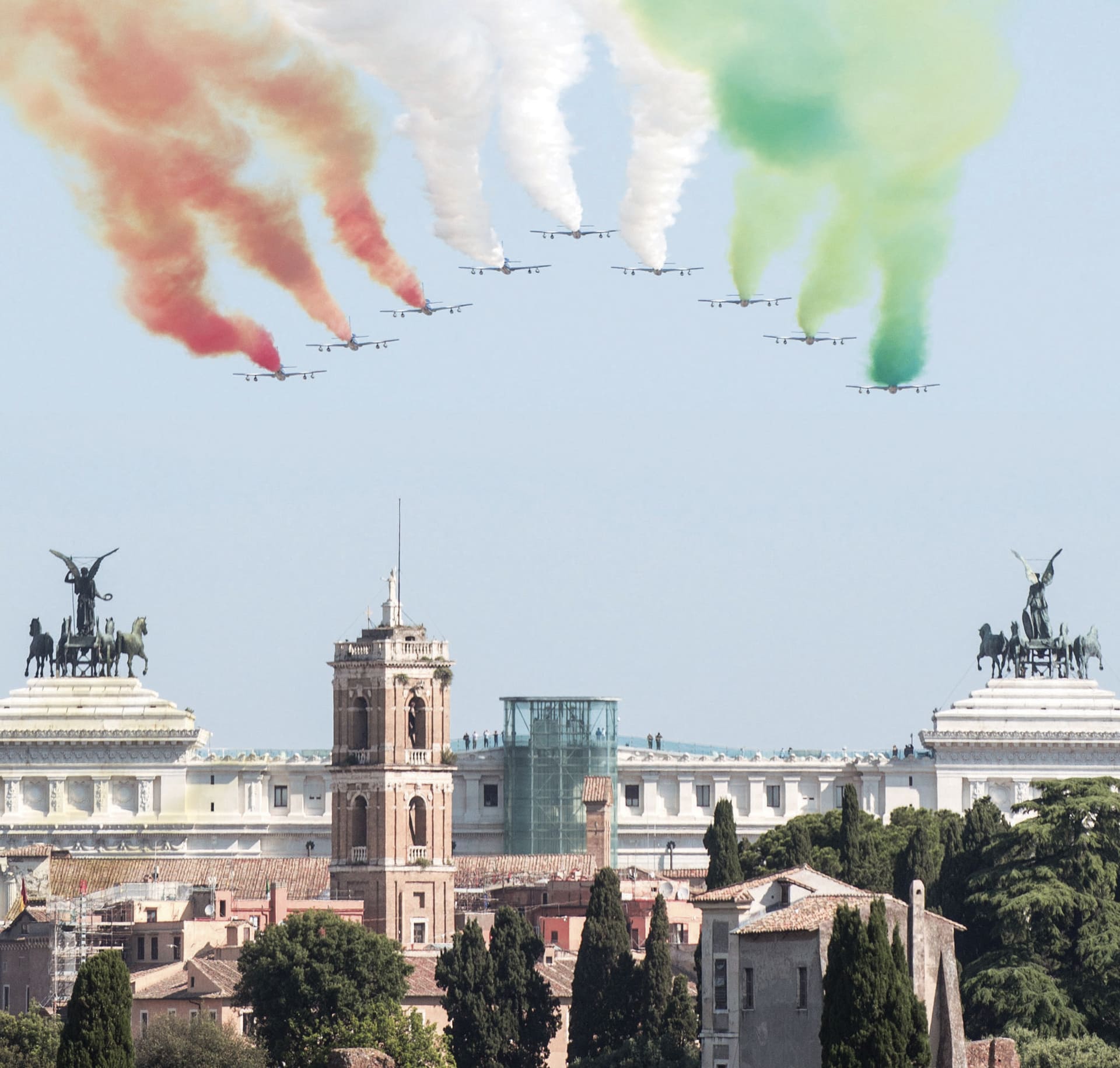
As anticipation builds, eyes turn skyward for one of the most unforgettable moments of the celebration. Above two of Rome’s most iconic landmarks—the Colosseum and the gleaming white Vittoriano—the Frecce Tricolori, Italy’s elite acrobatic air patrol, roar into view. In perfect formation, the fighter jets streak across the Roman sky, unfurling dramatic trails of red, white, and green smoke. Against the ancient skyline, the colors of the Italian flag linger in the air.

festadellarepubblica.it

Continue reading

Nature’s Story

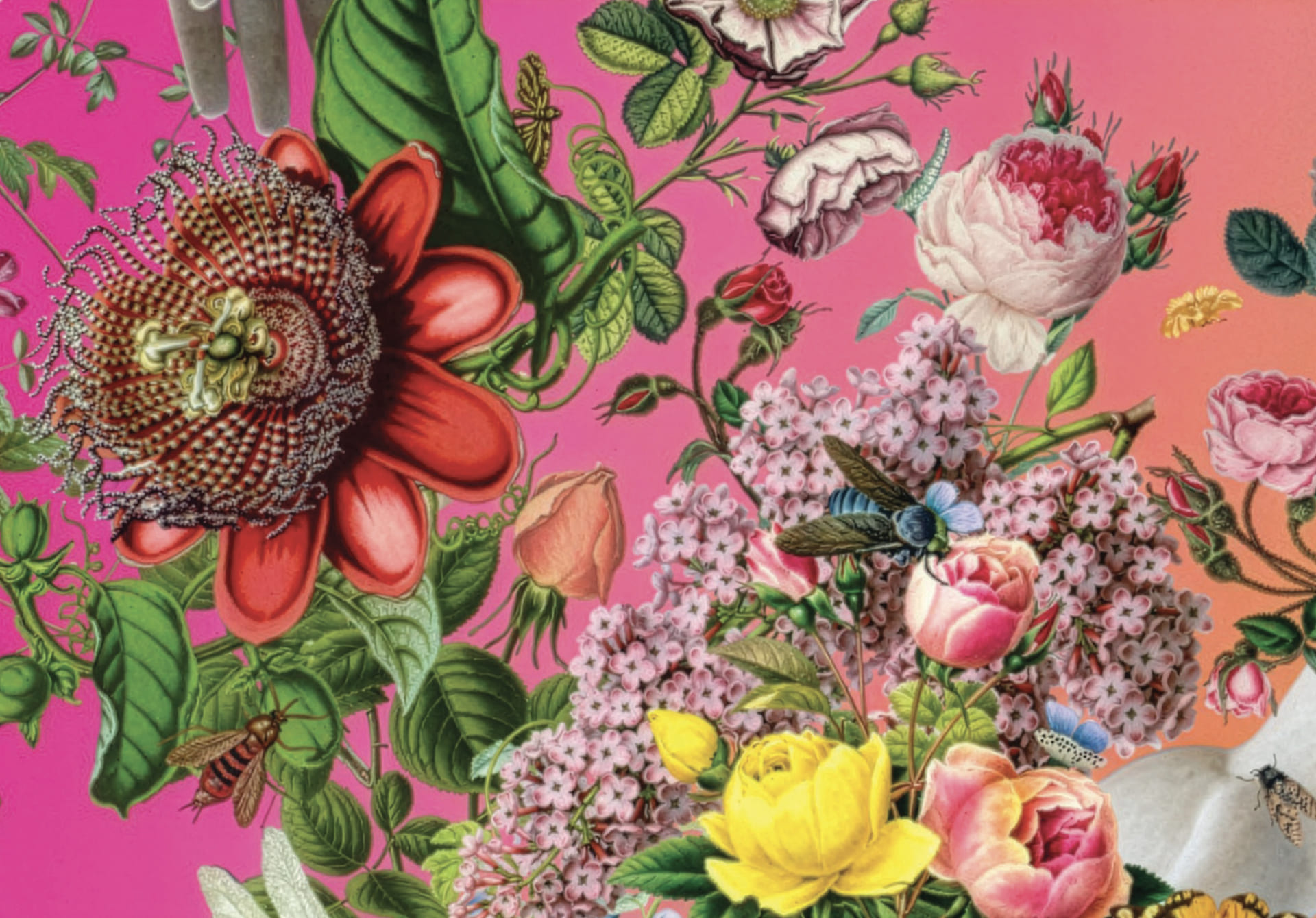
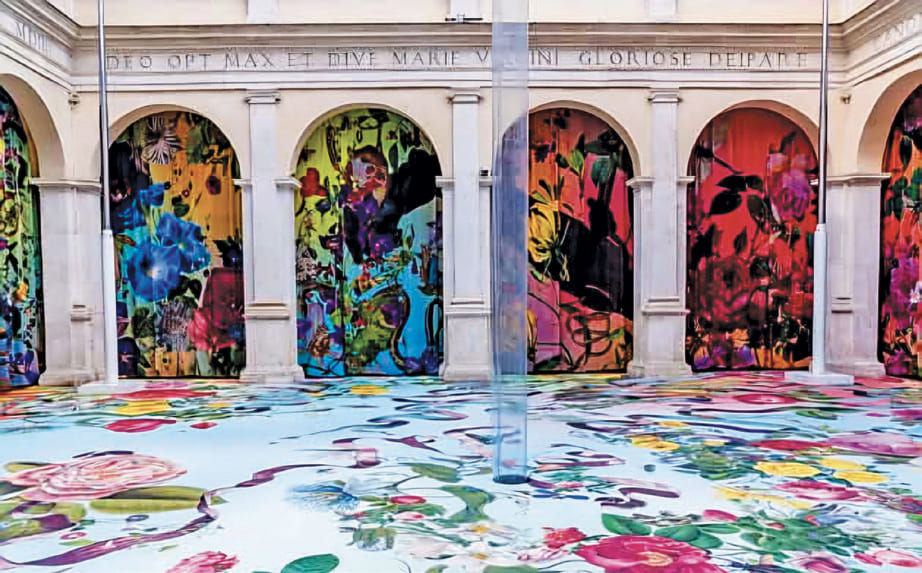
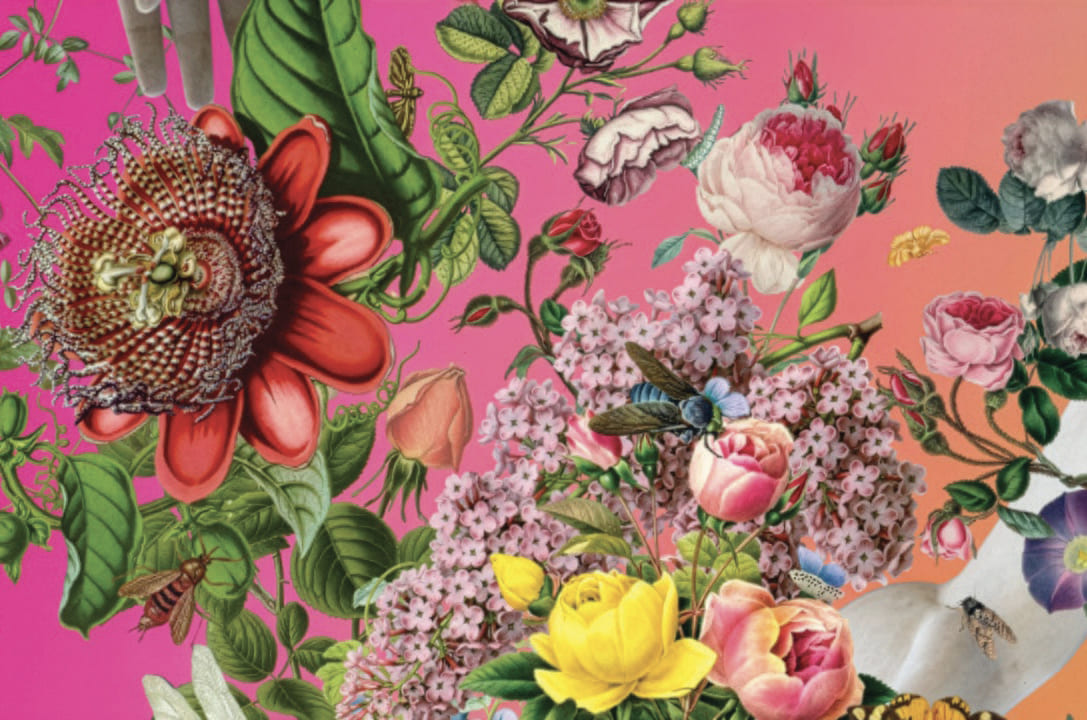
Photos Austin Young (Fallen Fruit). Temple of Flowers, 2025

Nature’s Story

An exhibition weaves together art, science, and technology to explore nature as a connected, evolving system


Set within the historic Chiostro del Bramante, Flowers. Wonderful Nature is the latest chapter of a successful exhibition that now turns its focus from flowers alone to the wider natural world. Running through September 6, the show explores nature as a living, interconnected system— where plants, animals, and marine life coexist in a delicate, ever-changing balance. Blending art, science, and ecology, the exhibition unfolds across three thematic sections— art and ecology, art and science, and art and politics—bringing together works from the 17th century to today. Alongside historical pieces, visitors will encounter cutting-edge installations, including works created with artificial intelligence.

Highlights include immersive, site-specific installations by Austin Young and Zadok Ben-David, as well as contemporary works like Enter the Plastocene by Tamiko Thiel. These are presented next to earlier masterpieces, offering a rich, layered journey through art and nature.

Enhanced with new scientific content and important loans from Italian collections, the exhibition invites visitors to see nature not just as a subject, but as a complex, evolving story. chiostrodelbramante.it

Continue reading

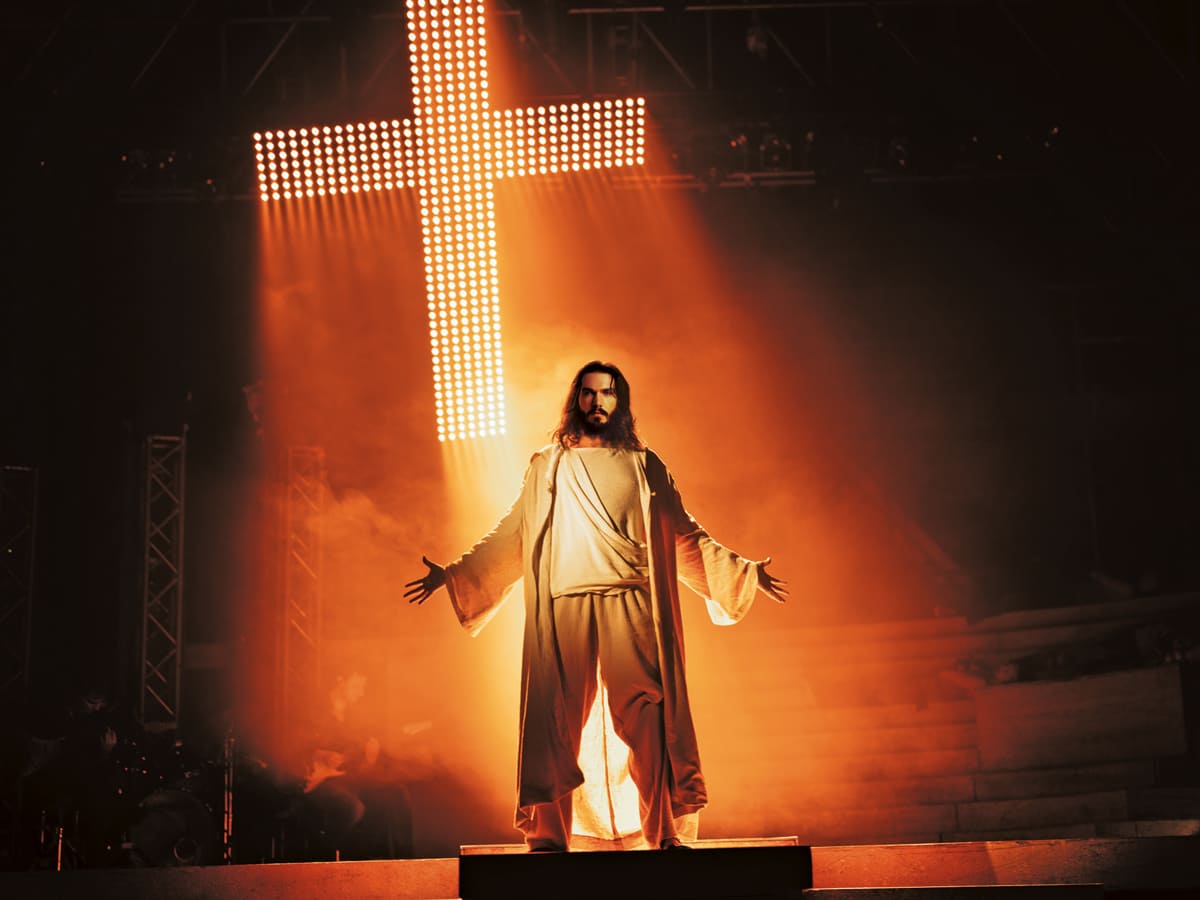
Sofia Coppola’s La Traviata

Sofia Coppola’s La Traviata

Don’t miss this stylish revival of Verdi’s timeless tragedy


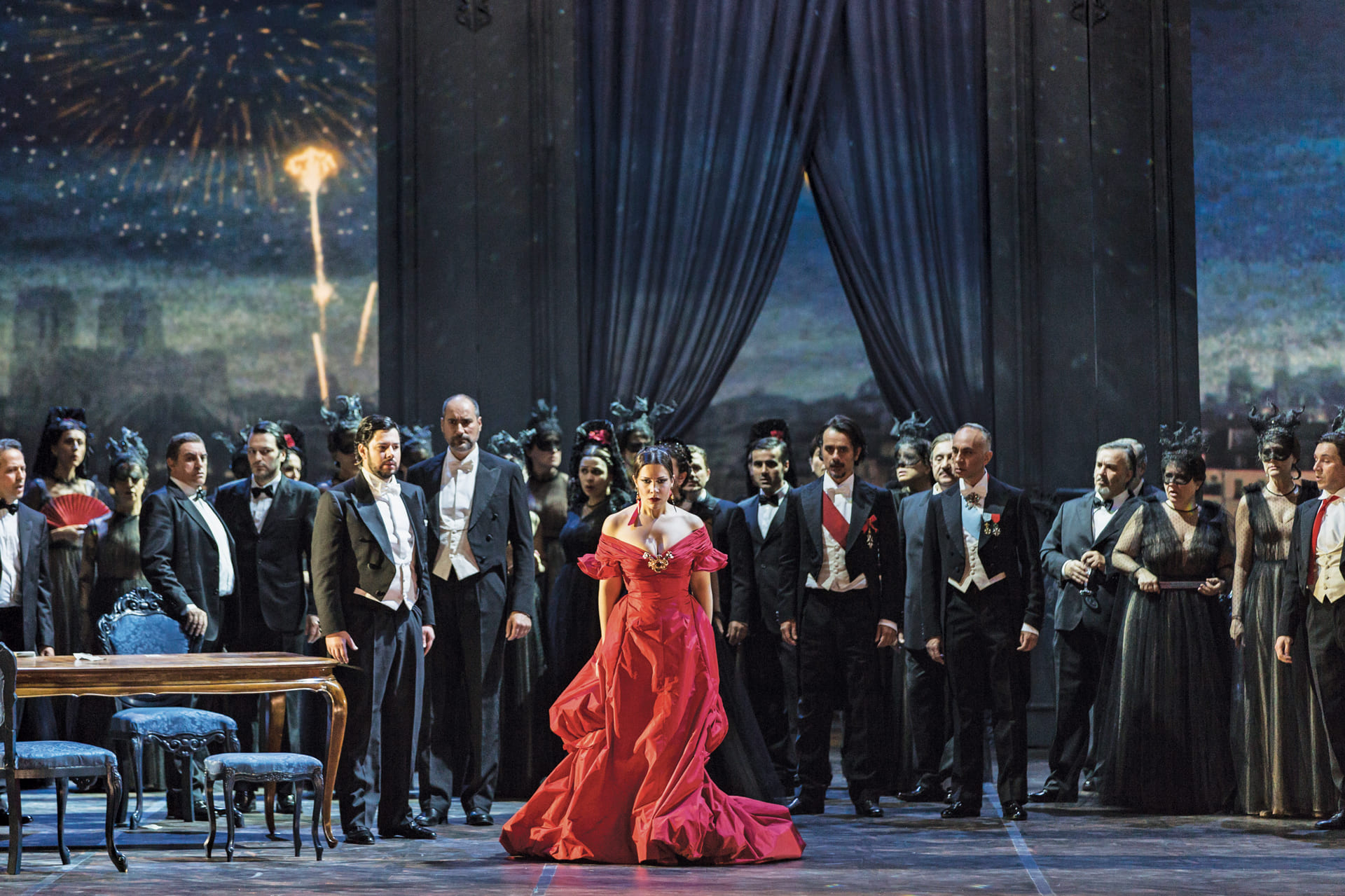
Directed by Oscar-winning filmmaker Sofia Coppola and featuring costumes by the late Valentino, this month’s production of Verdi’s La Traviata promises to be a major highlight of the season. The collaboration between Coppola and the legendary Italian couturier began years ago and has already been presented in several cities. Now it’s back in Rome, and will be featuring at Teatro Costanzi from June 21 to 30.

Based on Alexandre Dumas fils’ La Dame aux Camélias, the opera explores themes of love, sacrifice, and social judgment through the story of Violetta Valéry, a young Parisian courtesan who falls in love with Alfredo and chooses to leave behind Paris, its luxuries, and its excesses for a quieter life in the countryside. Their happiness is short-lived, however, as Alfredo’s father, Germont, intervenes and asks Violetta to leave his son, fearing their relationship will jeopardize his daughter’s marriage.

Though she resists at first, Violetta ultimately agrees. She writes a farewell letter to Alfredo, pretending she longs to return to her former life in Paris. Devastated and furious, Alfredo confronts her publicly and humiliates her by throwing money at her feet. As Violetta lies dying of tuberculosis, Alfredo learns the truth and returns to beg her forgiveness. The two are briefly reunited before she dies.

A timeless masterpiece, La Traviata continues to resonate for its powerful portrayal of love, loss, and human fragility, expressed with the full emotional force of opera. operaroma.it

Continue reading

Craftsmanship That Endures

Craftsmanship That Endures

At Il Bisonte, every product is handcrafted in Tuscany to age beautifully and tell a unique story


True style is not something that fades with time: it evolves, becoming increasingly personal and expressive. At Il Bisonte, every leather creation tells a story. The brand’s renowned Tuscan vegetable-tanned leather is designed to mature beautifully, developing a unique patina that reflects its journey. Soft yet durable, naturally long-lasting, and with an unmistakable woodland scent, each piece is created not simply to be used, but to accompany the life of the person who chooses it, becoming an investment meant to endure over time.

Since its founding in 1970 by visionary entrepreneur Wanny Di Filippo, the brand has grown while remaining deeply connected to its origins. Its creative spirit and attention to detail have remained unchanged, rooted in a tradition that values both craftsmanship and authenticity. Sustainability also plays a central role, with responsibly processed materials reflecting respect for both heritage and the environment.

At the heart of Il Bisonte lies a profound commitment to artisanal savoir-faire. Each creation balances simplicity and originality through carefully considered choices of color, texture, and structure. Skilled artisans craft every product by hand, guiding it through each stage, from the first cut of leather to the final stitch. This dedication ensures that every piece is infused with precision, care, and character.

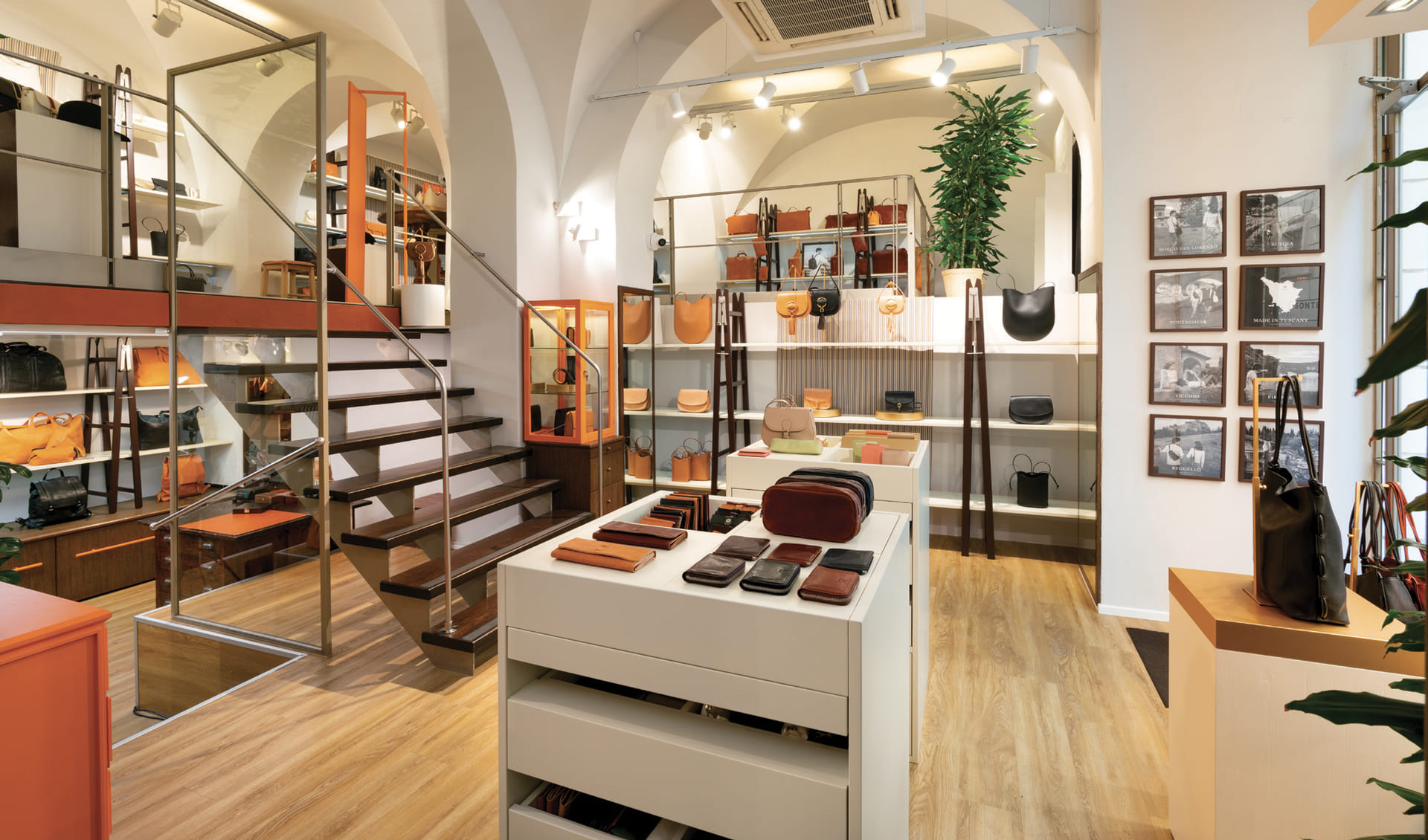
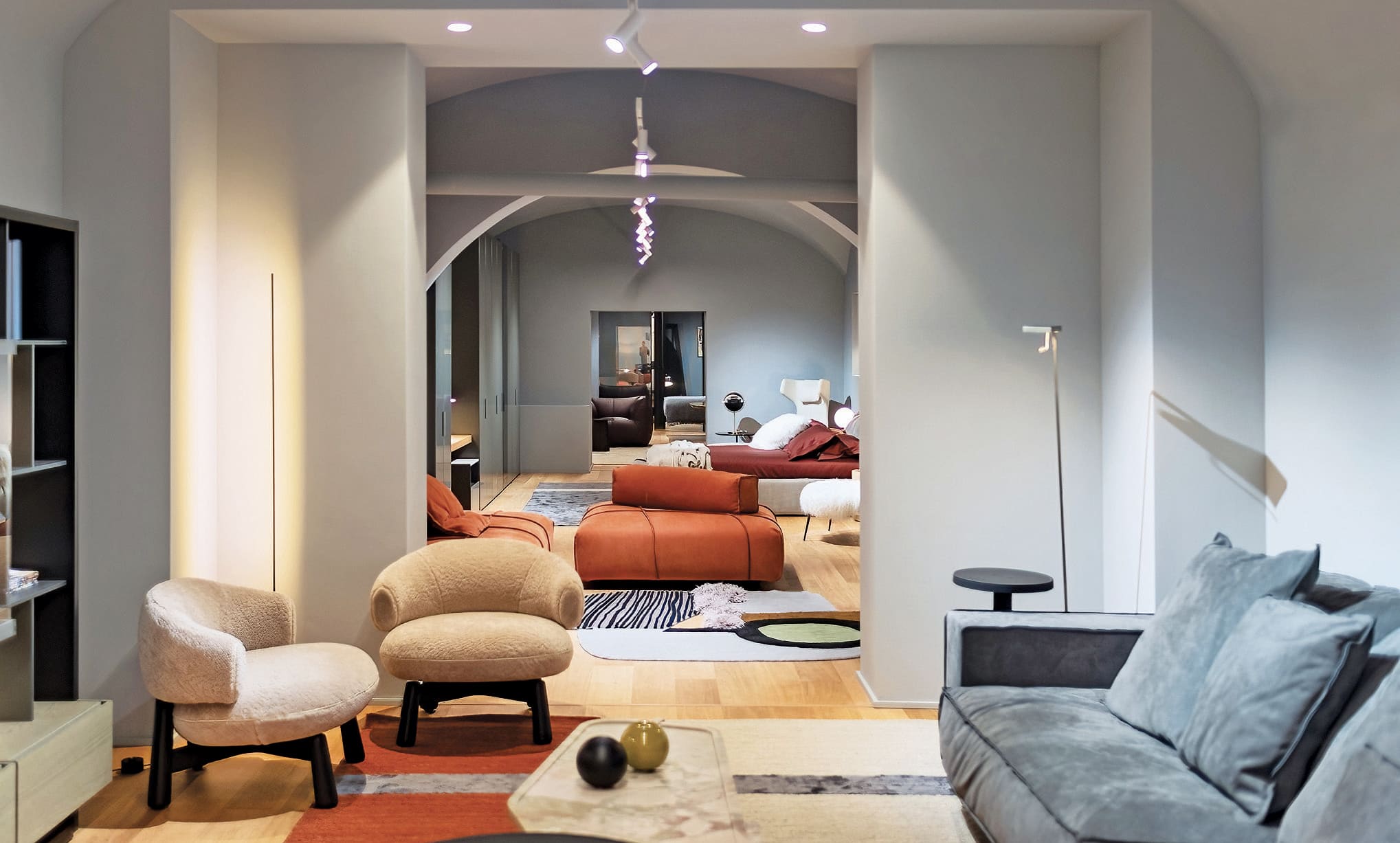
Today, Il Bisonte offers a wide selection of creations designed to accompany everyday life with timeless elegance: from crossbody bags, tote bags, backpacks, and briefcases to smaller leather accessories such as wallets, belts, keyrings, and eyewear cases. In Rome, the full collections can be discovered at the refined Il Bisonte boutique on Via Borgognona, just steps from Piazza di Spagna. Opened in 2018 and set across two floors, the store welcomes visitors into an elegant space with striking vaulted ceilings: the perfect setting for the brand’s iconic creations, where craftsmanship, functionality, and timeless style come together.

Via Borgognona, 13. Tel. +39 0668808097. Ilbisonte.com

Continue reading

Where Rome still eats like Rome

Where Rome still eats like Rome

Discover true Roman flavors at this cozy osteria near Piazza Navona


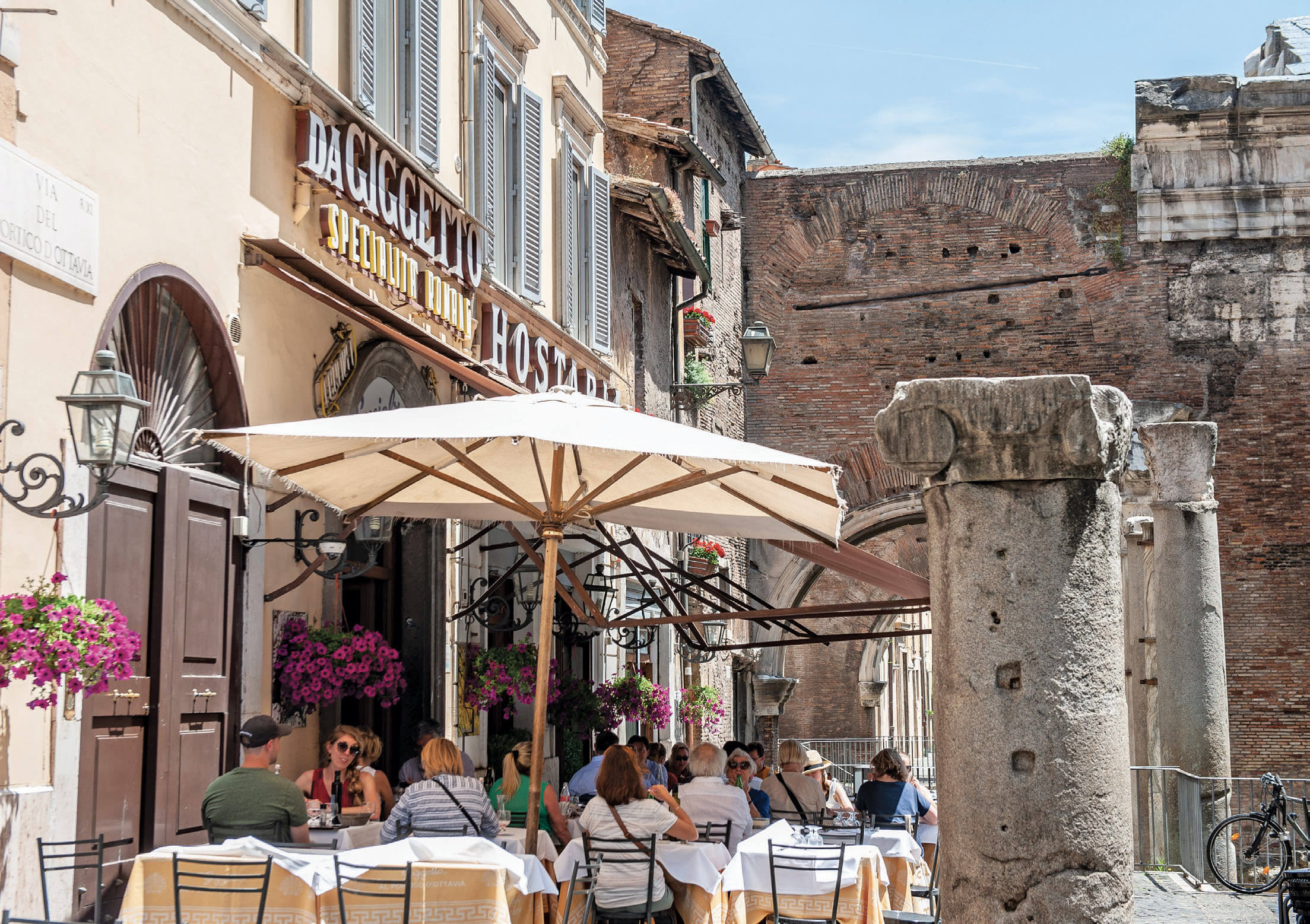
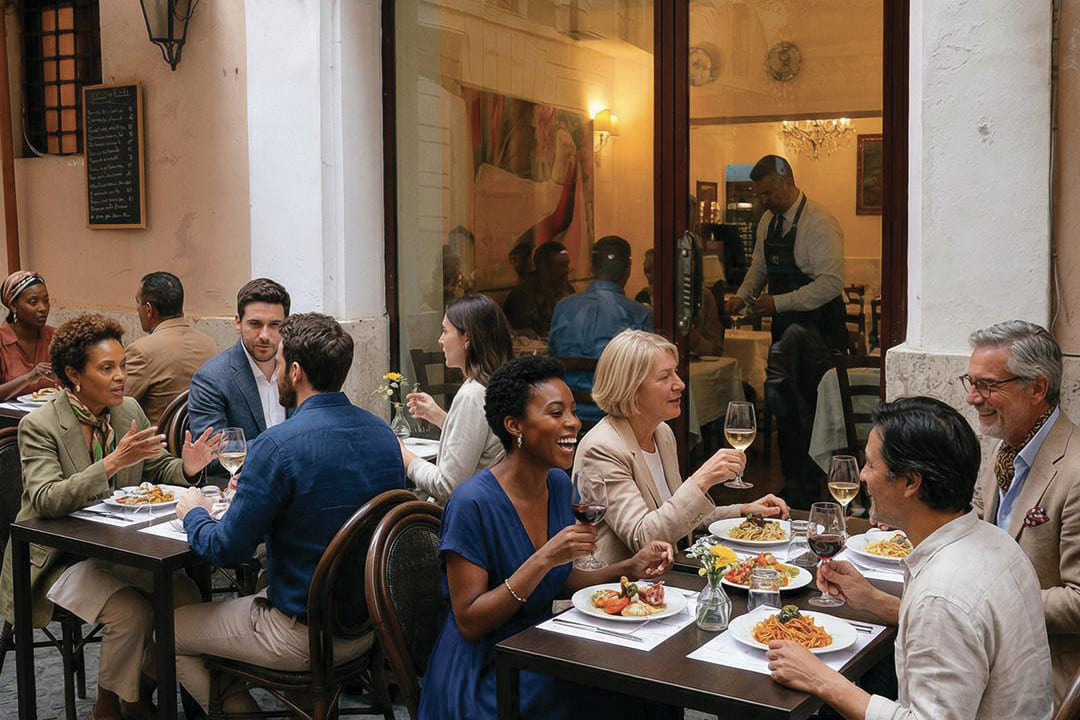
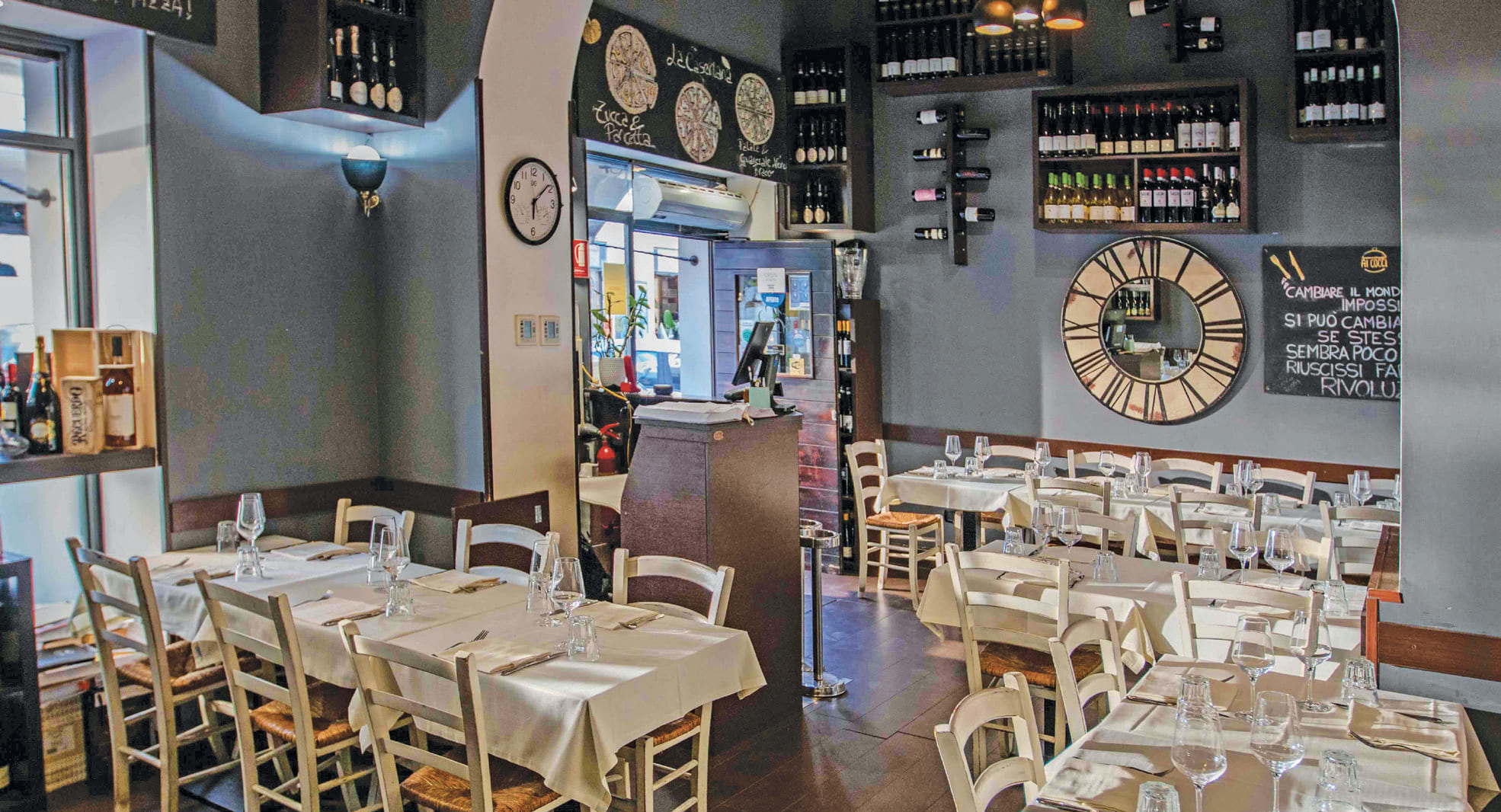
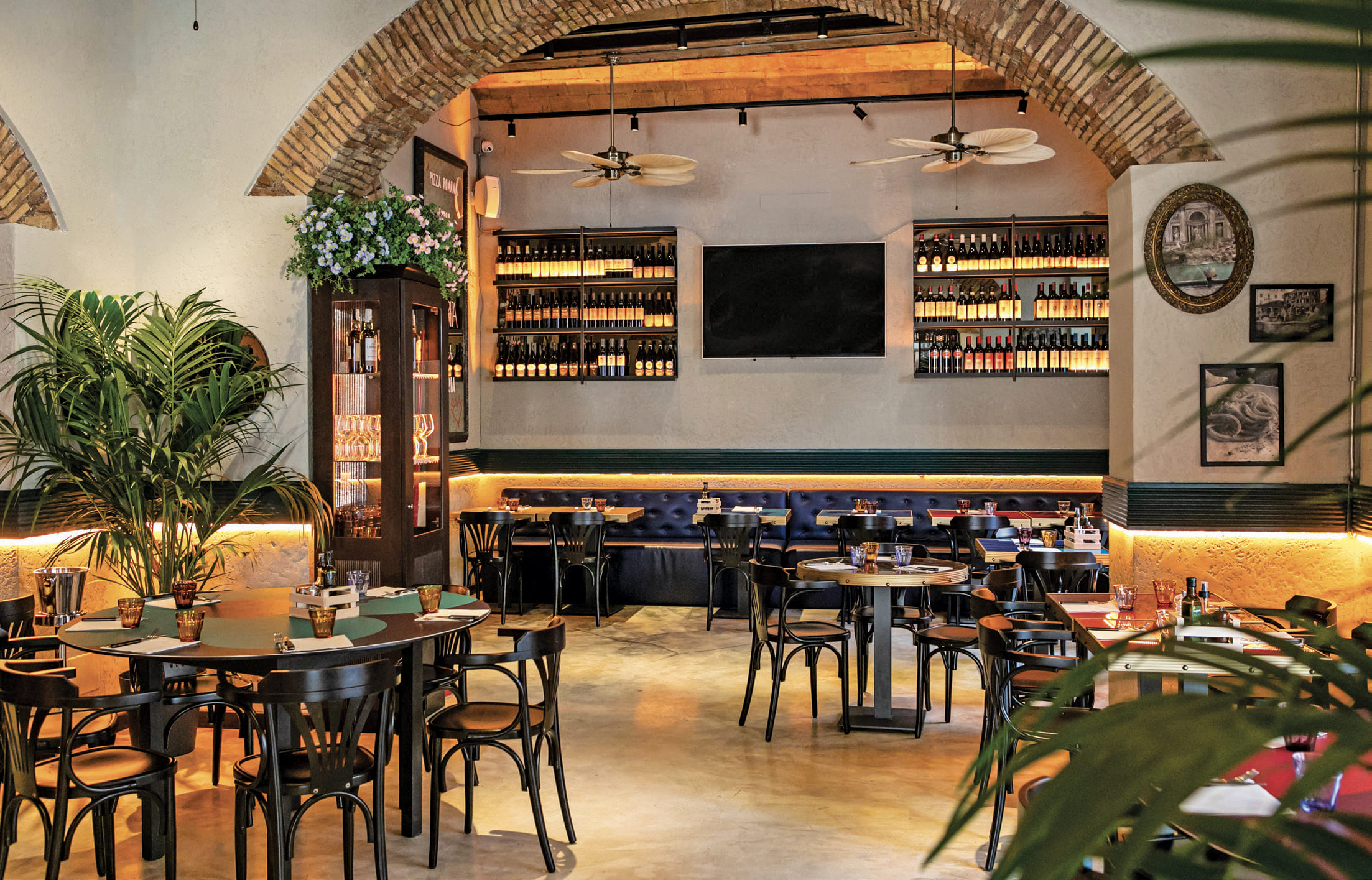
Tucked away in the maze-like alleys of antique-dealer street Via dei Coronari, Osteria Le Streghe dal 1920 offers an atmosphere that feels both intimate and timeless, like a living snapshot of Roman life.

What truly distinguishes this restaurant is its unwavering commitment to authentic Roman and Mediterranean cuisine. Each dish is prepared with fresh, seasonal ingredients and a genuine passion for tradition. The secret lies in the careful sourcing of local products, combined with refined culinary skill that brings out the best in every recipe. Under the attentive guidance of brothers Massimo and Stefano, the menu celebrates classic Roman and regional Italian flavors—light, balanced, and full of character.

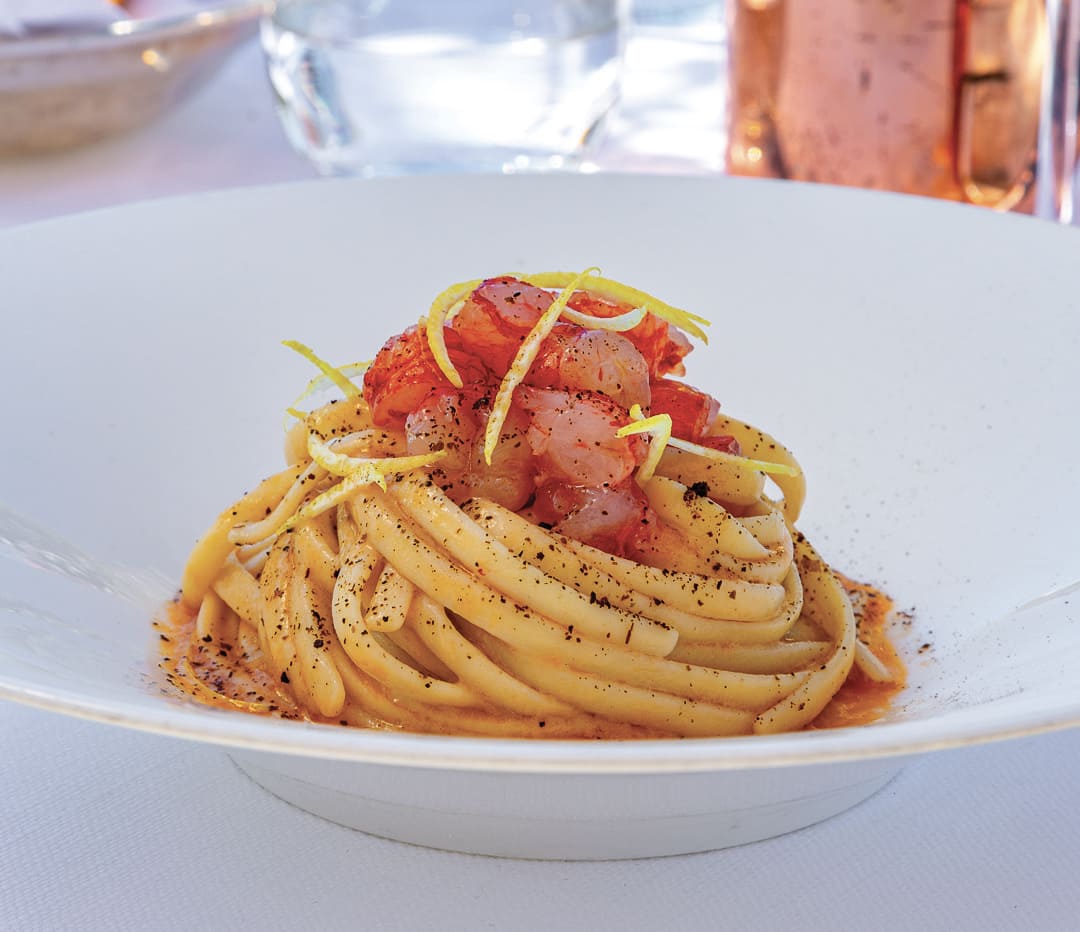
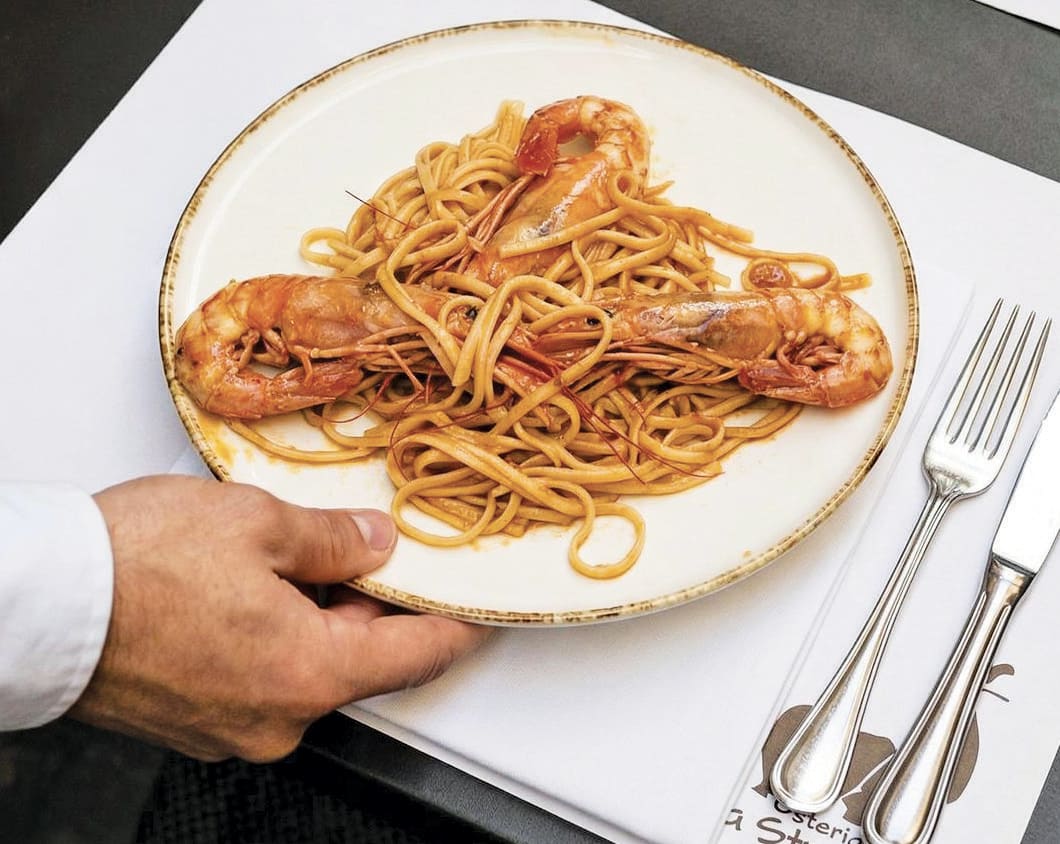
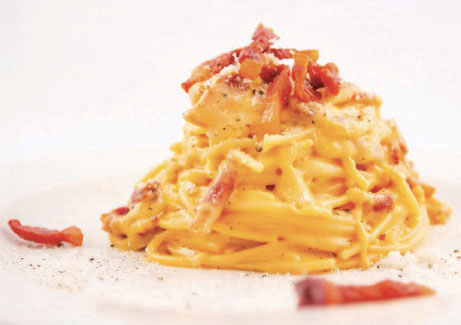
Begin your meal with a traditional carciofo alla giudia (Jewish-style artichoke), then move on to beloved pasta staples like spaghetti with clams or with prawns, tonnarelli cacio e pepe, spaghetti alla carbonara, or bucatini all’amatriciana, made with high-quality Cinta Senese guanciale. Main courses highlight Roman specialties, including veal saltimbocca, grilled lamb chops with potatoes, and “nonna” (grandma) meatballs in a tomato sauce. Other standouts include roast suckling pig, tripe with tomato and mint, and the house signature salt cod “Le Streghe.”

To finish, indulge in homemade desserts like a rich chocolate fondant with a molten center or a classic tiramisù. The thoughtfully curated wine list features regional Italian selections that pair beautifully with each course. And when the weather allows, dining at one of the charming outdoor tables adds an extra touch of Roman magic to the experience.

Vicolo del Curato, 13. Tel 066878182. osterialestreghe.it

Continue reading

Green Escapes

Flickr/Di Chap

Flickr/Di Chap

Green Escapes

Here are the best villas and parks in the Eternal City – By Andrea Werther


One of the simplest ways to take in Rome’s greener side is to step into one of its many “lungs”: the grand historic villa parks. When Rome was little more than a compact nucleus, these estates served as countryside retreats of the aristocracy. Today, most have been transformed into expansive public parks, offering leafy respite from the city’s relentless energy.

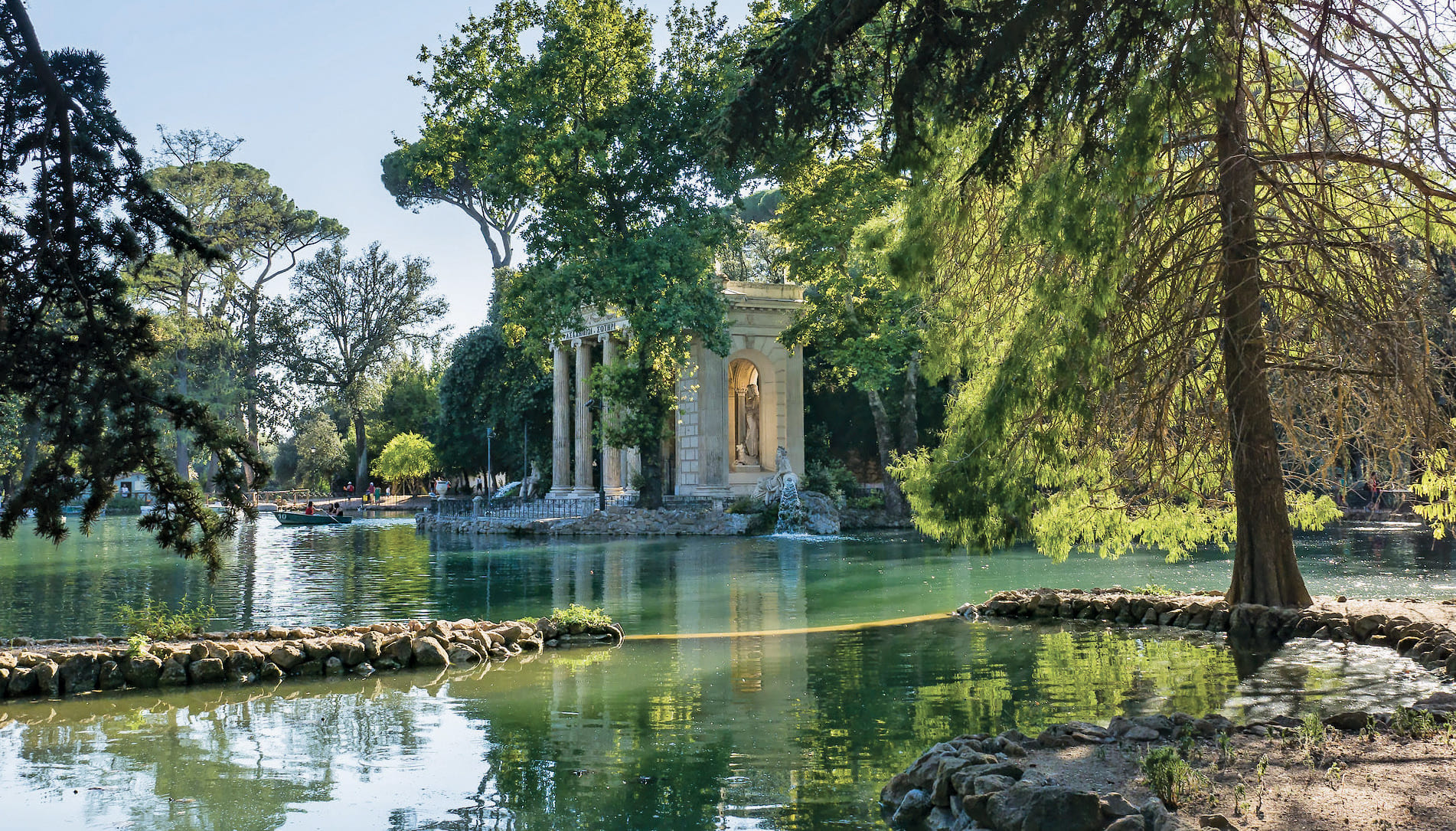
The most famous—and most convenient to reach—is Villa Borghese, perched atop the Pincian Hill. Its meticulously designed gardens make an ideal interlude before or after exploring the world-class museums tucked within the grounds. On the Janiculum Hill, Villa Pamphilj unfolds across more than 450 acres, which make it Rome’s largest landscaped park and a favorite haunt of joggers, families, and picnickers.

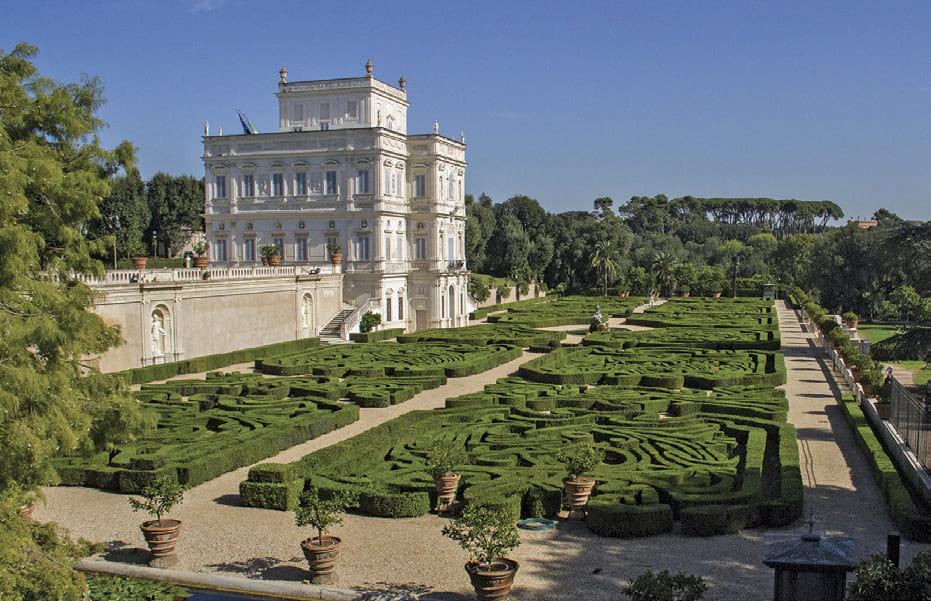
Villa Ada, by contrast, feels almost untamed: the city’s wildest green space, perfect for those seeking solitude and quiet. For a blend of nature and antiquity, the carefully maintained Villa Celimontana near the Colosseum is scattered with archaeological treasures—sarcophagi, sculptures, and even an obelisk hidden among the trees. Villa Sciarra in Monteverde may be modest in size, but it enchants with vine-draped grottoes, elaborate fountains, and secluded corners. And don’t miss Villa Torlonia, whose manicured grounds were designed by neoclassical architect Giuseppe Valadier and include the whimsical Art Nouveau Casina delle Civette, famed for its fantastical stainedglass windows.

Greenery among the ancient ruins
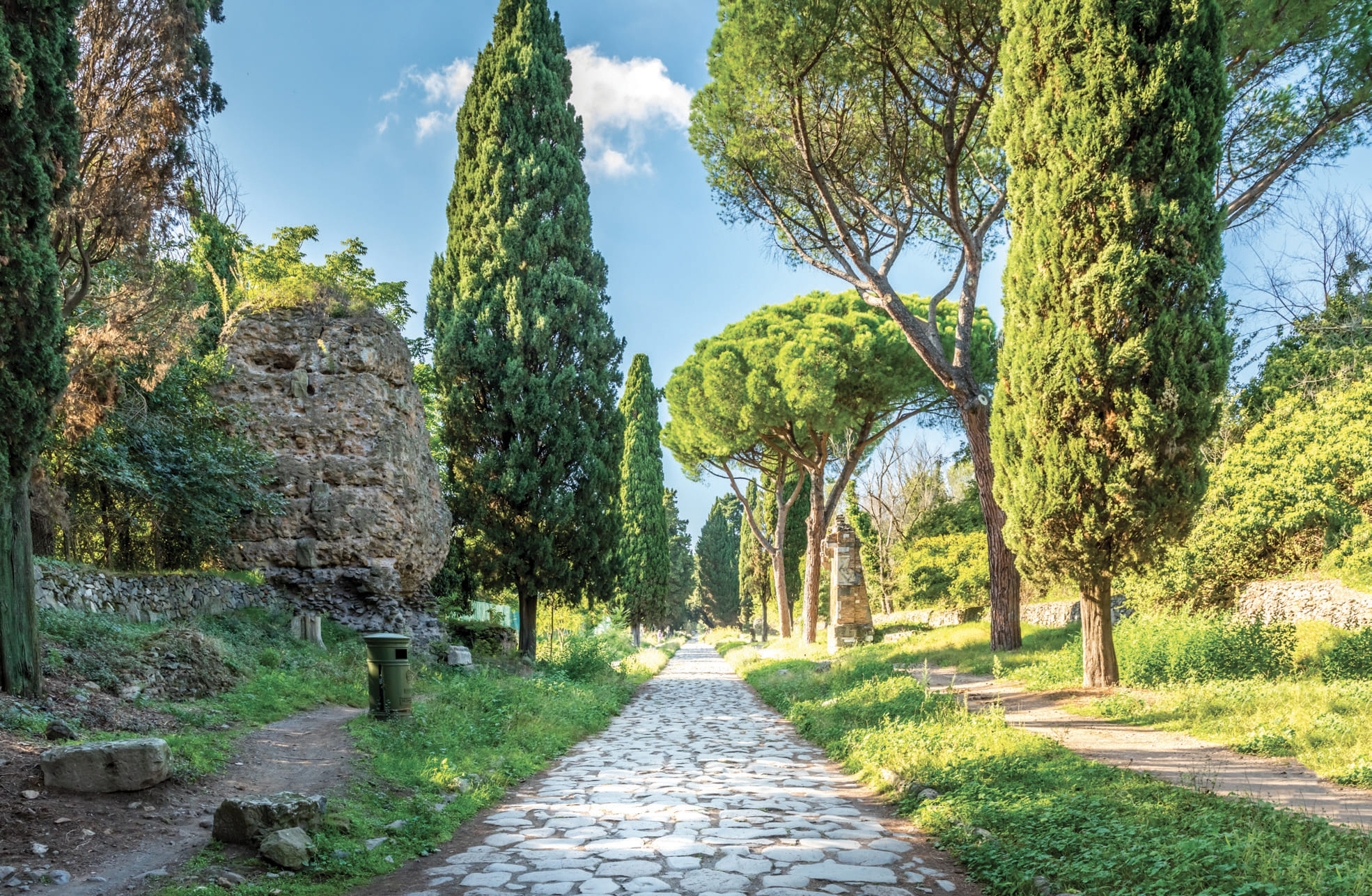
Travelers craving nature without sacrificing sightseeing will find that Rome’s archeological parks, between Via Appia Antica and Via Latina, offer the best of both worlds. Walk on or rent a bike and pedal through the Parco degli Acquedotti, where soaring aqueducts march across the landscape along the ancient Appian Way. Wander the shaded paths of the Parco degli Scipioni, pausing to admire its monumental mausoleums. Or venture into the vast valley of Caffarella Park to discover the legendary Nymphaeum of Egeria, a tranquil wildlife haven nestled deep within the ancient city.

Villa Pamphilj
Villa Pamphilj

Continue reading

Stone Narratives

shutterstock/JoAlexQ

shutterstock/JoAlexQ

Stone Narratives

Rome’s imperial history, frame by frame
By Claudio Lozzi


In Rome, some of the city’s most compelling stories aren’t told on the screen but carved in marble and lifted toward the sky.

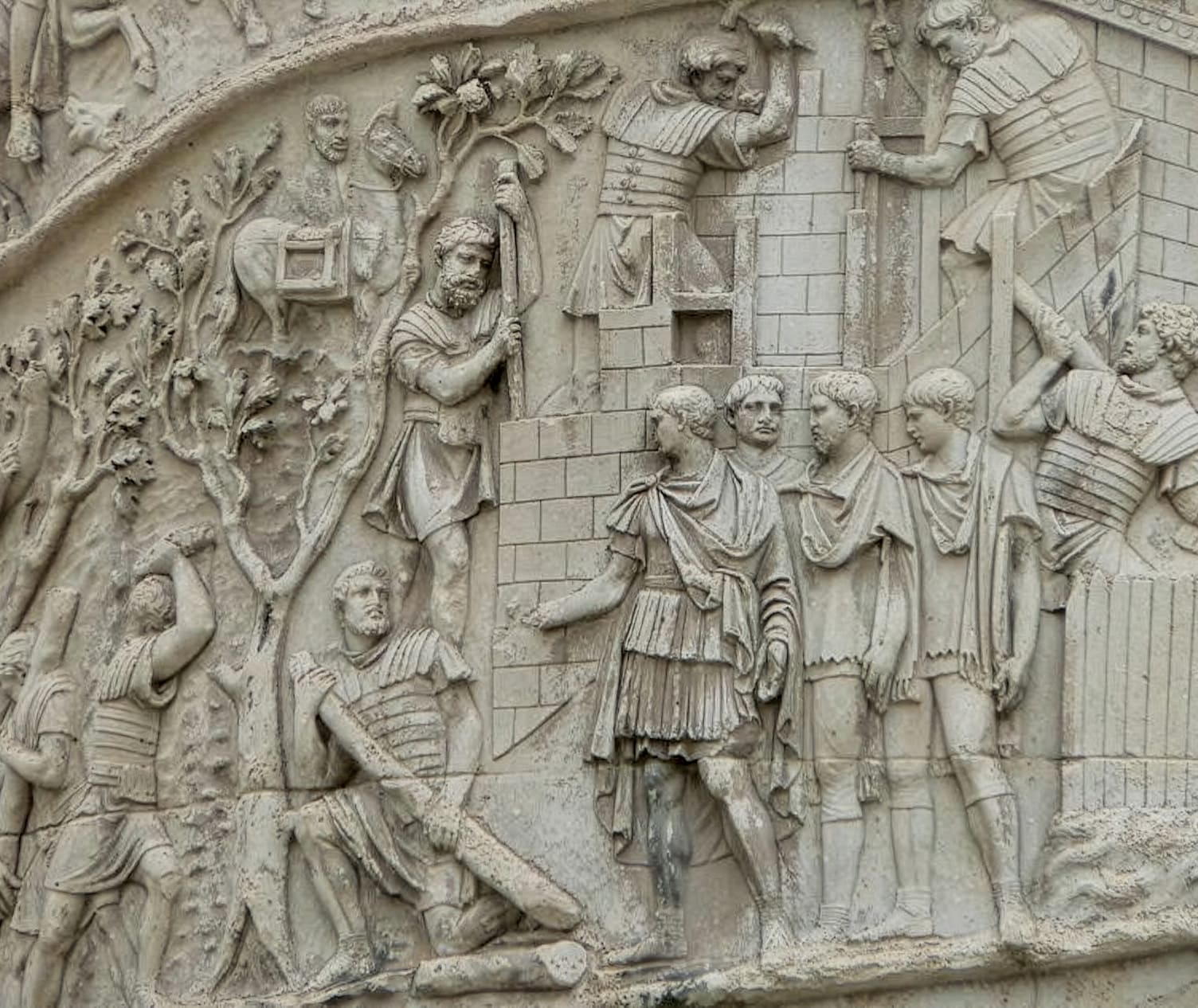
For a truly cinematic experience, start with Trajan’s Column, the ancient world’s most ambitious “film reel,” spiraling upward in the Imperial Fora. Erected in the early 2nd century AD, this 80-meter monument commemorates Emperor Trajan’s victorious campaigns against Dacia (modern-day Romania) through a continuous band of sculpture that wraps around the shaft 23 times. Designed by the great Apollodorus of Damascus, the column originally burst with color and detail, transforming military history into a lively visual chronicle.

Even today, the scenes remain astonishingly vivid: Roman engineers building a bridge across the Danube, legions marching out to war, naval units and cavalry assembling, and fierce clashes with Dacian and Germanic tribes. The sequence ends with Trajan’s triumph and the dramatic suicide of the Dacian king Decebalus. Though the column once stood between two libraries that allowed close-up viewing, modern visitors can still appreciate its intricacy—especially with the help of binoculars or an illustrated guide. A fascinating theory by art historian Salvatore Settis suggests that ancient viewers read the reliefs not in a dizzying spiral but in four vertical “strips,” each maintaining the story’s chronology.

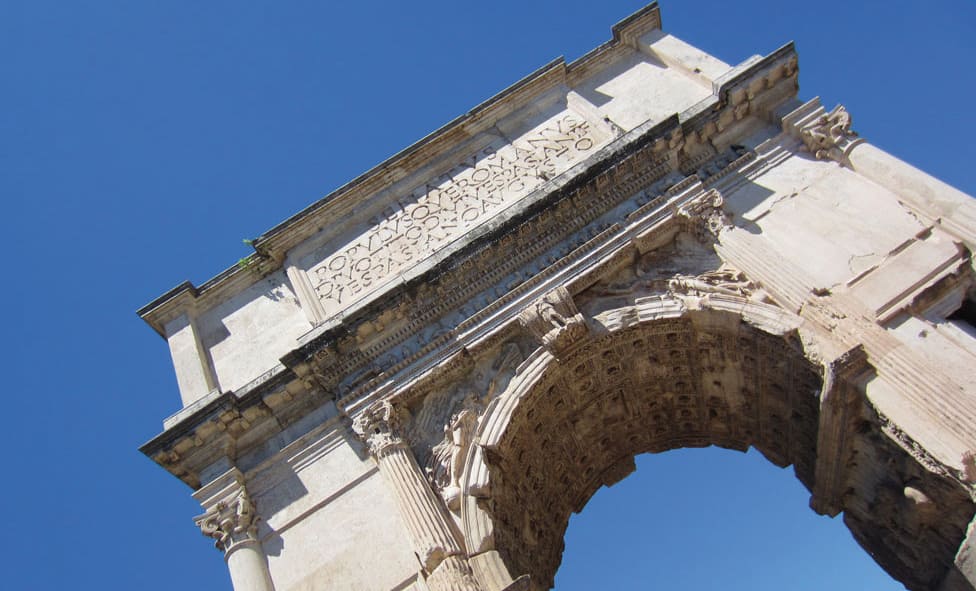
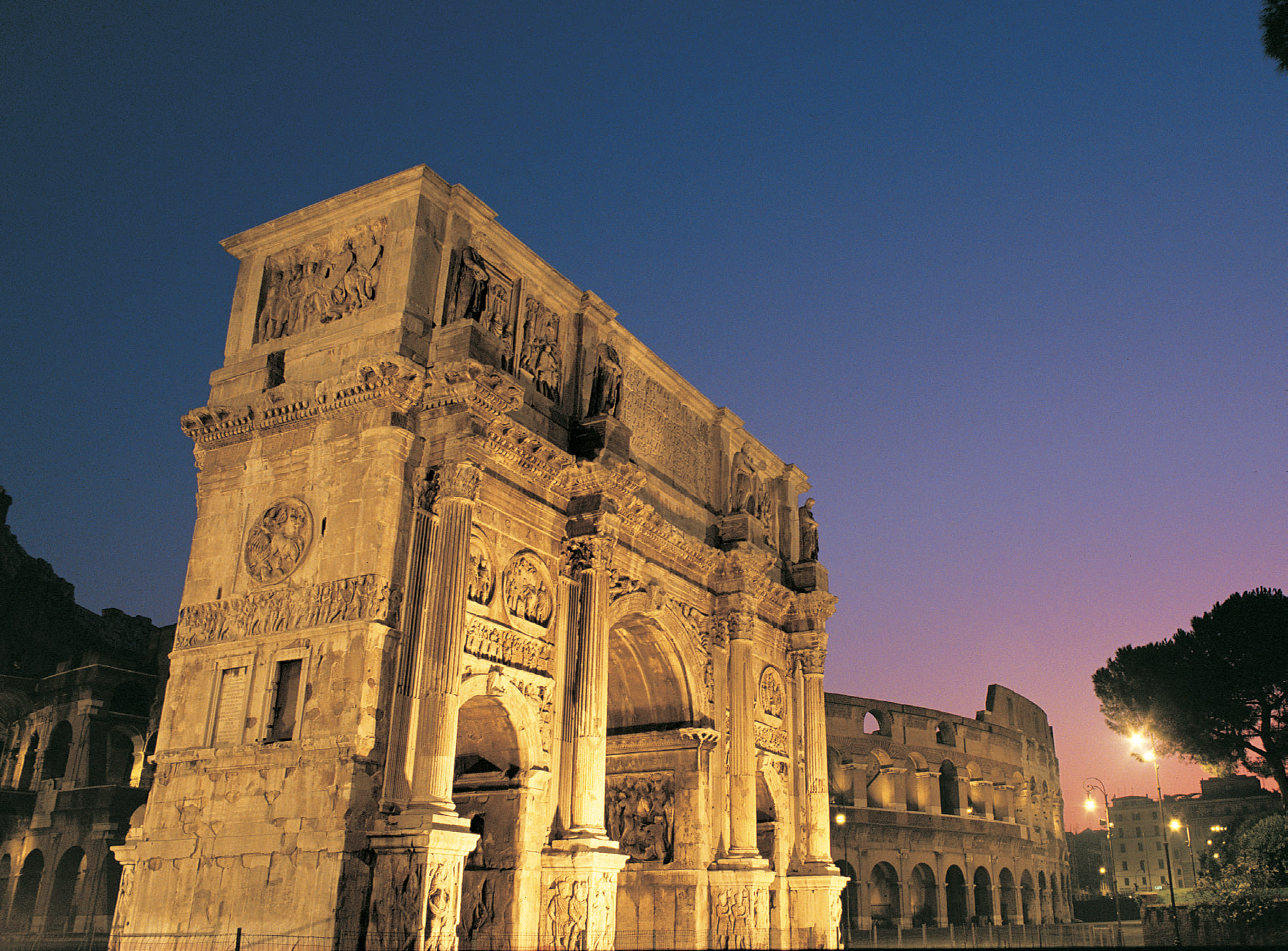
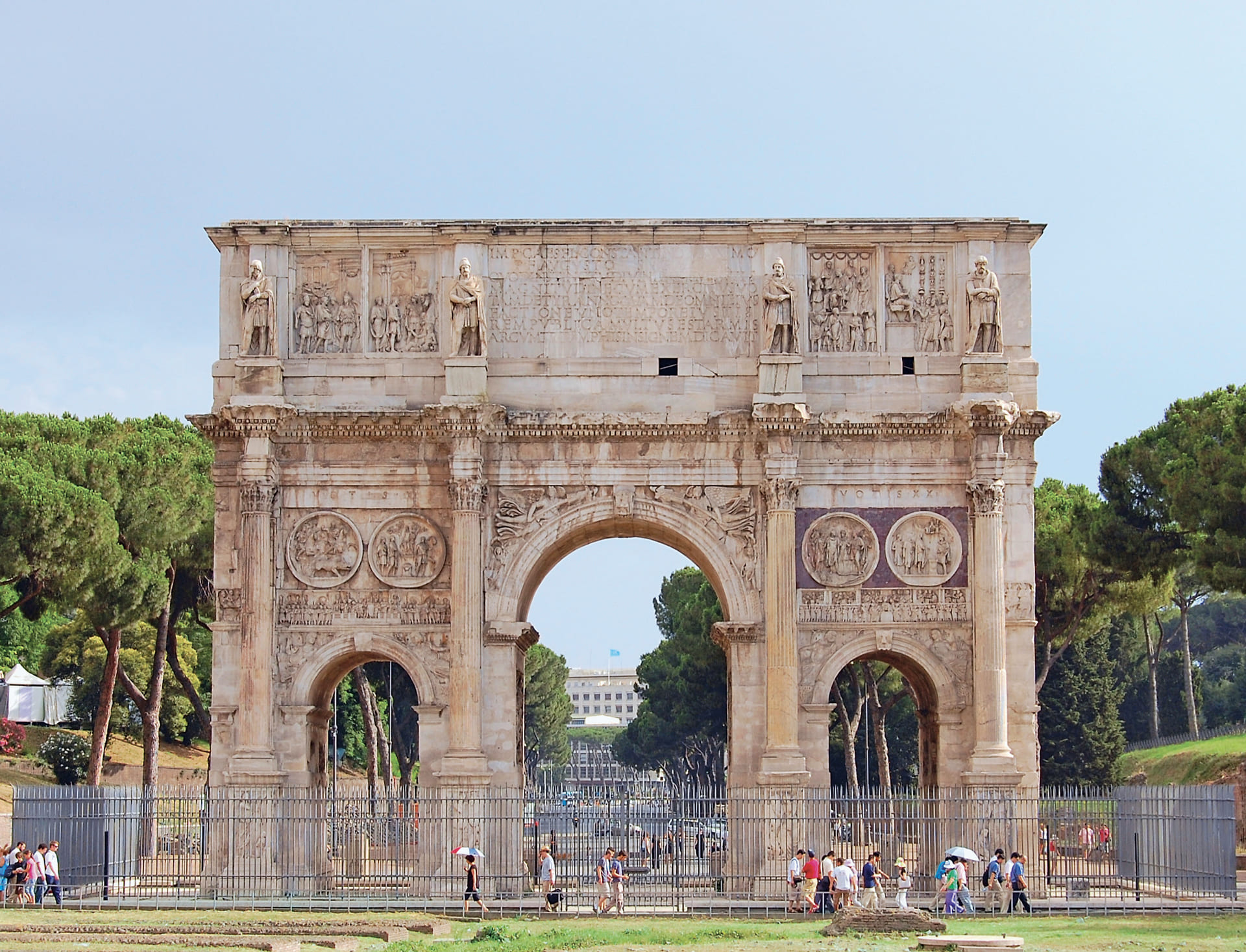
A short walk toward the Colosseum brings you to another monumental storyteller: the Arch of Constantine. Though dedicated in 315 AD to celebrate Constantine’s victory over Maxentius, the arch is a creative blend of old and new. Its sculptural fragments were lifted from earlier imperial monuments, and among these borrowed masterpieces, the figure who emerges as the true star is Marcus Aurelius. Scenes show him delivering speeches, granting clemency, conducting rituals, and confronting defeated leaders—an artistic reminder of Rome’s long tradition of military power and philosophical rule. The arch becomes a stone scrapbook of Rome’s imperial memory, seamlessly merging different eras into one triumphal gateway.

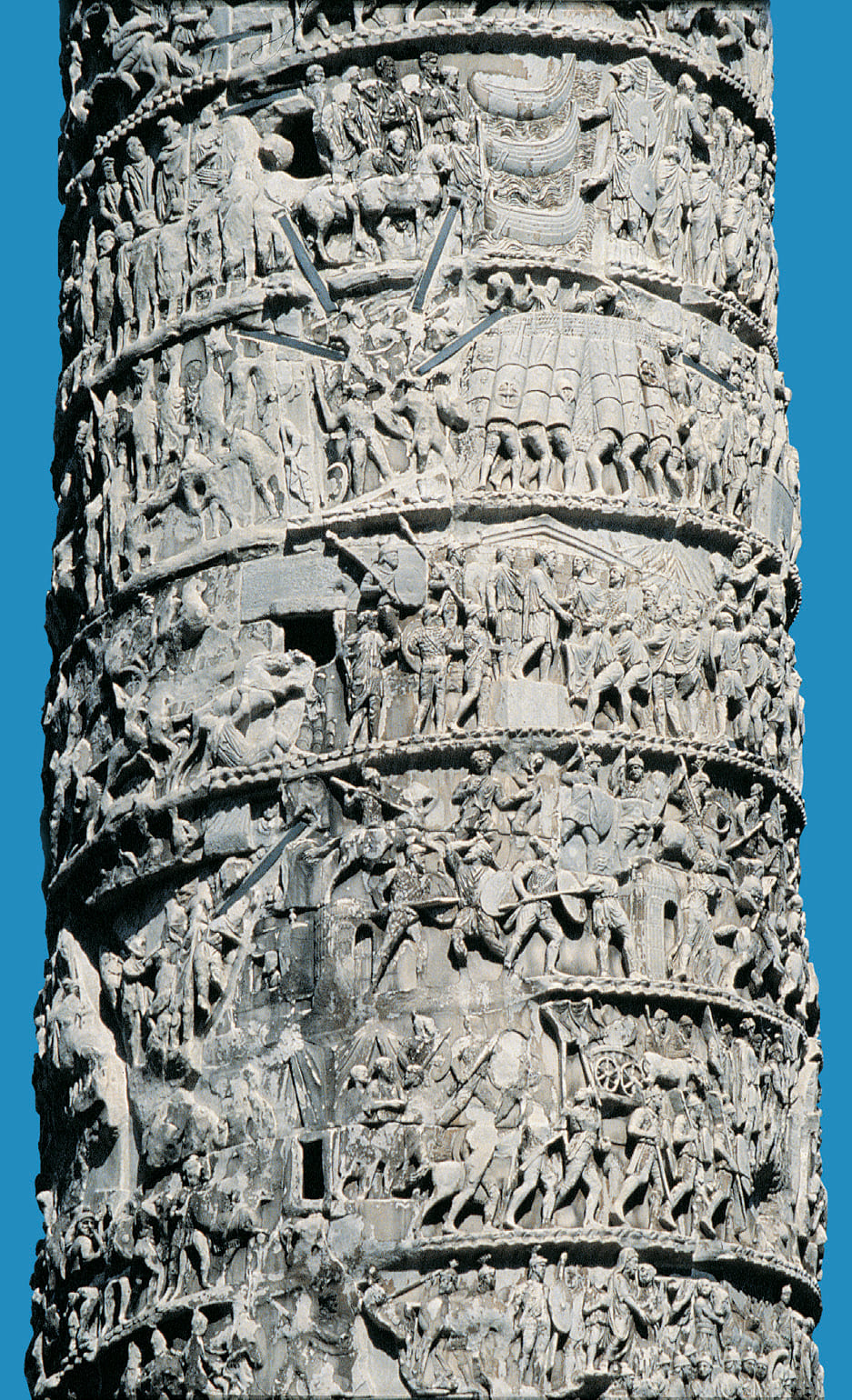
Follow Via del Corso north and Marcus Aurelius reappears—this time on his own monumental stage. The Column of Marcus Aurelius, standing in Piazza Colonna, was erected around 180 AD by his son Commodus to honor the emperor’s campaigns against northern tribes. Its 116 sculpted episodes, though stylistically rougher than those on Trajan’s Column, vibrate with movement: soldiers battling through forests, storms, and river crossings. The emperor, always shown frontally to emphasize his authority, once stood atop the column in bronze; today, a later statue of St. Paul crowns it. In the Middle Ages, visitors even paid a fee to climb the 190-step interior staircase—a testament to its enduring draw.

  • A detail of the Trajan’s Column
    A detail of the Trajan’s Column

    Flickr/ Paul Arps

  • Marcus Aurelius’ Column
    Marcus Aurelius’ Column

Continue reading

Behind The Doors Of The Quirinal

shutterstock/JoAlexQ

shutterstock/JoAlexQ

Behind The Doors Of The Quirinal

A walk through Rome’s presidential residence and centuries of power – By Leslie Ardengo


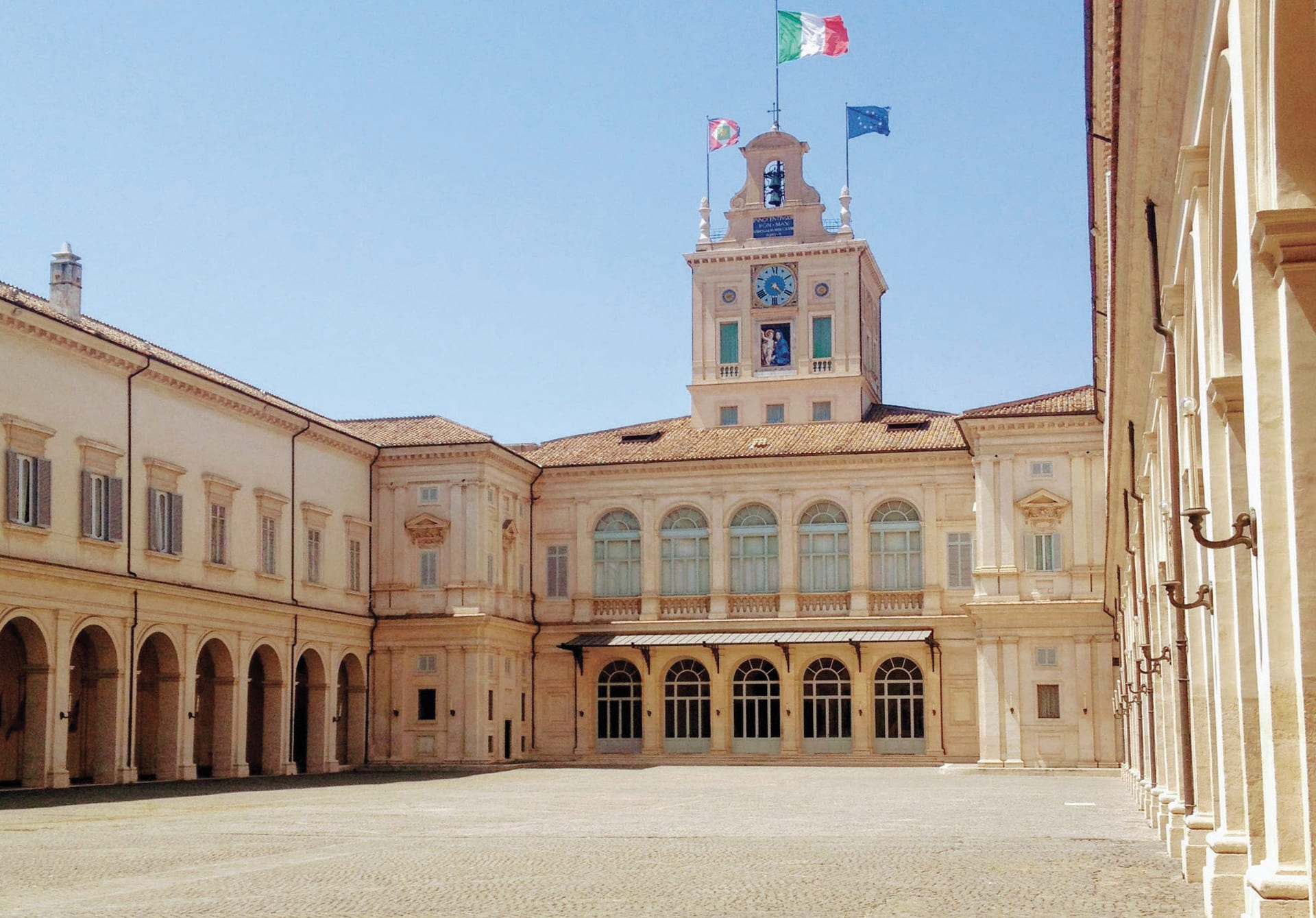
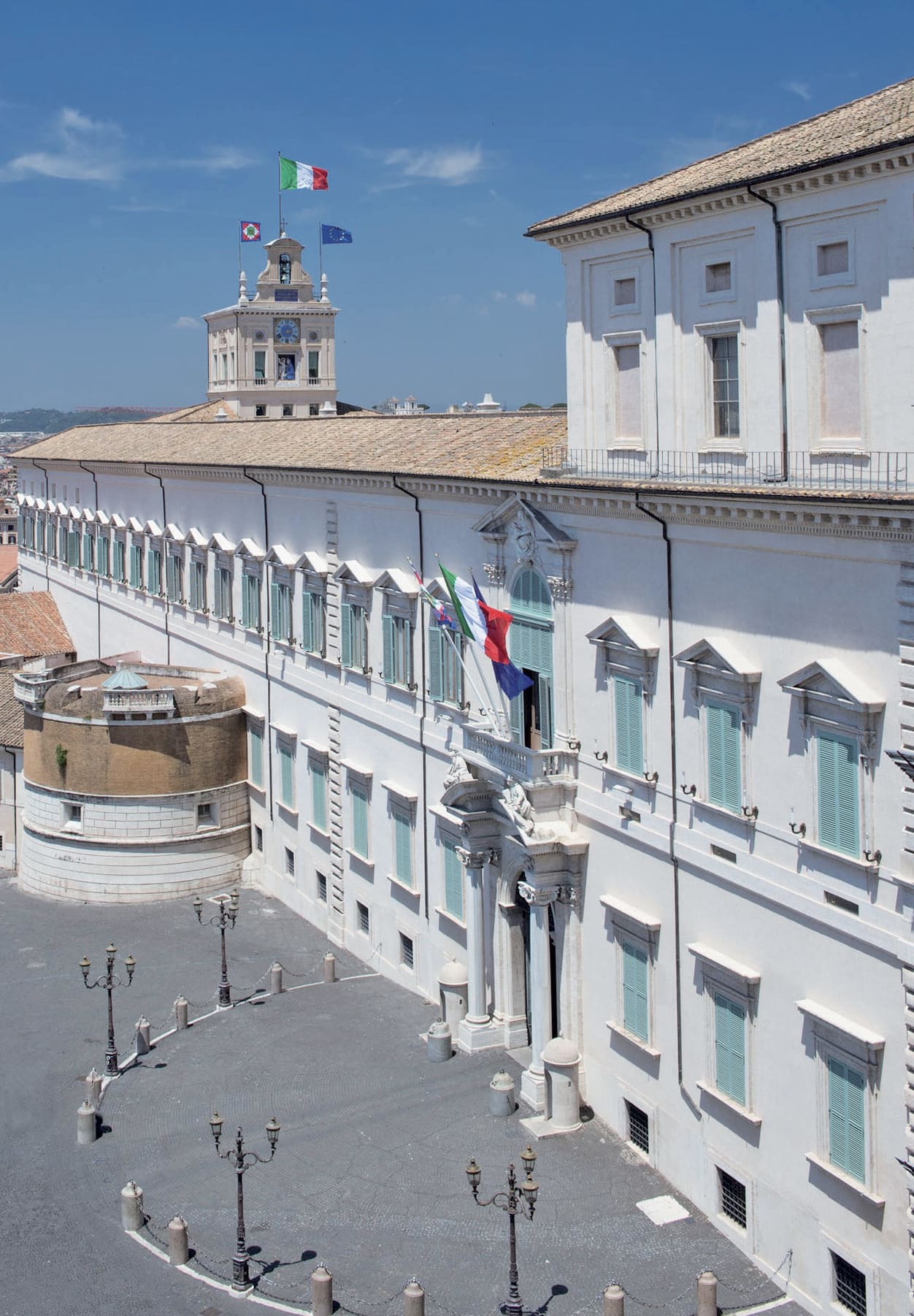
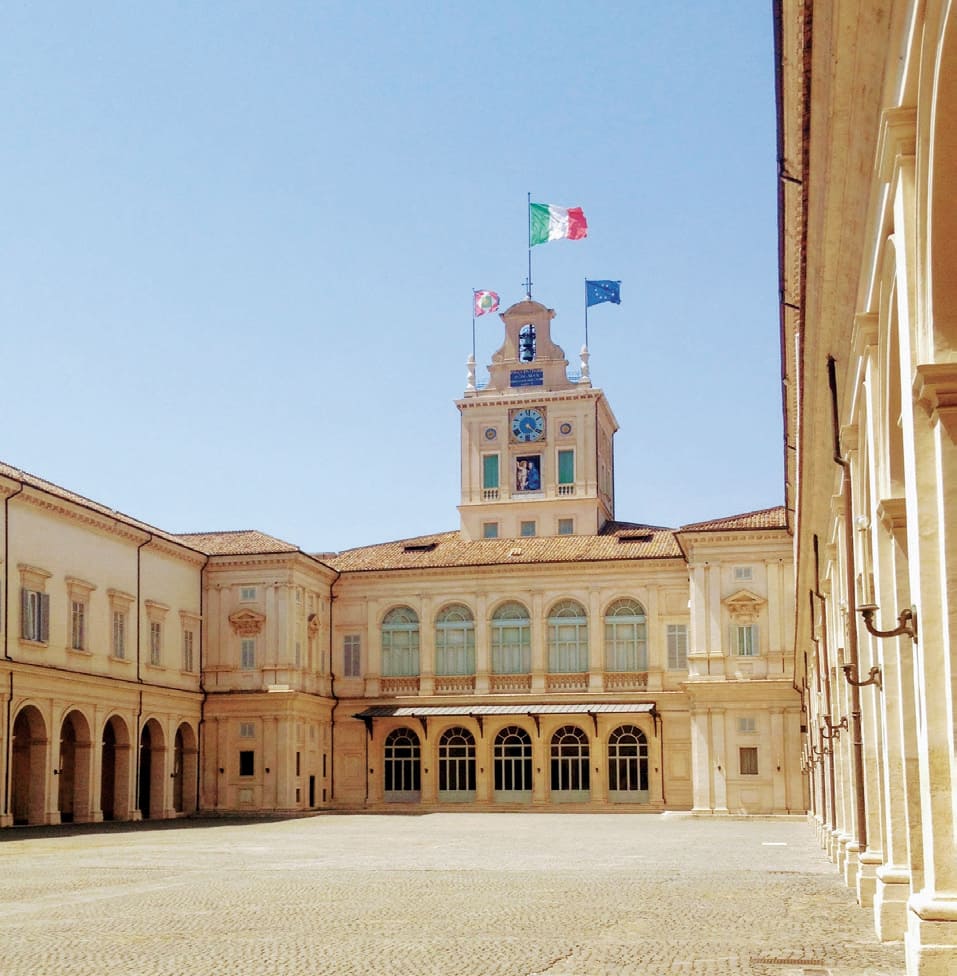
Perched atop the highest of Rome’s seven hills, the Quirinal Palace has watched over the city for centuries. Its origins reach back to ancient Rome, when a temple to the god Quirinus stood on this very spot. Later came imperial baths and sun temples, and much later still, in 1570, Pope Gregory XIII chose the hill as the site of his summer retreat.

Successive popes expanded the palace with all the exuberance of the Baroque age. Bernini’s angels, Cortona’s frescoes, Maderno’s halls, an elegant 18th-century coffee house, and a lavishly painted pavilion are just some of the treasures left behind. By the time Italy was unified in the 19th century, the Quirinal had become one of the world’s largest palaces. And what was first home to popes and kings, finally became the residence of the presidents of the Italian Republic.

Today the palace remains a working seat of state, yet it welcomes visitors year-round. Its grand courtyard, imperial apartments, and endless corridors offer a rare glimpse into layers of papal, royal, and modern Italian history. The surrounding gardens—cultivated since the 1600s and normally closed to the public—unfurl over four serene hectares; they open for regular visits on guided tours and, exceptionally, every year on June 2, Italy’s Republic Day.

Touring the palace
There are two itineraries available. The classic 90-minute tour offers an overview of the Piano Nobile and the ground-floor exhibits, including an engaging display on the palace’s origins and the Italian constitution. The extended 2.5-hour tour adds the Vasella Room, the gardens, and the remarkable carriage collection housed in the former papal stables.

What you’ll experience
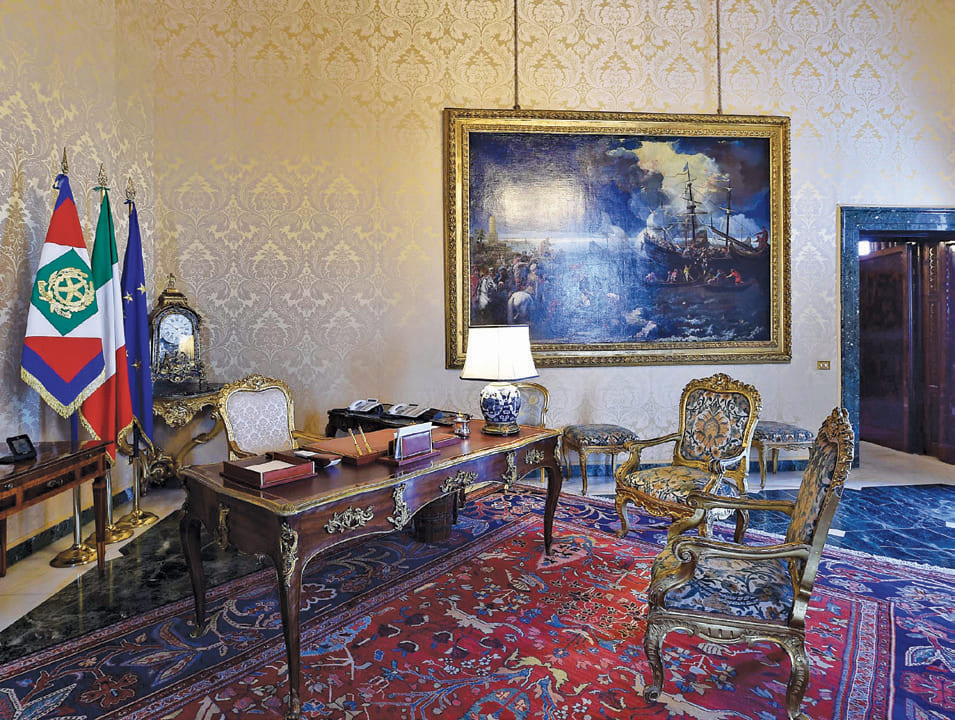
A visit to the Quirinal is a walk through centuries of Italian grandeur. Frescoed salons open onto rooms once used by popes, kings, and presidents. Glittering Murano chandeliers reflect on polished floors; ornate libraries, private chapels, spiral staircases, and royal relics reveal stories of courtly life. Highlights include: The Sala di Druso, once a papal audience chamber and later King Umberto I’s bedroom; the Paolina Chapel, still used for intimate concerts; the President’s Study, where global leaders are welcomed; Napoleon’s private “Salottino”. The Piffetti Library, an 18th-century gem; Mascherino’s 16th-century spiral staircase; Queen Margherita’s exquisite embroidered ball gown; dozens of historic baby prams, carriages, and royal curiosities.

The tour culminates in the historic stables, where dozens of ceremonial carriages recall the pageantry of eras past. Reservations are required: palazzo.quirinale. it/visitapalazzo/prenota.html

  • An aerial view of the palace
    An aerial view of the palace
  • The President’s Study
    The President’s Study

    Photos courtesy of Ufficio Stampa Quirinale

The Corazzieri: towering guardians of tradition
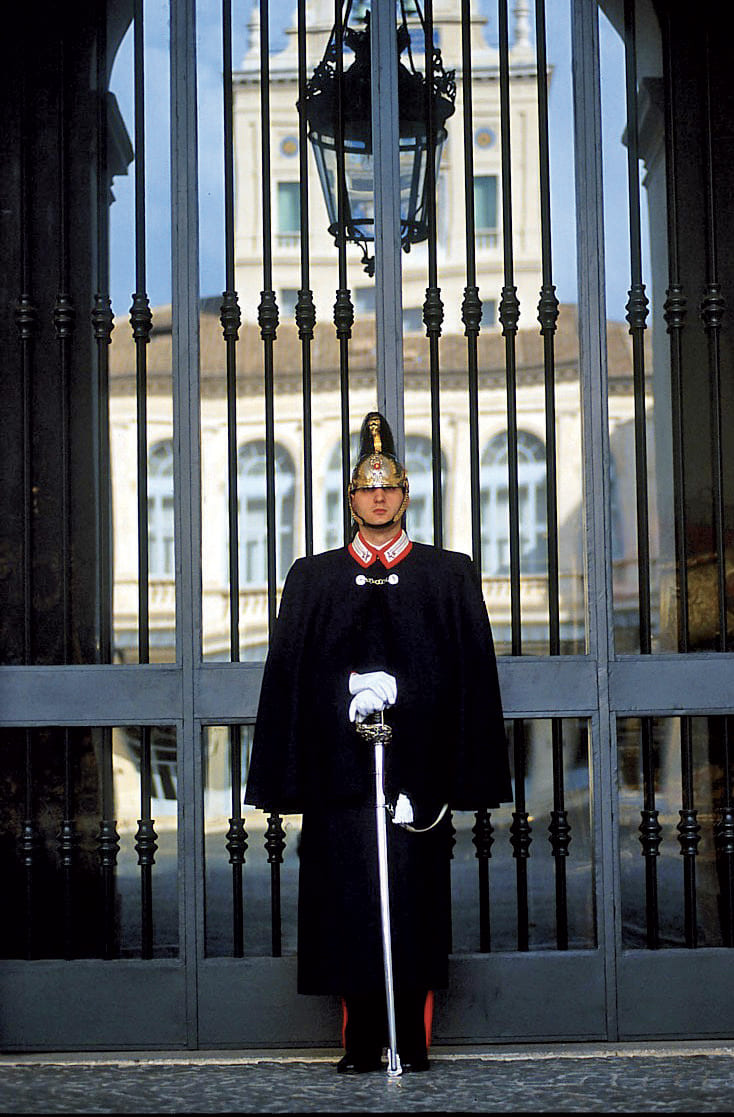
At Rome’s Quirinal Palace, grandeur arrives on horseback. The Corazzieri, the Italian Republic’s elite mounted guard, are an unforgettable presence: tall, polished, and steeped in ceremony. Part of the Carabinieri, this exclusive corps numbers just 280 men, each selected for exceptional discipline as well as for their height, standing over six feet tall. Their striking appearance is completed by hand-stitched uniforms and gleaming ceremonial armor, worn during state events and presidential escorts. Their story dates back to the 16th century, when a mounted guard corps was formed to protect the House of Savoy. Over time, the Corazzieri evolved into a symbol of prestige and loyalty, serving kings and, since 1946, the President of Italy. Today, visitors can glimpse this tradition up close. For the first time, the Corazzieri barracks—set within the serene grounds of Santa Susanna—are open for guided Saturday tours. Inside, you’ll find stables, historic armor, and ceremonial treasures, offering a rare behind-the-scenes look at one of Italy’s most distinguished institutions. Book your ticket on palazzo.quirinale.it/visitapalazzo/ prenotacaserma.html

Continue reading

What’s on this Month – June 2026

What’s on this month
Dante Ferretti at the Musei di San Salvatore in Lauro, Tragicomica at the MAXXI museum, Piero di Cosimo’s Magdalene at the VIVE – Vittoriano and Palazzo Venezia, Pablo Atchugarry at the GNAMC, Katsushika Hosukai at the Palazzo Bonaparte, Robert Mapplethorpe at the Ara Pacis museum, and more.
Maurizio Cattelan. Comedian, 2019. Ph. Zeno Zotti. Courtesy, Maurizio Cattelan’s Archive and Galleria Perrotin

Maurizio Cattelan. Comedian, 2019. Ph. Zeno Zotti. Courtesy, Maurizio Cattelan’s Archive and Galleria Perrotin

Tragicomica: Italian Art from the Late 20th Century to Today

All Month

They say that laughing to the point of tears reveals life’s mix of comedy and tragedy, and this exhibition explores that same duality in Italian art. On view at MAXXI – National Museum of 21st Century Arts until September 20, Tragicomica brings together more than 300 works by 130 artists active in the last 70 years. The show highlights how irony, humor, and contradiction run through Italian culture. Rather than following a traditional art history timeline, the exhibition offers a fresh perspective— challenging the established canon and presenting a more layered, unconventional view of Italy’s artistic evolution. You’ll encounter both iconic and lesser-known works by artists such as Gino De Dominicis, Piero Manzoni, Lucio Fontana, Maurizio Cattelan, Alighiero Boetti, Carol Rama, and Monica Bonvicini—all of whom explore the tension between the serious and the absurd. maxxi.art

Dante Ferretti. With My Eyes

All Month

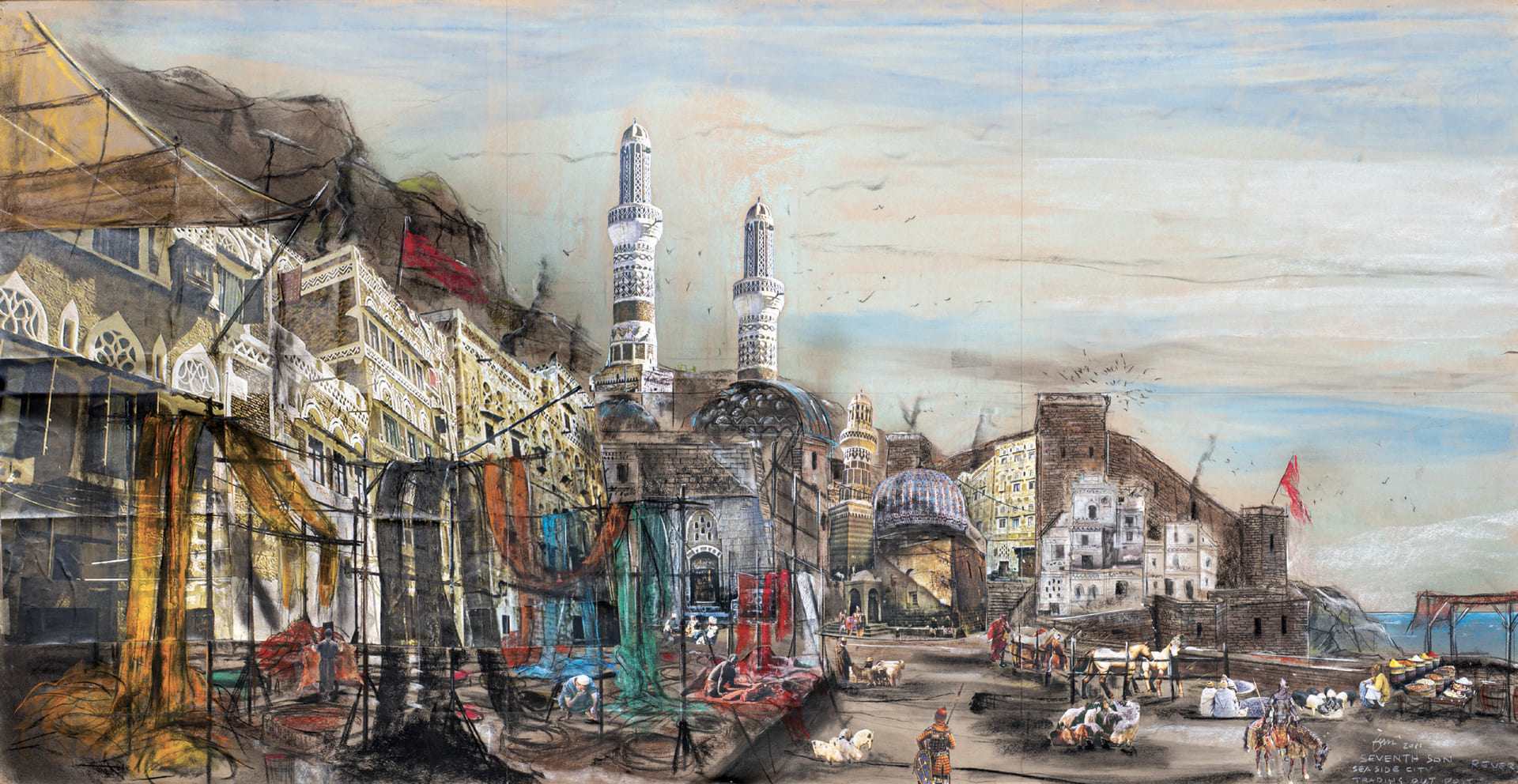
The exhibition Dante Ferretti. With My Eyes at the Musei di San Salvatore in Lauro is dedicated to the great set designer Dante Ferretti, a three-time Oscar winner who worked with directors like Fellini and Scorsese. The exhibition (a sketch on opposite page) shows how film sets are created, using original sketches, paintings, and preparatory materials, the very first steps in building a movie. The show highlights Ferretti’s hands-on, artistic approach, based on study and imagination, and lets visitors see how an idea becomes a real set. Through his work in cinema, theater, and opera, the exhibition offers a look inside the creative process of one of today’s most important set designers, showing how crucial set design is in shaping the images and worlds of film. conimieiocchimostra.it

Piero di Cosimo’s Magdalene: Art, History, and Women’s Lives in Renaissance Florence

All Month

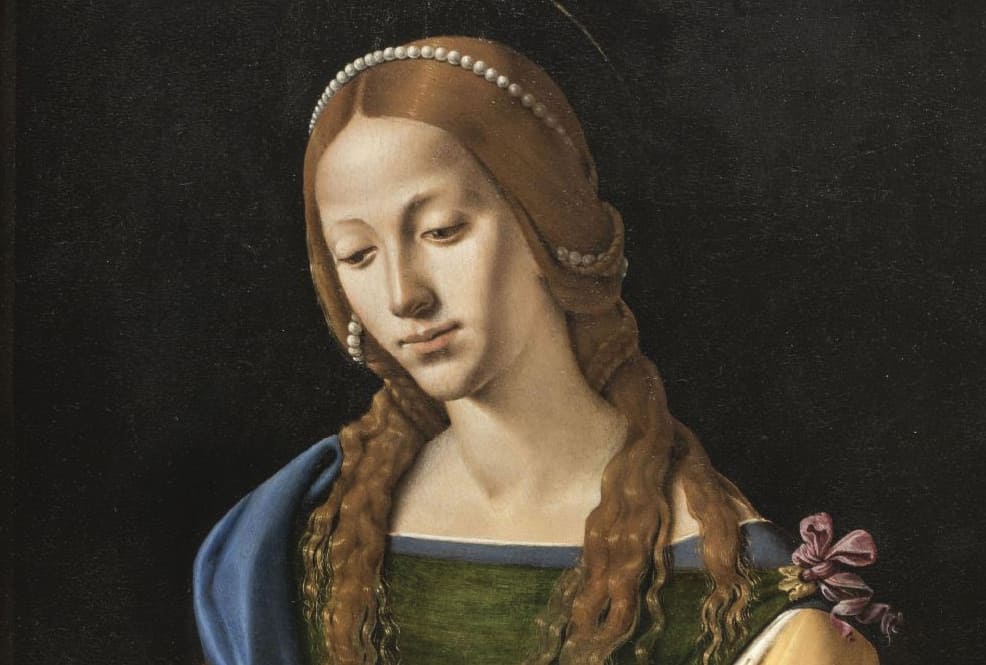
Until 5 July, the VIVE – Vittoriano and Palazzo Venezia will be welcoming visitors with the exhibition Piero di Cosimo’s Magdalene: Art, History, and Women’s Lives in Renaissance Florence. The exhibition features a precious panel painting by Piero di Cosimo (1462–1522), The Magdalene, preserved in the collection of the National Galleries of Ancient Art at Palazzo Barberini and exceptionally loaned to the VIVE. Piero di Cosimo is renowned for a highly personal artistic language, marked by meticulous attention to detail and influenced by masters such as Domenico Ghirlandaio and Leonardo da Vinci. In this work, Piero di Cosimo portrays Mary Magdalene as a young woman of his own time: a fifteenth-century Florentine, absorbed in her book and surrounded by objects drawn from her daily life. It is precisely these everyday items that inspire the exhibition’s concept: painting as a gateway into the lives of women in Renaissance Florence and the world that surrounded them. vive.cultura.gov.it
Photo Daniele Cortese

Photo Daniele Cortese

Pablo Atchugarry. Sculpting Light

Until June 21

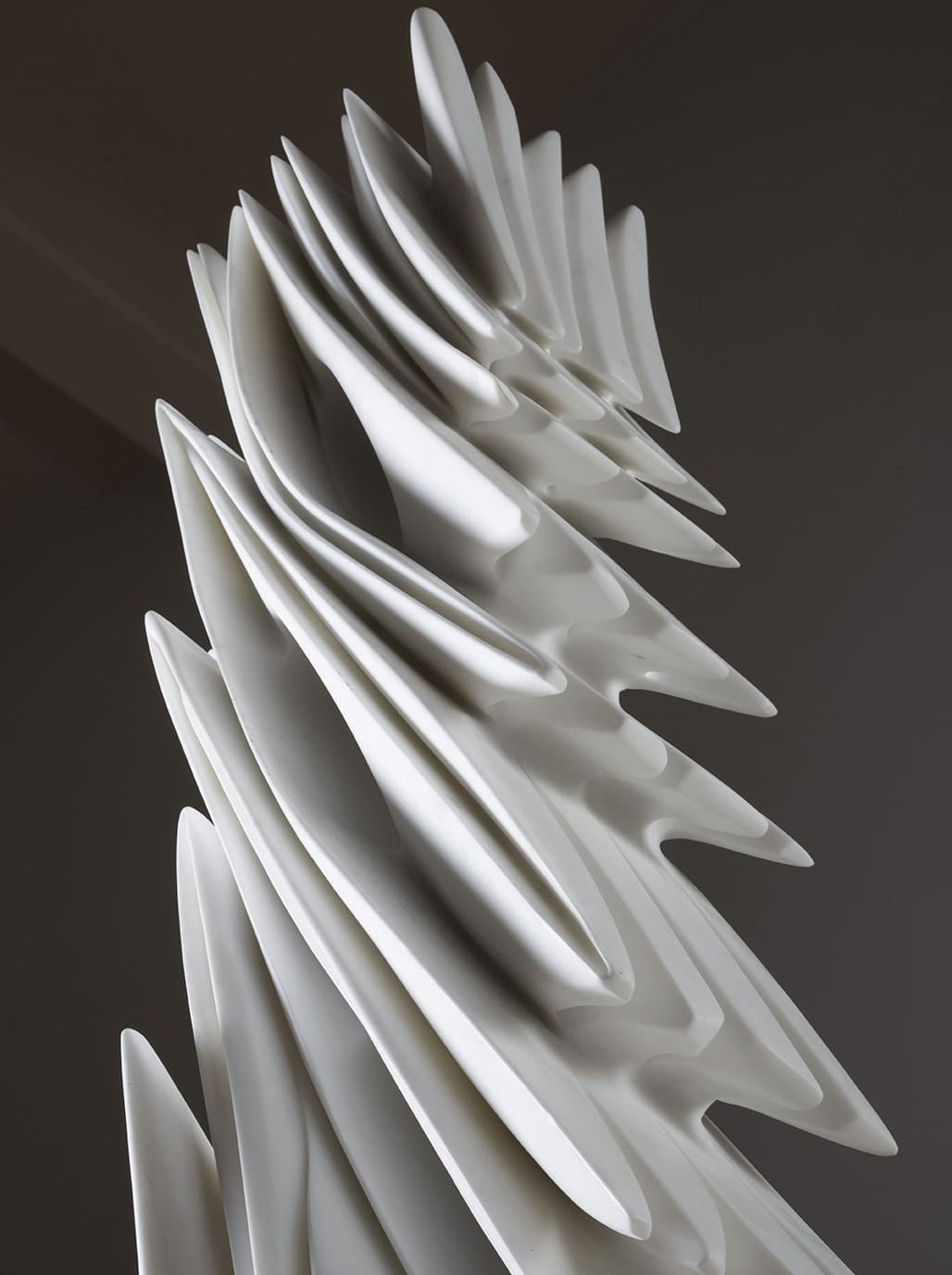
This month, the Galleria Nazionale d’Arte Moderna e Contemporanea will be presenting Pablo Atchugarry. Sculpting Light, an exhibition on Uruguayan-born, Italian-adopted artist Pablo Atchugarry. Featuring around fifty sculptures, the show offers a broad overview of the artist’s research and creative journey, retracing the last thirty years of his career. To mark the occasion, Atchugarry will donate a specially conceived major white marble work, Splendore (2006, pictured), created for the museum, to the collection of the GNAMC. Alongside his celebrated marble sculptures, the exhibition also includes works in wood carved from centuries-old olive tree trunks, enameled bronze, alabaster, and steel. Exceptionally, four sculptures by Atchugarry will be juxtaposed to four masterpieces from the museum’s permanent collection by Jean Arp, Lucio Fontana, Alberto Giacometti, and Henry Moore. gnamc.cultura.gov.it

Katsushika Hokusai: The Great Master of Japanese Art

All Month

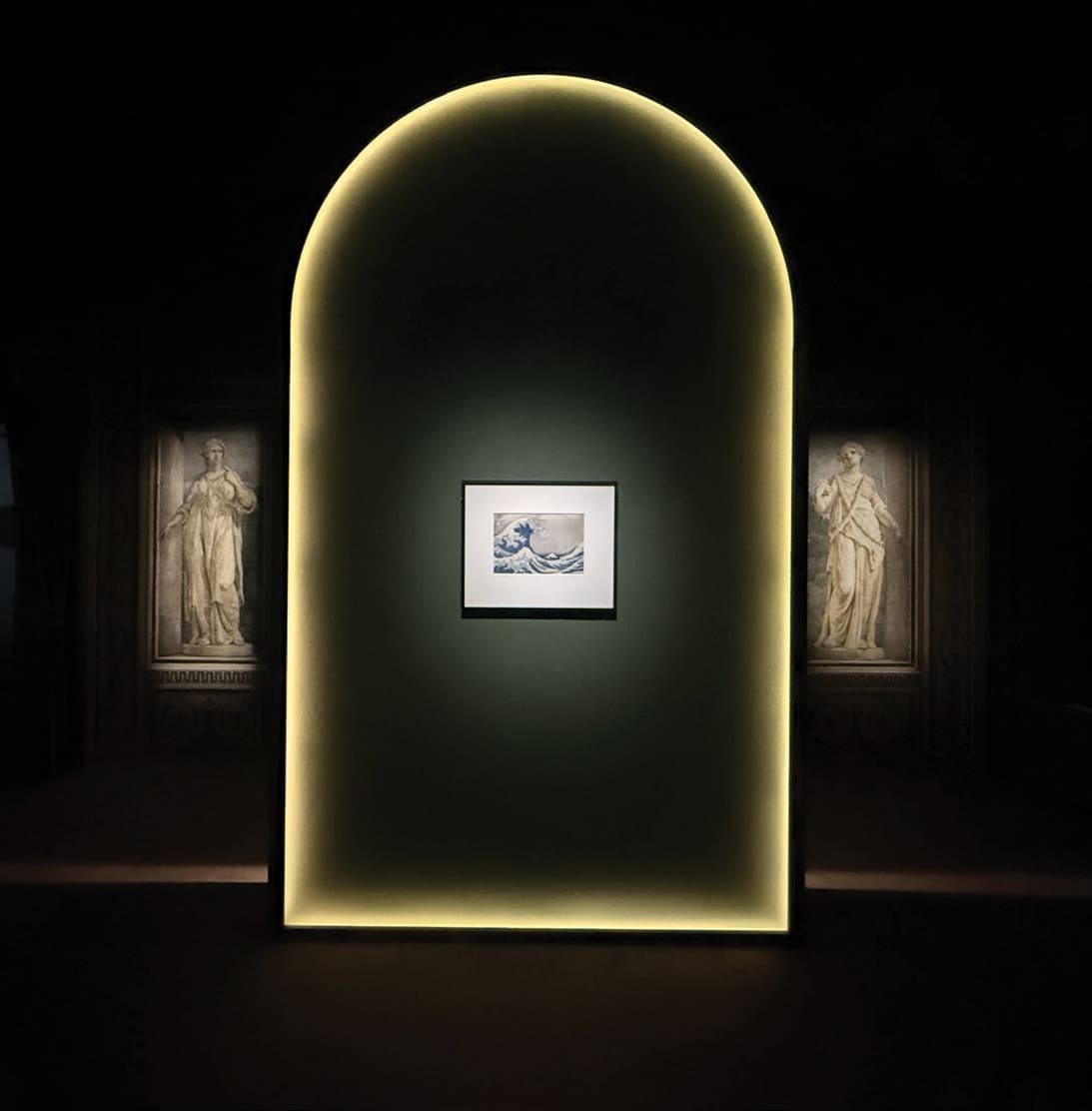
Few artists have shaped the world’s visual imagination quite like Katsushika Hokusai. A towering figure of Japanese art, his iconic ukiyo-e prints capture nature in motion—roaring waves, serene landscapes, graceful women, and glimpses of everyday life—rendered with a poetic sensibility that still feels strikingly modern today. Until June 29, Palazzo Bonaparte hosts Hokusai: The Great Master of Japanese Art, the most extensive exhibition ever dedicated to the artist in Italy. The show traces his remarkable evolution, from early works grounded in tradition to celebrated masterpieces such as The Great Wave off Kanagawa and the renowned series Thirty-Six Views of Mount Fuji. With more than 200 works on loan from the National Museum in Krakow, the experience is further enriched by innovative manga, illustrated albums, rare books and a curated selection of Japanese artifacts. mostrepalazzobonaparte.it

Robert Mapplethorpe. The Forms of Beauty

All Month

American artist Robert Mapplethorpe (New York, 1946–1989) did not simply photograph subjects: he sculpted space through the lens of his Hasselblad camera, imbuing each image with an aura of timeless classicism, defined by geometric vision and a relentless pursuit of perfection. Until October 4, the Ara Pacis Museum hosts the exhibition Robert Mapplethorpe. The Forms of Beauty, a selection of around 200 of his photographs, each exploring the concept of beauty as absolute perfection and formal rigor. Distinguished by a series of previously unseen works, the exhibition focuses on the search for pure form, where the human body, faces, and still lifes are treated with the same meticulous attention to light and geometry. arapacis.it
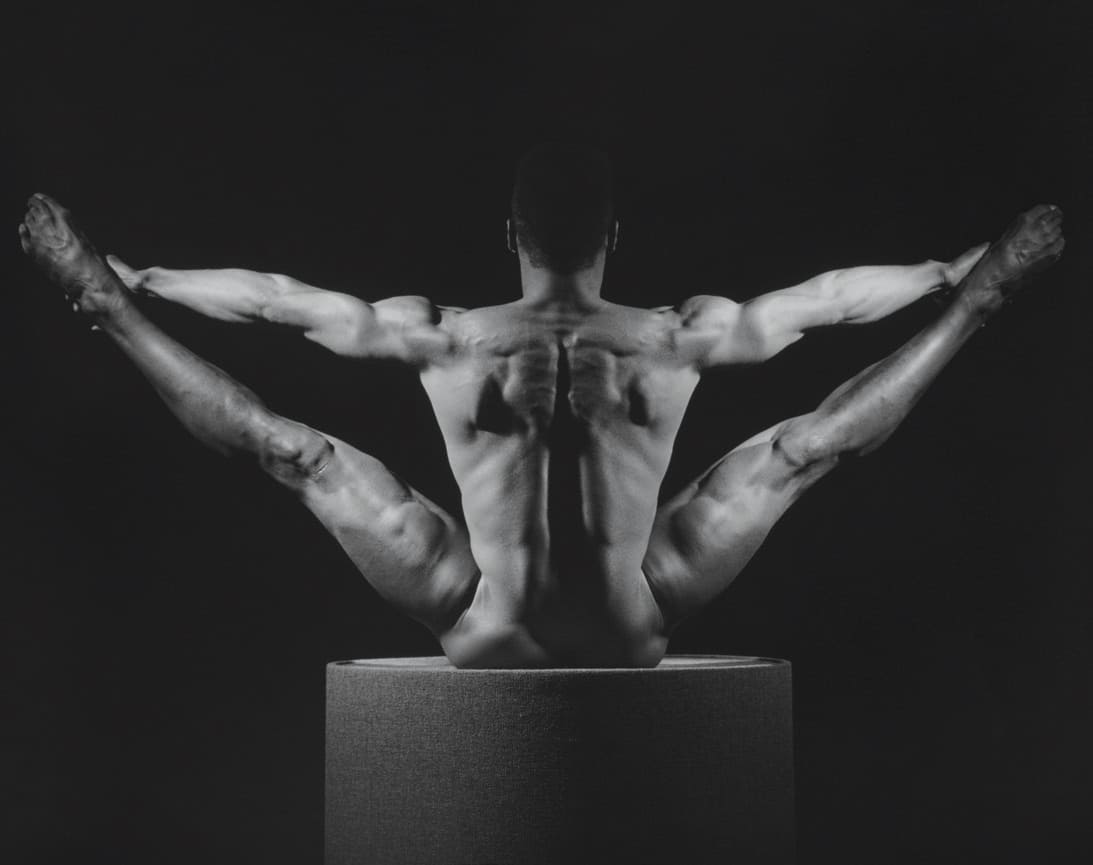
Derrick Cross, 1985 © Robert Mapplethorpe Foundation. Used by permission

Derrick Cross, 1985 © Robert Mapplethorpe Foundation. Used by permission

More dates on the calendar:

Constantin Brâncuși: The Origins of Infinity. All Month. mercatiditraiano.it
Angels: Messengers, Guardians and Wanderers. All Month. museicapitolini.org
Vasari and Rome. All Month. museicapitolini.org
Caravaggio and the Masters of Light. Museo Storico della Fanteria. All Month.
The Last Matisse. Museo Storico della Fanteria. All Month. navigaresrl.com
Robert Doisneau. All Month. Museo del Genio. arthemisia.it
Habsburg Wonders from the Kunsthistorisches Museum. All Month. palazzocipolla.com
Metamorphosis: Ovid and the Arts. From June 23. galleriaborghese.cultura.gov.it
Girandola of Castel Sant’Angelo (firework display). June 29. castelsantangeloroma.it
Flowers: Marvelous Nature. All Month. chiostrodelbramante.it
Mario Schifano. All Month. palazzoesposizioniroma.it
Cosmo Sallustio. Magic of Reality. June 6-28. lavaccheriaroma.it
See the listings section on pages 49–53 for further details.

Continue reading

Of peace and power

Sovrintendenza Capitolina ai Beni Culturali

Of peace and power

Explore the Ara Pacis: a reminder of how art and politics merged in ancient Rome
By Leslie Ardengo


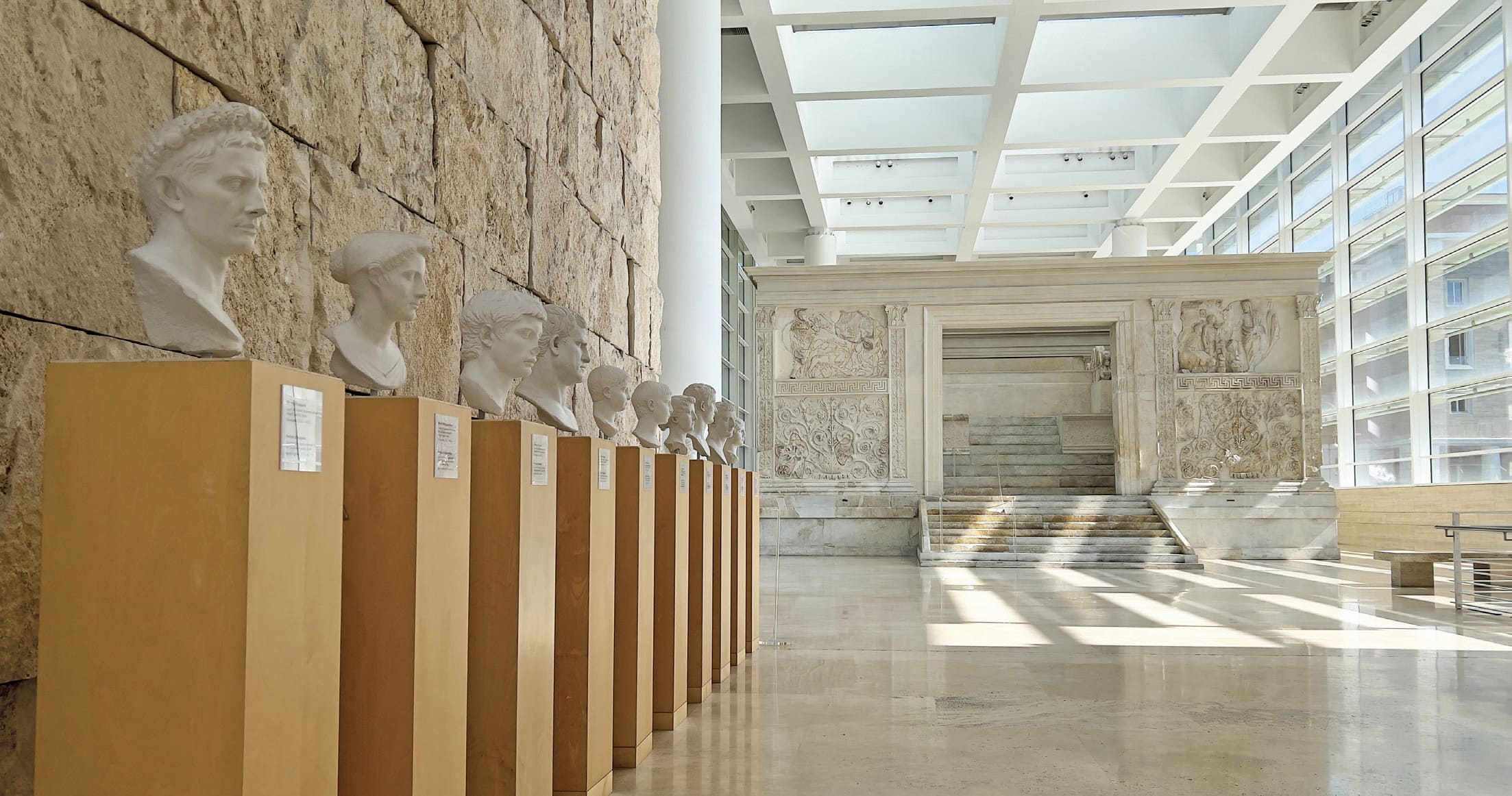
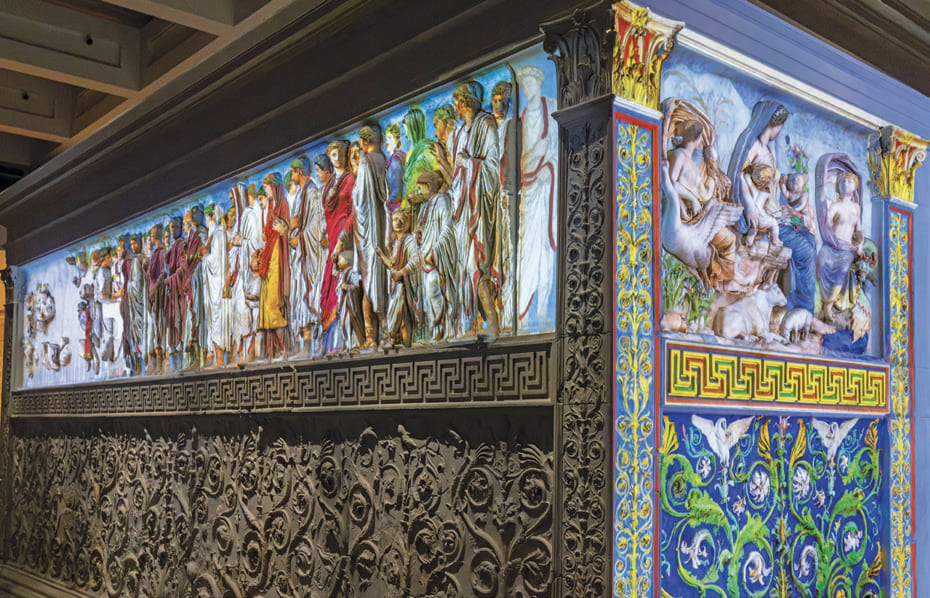
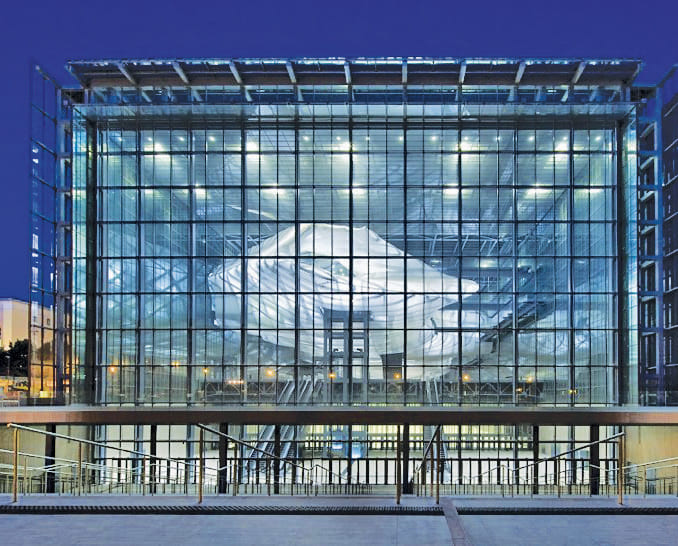
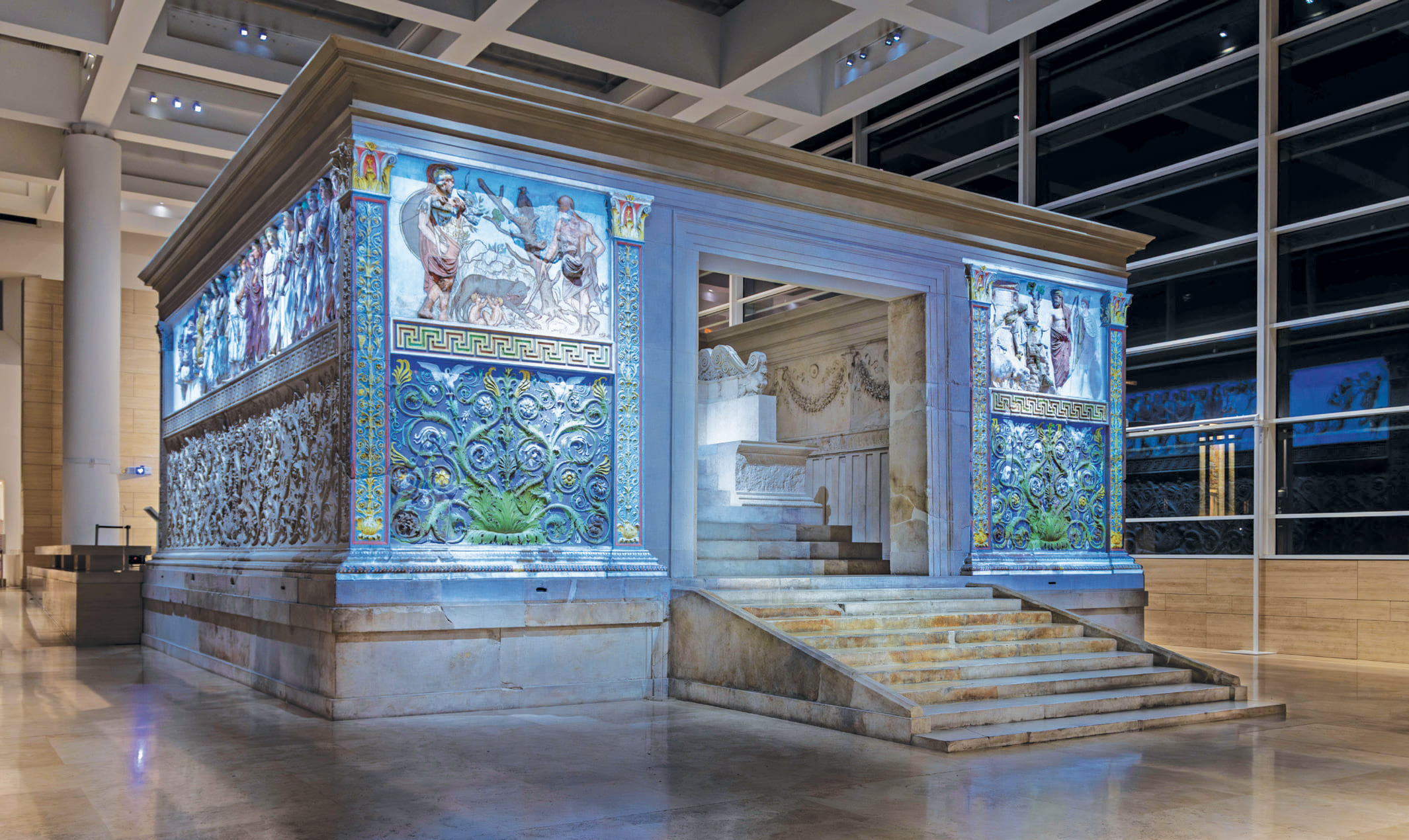
Along the banks of the Tiber and right next to the Mausoleum of Augustus stands the Ara Pacis Augustae, an altar built in 13 BCE to celebrate Emperor Augustus’s victories in Spain and Gaul, the resulting period of peace, and the stability of his rule. Encased within a modern glass pavilion designed by Richard Meier in 2003, the altar features splendorous narrative reliefs: lush garlands of fruit and flowers, processions of senators and priests, and mythological scenes linking Augustus’s reign to divine destiny.

Most impressive is the frieze of the imperial family walking together in solemn dignity, a rare, almost intimate glimpse of Rome’s ruling household immortalized in stone. The museum’s clean, sunlit design allows the carvings to be appreciated much as they would have appeared two millennia ago: gleaming, intricate, and unabashedly propagandistic. Although the altar was intended as a tribute to Augustus’s vision of a Rome at peace, it was mainly a persuasive display of who holds power and why, and a way for Augustus to show how political order and cultural flourishing went hand in hand.

Today, the brand-new multimedia project The Ara Reveals Itself offers an immersive experience — thanks to videomapping technique and with narration in your language through headphones — allowing you to discover the history of this fascinating monument that has survived to the present day. Tickets at arapacis.it.

Continue reading

A controversial master

A controversial master

A controversial master

Revisiting the life and legacy of best-selling painter Jack Vettriano


One of the most popular and widely reproduced artists of all time, Scottish painter Jack Vettriano passed away last year in Nice. Through July 5, Palazzo Velli in Trastevere will be celebrating the beloved artist with an exhibition that traces his life and career through more than eighty of his works. These include ten oil paintings, unique and certified works on museum-quality paper created especially for the occasion, a series of photographs taken in the artist’s studio by Sunday Times photographer Francesco Guidicini, and a video in which Vettriano reflects on his life and artistic evolution.

Born Jack Hoggan, Vettriano’s career was often dismissed by the art establishment, which never quite forgave his self-taught background and accused him of reviving a light, decorative aesthetic. Yet he achieved remarkable popularity among collectors and painting enthusiasts, who admire his gift for creating evocative atmospheres, stirring intense emotion, and capturing moments charged with sensuality.

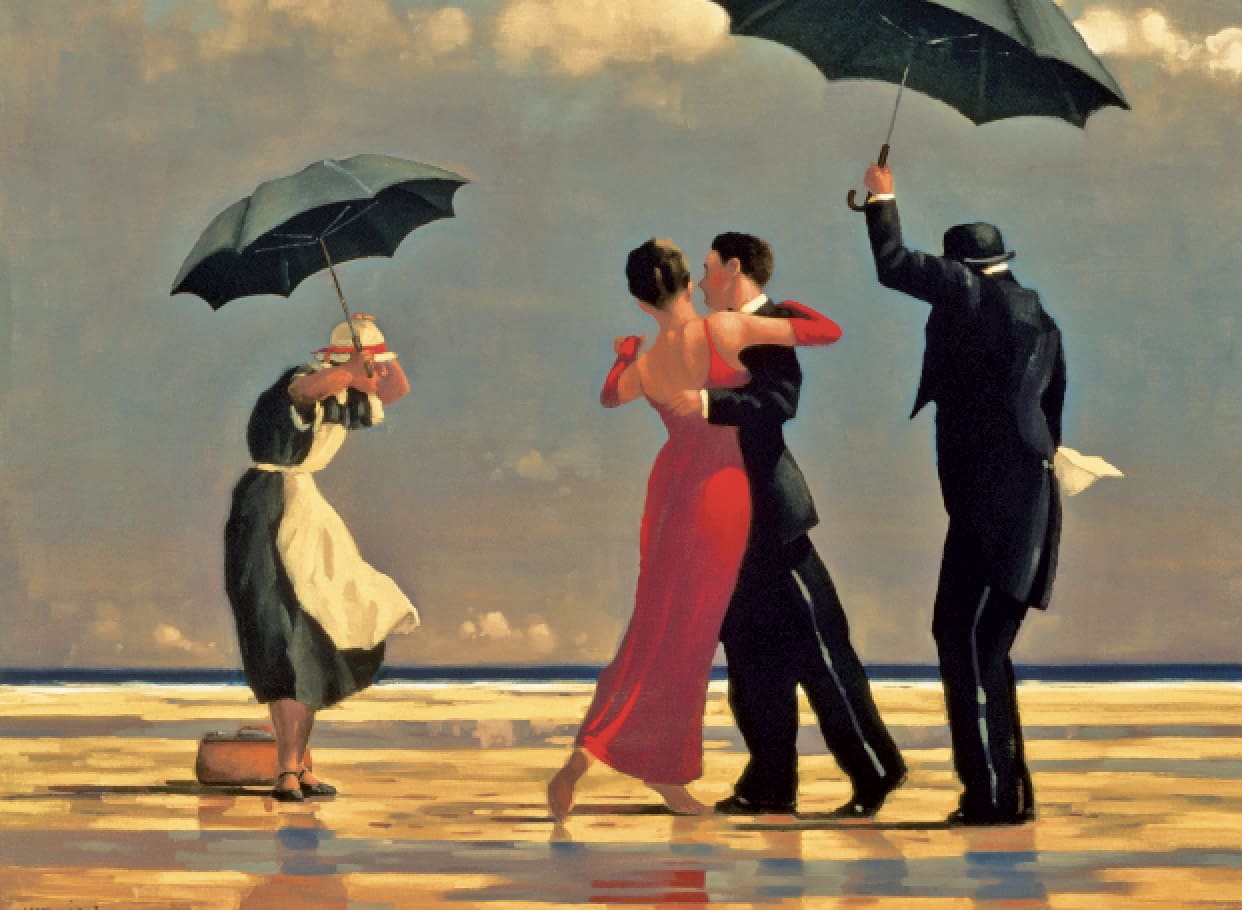
Indisputable proof of his public appeal came in 2004, when one of his most iconic works, The Singing Butler (pictured) sold at Sotheby’s for nearly £750,000. The painting depicts a couple dancing gracefully along a windswept shoreline on a grey, blustery day, sheltered by the open umbrellas of a maid and a butler who, in Vettriano’s imagination, hums the melody of Fly Me to the Moon made famous by Frank Sinatra. palazzopallavicini.com

Continue reading

The return of Momix

Ph ©Max Pucciariello

Ph ©Max Pucciariello

The return of Momix

Pendleton’s new Botanica is a journey through nature and transformation


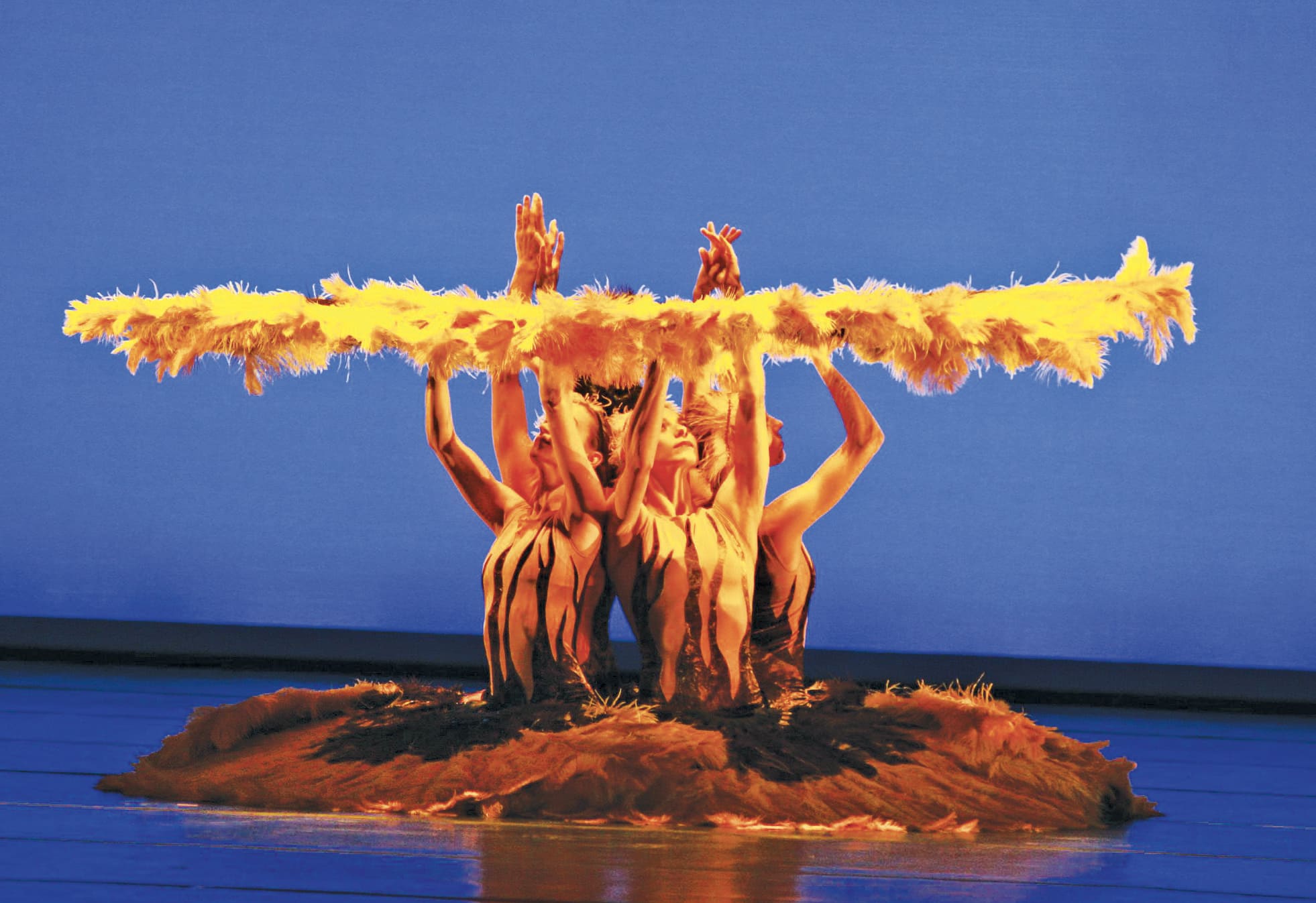
The great choreographer Moses Pendleton, known for his Momix productions, returns to the Teatro Olimpico with an evolved version of his popular 2009 creation, Botanica. This new Momix work, on until May 10, unfolds like a living organism and has now been reshaped and expanded on stage, evolving from its original form into new and unexpected transformations.

Through Pendelton’s unmistakable visual and choreographic language, Botanica – Season 2 draws audiences into the spellbinding second chapter of Botanica, a sensual, immersive experience that makes us feel delightfully small before the hum of wasps, the lush sensuality of marigolds, the grandeur of branches stretching skyward, and the life-giving energy of the sun. Nature has always been Pendelton’s guiding muse, expressing the artist’s visionary and eco-friendly views and offering an infinite source of inspiration. Enhanced with striking new technological effects and three-dimensional imagery, the production restores a sense of harmony and represents the perfection of the life cycle, gently instilling the awareness that safeguarding the beauty and wonder of our planet is a responsibility we all share. teatroolimpico.it

Continue reading

Where flavor meets the tide

Where flavor meets the tide

Handmade pasta and pristine seafood come together in this lively open-kitchen restaurant


Tucked away in the lively streets of Trastevere, Le Mani in Pasta has earned a loyal following as one of the neighborhood’s most reliable culinary stops. Always bustling with energy, the restaurant combines the warmth of Roman hospitality with the refinement of a seafood-focused kitchen with a highlight on pasta. Its open-plan cooking area adds to the charm, allowing diners to watch the chefs at work and lending an air of authenticity that feels both rustic and theatrical.

The menu strikes a balance between traditional Roman flavors and Mediterranean coastal influences. Starters set the tone with delicate preparations such as sea bass carpaccio laced with truffle, fresh tuna tartare, and a light yet satisfying artichoke and calamari salad. As the restaurant’s name suggests, pasta is the undisputed highlight here, and while the classics—carbonara, amatriciana, and arrabbiata— are well executed, it’s the seafood specialties that capture the spotlight. Favorites include tagliolini with shrimps, sea bream, and cherry tomatoes; paccheri with scampi and zucchini; gnocchi with clams and radicchio; and the indulgent linguine with lobster.

Main courses continue the celebration of the sea, from Catalan-style lobster and oven-baked turbot with potatoes to grilled pezzogna or the daily catch. Meat lovers will also find plenty to enjoy, from tender lamb chops to Roman-style saltimbocca or a fragrant orange-glazed filet. To finish, the gorgonzola semifreddo offers an adventurous twist, while the rich chocolate cake satisfies traditional sweet cravings.

With an attentive staff, a well-stocked wine cellar, and a convivial atmosphere, Le Mani in Pasta remains a must-visit for anyone seeking an authentic yet highend dining experience.

Via dei Genovesi, 37. Tel 065816017.

Continue reading

The Art of slow smoke

The Art of slow smoke

To savor a cigar or a pipe is to immerse yourself in the slow, silken art of smoking


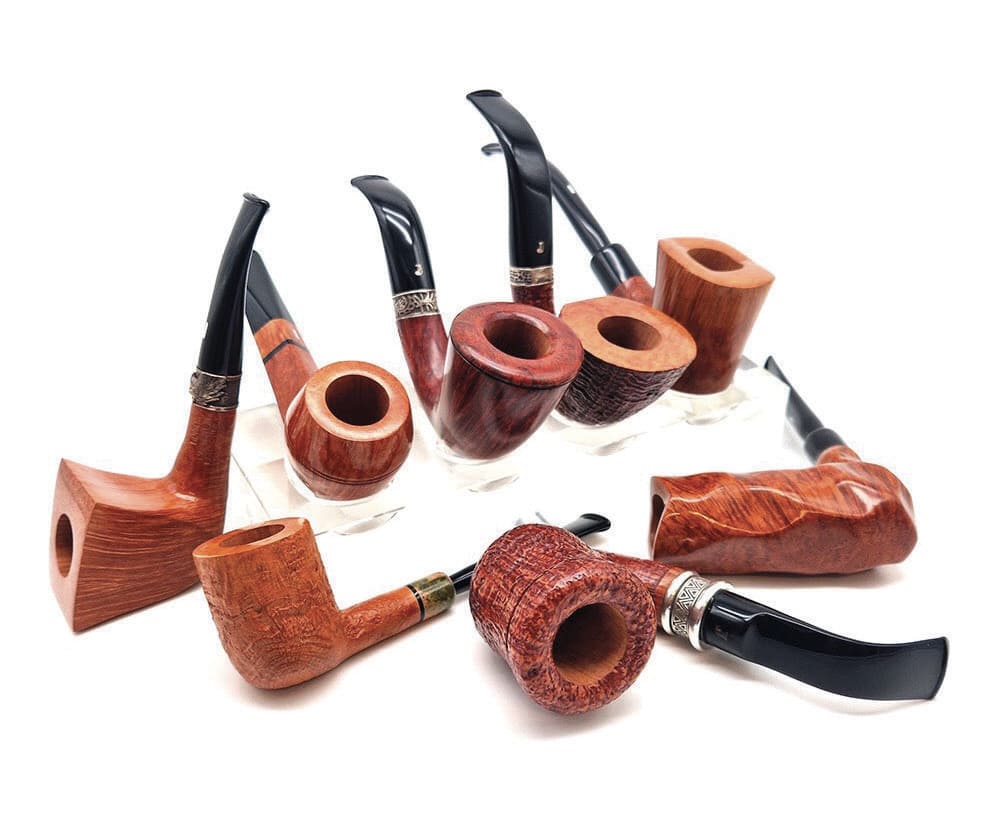
Rome reveals its character in many ways—but for those who appreciate slower pleasures, the city offers a refined world centered around cigars and pipes. Tucked between historic streets and elegant neighborhoods, a number of specialized shops continue to cultivate this tradition, combining expertise, craftsmanship, and a deep-rooted passion for tobacco culture.

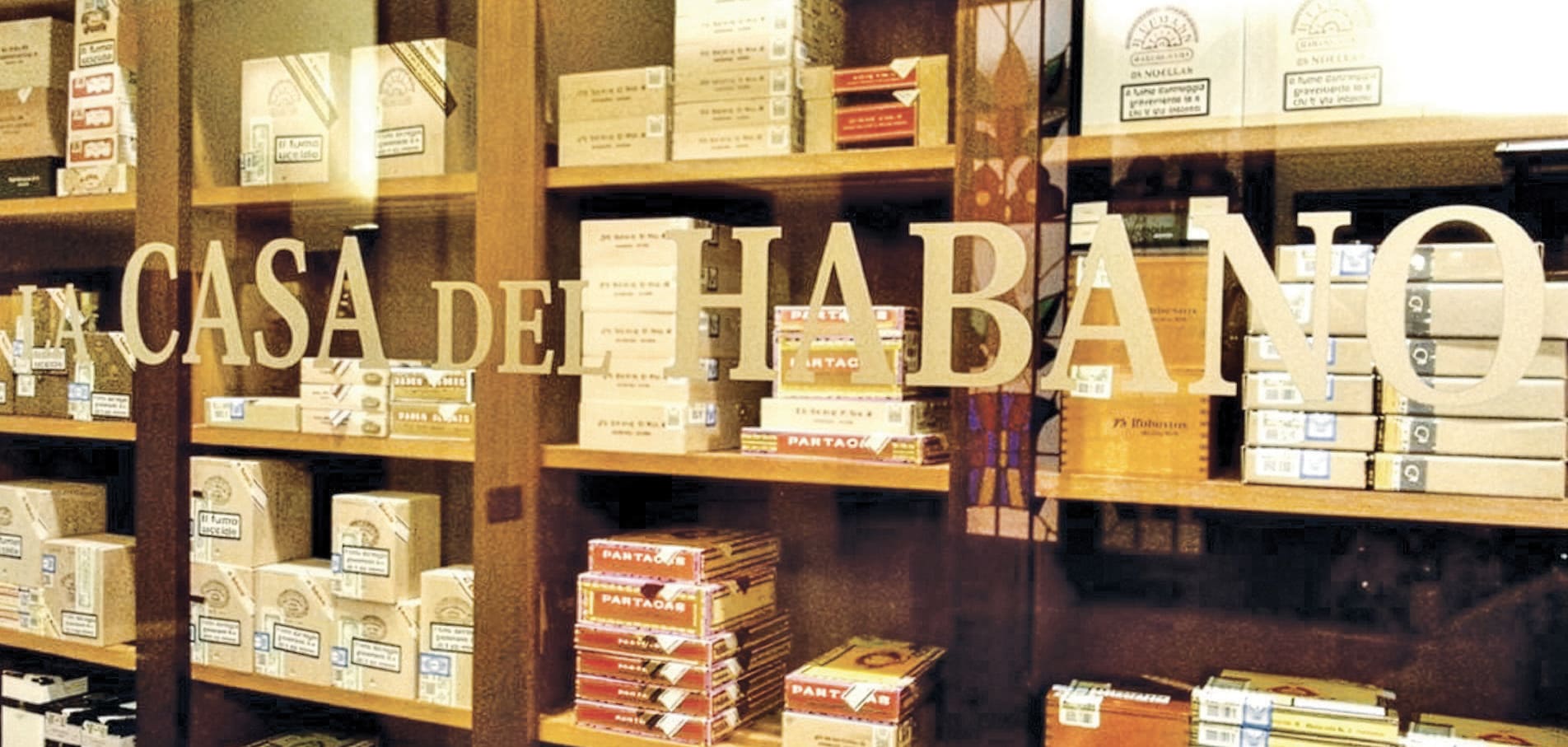
A natural starting point is Fincato, a historic name established in 1932. More than just a shop, it feels like a destination for enthusiasts, with a carefully curated selection that ranges from finely crafted briar and meerschaum pipes to an extensive variety of cigars. Alongside tobacco blends and accessories, visitors will also find an assortment of spirits and French wines, making it a place where taste extends beyond smoking itself. Via della Colonna Antonina, 34. fincatolacasadelhabano.com

Not far away, Lupidi has built a strong reputation since opening in 1976. Known for its well-balanced selection, it caters to both seasoned smokers and newcomers, offering a range of internationally renowned cigar brands alongside a solid pipe collection. Piazza Giuseppe Verdi, 2. lupidi.it

For those particularly drawn to Cuban cigars, MF Tabacchi dal Mondo stands out as a key reference point. Recognized as a Habanos Specialist, the shop combines a wide premium selection with a clear focus on promoting the culture behind slow smoking. Beyond cigars, its offering extends to pipes, spirits, and refined accessories, reflecting a broader lifestyle approach rather than simple retail. Via E. Faà di Bruno, 73. mftabacchidalmondo.it

In the Prati district, Sansone – The Smoking Store takes a more contemporary approach, with an extensive range of accessories and services. From humidors and travel cases to restoration and cleaning, the shop supports every aspect of the smoking experience, even offering bespoke services for private events and corporate occasions. Viale Giulio Cesare, 18. gustotabacco.it

A different atmosphere awaits at Serpilli, where tradition is palpable. Active since 1960, the shop combines a broad cigar selection with a distinctive collection of antique objects, from vintage snuff boxes to Art Nouveau cases. The result is an environment that feels as much like a small museum as it does a retail space. Via Solferino, 4. gustotabacco.it

Further out, Tabaccheria Vannicelli represents another long-standing presence, with roots dating back to 1954. Particularly noted for its cigar offering, the shop maintains carefully controlled conditions to preserve quality, while also showcasing a diverse pipe selection that reflects both craftsmanship and variety. Viale Guglielmo Marconi, 600/602. tabaccheriavannicelli.it

Continue reading

Art in bloom

Flickr/Franie Frou

Flickr/Franie Frou

Art in bloom

From symbols of beauty to reflections on life’s transience, flowers have inspired some of Rome’s most vivid works of art
By Andrea Werther


If April’s showers have done their job, Rome in May bursts into bloom—not only in its gardens and parks, but also across its art scene. Throughout the centuries, Roman artists have adorned their works with botanically accurate floral details, often featuring tulips, roses, peonies, irises, carnations, and anemones, sometimes alongside orange blossoms or jasmine. For a flower-themed tour of the city, here are some of the city’s most iconic blossoms.

Loggia of Cupid and Psyche, Villa Farnesina
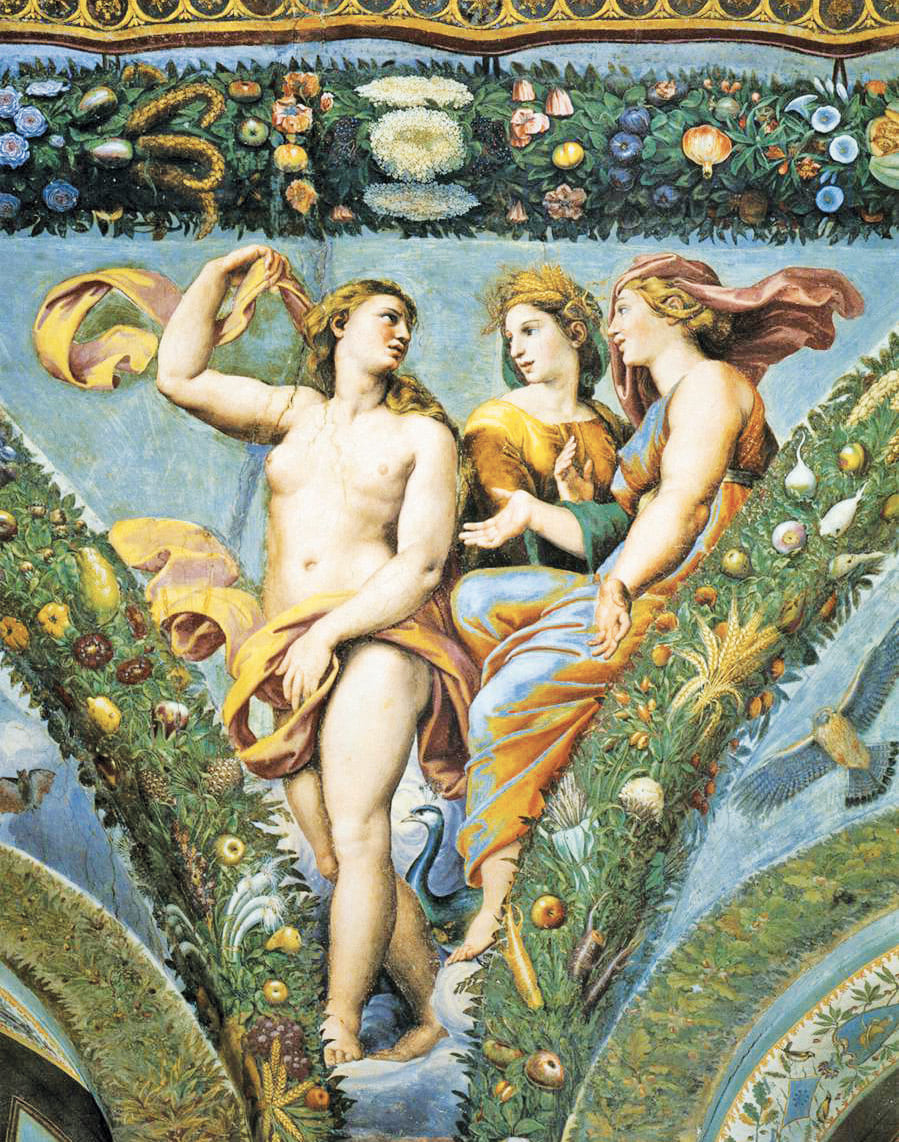
One of Rome’s most enchanting Renaissance spaces, Villa Farnesina is renowned for its frescoes by Raphael and his circle. The Loggia of Cupid and Psyche is its crowning jewel: the vaulted ceiling bursts with mythological scenes framed by lavish garlands of flowers, fruit, and foliage painted by Giovanni da Udine. Featuring over 200 identifiable plant species, including roses, myrtle, laurel, ivy, pomegranate, grapevine, and even exotic arrivals such as maize (corn) and pumpkin, the decorations create an extraordinary suspended garden of color and life.

Vatican Loggias, Raphael
A similar floral triumph can be admired in the Vatican Loggias frescoed by Raphael and his workshop. Inspired by ancient Roman grotesques, the painted decorations display a variety of stylized flowers such as lilies, acanthus leaves, vines, and palmettes. These refined ornamental motifs transform the architectural space into a vibrant celebration of nature and classical harmony.

Mario de’ Fiori (Mario Nuzzi)
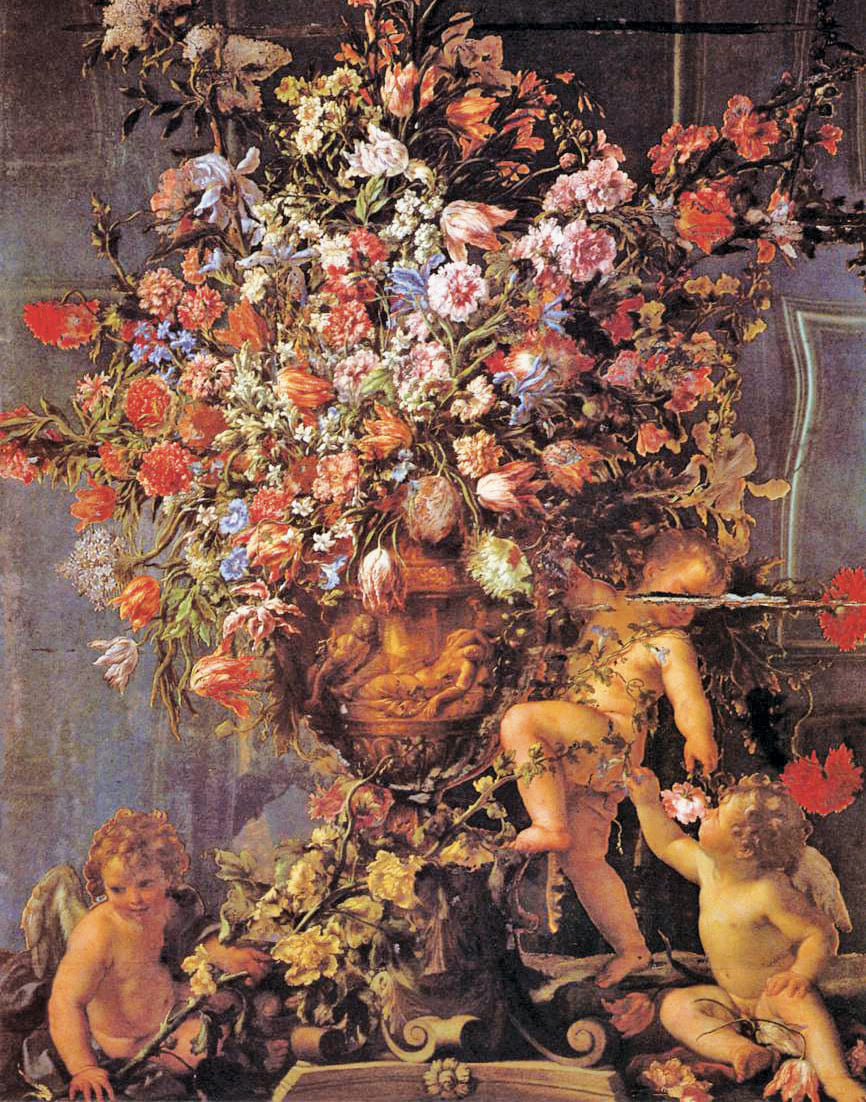
Baroque painter Mario Nuzzi was so celebrated for his exuberant floral still lifes that he became universally known as Mario de’ Fiori. His compositions are theatrical and abundant, with flowers overflowing in dramatic arrangements. One of his most famous works, Mirror with Three Putti, can be admired at Galleria Colonna.

  • The Stadium of Marbles
    wikipedia.org

    Mario de Fiori’s Mirror with Three Putti

  • Ancient handball game
    wikimedia.org

    Giovanni da Udine’s Venus, Ceres and Juno

Michelangelo, Sistine Chapel ceiling (floral details)

Amid the grandeur of the Sistine Chapel ceiling, Michelangelo incorporated subtle yet powerful vegetal motifs. Floral garlands and botanical elements appear in the decorative sections, symbolizing life, creation, and divine abundance. These details enrich the monumental narrative with a sense of natural vitality.

Ara Pacis Augustae
The Ara Pacis offers one of ancient Rome’s most refined celebrations of nature. Along the lower friezes, intricately carved vines, flowers, and leaves unfold in rhythmic patterns. These floral reliefs symbolize peace, prosperity, and renewal.

Hall of Flowers and Fruit, Vatican Pinacoteca
Tucked away in the Vatican Pinacoteca, the Hall of Flowers and Fruit provides a quiet moment of visual delight. Here, expertly painted blossoms and fruit arrangements reveal the artists’ technical mastery and close observation of nature. It is a lesser-known but rewarding stop for lovers of floral imagery.

Jan Brueghel the Elder, Vase of Flowers
Jan Brueghel the Elder transformed flowers into objects of wonder and luxury. His vases combine species that would never bloom together in nature, creating visual catalogs of botanical abundance. At Galleria Borghese, the Vase of Flowers stands as triumphs of Flemish precision and imagination.

Abraham Brueghel, Floral Still Life
Abraham Brueghel’s flower paintings are exuberant and richly colored. Baroque compositions overflow with blooms that dominate the canvas through their vitality and dramatic presence. His works at Palazzo Corsini perfectly capture the lavish spirit of Roman still-life painting.

Casina delle Civette, Villa Torlonia
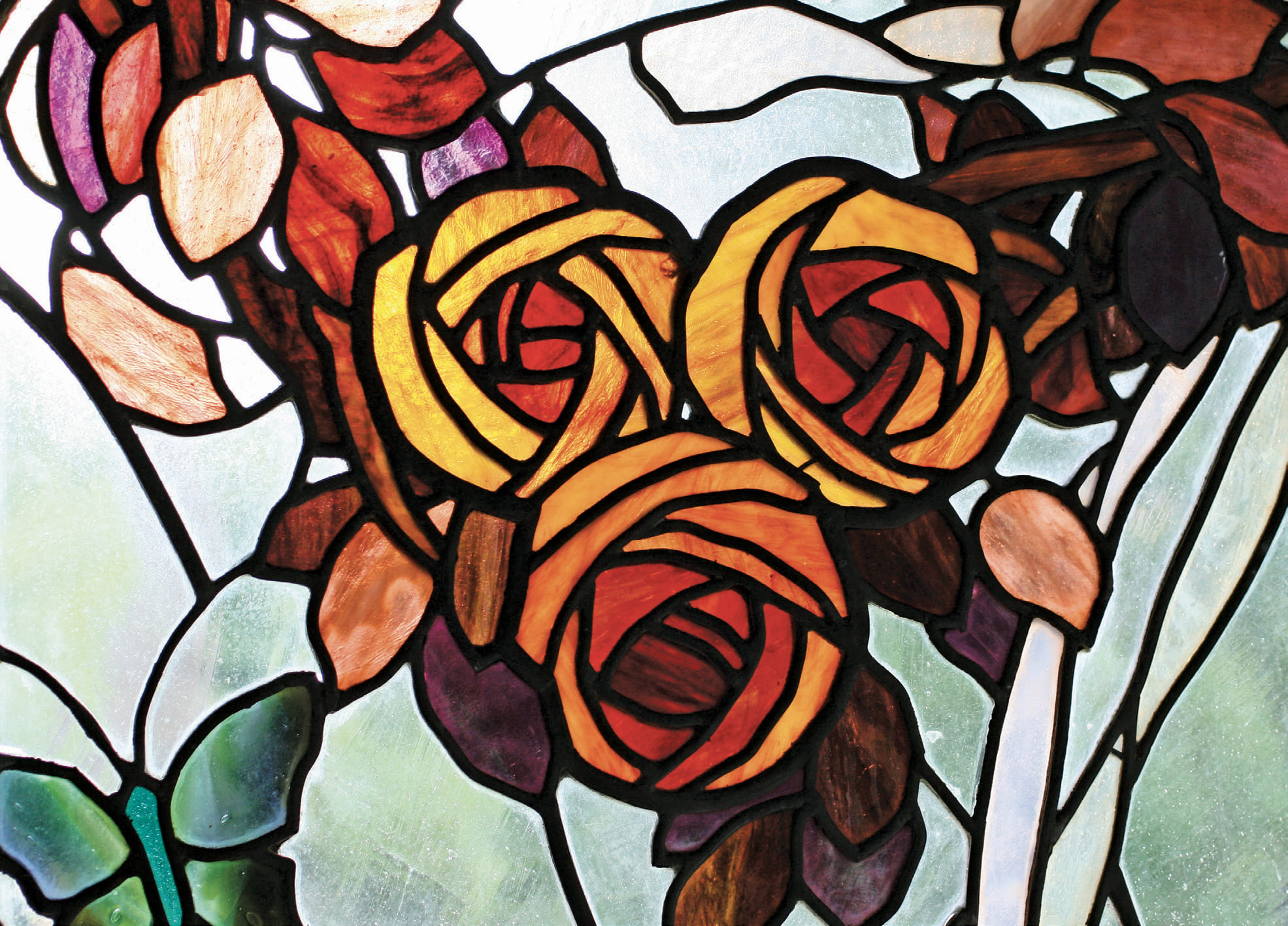
At the Casina delle Civette, floral imagery takes a luminous and unexpected form. Art Nouveau stained glass windows fill the whimsical building with flowers, fruits, and natural motifs rendered in glowing color. The Balcony of the Roses, designed by Paolo Paschetto, is a highlight where vibrant roses seem to bloom in light itself.

The Garden of Livia, Palazzo Massimo
Ancient Rome offers one of the most astonishing floral paintings in the Garden of Livia. Covering all four walls of a room, the frescoes depict a lush garden alive with trees, flowers such as poppies and daisies, and birds. Preserved today at Palazzo Massimo, this immersive masterpiece remains a timeless celebration of nature.

Not to be missed this month is the exhibition Flowers: Marvelous Nature, on view at DART – Chiostro del Bramante until September 6. This immersive experience blends artistic expression with scientific inquiry, celebrat- ing the full spectrum of life—plants, animals, and marine species. It explores the theme of flowers in art through the lens of a dynamic, harmonious ecosystem.

chiostrodelbramante.it

Continue reading

The Roman temple of power and sport

Flickr/Florence

Flickr/Florence

The Roman temple of power and sport

From ancient Roman spectacle to Fascist ambition, Rome’s iconic Foro Italico shows how sports can serve politics and identity.
By Claudio Lozzi


Sporting events have long been central to Rome’s identity, with colossal spectacles such as the games at the Circus Maximus and the gladiatorial contests in the Colosseum serving not only as entertainment, but also as instruments of power. For the Roman Empire, public shows were a means of both appeasing the masses and asserting imperial dominance, and this tradition was woven deeply into the fabric of Rome’s civic life.

In the 20th century, this legacy of Roman glory found new expression under the rule of Benito Mussolini. Seeking to restore Italy to what he perceived as its rightful place in the world, Mussolini envisioned a return to the power and magnificence of ancient Rome, particularly in the realm of sport. This vision took physical shape with the construction of the Foro Italico, originally named Foro Mussolini, between 1928 and 1938. Designed by architects Enrico Del Debbio and Luigi Moretti, the complex was inspired by the monumental forums of ancient Rome, blending Fascist ideology with the sporting culture of the past.

Mussolini’s ultimate goal in creating the Foro Italico was to position Rome as the host of the 1940 Summer Olympics. Although the bid was unsuccessful — the games were assigned to Japan but then canceled due to World War II — the Foro Italico would eventually host the 1960 Olympics, fulfilling its original purpose. Today, the complex stands as a modern sports hub, housing several venues such as the Aquatics Center, a prestigious Tennis Club, and the Olympic Stadium, the largest sports arena in Rome.

Yet, beyond its function as a sports complex, the Foro Italico is also an enduring symbol of Mussolini’s attempt to infuse Fascist Italy with the aura of ancient Rome. The site is dotted with politically charged artworks — frescoes and mosaics that reflect the regime’s vision of power and national pride.
However, the most striking feature of the Foro Italico is the Stadio dei Marmi, or Stadium of Marbles.

This open-air arena, with its elegant Carrara marble steps, is encircled by 59 larger-than-life statues of nude athletes, each holding a piece of modern sporting equipment such as tennis rackets and cricket bats. At first glance, these statues seem to pay homage to the classical sculptures that adorned Roman sports arenas, but a closer look reveals their distinctly Fascist characteristics—sharp angles, stylized forms, and a sense of physical austerity that reflects the regime’s minimalist aesthetic. Originally designed as a training ground for students of the nearby Academy of Physical Education, the Stadio dei Marmi has since become a symbol of the stark, authoritarian beauty that defined Mussolini’s vision of a new Roman Empire.

Around the stadium, other Fascist-era monuments reinforce this ideological agenda. The marble obelisk, towering and imposing, and the Fountain of the Sphere, with its ancient-style mosaics crafted by Giulio Rosso, further the illusion of a timeless, unbroken connection between ancient Rome and Mussolini’s Italy. Together, these elements create a striking juxtaposition of history, politics, and sport—an architectural and cultural expression of Mussolini’s attempt to mold the present through the lens of Rome’s imperial past.

  • The Stadium of Marbles
    The Stadium of Marbles
  • Ancient handball game
    Ancient handball game
  • Tennis at the Foro Italico
    Tennis at the Foro Italico
Tennis, Ancient Roman Style
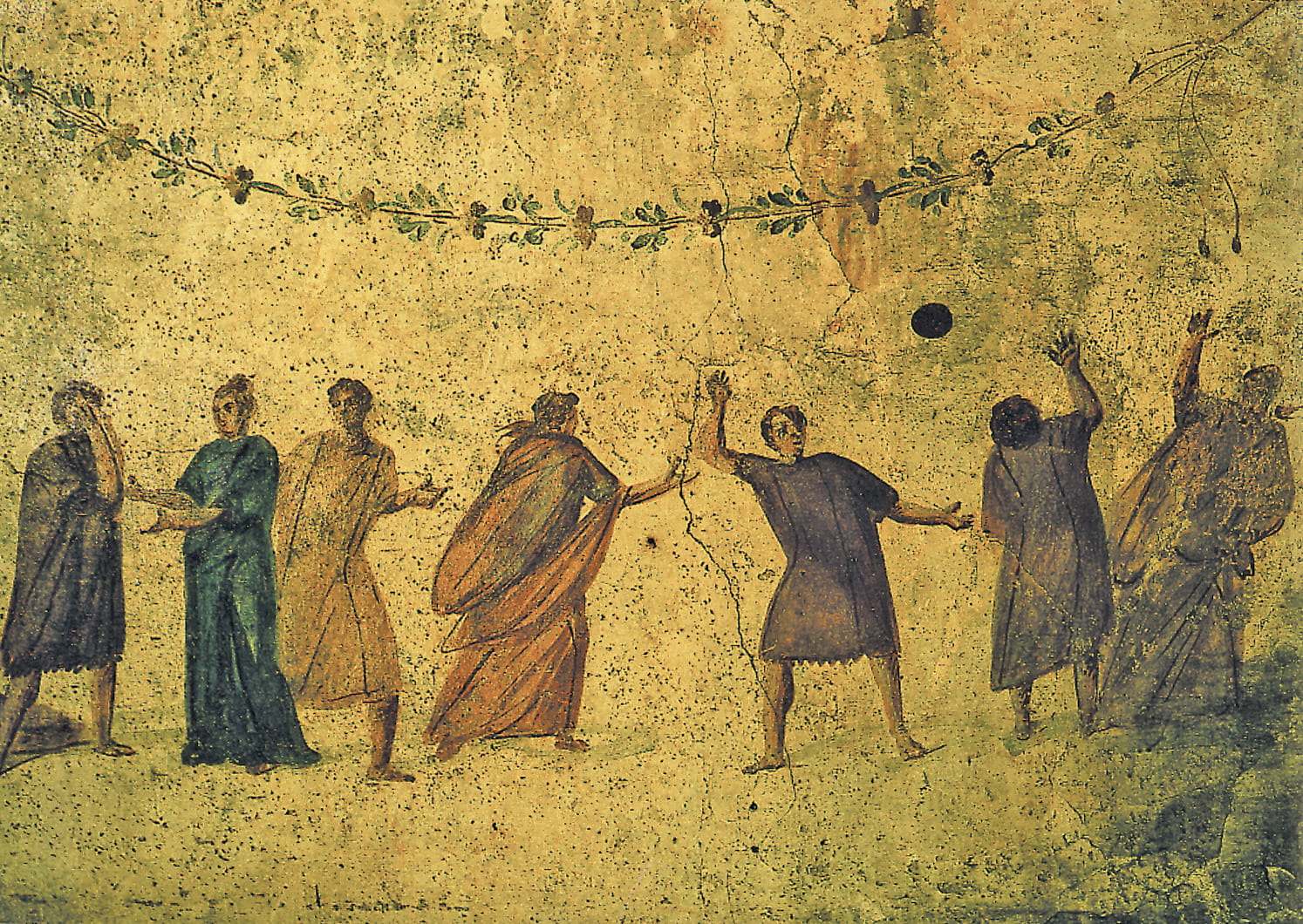
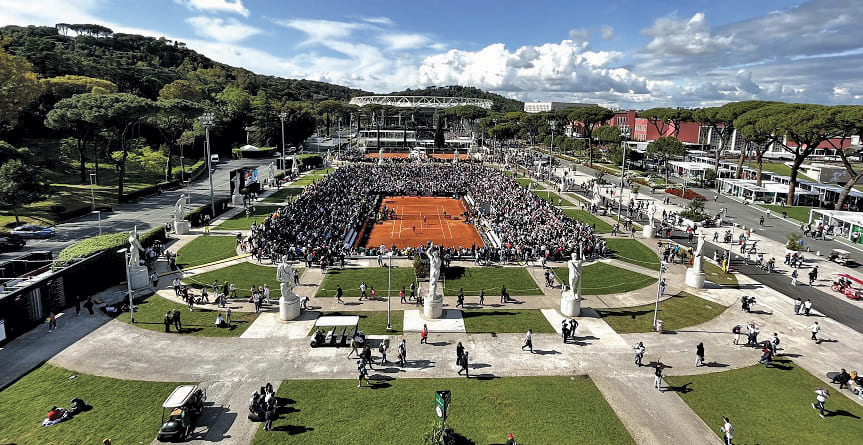
Until 17 May, the sharp pop of tennis balls echoes through Rome’s Foro Italico as the world’s best players compete for the Italian Open title. Yet beneath the modern clay courts lies a far older sporting legacy—one that predates rackets, nets, and baseline battles by centuries. Long before tennis became a global spectacle, the Romans were avid sports enthusiasts with a flair for competition and show. Among their favorite pastimes was expulsim ludere, a primitive form of handball widely believed to be an early ancestor of modern tennis. Played against a single wall—much like today’s one-wall handball—the game required little more than an open space and a solid surface. Courts could be found in bath complexes and private villas, though almost any sturdy wall would do. While no formal rulebook survives, historians speculate that the game used a 21-point scoring system and courts roughly comparable in size to those used today. Players likely wore large, sturdy gloves rather than wielding rackets, though variations of handball and racquet-like games appeared across the ancient world. Archaeological evidence, including inscriptions and drawings, suggests the sport’s popularity stretched far beyond Rome. Some scholars even trace the word “tennis” to Egypt, noting depictions of early racket use and pointing to the ancient port city of Tinnis as a possible linguistic root. As handball gradually evolved into racquet sports-and eventually into modern tennis-today’s players unknowingly follow in the footsteps (and foot faults) of ancient athletes. At the Italian Open, history isn’t just courtside; it’s underfoot. internazionalibnlditalia.com

Continue reading

What’s on this Month – May 2026

What’s on this month
French Photographer Hervé Gloaguen at the Museum of Rome in Trastevere, Mario Schifano at the PalaExpo, The Face of Women at the Palace of the Italian Senate, Piazza di Siena Horse Competition at Villa Borghese, BNL Italy Tennis Internationals at the Foro Italico, Flowers: Marvelous Nature at the Chiostro del Bramante, and more.
(c) Donation Hervé Gloaguen, Ministère de la Culture (France), Médiathèque du patrimoine et de la photographie

(c) Donation Hervé Gloaguen, Ministère de la Culture (France), Médiathèque du patrimoine et de la photographie

À Rome La Nuit

All Month

French photographer Hervé Gloaguen, a member of the renowned Viva Agency, stood out in the mid-1970s as one of the few in France to embrace color photography, breaking from the black-and-white humanist tradition focused on social life. During a journey through Rome, he captured young people gathering around fountains, café terraces, and restaurants, revealing intimate corners of the Eternal City. He quickly turned his lens toward the mysteries of nightlife, drawn by its atmosphere and glowing lights. These vibrant images—taken between 1975 and 1995—form the heart of À Rome la nuit, an exhibition at the Museum of Rome in Trastevere, on view through September 6. The show is part of a broader cultural program celebrating the 70th anniversary of the Rome–Paris twinning, highlighting the artistic and creative ties between the two capitals. museodiromaintrastevere.it

Mario Schifano

All Month

Until 12 July, the Palazzo delle Esposizioni will be hosting a major exhibition dedicated to Mario Schifano, one of the most influential and popular figures in recent Italian art. The exhibition traces Schifano’s artistic journey through his key visual innovations—from early material experiments and iconic monochromes to works shaped by photographic language and art-historical themes. It also explores his famous TV landscapes, images in motion, his blending of photography and painting, and his more recent works, marked by an explicit sense of social engagement. The show also features a dialogue with Marco Tirelli, whose 42 works form a single large-scale installation from the project Anni Luce, alongside Romasuona, an exhibition celebrating the extraordinary and music scene of 1970s Rome. palazzoesposizioniroma.it
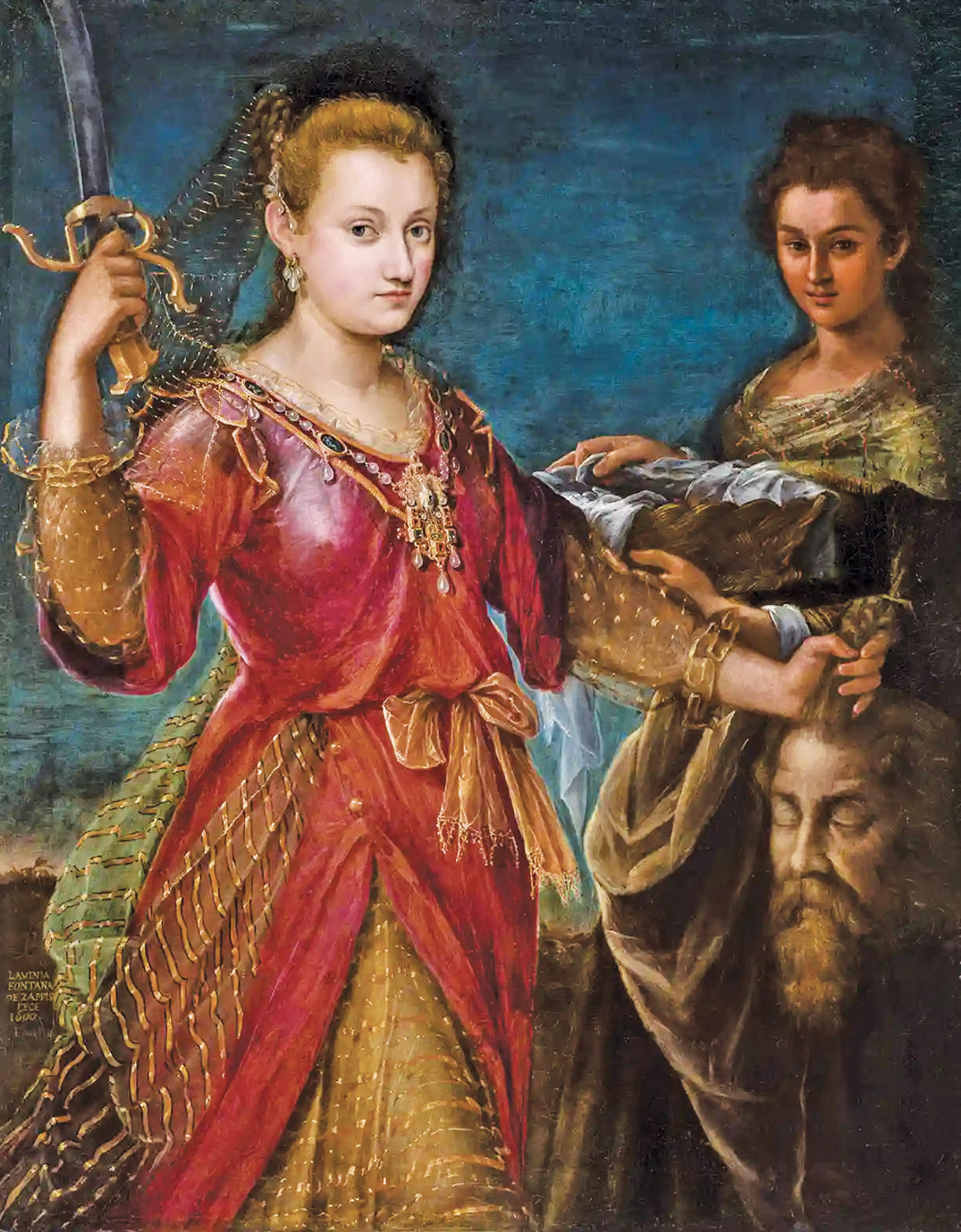
Lavinia Fontana. Giuditta con la testa di Oloferne. Bologna, Museo Davia Bergellini (Fondazione Opera Pia Da Via Bergellini)

Lavinia Fontana. Giuditta con la testa di Oloferne. Bologna, Museo Davia Bergellini (Fondazione Opera Pia Da Via Bergellini)

The Face of Women

All Month

As part of the 80th anniversary celebrations of the Italian Republic, the Italian Senate of the Republic and the Ministry of Culture present The Face of Women. The exhibition highlights centuries of female artistic talent and ingenuity through works by outstanding women artists such as Artemisia Gentileschi, Sofonisba Anguissola, Lavinia Fontana, and Rosalba Carriera, alongside the stories of the women who helped draft Italy’s Constitution. The exhibition traces women’s artistic presence from the 15th century, when some Italian women first carved out professional roles in a male-dominated field, through the early 19th century, when their presence became more established. senato.it
©Massimo Argenziano

©Massimo Argenziano

Piazza di Siena Horse Contest

May 27-31

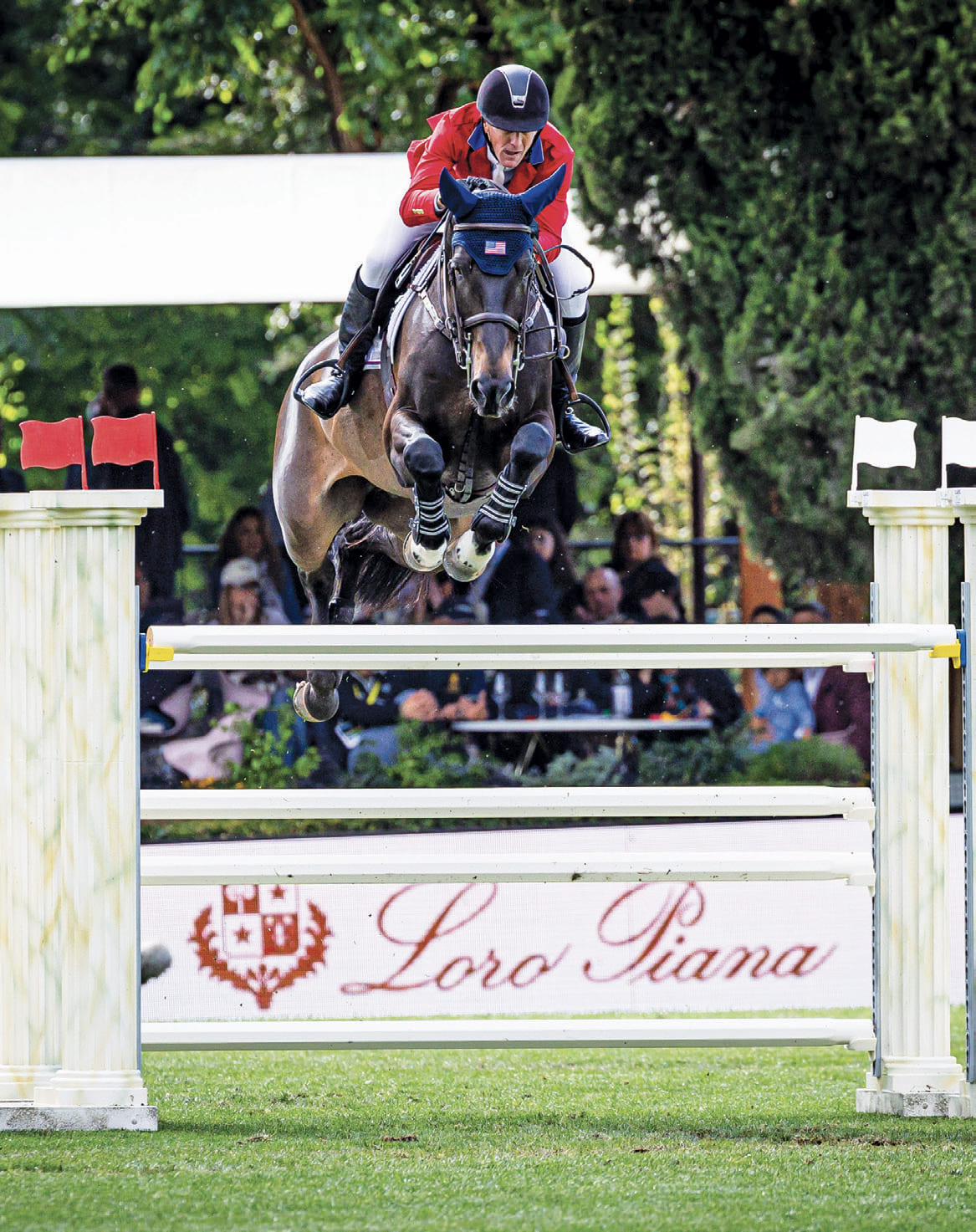
The 93d annual Official International Horse Show of Rome, also known as Piazza di Siena, is set to cap off an exciting month of equestrian sports from May 27–31. This prestigious event showcases toptier talent from Europe and North America competing for top prizes in both dressage and show jumping. The events will take place in the stunning Villa Borghese park, offering a beautiful backdrop for world-class equestrian sports. Best of all, general admission is free, though reserved boxes are available for those seeking a premium experience. piazzadisiena.org
Internazionalibnlditalia.com/Photo FITP

Internazionalibnlditalia.com/Photo FITP

BNL Italy Tennis Internationals

Until May 17

Get ready for an unforgettable tennis experience at the 83rd BNL Italy Internationals, taking place at the Foro Italico from April 28 to May 17. This prestigious tournament attracts top ATP stars like world number one, Italian Jannik Sinner, and Lorenzo Musetti (ATP 9), as well as tennis legends Novak Djokovic. Alongside them are defending champion and world number two Carlos Alcaraz, Alexander Zverev, Alex de Minaur, Ben Shelton and more. On the women’s side, champions like Aryna Sabalenka (ranking 1 WTA), Iga Swiatek, and Italian Jasmine Paolini (2025 edition’s winner, 8 WTA) will also be competing. At this combined event, featuring both men’s and women’s qualifiers, main draws, and finals all on the same days, fans will be treated to a thrilling lineup of world-class tennis, showcasing the best of both male and female athletes. internazionalibnlditalia.com

Flowers: Marvelous Nature

All Month

Nature takes center stage in the major exhibition Flowers: Marvelous Nature, on view at the Chiostro del Bramante until September 6. This new chapter of the Flowers exhibition expands its focus beyond flowers alone to explore nature as a complex, interconnected system, where plants, animals, and environmental elements coexist and interact. Structured around themes such as ecology, science, and politics, the exhibition brings together historical and contemporary works, from the 17th century to today, creating a dialogue between art, scientific knowledge, and current environmental concerns. chiostrodelbramante.it
Austin Young.Temple of Flowers /Tempio di Fiori, 2025

Austin Young.Temple of Flowers /Tempio di Fiori, 2025

More dates on the calendar:

Vasari and Rome. All Month. museicapitolini.org
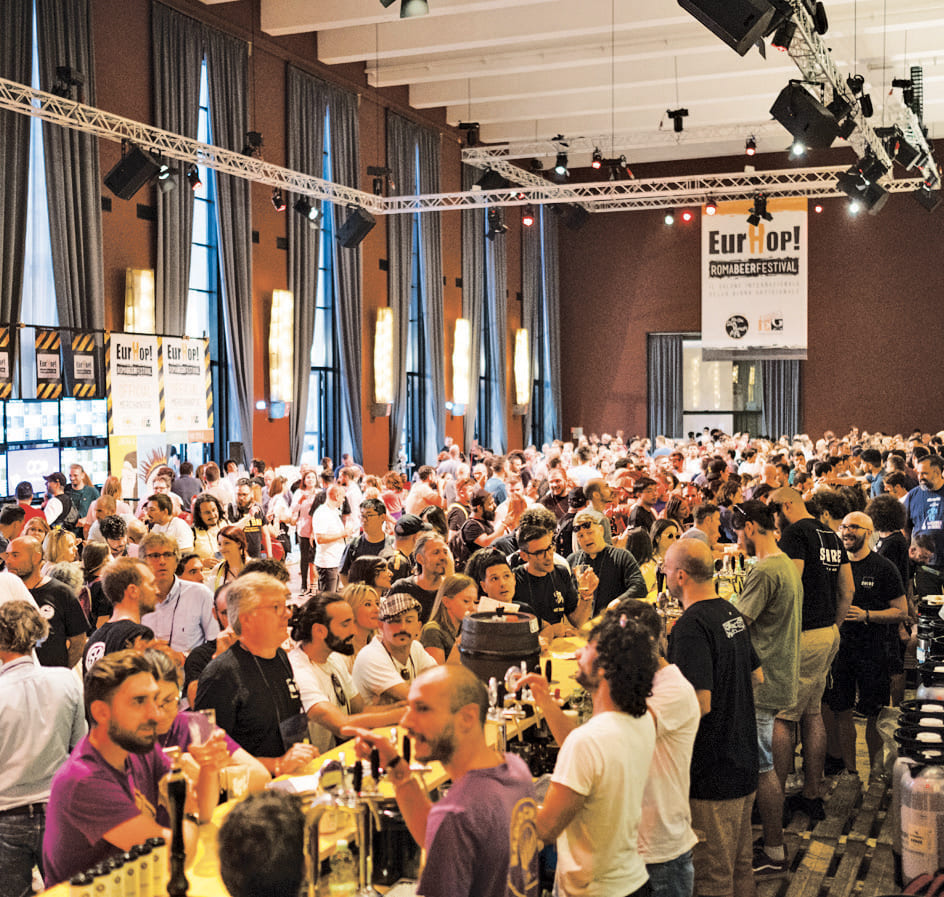
Taste of Roma. Gazometro. May 6-10. tasteofroma.it
Adrian Tranquilli. It’s Happening Again. Until May 24. Palazzo Braschi. museodiroma.it
Habsburg Wonders from the Kunsthistorisches Museum. All Month. palazzocipolla.com
Constantin Brâncuși: The Origins of Infinity. All Month. mercatiditraiano.it
Robert Doisneau. All Month. Museo del Genio. arthemisia.it
Dante Ferretti. With My Eyes. All Month. conimieiocchimostra.it
Tragicomica. Perspectives on Italian Art from the mid-20th Century to Today. All Month. maxxi.art
Final Stage, 109th Giro d’Italia (Cycling Race). May 31. Via dei Fori Imperiali. giroditalia.it
Hokusai. The Great Master of Japanese Art. All Month. mostrepalazzobonaparte.it
The Last Matisse. Museo Storico della Fanteria. All Month. navigaresrl.com
Marathon Race for the Cure 2026. May 7-10.
Circus Maximus. raceforthecure.it

Continue reading

The sacred passage to the Vatican

Dreamstime
Dreamstime

The sacred passage to the Vatican

Sant’Angelo bridge is lined with a procession of angelic statues depicting the passion
By Andrea Werther


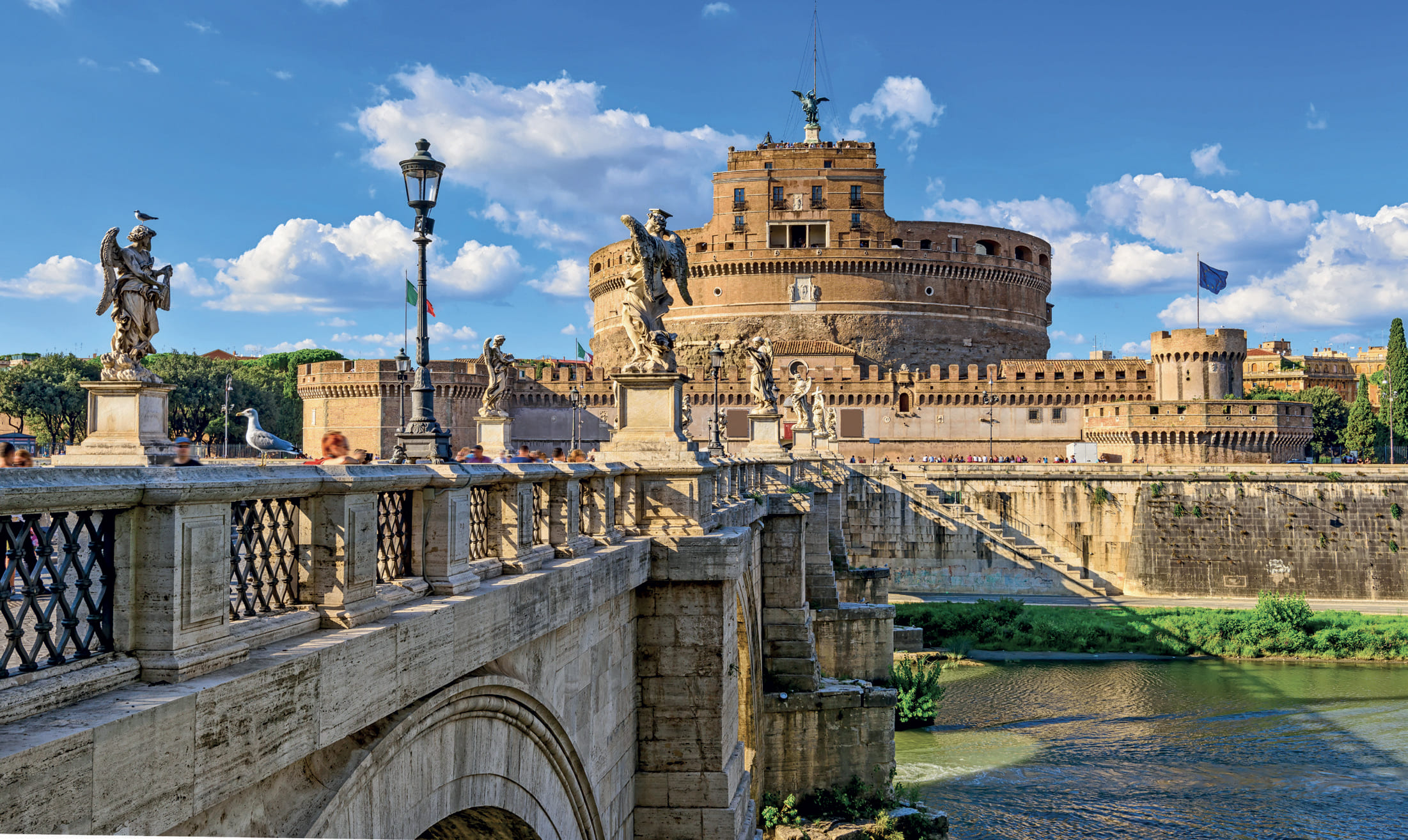
Often hailed as Rome’s most beauti- ful bridge, Ponte Sant’Angelo is less a thoroughfare than a ceremonial pas- sage: one that draws visitors from the bustle of the city toward the spiritual gravity of the Vatican. Lined with a procession of angels, each frozen in a moment of the passion of Christ, the bridge feels like an open-air ca- thedral, where stone, faith, and history con- verge beneath the Roman sky.

The bridge was built in 136 AD, commissioned by Emperor Hadrian to connect the heart of ancient Rome with his grand mausoleum across the Tiber. Originally called Ponte Elio, the bridge served as a ceremonial approach to imperial power. In 590 AD, during a devastating plague, Pope Gregory the Great reportedly witnessed a vision atop Hadrian’s mausoleum: an an- gel sheathing a sword, signaling the end of divine punishment. The vision transformed the monument into Castel Sant’Angelo, the fortress of the popes—and the bridge took on the name it bears today. From that moment on, Ponte Sant’Angelo became a threshold not just between riverbanks, but between the earthly and the eternal.

Until the late 17th century, the bridge bore only two statues: Saints Peter and Paul, Dreamstime guardians of Rome. Beneath them were etched two stark Latin warnings: “Hinc hu- milibus venia,” meaning “forgiveness for the humble” and “Hinc retributio superbis”, or “punishment for the proud.” These were no empty words. For decades, Ponte Sant’Angelo served as one of Rome’s official execution sites, a public stage for jus- tice and terror.

In 1667, Pope Clement IX entrusted Gian Lo- renzo Bernini with transforming both the bridge and the castle. Bernini imagined the crossing as a spiritual ascent—a sculptural Via Crucis guiding pilgrims toward St. Peter’s. His vision called for ten angels, each bearing an instrument of Christ’s suffering: the crown of thorns, the nails, the cross, the shroud. The effect was meant to overwhelm, to humble, to inspire awe in every soul who passed be- tween Rome and the Vatican.

Bernini sculpted two of the angels himself, The Angel with the Crown of Thorns and the Angel with the Scroll, masterpieces so pow- erful that the pope feared exposure to wind and rain would diminish them. They were re- placed with copies, while the originals were moved indoors to the church of Sant’Andrea delle Fratte, where they remain today—se- rene, intense, and achingly human.

Continue reading

Shaping baroque Rome

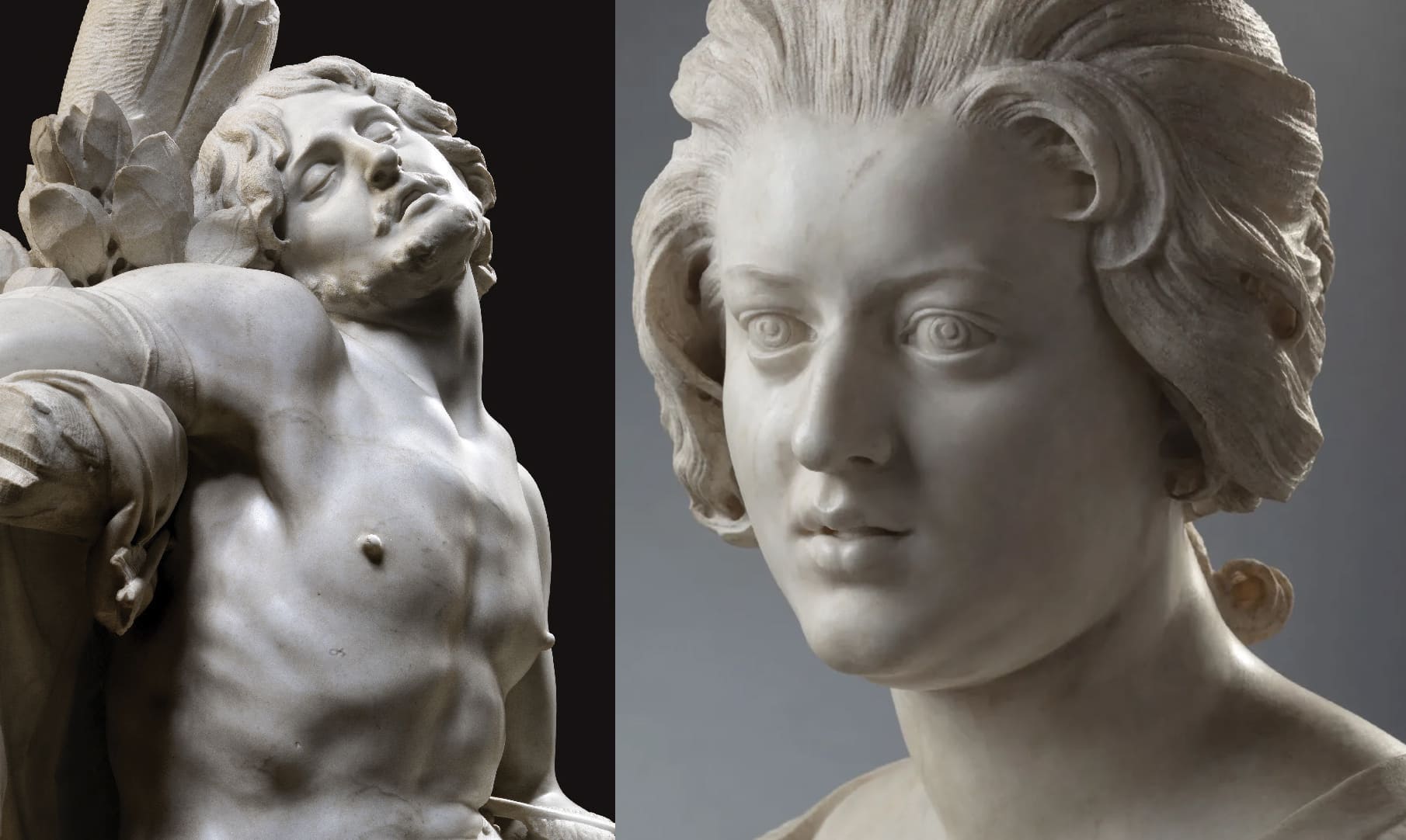
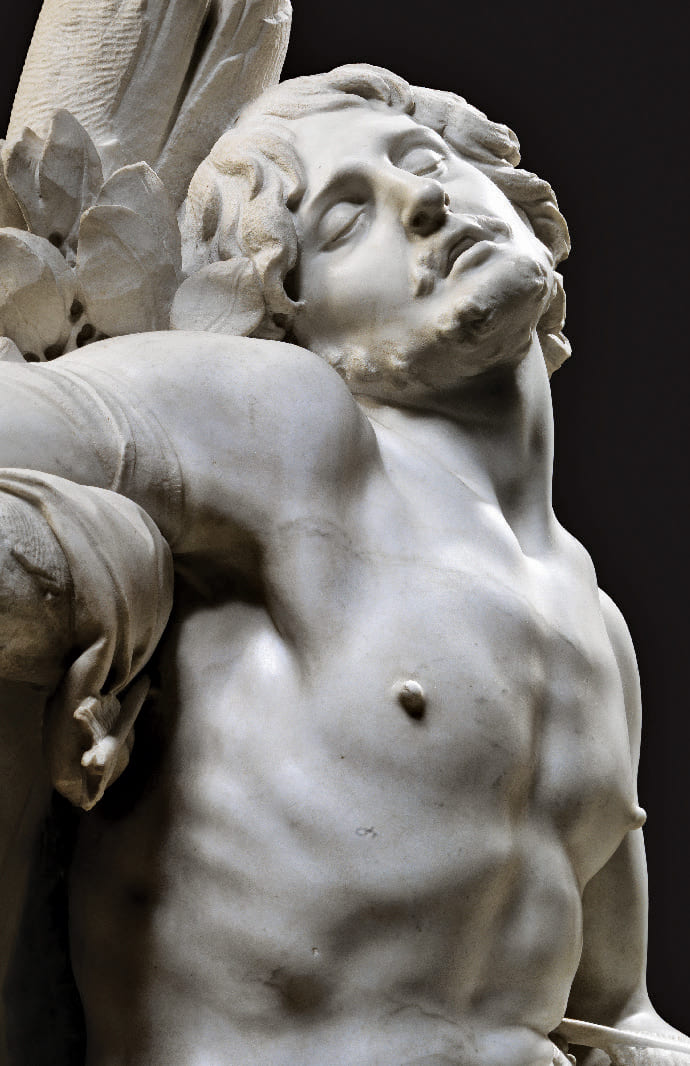
Saint Sebastian (detail) private collection on loan from the Thyssen Museum, Madrid.
Portrait of Costanza Bonarelli, 1637-1638 circa, Marmo, 74.5 cm, Firenze, Museo Nazionale del Bargello. Courtesy Ministero della Cultura – Galleria dell’Accademia di Firenze e Musei del Bargello

Shaping baroque Rome

An exhibition explores the close bond between Gian Lorenzo Bernini and the Barberini family


Gian Lorenzo Bernini is often credited with turning Rome into the Baroque masterpiece it is today, but his extraordinary career was closely tied to his relationship with Maffeo Barberini. When Barberini became Pope Urban VIII in 1623, his patronage helped propel Bernini to new prominence, fostering a close artistic, political, and personal dialogue between the two.

This relationship is at the heart of the exhibition Bernini and the Barberinis at Palazzo Barberini, which offers a fresh perspective on the birth of the Baroque. The show also coincides with the 400th anniversary of the consecration of St. Peter’s Basilica in 1626, one of the crowning achievements of Roman Baroque art and of Bernini’s career.

Unfolding across six sections, each dedicated to a key aspect of the relationship between Bernini and the Barberini family, the exhibition traces the artist’s career from his early years to full artistic maturity. On display are seminal works such as Saint Sebastian from the Museo Thyssen-Bornemisza in Madrid and the Putto with Dragon from the Getty Museum, alongside exceptional loans including The Four Seasons from the Aldobrandini Collection. And for the first time, the Gallery of Portraits of the Barberini ancestors returns to Palazzo Barberini with marble masterpieces by Bernini, Giuliano Finelli, and Francesco Mochi.

The exhibition also highlights images of Urban VIII and of Bernini as a painter, represented by canvases shown to the public for the first time, alongside drawings, engravings, and models related to the construction of St Peter’s. It concludes by placing Bernini’s works in dialogue with those of other leading artists of the period.
Until June 14. barberinicorsini.org

Continue reading

A miniature universe in motion

A miniature universe in motion

This Cirque du Soleil show is an immersive celebration of movement, color, music and acrobatic artistry


Cirque du Soleil is back in town! The world-renowned Canadian nouveau cirque company, famous for turning the circus into a theatrical spectacle of acrobatics, dance, music, and striking visuals, returns with a reinterpretation of one of its most beloved productions. Meaning “egg” in Portuguese, OVO was originally created 15 years ago, quickly becoming an international success. The show, on from April 2–5 at the Palazzo dello Sport, is centered on the theme of insects, now revisited to feature refreshed staging features, updated visuals, additional acts, and redesigned costumes and music, while preserving the playful spirit that made the original so memorable. More than 50 artists, acrobats, and musicians bring this miniature world to life through unforgettable insect characters, including a curious ladybug, a quick-witted fly, and a hungry beetle. Performers combine daring aerial feats with intricate choreography and live music, for an immersive experience. At the heart of the story is the gentle romance between a shy insect and a radiant ladybug, set within the lively rhythms of an insect community. The show invites audiences to embrace life’s smallest details and to see the world from a new perspective and the title, represented by an imposing inflatable structure that dominates the opening scene, symbolizes birth, continuity, and the eternal cycle of life within an extraordinarily rich and lively universe.

Continue reading

Bring design to people

Bring design to people

Mobilnovo brings together iconic design brands, expert guidance, and tailored solutions to shape spaces that truly feel like home


With over 50 years of expertise, Mobilnovo stands as a natural starting point for anyone wishing to reimagine the art of living. The knowledgeable and deeply passionate consultants invite visitors to discover furnishings that harmonize effortlessly with their spaces while reflecting personal tastes and aspirations. Spread across eight showrooms throughout the city, Mobilnovo has become a must-visit destination for those seeking furniture solutions where style and functionality coexist seamlessly. Step inside and explore a curated universe of nearly 200 of the world’s most distinguished design brands-among them Poliform, Minotti, Maxalto, Edra, Vitra, Flexform, and Paola Lenti. Here, design is meant to be experienced: textures are felt, proportions observed, and the exceptional comfort of sofas, armchairs, and beds truly understood. As they say, great design goes beyond refined lines and luxurious materials-it lies in thoughtful details that elevate everyday life.

Often, it takes just one distinctive element to transform an entire room, shifting its atmosphere and identity. With this philosophy in mind, the staff at Mobilnovo supports clients through every stage of their interior design journey, helping with everything from small refinements to complete transformations. Whether renovating, reimagining a space, or simply seeking inspiration, this is the place to go if you want to turn ideas into living realities.
Via Sicilia, 267. Tel +39 0642827431.
Via Sicilia, 190. Tel +39 0639377604.
Via Anastasio II, 103. Tel +39 066381104.
Via Gregorio VII, 229. Tel +39 06630870.
Via G. Ferrari, 7. Tel +39 0637518373.
mobilnovo.it

Continue reading

Crispy pizza, timeless flavors

Crispy pizza, timeless flavors

Hand-crafted dough, seasonal ingredients, and tasteful recipes come happily together at this lively Roman pizzeria


In Rome, pizza is serious business, and at Margherita Roma tradition meets a fresh, contemporary spirit right in the historic center.

Their signature dough, leavened for 24 hours and rolled out strictly by hand with a roll- ing pin, becomes the quintessential Roman pizza: thin, crispy, and irresistibly flavor- ful, available in both beloved classics and bold, creative variations. Try for example the Margherita or the zucchini flowers with anchovies or, among the special pizzas, the Underwood (porcini mushrooms, provola cheese, speck and arugula) or the cheese and pear (with gorgonzola cheese, pears and honey).

The menu is rich and generous, featur- ing golden fried starters (try the supplí al telefono, with beef ragú), fresh salads, and traditional Roman dishes, all perfect for sharing in a warm, lively, and pleasantly informal setting. Mouthwatering tempta- tions include, among the others, meatballs in tomato sauce; carbonara, amatriciana or ricotta and spinach ravioli with beef ragù; saltimbocca alla romana, braised beef with mashed potatoes and, as a sweet finale, caprese cake with pistachio sauce or panna cotta with white chocolate and strawberries.

The wine list traces an ideal journey through Italy, and is thoughtfully curated to comple- ment and elevate every dish. Each label is handpicked, featuring both celebrated pro- ducers and small local wineries.
Piazza Cardelli, 5a/b. Tel 0668805145. margheritaroma.com

Continue reading

Rome and the magic of number seven

  • living-rome-2026-04-11

  • living-rome-2026-04-12

Rome and the magic of number seven

Why number seven resounds everywhere in the Eternal City – By Sol Stein


In Rome, numbers are never just numbers. And none carries more weight than seven woven into the city’s mythology, religion, and identity since its earliest days. This powerful, symbolic number echoes through the history of Rome ever since its mythical beginnings. Seven were the fateful hills upon which the Eternal City was founded (and even April 2lst, the day of its birth, is a multiple of 7). Seven, too, were the kings who ruled in succession before the Republic took hold. The most important games, including the ancient Ludi Romani (pictured above), were seven in number. And the solemn feast of the Septimontium-a date heavy with meaning on the Roman calendar-celebrated the incorporation of those very seven hills into the heart of the Urbs. Seven was also the number of the Magistrates (Septemviri) responsible for dividing and distributing the land and, again, of the companies of vigiles (firefighters) designated to protect the city from fires. This hidden symbolism of the number seven can be found carved into the stones of many imperial-era monuments. Let’s not forget for example the seven protective talismans that guarded the city-among them the famed needle of Cybele, revered as o sacred object believed to have aided Rome in defeating Hannibal. The number seven reappears in Christian Rome during the Jubilee of the year 1300. Under Pope Boniface VIl, pilgrims were instructed to visit the seven major basilicas-St. Peter’s, St. Paul’s Outside the Walls, St. Sebastian, St. John Lateran, St. Mary Major, the Holy Cross in Jerusalem, and St. Lawrence Outside the Walls-a tradition that continues even today. Want more examples? There’s the Church of Santa Maria dei Sette Dolori (Our Lady of the Seven Sorrows), nestled on the slopes of the Janiculum Hill. Or places just outside the city limits with evocative names like Settebagni or Settecamini. Back in the heart of Rome, near Piazza Vittorio, one stumbles upon a mysterious wonder-the Porta Magica (Magic Door). Hidden among the ruins of the Trophies of Marius, it’s the world’s only surviving alchemical monument. Its cryptic inscriptions are said to contain the secret of the philosopher’s stone-the mythical substance that turns lead into gold. And guess what? The number seven lies at the core of its riddle too. Like a secret key, this magical number unlocks the gates to Rome’s most hidden depths, revealing its eternal mysteries and soul.

Continue reading

Eternal masterpiece

  • living-rome-2026-04-11

  • living-rome-2026-04-12

Eternal masterpiece

Two thousand years after it was built, the Pantheon still stands almost exactly as it did in ancient times – By Claudio Lozzi


Step inside the Pantheon and time seems to have paused. One of the best-preserved monuments of the ancient world, the Pantheon has reached us remarkably intact, retaining much of the appearance it had under Emperor Hadrian in the 2nd century AD. It’s a rare survivor of invasions, neglect, and even attempted demolition, offering a rare connection to antiquity.

Visiting the Pantheon feels less like entering a historical site than stepping into a living fragment of ancient Rome. As the Eternal City approaches its 2,779th birthday on April 21, 2026, this impressive building remains one of its most powerful symbols of continuity.

A temple built for the gods
The Pantheon was the first Roman temple to feature a dome, and its circular layout was not just an architectural choice: it carried symbolic meaning and aimed to encompass all gods within a single space of religious perfection. The floor is the very one walked on by Hadrian and his priests, the sixteen massive supporting columns defy the passage of time, and the majestic dome seems to represent the immortality of the Eternal City. Among the few original elements that have not survived are the large fresco depicting the battle between the Amazons and the Giants, and the bronze ceiling beams, which were melted down by Bernini to create the baldachin of St. Peter’s.

Saved by faith
A natural question that arises when visiting such a unique monument is, how did the Pantheon survive the centuries when most other pagan buildings didn’t? The answer lies in a decisive transformation. In 609 AD, Pope Boniface IV consecrated the building as the Christian church Santa Maria ad Martyres. Continuous religious use protected the structure, ensuring its preservation through the centuries. To this day, services are still celebrated within its ancient walls.

Engineering the impossible
Equally astonishing is the building’s engineering. The Pantheon’s dome—still the largest unreinforced concrete dome in the world—is a marvel that has never collapsed under its own weight. Roman engineers, whose names have been lost to history, used construction techniques so advanced they still impress modern architects. To reduce the weight of the dome, they used a clever method: instead of using bricks, which would have caused the structure to collapse, they employed a mix of materials that became progressively lighter as the dome rose— heavy concrete and travertine at the base, gravel in the middle, and pumice stone at the top. Even the walls are not uniformly thick, but gradually taper toward the top. Despite weighing roughly 5,000 tons, the structure remains perfectly balanced. The dome functions as a self-supporting lid, distributing weight through an intricate system of columns, piers, and hidden arches. The coffered ceiling is not merely deco-rative—it reduces mass while enhancing the visual rhythm of the interior. So influential was this design that Renaissance architect Filippo Brunelleschi studied the Pantheon closely before creating the dome of Florence’s cathedral. The oculus at the top Another extraordinary feature is the central oculus—a circular opening at the top of the dome that allows sunlight to enter during the day and rain to fall through. This feature not only illuminates the interior naturally but also creates a dramatic and ever-changing atmosphere. For the living and the dead Over the centuries, the Pantheon has taken on new roles while preserving its ancient identity. Today it serves not only as a church but also as a mausoleum, housing the tombs of Italy’s royal family and of the Renaissance master Raphael. The artist himself chose this resting place, ensuring that his legacy would remain forever linked to Rome’s most timeless monument.

Continue reading

Contemporary living

Arcon

Arcon

Contemporary living

A close-up look at the city’s most inspiring boutiques for unique design pieces


Then it comes to all things trendy and cutting-edge in Italy, it’s Milan rather than Rome that springs to mind. That is especially true in April, when the Salone Internazionale del Mobile (Milan’s Design Week) opens its doors to its international audience. Often accused of living in the past, Rome nevertheless holds its own on the contemporary design stage. The Eternal City is home to a number of refined boutiques where modern taste meets Italian craftsmanship, offering a rich selection of furniture, accessories, and distinctive objects. For those looking to bring character and originality into their homes, these are some of the best places to discover inspired interior design in the capital.

Arcon stands out as one of Rome’s most compelling destinations for Italian interior design. Its highly specialized team helps furnish some of the city’s most beautiful homes with exclusive collections from leading brands such as Cassina, Fontana Arte, Foscarini, Tonelli, and Flexform. The shop’s two showrooms—the second located near the Spanish Steps—offer an inspiring overview of both Italian crafts- manship and international design.
Via della Scrofa, 104. arconroma.com

Ripetta Design is an elegant gallery devoted to fabrics and accessories spanning Art Deco and contemporary styles. Rich velvets, silks, embroidered satins, cottons, and linens from some of the world’s most luxurious brands line the space, alongside an exceptional selection of wallpaper ranging from classic motifs to boldly eccentric patterns. Exclusive design objects complete the offering, making this refined atelier an essential stop for anyone looking to transform their interior.
Via di Ripetta, 152. ripettadesign.com

Boschettotre is a concept store created by Oriana Tombolesi, an experienced interior designer who envisioned a space reflecting her personal taste and distinctive style. The collection features designer furniture and home décor, along with essential accessories such as artistic wallpapers, rugs, containers, kitchen utensils, shelving systems, and lighting. This charming boutique also offers a selection of items designed and handcrafted in its own workshop.
Via del Boschetto, 3. boschettotre.it

Dispensabile presents a refined studio-showroom with a distinctly Nordic sensibility. Within its elegant interior, visitors will find furnishings, home accessories, lighting, and design objects that combine clean lines with warm materials. The staff can also help visitors imagine and plan their own interiors. Among the brands represented are HAY, Alessi, Ferm Living, and Louis Poulsen.
Via d’Ara Coeli, 37/39. dispensabile.it

Retrò Design specializes in distinctive pieces that span the elegant restraint of the 1940s to the bold experimentation of the 1970s. The shop offers a selection of furniture, accessories, and decorative objects ideal for creating a dream midcentury interior. Italians refer to this category as modernariato: think sculptural sofas, postwar glassware, and playful 1970s lighting that brings personality to any space.
Piazza del Fico, 21. retrodesign.it

Mia Home Design Gallery is a dynamic showroom where contemporary and retro elements blend seamlessly. The constantly evolving selection features unique design objects, limited editions, and pieces by both established designers and emerging talents. The home is conceived as a deeply personal space that reflects the creative individuality of its owner.
Via di Ripetta, 224. galleriamia.it

  • MIa Home Design Gallery
  • Dispensabile
  • salone Internazionale del Mobile

Continue reading

What’s on this Month – April 2026

What’s on this month
Caravaggio and the Masters of Light at the Museo Storico della Fanteria, Katsushika Hosukai at Palazzo Bonaparte, The Neptune of Lyon at Museo Barracco, Robert Doisneau at Museo del Genio, Vasari and Rome at the Capitoline Museums, The Harlem Globetrotters at Palazzetto dello Sport/PalaTiziano, and more.
navigaresrl.com

navigaresrl.com

Caravaggio and the Masters of Light

All Month

On view through June 28 at Rome’s Museo Storico della Fanteria, Caravaggio and the Masters of Light plunges visitors into the dramatic world of Caravaggism, tracing the renowned painter’s seismic influence on a generation of artists. The exhibition’s emotional centerpiece is The Incredulity of Saint Thomas (pictured) on loan from the Bildergalerie in Potsdam; a powerful example of Caravaggio’s radical use of light, unflinching realism, and spiritual intensity. Surrounding works by followers such as Bartolomeo Manfredi, Orazio Gentileschi, Carlo Saraceni, Jusepe de Ribera, and others reveal how his visual language reshaped European painting. The result is an immersive, enlightening journey into an artistic revolution that changed how we see art forever.
navigaresrl.com

Hokusai The Great Master of Japanese Art

All Month

This month, until June 29, Palazzo Bonaparte will be hosting the largest show ever held in Italy on Katsushika Hokusai, Japan’s most influential artist and a central figure in global visual culture. A prolific and visionary painter and printmaker, Hokusai is best known worldwide for his ukiyo-e prints, where nature, surging waters, landscapes, female figures, and everyday Japanese life are transformed into a poetic and strikingly modern vision. The exhibition traces his artistic journey, from works rooted in tradition such as The Fifty-Three Stations of the Tōkaidō, through iconic masterpieces including The Great Wave off Kanagawa and Thirty-Six Views of Mount Fuji, to his most innovative creations, notably the celebrated manga and decorative illustrated albums. Featuring over 200 works from the National Museum in Krakow, the show is enriched by rare books, precious Japanese objects, musical instruments, armor, and traditional costumes, offering a vivid dialogue between art, daily life, and spirituality.
mostrepalazzobonaparte.it
Robert Doisneau Le baiser de l’Hôtel de Ville , 1950 Stampa fine art su carta ai sali d’argento da negativi originali, 50x40 cm © Atelier Robert Doisneau

Robert Doisneau Le baiser de l’Hôtel de Ville , 1950 Stampa fine art su carta ai sali d’argento da negativi originali, 50×40 cm © Atelier Robert Doisneau

Robert Doisneau

All Month

The black-and-white photography of Robert Doisneau is being celebrated in a large exhibition at the Museo del Genio. Doisneau, one of the most beloved photographers of the 20th century, was also a key figure in French humanist photography. On view are 140 landmark images, ranging from everyday scenes in Parisian neighborhoods to the tender glances of young lovers, including the iconic Le Baiser de l’Hôtel de Ville, one of the most romantic photographs ever taken. With irony, grace, and remarkable sensitivity, Doisneau transformed fleeting moments into timeless images, capturing love, childhood, and the vibrant poetry of city life. Each photograph opens a window onto a world of authentic emotion and universal stories. arthemisia.it
Nettuno di Lione al Museo Barracco

Nettuno di Lione al Museo Barracco

The Neptune of Lyon

All Month

Until June 7, visitors to the ground-floor gallery of the Museo Barracco get to admire the monumental statue of Neptune, shown to the public here for the first time. The sculpture, dating back to the 3rd century AD, originally comes from the ancient Roman city of Lugdunum, today’s Lyon.
Almost life-size, the sea god is rising from the water, with his hair arranged in distinctive “wet curls.” Experts believe Neptune once held a trident in his left hand, and possibly a dolphin in his right. The statue likely stood in a monumental setting, such as a temple in Lugdunum, the capital of the Roman province of Gallia Lugdunensis. It was rediscovered in 1859 in the Rhône River. museobarracco.it
Resurrection of Christ (1550); oil on panel, 233 × 156 cm; Siena, Pinacoteca Nazionale. Courtesy of Musei Nazionali di Siena

Resurrection of Christ (1550); oil on panel, 233 × 156 cm; Siena, Pinacoteca Nazionale. Courtesy of Musei Nazionali di Siena

Vasari and Rome

All Month

To mark the 450th anniversary of the death of Giorgio Vasari, the Capitoline Museums at Palazzo Caffarelli present Vasari and Rome, an important tribute to one of the Renaissance’s most influential figures. The exhibition traces Vasari’s artistic and cultural jour-ney during his different stays in Rome (he was born in Arezzo but had a deep and long-lasting relationship with the Eternal City), revealing the many sides of the celebrated painter, architect, stage designer, and biographer. Through masterpieces on loan from lead-ing Italian and international institutions, such as the outstanding Resurrection of Christ (pictured) from the Pinacoteca Nazionale di Siena, the display explores how Rome, through its ancient art and the example of masters like Raphael and Michelangelo, shaped the young artist and propelled his rapid rise in the service of powerful cardinals and popes.
museicapitolini.org

The Harlem Globetrotters

April 9

The Harlem Globetrotters arrive at the PalaTiziano on April 9 as part of their centennial world tour. Celebrating 100 years of show-stopping basketball, the legendary team hits the court in a new uniform by Jeff Hamilton—an homage to the colors and symbols that made them global icons. Expect a thrilling show that combines top-notch basketball with non-stop fun: incredible ball tricks, lightning-fast passes, long-range shots that wow the crowd, and plenty of moments guaranteed to make you laugh. Fans can elevate the experience with the Magic Pass, offering the chance to meet players and shoot hoops along-side them, or the Celebrity Court Pass for up-close access to the pre-game warm-up—plus the classic photo and autograph session with the stars.
harlemglobetrotters.com

More dates on the calendar:

Jack Vettriano. All Month. palazzopallavicini.com
Venus. Valentino Garavani through the eyes of Joana Vasconcelos. All Month. piazzamignanelli23.com
Bernini and the Barberinis. All Month. barberinicorsini.org
Habsburg Wonders from the Kunsthistorisches Museum. All Month. palazzocipolla.com Treasures of the Pharaohs. All Month. scuderiequirinale.it
Marcello Provenzale from Cento. All Month. galleriaborghese.cultura.gov.it
Giovan Francesco Penni. All Month. galleriaborghese.cultura.gov.it
Impressionism and Beyond. Masterpieces from the Detroit Institute of Arts. All Month. arapacis.it
Rome’s 2779th Birthday Parade. From Circus Maximus to Colosseum. April 21. natalidiroma.it
The Empire of Dinosaurs. Botanical Garden of Rome. All Month. ortobotanico.web.uniroma1.it
The Last Matisse. Museo Storico della Fanteria. All Month. navigaresrl.com
Il Volto delle Donne (The Face of Women) at Palazzo Madama. All Month. senato.it

Continue reading

Rome’s eight Hill

Fountain of the amphorae. Wikimedia Commons

Rome’s eight Hill

How broken jars became a Roman landmark – By Leslie Ardengo


Testaccio Hill is one of Rome’s most unusual and fascinating landmarks—not a natural formation, but an artificial mound shaped by centuries of human activity. Known as Monte dei Cocci (Hill of Shards), it was created between the 1st century BCE and the 3rd century CE through the gradual accumulation of broken amphorae—earth-enware jars used to transport goods such as oil and wine—discarded at the Emporium, the city’s ancient river port. After traveling upriver from the port of Ostia, Roman merchants would unload their goods and discard the now-empty amphorae, which were considered single-use containers. These shards, known as testae in Latin (from which the name Testaccio derives), were piled systematically into what eventually became an archaeological hill. Although some fragments were repurposed for construction, the majority were simply waste, which over time formed a monument to Roman commerce and consumption. Rising about 30 meters high and spanning roughly 1,000 meters in circumference, the hill has been the site of numerous archaeological excavations. These digs have revealed that the oldest deposits date from the reign of Augustus to that of Marcus Aurelius, with later layers added between the time of Antoninus Pius and Aurelian. What truly sets Monte dei Cocci apart, however, is its transformation in modern times. Over the centuries, small houses, rooms, and even entire establishments have been carved into the mound. Today, restaurants, clubs, and artisan workshops occupy this unique setting, where exposed amphorae walls testify to a layered history made from an estimated 40 million pottery fragments. This blend of ancient waste and urban reuse has earned Testaccio the nickname “Rome’s eighth hill.” For more info: sovraintendenzaroma.it

Continue reading

The Habsburg Wonders

Diego Rodríguez de Silva y Velázquez. Infanta Margarita in a Blue Dress 1659 Olio su tela © KHM-Museumsverband

The Habsburg Wonders

An extraordinary exhibition from Vienna’s Kunsthistorisches Museum showcases masterpieces of imperial splendor


Hosted at the Museo del Corso–Polo Museale – Palazzo Cipolla, From Vienna to Rome. Habsburg Wonders from the Kunsthistorisches Museum offers an extraordinary encounter with more than fifty masterpieces drawn entirely from the prestigious collections of Vienna’s Kunsthistorisches Museum. Through a refined selection of works collected or commissioned between the 16th and 18th centuries by prominent members of the Austrian imperial family, the exhibition reveals the historical and cultural identity of the Viennese museum—an institution that embodies the splendor of an empire and the intellectual ambition of a dynasty. A special section is devoted to the Viennese museum’s architecture itself: the majestic building was designed by Gottfried Semper and Carl Hasenauer and is a true temple of art whose monumental presence stands as one of the most fascinating architectural achievements of the 19th century. Tracing the origins of the museum and the magnificence of its collections, the exhibition brings together works by the greatest masters of European painting—Peter Paul Rubens, Diego Velázquez, Jan Brueghel the Elder, Anthony van Dyck, and Lucas Cranach—along-side Italian geniuses such as Titian, Tintoretto, Veronese, Arcimboldo, and Orazio Gentileschi, each represented by masterpieces of rare beauty and expressive power. Completing the exhibition is a precious selection from the Kunstkammer, one of Europe’s most extraordinary “cabinets of curiosities,” where the marvels of nature and the triumphs of human ingenuity coexist in a universe of splendor, curiosity, and contemplation. Until July 5. palazzocipolla.com

Continue reading

The (Seven) hills are alive…

The (Seven) hills are alive…

…to the sound of music! From jazz legends
and rock to Italian pop and Latin icons, it’s
a month of standout performances at the
capital’s top venues.


March offers an exceptionally vibrant program for music lovers, with a rich calendar of live performances spanning genres and styles.

Most of the concerts take place at the Auditorium Parco della Musica one of the capital’s leading venues for major live events. Here, the month opens on March 6 with legendary French progressive rock band Magma. On March 23, jazz-fusion guitar virtuoso Lee Ritenour returns to the stage. Known for his versatility and long, influential career, and nicknamed “Captain Fingers” for his technical brilliance, Ritenour began playing at age eight and was already recording professionally by sixteen. Over the years he has collaborated with artists including Steely Dan, Pink Floyd, Herbie Hancock, and Sonny Rollins. On the same day, in another hall within the Auditorium complex, saxophonist Chris Potter performs alongside The Bad Plus and Craig Taborn, promising a compelling blend of swing, freedom, and melodic invention.

Latin music fans should not miss Cuban guitarist and Buena Vista Social Club star Compay Segundo, playing live at Teatro Brancaccio on March 22, while those interested in Italian pop can look to the Palazzo dello Sport’s busy program of national and regional stars, including acclaimed singer Giorgia, performing on March 16.

Among the month’s standout Italian events is Angelina Mango, winner of the Sanremo Festival 2024, who will appear at the Auditorium Conciliazione on March 4.

auditoriumconciliazione.it

Continue reading

Pure Italian Style – L’Artigianato

Pure Italian Style

Handcrafted gifts, home décor, and iconic design pieces right on Piazza Navona


If you’ve left your gift shopping to the last minute but still want something meaningful, L’Artigianato is the perfect destination. Nestled in Rome’s iconic Piazza Navona, this boutique brings together the best of Italian craftsmanship, offering both timeless pieces and modern and contemporary design items. Inside, you’ll find a thoughtfully curated selection of gifts, home furnishings and utensils, souvenirs, toys and handmade objects, all proudly carrying the Made in Italy seal. The store features classics such as delicate Capodimonte chinaware, refined artistic ceramics, and dazzling Murano glassware— each piece a testament to Italy’s tradition of beauty and precision. For those with modern tastes, L’Artigianato also showcases designs from celebrated Italian brands like Alessi, Bialetti, and Giannini. From the iconic Bialetti moka coffee maker, beloved in homes across the world, to unique table games and striking decor items, the collection blends practicality with artistry. Shopping here means more than just picking up a gift; it’s about taking home a piece of Italy’s rich heritage of craftsmanship. Every item reflects careful manufacturing and a level of detail that has made Italian design famous worldwide. After browsing, step out into Piazza Navona itself—one of the most beautiful squares in the world—and relish the joy of shopping in a place where history, art, and everyday life meet seamlessly. Piazza Navona, 84. Tel 066874476. italianhandicraft.it

Continue reading

Old Soul, Modern Flavors

Old Soul, Modern Flavors

From gnocco alla romana to scrumptious artichokes, every dish tells a Roman story


Just steps from the Pantheon, Gnocco – Osteria alla Scrofa blends contemporary charm with the soul of old Rome. This inviting osteria celebrates the city’s culinary heritage, where timeless flavors meet modern craftsmanship and every dish feels like a family story. It’s the kind of place where meals linger, conversations flow, and guests are welcomed as if into a Roman home. Chef Davide Cianetti brings a refined touch to classic recipes, honoring local tradition while adding a fresh, thoughtful twist. Signature plates include comforting semolina gnocco alla romana—with butter, pecorino, and anchovies—and potato-and-pecorino gnocchi paired with lamb ragù, artichokes, and mint. Traditionalists will savor perfectly executed Roman staples such as amatriciana, carbonara, and delicate tortellini enriched with double cream, ham, peas, and Parmigiano Reggiano. Among the standout second courses, don’t miss the Roman-style salt cod with tomato, pine nuts, and raisins; the tender beef cheek braised in Barolo; or the fragrant chicken cacciatora with olives, capers, and rosemary. For something indulgent, the roast suckling pig with pumpkin chutney, apple, and cinnamon delivers a memorable harmony of flavors. Desserts stay faithful to tradition: a luscious tiramisù, silky crème caramel, and irresistible fried doughnuts bring the meal to a comforting close. The thoughtfully curated wine list traces an ideal journey from northern vineyards to the sun-drenched south, highlighting both renowned estates and small artisanal producers— each bottle selected to pair seamlessly with the kitchen’s creations. Via della Scrofa, 100. Tel 0659872957. gnoccoroma.it

Continue reading

Eternal café culture

Rome’s historic cafés preserve the city’s deeply cultural soul

Rome’s historic cafés preserve the city’s deeply cultural soul

Eternal café culture

Rome’s historic cafés preserve the city’s deeply cultural soul – By Claudio Lozzi


With their decades-old traditions, many of Rome’s oldest cafes are a bit like “monuments,” offering a vivid portrait of the city’s cultural and social life throughout the decades. We’ve picked the most iconic ones:

Babingtons
In 1893, Anna Maria Babington and Isabel Cargill had the inspired idea of opening Rome’s first tea room in Piazza di Spagna. They aimed to popularize the English ritual of tea, which in Italy was then used only as a medicinal infusion, and turn it into a social occasion. Today, royal families, politicians, and intellectuals still meet in this charming venue, where English elegance blends with Roman informality. Don’t miss the tea blends, from classic English Breakfast and Earl Grey to delicate Oolong and green teas, as well as unique creations like the Babington Royal Blend. Piazza di Spagna, 23. Tel 066786027. babingtons.com

Caffè Museo Atelier Canova Tadolini
On the exclusive Via del Babuino, in the heart of Rome’s luxury shopping district, lies a truly unique venue: the Caffè Museo Atelier Canova Tadolini. Once the atelier of the great sculptor Antonio Canova, it was left to his favorite student Adamo Tadolini. Today, it’s more than just a café – it’s also a museum displaying a remarkable collection of preparatory models, marble and bronze sculptures, anatomical studies, and original tools of the trade. Via del Babuino, 150a. Tel 0632110702. canovatadolini.com

Caffè Ciampini
In 1943, Giuseppe Ciampini opened his first coffee bar, Tre Scalini in Piazza Navona, which became famous for his creation, the “tartufo gelato.” He later moved to Via Frattina with the new Ciampini name, and the café eventually settled in Piazza San Lorenzo in Lucina. Today it is an open-air “living room” in the heart of Rome, where renowned patrons enjoy gourmet dishes, coffee, and aperitifs. Piazza San Lorenzo in Lucina, 29. Tel 066876606. ciampini.com

Vitti dal 1898
Also located in Piazza San Lorenzo in Lucina, right in front of the basilica of the same name, Caffè Vitti boasts a long tradition handed down through generations. The Vitti family preserves an artisanal gelato-making culture dating back to the 19th century (since 1898), now combined with a modern café concept. In addition to its signature handmade gelato, it offers gourmet Roman cuisine and a refined mixology bar. Piazza San Lorenzo in Lucina, 33. Tel 066876304. vitti.it

Giolitti
While filming Roman Holiday, Gregory Peck, already a fan of Giolitti’s delicious creams, insisted that this legendary gelateria on Via degli Uffici del Vicario (opened in 1930) supply the gelato for the iconic scene on the Spanish Steps. Giolitti has since become famous worldwide, attracting Hollywood stars, directors, and even former President Obama’s daughters, who were given a behind-the-scenes tour of the production process. The gelateria still follows its original recipes, guaranteeing authentic, natural flavors loved by politicians from the nearby Parliament, tourists, and true Romans alike. Via degli Uffici del Vicario, 40. Tel 066991243. giolitti.it

Bar della Pace
Recently reopened after a long closure, the Bar della Pace dates back to 1891. Frequented by artists, actors, and intellectuals, it was also a film set for Woody Allen’s To Rome with Love. The famous ivy-covered façade is gone, but the legendary counter remains, and the interior has been renovated while keeping the venue’s historic identity. Outside, new tables and umbrellas offer a perfect spot to admire the lively atmosphere and the stunning Bramante-designed Church of Santa Maria della Pace. Via della Pace, 3. Tel 0698261850. bardellapace.it

Finally, a special mention goes to the Antico Caffè Greco on Via Condotti, founded in 1760. This famous cultural salon and meeting place for artists and intellectuals of all kinds was recently closed and is now at risk of demolition, although a citizens’ petition is underway to prevent it from being irreparably destroyed.

Caffè Museo Atelier Canova Tadolini

Caffè Museo Atelier Canova Tadolini

Vitti dal 1898

Vitti dal 1898

In addition…

to these cafés rich in history and culture, there are many other noteworthy venues. Among them is Caffè Doney, a symbol of the Roman Dolce Vita (Via Veneto, 125. Tel 0647082783. restaurantdoney.com). Rosati, a Roman icon since 1922 (Piazza del Popolo, 5a. Tel 063225859. barrosati.it); Canova, beloved by Federico Fellini, to whom the café dedicated its photo gallery (Piazza del Popolo, 16. Tel 06361223.canovapiazzadelpopolo.it); and Caffé Sant’Eustachio, founded in 1938 as a coffee roastery near the Pantheon. Its original wood-fired roasting machine is still intact, and many swear it serves the best coffee in Rome. (Piazza di Sant’Eustachio, 82. Tel 0668802048. caffesanteustachio.com).

Continue reading

Commuting through history

metrocspa.it

metrocspa.it

Commuting through history

Rome’s new metro line stations transform everyday travel into a cultural experience


ith the opening of the extension of Metro Line C between San Giovanni and Colosseo–Fori Imperiali, the Eternal City has recently transformed a simple commute into an immersive descent through two millennia of history.

Stretching for four kilometers, the new section does more than move passengers: it redesigns public transport as a cultural experience, revealing what lies beneath Rome’s streets and proving, once again, that no place in the world pairs antiquity and modern life quite as effortlessly as the Eternal City. The two newly opened stations — Porta Metronia and Colosseo–Fori Imperiali — have been conceived as “museum-stations” from the very beginning. These are not transitional spaces to be hurried through, but monumental underground galleries shaped by the archaeological discoveries uncovered during construction. Platforms, staircases and gathering areas weave organically around ancient walls, wells and foundations, allowing travelers to encounter Rome’s past as never before.

The showstopper is undoubtedly the Colosseo–Fori Imperiali station (pictured above), already celebrated as one of the most spectacular metro stations in the world. Sinking 32 metres below ground across four vast levels, the station opens into soaring halls up to 50 metres wide. At mezzanine level, an arresting glass façade frames a rare, ground-level view of the Colosseum — a perspective that few visitors ever see.

From the street down to the platforms, the station unfolds as a seamless, continuous narrative. An Imperial-era domus decorated with frescoes emerges along the route, while beyond the ticket barriers twenty-eight Republican-period wells are displayed and interpreted through glass installations and multimedia storytelling. Elsewhere, the remains of a balneum — a private bath complex from an ancient Roman house — anchor the space firmly in everyday ancient life. In the main atrium, open to all even if not catching a train, immersive videos and dioramas chart the evolution of the Fori Imperiali area, turning the station into a destination in its own right.

Quieter in scale but no less fascinating, the Porta Metronia station descends five levels to a depth of 30 metres. Its entrances and halls double as exhibition spaces, animated by illustrations, graphic panels and large photographic displays that bring the archaeological finds to life. Like its counterpart near the Colosseum, Porta Metronia was built using the innovative archaeological “top-down” method, allowing engineers to dig from the surface downward while safeguarding surrounding structures and giving archaeologists time to study and preserve what emerged.

Continue reading

A baroque duel in stone

226620733 © Dmytro Surkov | Dreamstime

226620733 © Dmytro Surkov | Dreamstime

A baroque duel in stone

How Bernini and Borromini’s feud defined Rome’s architecture – By Sol Stein


The rivalry between Gian Lorenzo Bernini and Francesco Borromini is one of the most famous—and dramatic—in the history of architecture. Bernini, the darling of popes and princes, stands as one of the rare artists blessed with extraordinary fortune during his lifetime. Showered with honors, wealth, and prestigious commissions, he enjoyed enduring acclaim even after his death, consistently celebrated by official critics across centuries and borders.

The story of his great rival, Francesco Borromini, could not be more different. A misunderstood and fiercely original genius, Borromini was forced to work largely in isolation, overshadowed by his already celebrated contemporary. Plagued by bouts of depression, his life unraveled in a series of increasingly desperate acts—culminating in the burning of his own drawings shortly before his death, and finally, his suicide, committed in 1667.

If scholars often liken Bernini to Mozart—an analogy that feels fitting given his seemingly effortless genius, capable of transforming marble into flesh and light through movement and theatricality—Borromini was certainly no Salieri. On the contrary, no one captured the restless, tormented soul of the Baroque with greater originality. His architecture dares through bold geometries, vertiginous vertical thrusts, and astonishing manipulations of light, revealing a freedom of form that still feels radical today.

The hostility between the two masters has become legendary, fueled by anecdotes cherished by Roman folklore. The most famous event takes place in Piazza Navona. Tradition has it that the Bernini-designed statue of the Rio della Plata, part of the Fountain of the Four Rivers, raises a defensive hand toward the façade of Borromini’s nearby church of Sant’Agnese in Agone, as if fearing its imminent collapse—a sly insult to its structural integrity. In response, the statue of Saint Agnes above, her hand resting calmly on her chest, appears to reassure both the river god below and his creator with an unshakable gesture of faith.

Their contrasting artistic personalities can be experienced just steps apart on Via del Quirinale. Borromini’s San Carlo alle Quattro Fontane—small, austere, and entirely white— is one of the great masterpieces of Baroque architecture. Its intricate yet restrained dome crowns an intimate space that feels at once cerebral and transcendent. A short walk away rises Bernini’s Sant’Andrea del Quirinale, a radiant oval-plan church lavishly adorned with stucco and gold, theatrical in its luminosity and emotional appeal. Though Bernini’s church was completed more than a decade later, their proximity invites constant comparison—an architectural dialogue in stark contrast.

The rivalry unfolds in real time within Palazzo Barberini, where each artist designed a staircase on opposite sides of the building. Bernini’s is square, orderly, and serenely symmetrical; Borromini’s, by contrast, is a fluid ovoid spiral of remarkable elegance.

Perhaps the most mischievous episode of all took place at the Palazzo di Propaganda Fide, a commission Borromini finally won— much to Bernini’s envy. The building stood directly across from Bernini’s studio, and Borromini seized the opportunity for provocation. According to legend, he ordered his workers to labor through the night to decorate a prominent window with two enormous donkey ears, an unmistakable jab at his rival’s supposed artistic limitations. Bernini’s reply was swift and equally irreverent: the following night, he sculpted a bracket on the palazzo’s heavy frame into the unmistakable shape of a penis. Curse, challenge, or mockery? For a time, both “decorations” remained in place, silently trading insults across the street—until censorship intervened and removed them for offending public morals.

For the sake of truth, the monumental bronze canopy above the high altar of St. Peter’s Basilica, known as “Bernini’s Baldacchino,” was the result of close collaboration between the two rivals—a rare moment when competition gave way to shared mastery.

Borromini’s dynamic staircase

Borromini’s dynamic staircase

 Bernini’s symmetrical staircase

Bernini’s symmetrical staircase

Continue reading

The seven hills that shaped Rome

Shutterstock/Lena Ivanova

Shutterstock/Lena Ivanova

The seven hills that shaped Rome

Exploring myth, politics, and daily life on Rome’s mighty hills – By Sol Stein


Rome may sprawl over many hills – as any cyclist quickly learns– but its ancient heart only rested on seven, each of which shaped the city’s myths, politics, and daily life. While it’s often hard to tell which hill you are standing on at any given time, knowing the hills’ history gives a different perspective to a Rome visit, as each has its own distinctive features. Here is a short tour of the Seven Hills of Rome.

Palatine – Birthplace of an Empire
Rome’s birthplace. According to legend, Romulus founded the city here after killing his brother Remus, and archaeology confirms it as the site of the earliest settlement, the Città Quadrata. Over time, it became the most exclusive address in the empire, home to the emperors whose lavish residences gave us the word “palace.” With a Colosseum ticket, visitors can wander through vast palace ruins, glimpse surviving frescoes, and enjoy views over the Forum.

Capitoline – Power and Gods
The Capitoline Hill was Rome’s religious and political center. Its summit once housed the immense Temple of Jupiter Optimus Maximus, while the sheer Tarpeian Rock served as a grim place of execution for traitors. Today, the Capitoline Museums hold some of antiquity’s greatest masterpieces, including the Dying Gaul, the equestrian Marcus Aurelius statue, and the iconic She- Wolf. Outside, Michelangelo’s elegant piazza and the nearby Vittoriano offer panoramic skyline views.

Aventine – Spectacular views
Historically associated with outsiders—and with Remus’s failed claim to power—the Aventine is now one of Rome’s calmest and most refined districts. Highlights include Santa Sabina, with its original fifth-century wooden doors, and two unforgettable viewpoints: St. Peter’s Basilica perfectly framed through the Knights of Malta keyhole, an the romantic panorama of the entire city from the Orange Garden.

Caelian – Round churches and timeless parks
Behind the Colosseum lies the Caelian, a once-aristocratic neighborhood rich in early Christian sites. Don’t miss the circular Santo Stefano Rotondo or the basilica of Santi Giovanni e Paolo, with excavated Roman houses lying beneath the church. Nearby park Villa Celimontana offers shaded paths, fountains, and scattered antiquities.

Quirinal – Presidential beauty
Once a Sabine stronghold, the Quirinal now hosts Italy’s presidential palace. Visitors can explore the frescoed Quirinal Palace, the exhibition spaces of the Scuderie (currently hosting a spectacular exhibition on ancient Egypt, the Pharaoh’s Treasures, www.scuderiequirinale. it), and the art-filled Palazzo Barberini. The hill also boasts two masterpieces by Rome’s most famous Baroque rivals: Bernini and Borromini (see page 13), who designed the two churches of Sant’Andrea al Quirinale and San Carlo alle Quattro Fontane, respectively.

Esquiline – From mosaics to world foods
Formerly a patrician district and now one of Rome’s most multicultural areas, the Esquiline is lively and diverse. Its bustling market (see p. 19) reflects global influences, while Santa Maria Maggiore remains its crown jewel, glowing with fifth-century mosaics—among the earliest depictions of the Virgin Mary.

Viminal – Grand stations and ancient baths
The smallest and often most overlooked hill, the Viminal is nevertheless familiar to travelers thanks to Termini Station. Its ancient highlight was the colossal Baths of Diocletian, now part of the National Roman Museum, and Michelangelo’s Santa Maria degli Angeli. Nearby Palazzo Massimo displays exquisite frescoes, mosaics, and sculpture. End your visit at Piazza della Repubblica, with its once-scandalous Fountain of the Naiads.

Capitoline

Capitoline

Shutterstock/Matteo Gabrieli

Shutterstock/Matteo Gabrieli

Shutterstock/JoAlexQ

Shutterstock/JoAlexQ

Continue reading

What’s on this Month – March 2026

What’s on this month
The 31st Rome Marathon, GAM 100. A Century of the Municipal Gallery, 1925-2025 at the Gallery of Modern Art, Venus at Spazio PM23, Bernini and the Barberinis at Palazzo Barberini, Cartier and Myth at the Capitoline Museums, Movie Icons – Original Props from Hollywood Film Sets at the WeGil Gallery, and more.
runromethemarathon.com

runromethemarathon.com

Rome’s Marathon

March 22

It’s marathon time in Rome! On March 22 at 8:30am, the 31st Rome Marathon sets off from the Colosseum, sending runners past legendary sights including the Baths of Caracalla, Circus Maximus, St. Peter’s Basilica, Castel Sant’Angelo, the Tiber, Stadio Olimpico, and Piazza del Popolo, before the grand finish on Via dei Fori Imperiali. The route has remained unchanged since the marathon’s debut in 1982. In addition to the main marathon, participants can also take part in the Run4Rome solidarity relay or the Stracittadina 5K Fun Race, a more relaxed and accessible option open to runners of all ages and abilities. runromethemarathon.com

GAM 100. A Century of the Municipal Gallery, 1925–2025

All Month

One hundred years on, Rome celebrates the founding of its Gallery of Modern Art with the major exhibition GAM 100. A Century of the Municipal Gallery, 1925–2025. Today, the collection comprises more than 3,000 works—including paintings, sculptures, drawings, and graphic art—documenting artistic movements and trends spanning over two centuries, from the 19th to the 21st century. The exhibition brings together more than 100 carefully selected pieces, among them true masterpieces by artists such as Balla, Bocchi (pictured left), Carrà, Sironi, Guttuso, and Mafai. Together, these works form an ideal compass, guiding visitors through a century of art and history while tracing the evolution of the Gallery itself—its locations, key dates, and defining moments. galleriaartemodernaroma.it
piazzamignanelli23.com

piazzamignanelli23.com

Venus

All Month

Following the death of world-famous designer Valentino Garavani this past January, a new city-wide exhibition in Rome pays tribute to his legacy. Supported by Spazio PM23 of the Valentino Foundation, Portuguese artist Joana Vasconcelos rein- terprets his iconic creations in Venus, a show that blends contemporary art with Valentino’s signature fashion codes across multiple sites. Iconic masterpieces alter- nate with new, site-specific works by the artist, who for the occasion reimagines Valentino’s signature codes through a con- temporary lens, inviting visitors to rediscov- er Rome through a creative experience. piazzamignanelli23.com
Saint Sebastian (detail) private collection on loan to the Thyssen Museum, Madrid. Ph Luciano Romano

Saint Sebastian (detail) private collection on loan to the Thyssen Museum, Madrid. Ph Luciano Romano

Bernini and the Barberinis

All Month

The National Galleries of Ancient Art present, at Palazzo Barberini, the major exhibition Bernini and the Barberinis, an in-depth exploration of the extraordinary relationship between Gian Lorenzo Bernini and Maffeo Barberini, most influential patron, who was elected pope in 1623 under the name Urban VIII. The exhibition offers a rare opportunity to reconsider the birth of the Baroque through the privileged lens of the artistic, political, and personal dialogue between Bernini and Pope Urban VIII—two key figures in the emergence and affirmation of the Baroque language. The show also coincides with the four-hundredth anniversary of the consecration of the Basilica of St Peter’s (1626), one of the crowning moments of Roman Baroque and of Bernini’s artistic career. barberinicorsini.org
Tiara, Cartier Paris, special order, 1907 Platinum, diamonds photo Vincent Wulveryck, Collection Cartier © Cartier

Tiara, Cartier Paris, special order, 1907 Platinum, diamonds photo Vincent Wulveryck, Collection Cartier © Cartier

Cartier and Myth

Until March 15

Lovers of luxury and fashion should not miss Cartier and Myth at the Capitoline Museums, a dialogue between the maison’s creations and the marble sculptures of the Cardinal Alessandro Albani. The exhibition explores how classical antiquity has continually inspired Cartier’s most iconic designs, highlghting the influence of Greek-Roman motifs and the stylistic evolution of the early 20th century, when a new vision of classical art emerged. A section focuses on jewelry-making techniques rooted in Roman craftsmanship. Conceived as an immersive experience, the exhibition also features audiovisual elements, olfactory installations by Cartier’s perfumer Mathilde Laurent, and displays of hard stones representing ancient deities and myths. museicapitolini.org

Movie Icons Original Props from Hollywood Film Sets

All Month

Some of Hollywood’s most recognizable film objects are on view at the WeGil space’s exhibition Movie Icons, showcasing more than 100 original props from some of cinema’s most beloved films. Highlights include Forrest Gump’s feather, Harry Potter’s magic wand, a Star Wars stormtrooper helmet, and the iconic bullet from The Matrix. More than a display of cinematic memorabilia, the exhibition takes visitors on a journey through film genres, using props and costumes to explore storytelling on multiple levels—from on-screen myth to behind-the-scenes craftsmanship and the many professions of cinema. In an era increasingly dominated by digital effects, Movie Icons celebrates the enduring power of tangible objects and invites reflection on the art of collecting and its evolution. wegil.it

More dates on the calendar:

From Pop to Eternity. Until Mar 29. lavaccheriaroma.it
The Lyon’s Neptune. All Month. museobarracco.it Amir Zainorin.
Gravity of the Wall. All Month. museodellemuraroma.it
Treasures of the Pharaohs. All Month. scuderiequirinale.it
Impressionism and Beyond. Masterpieces from the Detroit Institute of Arts. All Month. arapacis.it
Antonio Scordia: Reality Becomes Vision. Until Mar 29. museivillatorlonia.it
The Unfinished: Between Poetics and Executive Technique. All Month. museicapitolini.org
Magic Lanterns. Photos from Valerio De Paolis’ Collection. All Month. museocarlobilotti.it
Real Bodies and Imagined Bodies. Identity, belonging, the construction of meaning.
All Month. centrodellafotografia.it
Silvia Camporesi. The Right Time and Place. All Month. centrodellafotografia.it
Irving Penn. Photographs 1939-2007. All Month. centrodellafotografia.it
Barbara Yelin: Drawing Lives. Until Mar 20. casadigoethe.it
Hokusai. The Great Master of Japanese Art. From Mar 27. mostrepalazzobonaparte.it

Continue reading

Cartier and Myth

Cartier and Myth

The Maison’s iconic creations in conversation with Greco-Roman art


Until March 15, Cartier’s creations are presented vis-à-vis the marble sculptures from Cardinal Alessandro Albani’s collection — in the heart of the Capitoline Museums’ Palazzo Nuovo — together with a selection of remarkable ancient pieces.

Cartier and Myth, the first exhibition to be hosted in the 17th-century palace of the Capitoline Museums, looks at how the Maison has repeatedly turned to classical antiquity for inspiration in shaping its most iconic jewelry designs. The show highlights the influence of Greco-Roman motifs and the stylistic evolution of the early 20th century, when a renewed vision of classical art emerged.

One section in particular focuses on jewelry- making techniques rooted in Roman craftsmanship, tracing the use of classical motifs and their reinterpretations during the first half of the 20th century. The section examines Cartier’s mastery of technique and artistry, revealing how references to the Roman era shaped the Maison’s creations. By comparing Cartier’s works with the deities of the Palazzo Nuovo — Aphrodite and Dionysus, Apollo and Heracles, Zeus and Demeter — the exhibition illustrates how mythological themes have shaped Cartier’s creative vocabulary since the early 1900s.

Conceived as an immersive experience, the show also features audiovisual elements, olfactory installations by Cartier perfumer Mathilde Laurent, and displays of hard stones from the Maison’s glyptic workshop representing ancient deities and myths. museicapitolini.org

Continue reading

Zinouzi carpets

Zinouzi carpets

The finest tradition of craftsmanship in Rome


Since 1952, the name Zinouzi has been synonymous with exceptional quality and timeless design in the world of handmade rugs. This distinguished family-run company offers an extraordinary collection of carpets that blend centuries- old craftsmanship with contemporary sophistication.

Located in the heart of Rome, Zinouzi presents an impressive range of authentic Persian, Turkish, Indian, Nepalese, Afghani, Pakistani, Chinese, and Caucasian rugs — each meticulously handcrafted by skilled artisans. The atelier also specializes in custom-made carpets, tailored to your specifications in size, color, and design, whether it’s conceived by you or by your interior designer.

What truly sets Zinouzi apart is its unwavering dedication to preserving the traditional art of carpet weaving while maintaining remarkably competitive prices. Every rug is a unique work of art, woven using ancestral techniques passed down through generations.

The Zinouzi team provides expert guidance throughout the selection process, ensuring you find the perfect piece to complement your home. Whether you are seeking a classic or antique carpet or prefer a modern, minimalist design, you’ll discover a wide variety of options — from intricate motifs to simple, elegant patterns — crafted from the finest silk, handspun wool, bamboo silk, and cotton.

In addition to its vast collection, Zinouzi offers professional carpet cleaning, restoration, and repair services, backed by over 70 years of experience. Worldwide shipping is also available. Piazza Nicosia, 13. Tel 0668803005. zinouzi.it

Continue reading

The greatest magic show on Earth

The greatest magic show on Earth

A world-class lineup returns to Rome with two hours of pure live illusion


Now in its 22nd edition, Supermagic returns to the Eternal City this winter with Supermagic Elementi 2026. From January 22 to February 8, this spectacular blend of wonder and show will transform the Auditorium della Conciliazione into a dreamlike stage where world-class illusionists redefine what is possible.

Supermagic isn’t just another stage production— it’s a reminder of how live performance can still surprise us. Each year, illusion blurs with reality, allowing adults and children alike to let disbelief slip for a while. From closeup sleight-of-hand with cards and coins to large-scale disappearances, levitations, mentalism, and even updated classic routines with rings, ropes, or doves, audiences will experience traditional craft with visual illusions and special lighting effects. And rather than relying on spectacle alone, Supermagic leans on craft, tradition, and the timeless pleasure of watching the impossible unfold in real time.

Audiences will get a chance to admire the world’s top international masters of illusion — magicians, illusionists, manipulators, and magical talents from across the globe. The show was named Best Magic Show by the Fédération Internationale des Sociétés Magiques, and brings together 130 performers whose work has drawn more than 280,000 spectators over 21 editions. Among them are Topas (Germany), two-time world champion; Maurice Grange (Germany), European champion of manipulation; Xavier Mortimer (France), master of visionary magic; Jay Niemi & Jade (Finland, pictured above), sophisticated and elegant illusionists; and Italians Paolo Carta and Sara, awarded as the most creative illusionists.

supermagic.it auditoriumconciliazione.it

Continue reading

A taste of Italy, the Obicà way

A taste of Italy, the Obicà way

Celebrating mozzarella, the queen of Mediterranean flavors, reimagined


Ever the past 20 years, Obicà, the first-ever mozzarella bar, has become a symbol of gastronomic excellence and contemporary style, with locations in cities across the globe, from London to Tokyo, Porto to New York. And the interiors of the Via de’ Prefetti restaurant, located in the Parliament area, reflect this identity, with a minimal and informal style that immerses guests in a youthful, modern atmosphere. As always, the stars of the show are the fresh, seasonal ingredients, carefully selected and expertly prepared, in line with Obicà’s dedication to offering genuine Made in Italy products, all with a convivial and international flair. The unrivaled queen of the menu is, of course, the Mozzarella di Bufala Campana DOP, available in classic, smoked, and bocconcini formats, all certified for origin and quality. Another sure bet is the Pizza Obicà, renowned for its light, soft, and fragrant crust—achieved through a slow fermentation process of at least 48 hours—and topped with a variety of tasty, high-quality ingredients.

If you are in the mood for pasta, try the fresh tortelloni filled with mozzarella and lemon, served with pomodorini del Piennolo del Vesuvio DOP, pacchetelle cream with oregano, and fried aubergine. Second courses range from hearty salads to Obicà’s famous burrata burger with Chianina beef, small burrata pugliese, rolled bacon, avocado, baby spinach, bell pepper ketchup, and roasted potatoes. End your meal on a decadent note with the torta tenerina, a dark chocolate cake served with mascarpone cream. In the Neapolitan dialect, obicà is an expression used to describe something surprising —just like a great mozzarella: soft and delicious, to be enjoyed in its infinite variations.

Open Mon-Thu, 10am-11:30pm; Fri, 10am-12am; Sat and Sun, 11am-12am. Via dei Prefetti, 26a (piazza di Firenze corner). Tel 066832630. Piazza del Foro Romano, Castel Romano Designer Outlet. Via Ponte di Piscina Cupa, 64. Tel 065050087. obica.com

Continue reading

The Flow Of The Centuries

shutterstock/Francesco Bucchi

shutterstock/Francesco Bucchi

The Flow Of The Centuries

Beyond the marble and grandeur of the Eternal City lies something quieter, more enduring: the Tiber river


Rome dazzles with treasures at every turn—fountains that sing in piazzas, churches crowned with frescoes, palazzi echoing with centuries of secrets. And in the middle of all this flows the Tiber river, a witness to millennia of Rome’s history.

The river isn’t just water flowing through stone; it is Rome’s soul. Long before emperors carved their names into history, the Tiber carried the lifeblood of empire. Ships rowed in from the Mediterranean, their hulls heavy with grain, wine, and silk. At the bustling Foro Boario, merchants unloaded treasures. Broken amphorae piled so high they created Monte dei Cocci in Testaccio, a man-made hill that still stands today. Without the Tiber, there would have been no Rome.

As the city expanded, new ports rose— Emporium, Ripetta, Ripa Grande—each meeting the demands of a metropolis hungry for more. Barges floated past the rising walls of the Vatican, carrying the stone that built its splendor. Even in the 17th century, as Pope Innocent XII expanded ports, the river remained Rome’s central artery.

But the river could be both giver and destroyer. In December 1870, a catastrophic flood led to the construction of the towering embankments that still line its course. These walls saved Rome from devastation but also pushed the river into the background, transforming it from the city’s beating heart into something glimpsed between stone barriers. Yet the Tiber has never lost its allure. Today, 25 bridges span its waters, each telling a story. The ancient Ponte Fabricio still carries Romans to the Tiber Island (Isola Tiberina) while Ponte Sant’Angelo, adorned with Bernini’s angels, glows at sunset. Ponte Sisto leads to Trastevere, where cobbled streets buzz with trattorias and music. Walking across these bridges is like moving through time, from antiquity to the present, in a few graceful steps.

Tiber Island

Tiber Island

A statue representing the Tiber

A statue representing the Tiber

The river flowing under Ponte Sisto

The river flowing under Ponte Sisto

At dusk, the river comes alive with a different kind of beauty. Its waters shimmer “bionde”—blond—in the fading light, turning gold as the domes and rooftops of Rome glow against the sky. Stand on a bridge and you’ll understand why poets adored it: the scene is nothing short of eternal.

Today the Tiber no longer bustles with commerce, but life still flows along its banks, with runners, cyclists, and lovers sharing its paths. Though proposals to restore navigation resurface from time to time, the river’s real gift is quieter: perspective. To pause beside its waters is to feel the layers of Rome itself—victory and loss, splendor and struggle, past and present flowing together. If monuments are Rome’s face, the Tiber is its soul: eternal, unhurried, endlessly moving forward. Long after empires crumbled and emperors faded into legend, the river kept flowing, binding Rome’s story in one golden current.

CRUISING THE TIBER

Today, the Tiber can be navigated only in certain stretches by shallow-draft boats, due to the presence of obstacles, sandbanks and small rapids, such as those near Tiber Island. At specific times of the year, tourist navigation services operate along the section between Ponte Duca d’Aosta and Tiber Island, and between Ponte Marconi and Ostia Antica (for more details check the websites listed below). An ambitious project is currently underway — a true challenge given the complexity of the riverbed’s morphology — to create a discontinuous navigation route equipped with multiple landing points, allowing visitors to rediscover the Tiber as a unique cultural and natural corridor through Rome. visite-guidate-roma.com-gitesultevere.it

Continue reading

Pasquino & Co., The Rise of Roman Satire

Marforio

Marforio

Pasquino & Co., The Rise of Roman Satire

How a single voice inspired a culture of public mockery and political dissent


Back in 16th-century Rome, a tailor named Pasquino made his mark not with scissors and thread, but with sharp words and satirical wit. Based near Piazza Navona, Pasquino was famous for mocking the political elite, the clergy, and ordinary townspeople alike. He and his friends would spend hours ridiculing those in power, unleashing a torrent of sharptongued humor. Soon, his cutting remarks found a wider audience on the walls of the city, and so began the tradition of writing on walls, still so common in Rome today. Pasquino’s legacy lived on long after his death. A group of his friends found an old, mutilated statue—possibly of Alexander the Great or another ancient hero—and decided to turn it into a monument to their late friend. They placed it near Palazzo Braschi, and the statue quickly became a platform for political commentary. The people of Rome started leaving satirical messages on small pieces of paper (pasquinades) on the statue, turning it into the unofficial voice of the common folk. Pasquino’s statue soon became such a successful means of political expression that Romans decided it needed a friend. So they found a colossal statue of the god Mars, known as Marforio, and placed it beside Pasquino to join in the fun. Together, the two formed a dynamic duo of ridicule, delivering biting commentary on the city’s power structures. The pasquinades were both humorous and poignant, filled with wordplay and criticism, often highlighting the absurdities of political life. One of Pasquino’s most famous targets was Lucrezia Borgia, who, even in death, couldn’t escape his scorn. A message on the statue once read: “Here lies Lucrezia: daughter, wife, and daughter-in-law of the Pope.” Similarly, Pope Innocent X’s powerful sister-in-law, Donna Olimpia, earned the nickname
Pasquino. Flickr/Umberto Rotundo-Viditu

Pasquino. Flickr/Umberto Rotundo-Viditu

Madame Lucrezia

Madame Lucrezia

The wife of Christ.” Pasquino even took aim at Napoleon’s invading French troops, mocking them with the line, “Not all Frenchmen are thieves, only Buonaparte…,” a pun on Napoleon’s Italian surname Buonaparte, which Romans twisted into buona parte, ‘the bigger part (of them).’ Implying however that the actual thief was Napoleon. But it wasn’t just Pasquino and Marforio making waves. Other statues across the city joined in the conversation. Madame Lucrezia, an ancient bust of the goddess Isis, and the Babuino (a baboon statue) also became famous for their witty exchanges. Abate Luigi, a statue of a disfigured priest with a sense of humor, and Facchino, a small fountain, also contributed to the city’s lively satire. Despite numerous attempts to silence Pasquino, his satirical messages continued to appear on the city’s streets, defying censorship and challenging the powerful. Even today, his influence persists

A DIGITAL PARALLEL

The satirical dialogues of Rome’s talking statues bear an uncanny resemblance to today’s social media. Just as people in the past sought to express their opinions anonymously, today’s internet serves as a global platform for free speech— often anonymous, often irreverent. Pasquino was the original mouthpiece for the people, long before X, Facebook or Instagram existed, and his pasquinades can be seen as an early form of political graffiti. In a world where the elite tried to control discourse, Pasquino was the unfiltered voice of the masses, poking fun at authority figures in ways that still resonate today.

Continue reading

Between pines and ruins

shutterstock/Valerio Mei

shutterstock/Valerio Mei

Between pines and ruins

Exploring Villa Borghese’s lakeside garden


Within the lush greenery of Villa Borghese is a small, man-made lake surrounded by lawns, trails, benches, and archaeological remains, all creating a romantic and picturesque atmosphere that is typical of the late-1800s English-style gardens. With its idyllic charm, the Giardino del Lago offers a peaceful escape from the bustle of Rome and is perfect for a leisurely stroll, jog, or boat ride.

Over the centuries, the garden has undergone several redesigns, but has always maintained its charm as a place of quiet meditation. Originally designed by the Borghese princes in the 18th and 19th centuries, the park was intended as a “natural” landscape, accessible to all, and inspired by the gardens of the period. Statues, fountains, and faux ruins are scattered throughout the grounds, enhancing the park’s sense of harmony with nature.

Entering the garden through a triumphal arch, visitors are greeted by the Viale dell’Aranciera, named after the orange grove that once grew there. On the left side of the lake is the temple of Aesculapius, dedicated to the snake-god of medicine. Its elegant Ionic columns form a perfect blend of art and nature. The picturesque scene is further enhanced by two nymphs, their water-spouting statues adding to the tranquil atmosphere.

The park also features various artefacts inspired by Ancient Rome, including a 3rd-century Roman-style sarcophagus depicting a couple with a torch, symbolizing the sun and moon. Another notable piece is the relatively recent “Gaia Fountain,” which celebrates the joy of life with its playful depiction of two satyrs and their child. The luxuriant vegetation, which offers shade on the hotter days, includes century-old oaks, cedars, cypresses and the pines of Rome, giant guards of the secluded marvels of Villa Borghese. sovraintendenzaroma.it

Continue reading

What’s on this Month – January 2026

What’s on this month
Shen Yun 2026 at the Auditorium Conciliazione, Giorgione’s Portrait of a Young Man at Palazzo Barberini, 1+1 The Relational Years at MAXXI Museum, Villas and Gardens of Rome at the Museum of Rome at Palazzo Braschi, Greece in Rome at the Capitoline Museums, 2026 Six Nations Rugby at the Stadio Olimpico, and more.
barberinicorsini.org

barberinicorsini.org

Portrait of a Young Man

Until March 8

Painted around 1503 and on loan from the Museum of Fine Arts in Budapest, Portrait of a Young Man by Giorgione is currently on display at Palazzo Barberini. This fabulous work retains Giorgione’s characteristic aura of mystery: its precise date, the young man’s identity, and the deeper meaning of the image still remain uncertain. Yet, the painting reflects the artist’s crucial role in shaping early 16th-century Italian portraiture. The painting is displayed in direct dialogue with Giorgione’s famous Double Portrait, kept at Palazzo Venezia and exceptionally lent by VIVE Vittoriano and Palazzo Venezia. From this comparison, the exhibition expands into the museum’s permanent collection, inviting visitors to explore the many forms of portraiture in the early 1500s—from Bronzino, Bartolomeo Veneto, Metsys, and Holbein to Raphael and Giorgione himself. barberinicorsini.org

Shen Yun 2026
China before Communism

February 13 – March 19

his season, the Auditorium Conciliazione will be featuring Shen Yun 2026, a spectacular show that blends classical Chinese dance with traditional stagecraft, a live East-West orchestra, and imaginative visuals, earning a prominent place in today’s performing-arts scene. Based in New York, company Shen Yun aims to revive the essence of 5,000 years of Chinese civilization, bringing a new production each year. The show evokes an ancient, more compassionate China through stories that highlight kindness, wisdom, and spiritual ideals. Audiences journey through mythical realms where emperors and philosophers seek cosmic harmony, celestial maidens dance with airy grace, and warriors leap across the stage with explosive energy. auditoriumconciliazione.it
MORE LOVE!© Gillian Wearing, courtesy Maureen Paley, London, Tanya Bonakdar Gallery, New York and Regen Projects, Los Angeles

MORE LOVE!© Gillian Wearing, courtesy Maureen Paley, London, Tanya Bonakdar Gallery, New York and Regen Projects, Los Angeles

1+1–The Relational Years

Until March 1

In the 1990s, a new generation of artists revolutionized art by opening it to human relationships—exploring collective life, social practices, conviviality, and interaction as creative tools. Until March 1, MAXXI museum explores what became known as the Relational Art movement with 1+1–The Relational Years, the first major global retrospective dedicated to this artistic current. Curated by its theorist Nicolas Bourriaud, it unites 45 artists united by concepts like proximity, participation, and micro-utopias, including Vanessa Beecroft, Maurizio Cattelan, Carsten Höller, Douglas Gordon, Gabriel Orozco, Santiago Sierra, and Felix Gonzalez-Torres. In an age when most relationships unfold through screens, 1+1 invites us to rediscover the human dimension of encounter, transforming the museum into a living, participatory space where art comes alive through those who experience it. maxxi.art
Joseph Heintz il Giovane. Veduta di Villa Borghese. 1625, olio su tela. Collezione privata

Joseph Heintz il Giovane. Veduta di Villa Borghese. 1625, olio su tela. Collezione privata

Villas and Gardens of Rome: a Crown of Delights

Until April 12

oman garden art has evolved greatly from the 16th century to the mid-20th century, and the exhibition Villas and Gardens of Rome: a Crown of Delights, on view at the Museum of Rome in Palazzo Braschi, traces this development for the very first time. Originally, gardens symbolized power, culture, and refinement — and served as tools of propaganda for the popes, princes, and cardinals who owned them. The exhibition follows their transformation into public spaces “for the pleasure of the people.” Through 190 paintings and views, visitors can rediscover the original appearance of villas and gardens that have now vanished or were heavily altered. The works highlight how Roman gardens inspired painters and became theatrical backdrops for celebrations and displays of power. Among the most notable are depictions of Villa Borghese and Villa Medici, as well as lost villas such as Villa Ludovisi and Villa Montalto Peretti. museodiroma.it
Fragment of a frieze with doves. © Musei Capitolini Ph Zeno Colantoni

Fragment of a frieze with doves. © Musei Capitolini Ph Zeno Colantoni

Greece in Rome

Until April 12

t the Capitoline Museums’ Villa Caffarelli, Greece in Rome brings to life the great masters of Greek art and their lasting influence on Roman and Western culture. The exhibition showcases more than 150 works —sculptures, reliefs, and archaeological finds,— all original Greek pieces, some on public display for the first time. Highlights include the rare reunion of the monumental Capitoline bronzes, the striking stele from the Abbey of Grottaferrata, and the expressive Niobid sculptures from the Horti Sallustiani. Newly unearthed Attic ceramics discovered near the Colosseum will also be making their debut. An immersive multimedia setup, with largescale projections and visual storytelling, guides visitors through the artistic dialogue between two extraordinary civilizations. museicapitolini.org

2026 Six Nations

February 7

he 2026 Six Nations, Europe’s most prestigious rugby tournament, kicks off at Rome’s Stadio Olimpico with a classic clash between historic rivals: Italy vs Scotland, on Saturday, February 7. The tournament brings together six powerhouse teams — France, England, Ireland, Wales, Scotland, and, of course, Italy. Over the years, Rome has become a beloved and essential stop in the competition, thanks to its iconic stadium and passionate fans. Each edition draws incredible energy and excitement from supporters and visitors alike. This year’s opener follows a 2025 campaign where Italy finished fifth and Scotland fourth — setting the stage for a balanced and thrilling match. Rugby fans should also mark their calendars for March 7, when the crucial Italy–England match will light up the Stadio Olimpico once again. sixnationsrugby.com

More dates on the calendar:

Vivian Maier. The Exhibition – Ugo Nespolo. Pop Air. Museo del Genio. Until Feb 15.
Piero Mascetti. Baroque Echoes and Urban Visions. Museo Carlo Bilotti Aranciera di Villa Borghese. Until Jan 25.
Treasures of the Pharaohs. Scuderie del Quirinale. Until May 3.
Gauguin. The Noa Noa Diary and Other AdventuresPicasso. The Language of Ideas. Museo Storico della Fanteria. Until Jan 25.
Impressionism and Beyond. Masterpieces from the Detroit Institute of Arts. Ara Pacis Museum. Until May 3.
Epiphany – Closing of the Holy Door. St. Peter’s Basilica. Jan 6.
Winter Sales. Most of shops in town. From Jan 3 to Feb 13.
Carnival Time. Citywide Celebrations. Feb 12-17. Alphonse Mucha. A Triumph of Beauty and Seduction. Palazzo Bonaparte. Until Mar 8.
Cartier and Myth. Capitoline Museums (Palazzo Nuovo). Until Mar 15.

Continue reading

The taste of Testaccio

The taste of testaccio

Ai Cocci: authentic flavors in Rome’s most vibrant culinary neighborhood


An authentic, historic Roman neighborhood on the Tiber, Testaccio is known for its vibrant food scene and local atmosphere, and is probably the neighborhood most deeply rooted in traditional Roman cuisine. Restaurant Ai Cocci was founded right here with the aim of creating a warm and welcoming place for foodies. Here, typical recipes and a cozy atmosphere come together to celebrate the city’s culinary soul.

From the first bite, the menu captures the essence of Rome’s traditions. Handmade pastas like fettuccine “ignoranti” – with guanciale (pig’s cheek) artichokes, pecorino, and pepper, tonnarelli, egg pappardelle, and ricotta-spinach ravioli are crafted daily by the chef and paired with classic sauces — carbonara, gricia, pajata (veal offal), cacio e pepe, or amatriciana. Each dish reflects a gastronomic philosophy where simplicity reveals depth of flavor. Beyond pasta, the menu continues to tempt: grilled lamb chops, beef straccetti with arugula, oxtail alla vaccinara, and tender meatballs in tomato sauce showcase the robust character of Roman cooking. For a lighter choice, the wood-fired pizzas — crisp, fragrant, and generously topped — offer a perfect alternative. Dessert lovers will find comfort in the classics: try the creamy tiramisu or an indulgent pistachio cheesecake to end the meal on a sweet note. Ai Cocci is a place where each plate pays homage to Testaccio’s roots and the enduring pleasure of sharing good food in good company.

Via Luca della Robbia, 21/23.
Tel 065743017.
ristoranteaicocci.com

Continue reading

The art of writing

The art of writing

From fountain pens to vintage typewriters: Italian writing tradition across generations


The walls of Antica Cartotecnica tell a story of both penmanship and craftsmanship. They are adorned with rare fountain pens, everyday writing tools, fine leather goods, and historic school or office instruments: golden protractors, wooden drafting tables, ink bottles—each one unique,—old pencils preserved in their boxes, vintage pens, ink blotters, vintage stationery, and typewriters from every era. This one-of-a-kind stationery shop traces its origins back to 1930, when Elisa Berti, grandmother of the current owner, purchased a small retail space from a nearby wholesale stationery business, and decided to specialize in writing products only—pens, inks, leather notebooks, and paper. Today, her grandson Alessandro continues her legacy. Having grown up surrounded by these treasures, he brings deep expertise and passion to curating the shop’s collection. His knowledge allows him to offer exclusive niche items, including Antica Cartotecnica’s own line of Italian-made bags and notebooks, available in custom designs upon request. What truly sets Antica Cartotecnica apart, however, is its ongoing pursuit of collector’s pieces—extraordinarily rare finds such as bakelite objects, notebooks, and world maps from the 1940s—that captivate enthusiasts worldwide. Among its premium brands are Montblanc, Pelikan, Aurora, Filofax, Parker, Montegrappa, Faber-Castell, and Leonardo Officina Italiana. The shop also proudly belongs to the prestigious Roman Association of Outstanding Historic Stores.

Piazza dei Caprettari, 61.
Tel 066875671/0668877093.
anticacartotecnica.it

Continue reading

Celebrating Cultural Magic

CELEBRATING CULTURAL MAGIC

Authentic performances, crafts, and holiday delights: Villa Borghese turns winter wonderland


The magic of the holiday season returns to Rome with Christmas World – A Christmas to Live, the largest Christmas Village in Europe. From November 29 to January 11, 2026, the Galoppatoio of Villa Borghese will once again be transformed into an enchanting winter wonderland, welcoming visitors of all ages to a festive celebration like no other. This year’s edition takes guests on an extraordinary journey through the Christmas traditions of the world. Each corner of the village reveals a different city or culture, brought to life through artistic installations, authentic food and crafts, and cultural performances staged in their original languages. The immersive experience highlights the unique customs that make each community special, at the same time uniting them under the universal spirit of the holidays. Families can enjoy the thrill of skating on a glittering ice rink, racing down icy slides, or bumping into one another in frosty bumper cars. A snow village recreates the charm of northern landscapes, while Santa’s sleigh ride and a Grand Christmas Carousel provide moments of wonder and delight. To further enhance the festive spirit, original musicals created especially for Christmas World blend music, dance, and storytelling, bringing to life unforgettable performances that move between tradition and imagination.

Beyond its spectacular shows, the event is also a feast for the senses. The international holiday market offers visitors a chance to taste seasonal delicacies and discover handcrafted treasures from across the globe. Choirs and live performances fill the air with music, while breathtaking light installations and interactive displays turn every step into a picture-perfect memory.
christmasworld.net

Continue reading

A popeless jubilee

A popeless jubilee

An exhibition recounts the story of the only Jubilee celebrated without its host


In 1342, the city of Rome started making arrangements for the Jubilee of 1350. This was to be the second Jubilee in history, following the first in 1300, but this time the circumstances were markedly different. Since 1309, the Papacy was no longer based in Rome, and the Pope’s residence had been moved to Avignon. This meant that the Pope would not be physically present in the Eternal City for the Jubilee. However, the city of Rome strongly wanted the event to take place, and when it finally came, in the aftermath of the Black Death of 1348 and after a devastating earthquake in 1349, the influx of pilgrims brought a wave of optimism and hope to the devastated Eternal City.

This month, the Markets of Trajan – Museum of the Imperial Fora will be commemorating this extraordinary Jubilee by hosting the exhibition 1350. The Jubilee Without a Pope. Organized into thematic sections, the exhibition presents works—often little known— coming from important Italian and foreign collections, as well as from Rome’s own heritage. Among the most remarkable works on display are the model of the Palais des Papes in Avignon, the statue of the Archangel Michael slaying the dragon, and that of Saint Veronica; the map of Rome in the shape of a lion; some writings by Francesco Petrarch concerning the legend of the gilded bronze globe that crowned the Vatican obelisk (believed to be the urn containing the ashes of Julius Caesar); and the frontal cast of the Ara Coeli slab depicting the vision of Emperor Augustus.
The exhibition runs until February 1, 2026. mercatiditraiano.it

Continue reading

City of Angels

Flickr/Giuseppe Milo

Flickr/Giuseppe Milo

The Egyptian Urbs

Explore ancient Egypt in the heart of Rome


Rome is a city of saints, emperors, martyrs— and angels. They appear everywhere: carved in marble, glowing in mosaics, floating across frescoed ceilings. Sometimes fierce, sometimes tender, these figures are more than decoration—they reflect the city’s spiritual imagination and artistic evolution. Angels appear throughout Rome’s streets and sanctuaries, from bridges to basilicas. Here are some of the most striking places to encounter them, especially at Christmastime.

Angels: a divine legacy
The word angel comes from Hebrew (mal’ak) and Greek (angelos), both meaning “messenger.” In Christianity, angels serve as intermediaries between God and humanity. Over centuries, they’ve evolved in art from mysterious winged figures into emotionally expressive, human-like companions. Ancient Rome had its own divine messengers— like Mercury—but Christian angels truly flourished as art blossomed during the early Christian, medieval, and Baroque periods. Today, angels are woven into the fabric of Rome’s churches, monuments, and even cemeteries.

A walk across heaven: Ponte Sant’Angelo and Castel Sant’Angelo
Begin your angelic tour at Ponte Sant’Angelo, lined with ten statues designed by Bernini and his workshop. Crossing the Tiber, they seem to accompany the passerby toward the imposing Castel Sant’Angelo, crowned with a bronze statue of the Archangel Michael. The figure commemorates a legendary vision in 590 AD that marked the end of a plague.

Churches where angels dwell
Rome’s churches are treasure troves of angelic art. Many shine with mosaics; others stun with sculpture or ceiling frescoes. Here’s an outlook of just some of them. Santa Maria Maggiore is one of Rome’s oldest and most magnificent basilicas, and its golden mosaics feature angels beside the Virgin Mary in stunning early Christian style. The ceiling itself, said to be gilded with the first gold from the New World, glows like a heavenly realm.

Flickr/Ann Silver

Flickr/Ann Silver

Santa Maria del Popolo houses dramatic Baroque chapels. Look for the Chigi Chapel, designed by Raphael and later completed by Bernini. Made famous by Dan Brown’s best seller Angels and Demons, Bernini’s marble sculpture group Habakkuk and the Angel can’t go unnoticed. The cupola of the basilica is surrounded by sculpted angels holding stars—cosmic messengers between heaven and earth.

Near the Pantheon, Santa Maria Sopra Minerva contains stunning frescoes and the tomb of St. Catherine of Siena. Above the altar and in side chapels, elegant angels playing musical instruments hover, their wings delicately stretched upwards. Built inside the ancient Baths of Diocletian, Santa Maria degli Angeli e dei Martiri fuses Roman grandeur with Christian mysticism. Designed by Michelangelo, it features celestial murals and statues— including angels that seem to emerge from the ruins themselves, linking past and present. A true hidden gem, Santa Prassede’s Chapel of St. Zeno contains 9th-century mosaics that shimmer with Byzantine angels—tall, solemn, and radiant with multicolored wings. When visiting Santa Cecilia in Trastevere don’t miss Pietro Cavallini’s 13th-century fresco in the apse, where graceful angels surround Christ. These are among the earliest examples of naturalistic angelic art in Rome. Perhaps the most famous angel in Rome resides in Santa Maria della Vittoria. Bernini’s Ecstasy of St. Teresa shows a smiling angel gently piercing the saint’s heart with a golden arrow. It’s dramatic, emotional, and unforgettable.

A touch of sorrow: the Angel of Grief
In the peaceful Protestant Cemetery, near the Pyramid of Cestius, stands one of Rome’s most poignant sculptures: the Angel of Grief. Created by American artist William Wetmore Story for his wife’s tomb in 1894, it shows an angel collapsed in mourning, wings drooping in sorrow. It’s a moving reminder of love, loss, and the eternal spirit.

Continue reading

What’s on this Month – December 2025

What’s on this month
Ugo Nespolo and Vivian Maier at the brand-new Museo del Genio, Impressionism an Beyond at the Ara Pacis Museum, the Festival di Nuova Consonanza at various sites, 100 Nativity Scenes in the Vatican, Restituzioni 2025 at the PalaExpo, the Rome Gospel Festival 2025 at the Auditorium PdM, and much more.
Pierre-Auguste Renoir, Woman in an Armchair, 1874, oil on canvas. Detroit Institute of Arts, Bequest of Mrs. Allan Shelden III, 1985.24

Pierre-Auguste Renoir, Woman in an Armchair, 1874, oil on canvas. Detroit Institute of Arts, Bequest of Mrs. Allan Shelden III, 1985.24

Impressionism and Beyond.
Masterpieces from the
Detroit Institute of Arts

From December 4

The Ara Pacis Museum is hosting the exhibition Impressionism and Beyond. Masterpieces from the Detroit Institute of Arts, featuring 52 works from one of the United States’ leading museums. The exhibition offers a rare chance to view outstanding pieces by major European modern artists from the late 19th and early 20th centuries. Organized into four sections, the exhibition traces the evolution from the origins of Impressionism to the early twentieth-century avantgardes, with works by Courbet, Renoir, Degas, Cézanne, Van Gogh, Matisse, Picasso, Modigliani, Kandinsky, Beckmann, and others. Highlights include Renoir’s Woman in an Armchair (1874) and Cézanne’s Bathers (1879–1880), works that masterfully exemplify the exploration of the figure, light, and the construction of pictorial space. arapacis.it

Ugo Nespolo. Pop Air Vivian Maier. The Exhibition

Until February 15, 2026

The newly opened Museo del Genio, which is part of the Italian Army’s Cultural Institute, aims to celebrate human intelligence as a transformative force—from engineering to communication, from flying devices to the future. Among the objects on display are many great inventions, inlcuding Guglielmo Marconi’s original radio telegraph equipment, which revolutionized global communication, and one of the first telephones by Antonio Meucci. The museum opens with two large exhibitions: Vivian Maier. The Exhibition, dedicated to the beloved American photographer, and Ugo Nespolo. Pop Air, a world premiere by artist Ugo Nespolo featuring giant inflatable sculptures that playfully reinterpret great international masterpieces.
esercito.difesa.it/storia/musei/Istituto-Storico- e-di-Cultura-dell-Arma-del-Genio

www.100presepi.va

www.100presepi.va

100 Nativity Scenes in the Vatican

December 8 – January 6, 2026

he traditional international exhibition 100 Nativity Scenes in the Vatican, held each year beneath Bernini’s Colonnade in St. Peter’s Square, will be celebrating its eighth birthday this month. The exhibition is part of the broader cultural program “The Jubilee is Culture”, which has accompanied the various initiatives of the Holy Year 2025. This international exhibition brings together works created by artists from all over the world (more than 120 countries are represented), each expressing their creativity through unique interpretations of the Nativity scene. The crèches, which showcase the inspiration of their creators, are made from a large variety of materials, including Japanese paper, silk, resin, polystyrene, wool, coconut and banana fiber, and glass. Admission is free, with no reservation needed.
www.100presepi.va
mdi ensemble ©Davide Santi

Festival Nuova Consonanza

Until December 20

20 world premieres, 27 concerts, experimental projects, performances, theatre, conferences, workshops, meetings, and presentations: the Festival di Nuova Consonanza, now in its 62nd edition, is among the most eagerly awaited events on Rome’s contemporary music scene. The festival will run until 20 December, bringing together some of the most prestigious ensembles and artists from the international world of music. Events will take place across key Roman venues such as the Auditorium Parco della Musica Ennio Morricone, Teatro Palladium, and Mattatoio di Roma – La Pelanda, as well as at several locations outside the city. The 2025 edition, titled “Spazio”, marks the first chapter of the trilogy “Spazio – Tempo – Suono” which will unfold over the next two years.
nuovaconsonanza.it
Luca Giordano. Lotta tra Perseo e Fineo. © MiC - Musei Nazionali di Genova. Foto Mauro Ranzani

Luca Giordano. Lotta tra Perseo e Fineo. © MiC – Musei Nazionali di Genova. Foto Mauro Ranzani

Restituzioni 2025

Until January 18, 2026

Intesa Sanpaolo and Azienda Speciale Palaexpo present the exhibition Restituzioni 2025, taking place at Palazzo delle Esposizioni. The show presents artworks restored as part of the 20th edition of “Restituzioni”, a triennial program dedicated to the preservation and enhancement of Italy’s artistic heritage. The exhibition showcases the restoration work carried out on 117 pieces of art from periods ranging from antiquity to the contemporary era, gathered from institutions across Italy. Visitors will encounter art from renowned masters as well as unexpected discoveries, including works by Giovanni Bellini, Giulio Romano, Luca Giordano, Mario Sironi, and Pino Pascali. There are also some remarkable and unique objects, such as the 19th-century draisine (the ancestor of the bicycle), a Samurai bow, and a sewn boat over 4 meters long.
palazzoesposizioni.it

Rome Gospel Festival 2025

December 21–31

Like every year, the Rome Gospel Festival returns once again to the Auditorium Parco della Musica. One of the most important gospel festivals in Europe, it features some of the best US spiritual and gospel choirs. Among the most prominent performers is the Harlem Gospel Choir from New York, a choir founded by Allan Bailey, renowned for his work with world-famous artists such as the Commodores, Michael Jackson, and Prince.
auditorium.com
harlemgospelchoir.com

harlemgospelchoir.com

More dates on the calendar:

Picasso. The Language of Ideas. Museo Storico della Fanteria. Until Jan 25, 2026.
Piero Mascetti. Baroque Echoes and Urban Visions. Museo Carlo Bilotti Aranciera di Villa Borghese. Until Jan 25, 2026
Treasures of the Pharahos. Scuderie del Quirinale. Until May 3, 2026.
Villas and Gardens of Rome. A Crown of Delights. Museum of Rome at Palazzo Braschi. Until Apr 21, 2026.
Ancient Civilizations of Turkmenistan. Capitoline Museums. Until Apr 12, 2026.
Gauguin. The Noa Noa Diary and Other Adventures. Museo Storico della Fanteria. Until Jan 25, 2026.
Ceroli Totale. Galleria Nazionale d’Arte Moderna e Contemporanea. Until Jan 11, 2026.
Alphonse Mucha. A Triumph of Beauty and Seduction. Palazzo Bonaparte. Until Mar 8, 2026.
Cartier and Myths. Capitoline Museums (Palazzo Nuovo). Until Mar 15, 2026.

Continue reading

The Pharaohs’ treasures

The Pharaohs’ treasures

A major exhibition unveils the wonders of Ancient Egypt


This fall, the Scuderie del Quirinale will be hosting a major exhibition dedicated to the ancient and mysterious world of Egyptian civilization. The Treasures of the Pharaohs, on until next May, is a rare chance to admire extraordinary masterpieces and archaeological wonders, some of which are being shown in Italy for the very first time.The collection is organized into six thematic sections, offering visitors a comprehensive journey through thousands of years of Egyptian history. It explores the pharaohs’ divine authority, the structure of society, spiritual beliefs, funerary rituals, and the most recent archaeological findings. Over 130 exceptional works have been lent by Egypt’s leading museums, complemented by a valuable piece from the Museo Egizio in Turin. Highlights of the show retrace the key chapters of Egyptian civilization, from its origins to the golden age of the New Kingdom and the Third Intermediate Period. Among the star pieces are the monumental sculpture of the Triad of Menkaure, the golden funerary mask of Pharaoh Psusennes I, statues of Sennefer, Ramses VI, and Thutmose III, the golden sarcophagus of Queen Ahhotep, her dazzling Golden Flies Necklace, the golden funerary mask of Amenemope, alongside royal jewels, everyday objects, and decorated sarcophagi.
A special section is devoted to the Golden City, a vast settlement dating back to the reign of Amenhotep III and Akhenaten. Unearthed during a groundbreaking excavation, the artifacts found shed fresh light on Egyptian society, daily life, and the crafts of court artisans—offering visitors an unprecedented glimpse into the world beyond the temples and tombs.
Until May 3, 2026. scuderiequirinale.it

Continue reading

Rome’s wildest theatrical party

Rome’s wildest theatrical party

The Rocky Horror Show is back!


“Don’t dream it, be it.” This season, Teatro Brancaccio brings that iconic Rocky Horror spirit to life as it hosts The Rocky Horror Show—the cult musical that has thrilled, shocked, and delighted audiences around the world for fifty years. With its explosive blend of rock music, outrageous characters, and unstoppable energy, this show is also a cultural phenomenon, and has a true tribe of fans.
The production, directed by Christopher Luscombe, invites theatergoers into a dazzling non-stop party, complete with timeless hits like “Sweet Transvestite,” “Damn It Janet,” and the iconic “Time Warp.” The plot follows Brad and Janet, a wholesome young couple who, stranded by a storm, stumble into a sinister castle. There they encounter the eccentric Dr. Frank-N-Furter and his scandalous experiment, plunging them into a whirlwind of temptation, liberation, and unapologetic fun.
What makes The Rocky Horror Show unique is the way it breaks down the wall between stage and audience. Fans don’t just watch—they participate, shouting lines back at the cast, dressing in flamboyant costumes, and dancing in the aisles. Since its 1975 film adaptation, the tradition has grown into a global ritual, making every performance feel like a collective celebration. Shows are in English.
Nov 25-31. teatrobrancaccio.it

Continue reading

Feriozzi

The three FS of fine jewelry

F.F. Feriozzi is where your golden dreams come true


For over six decades, the Feriozzi name has stood for excellence in fine jewelry. Founded in 1970 by a family renowned for its professionalism and artisanal mastery, the workshop has remained faithful to its founding values: authenticity, individuality, and timeless elegance. Today, under the direction of Fabio F. Feriozzi, this legacy continues with creations that unite heritage and innovation. Rejecting mass production, the atelier crafts bespoke pieces that embody each client’s unique personality and vision. Combining the finest metals and gemstones with a refined artistic sensibility, every jewel becomes a work of enduring beauty—an heirloom to be cherished for generations. Feriozzi’s designs, which include floral themes as well as classic combinations of gold and precious stones, transcend ornamentation, becoming intimate expressions of beauty and meaning. Rooted in a profound appreciation for historical styles—particularly the sophisticated lines of 19th-century and Art Deco aesthetics—his work reflects decades of research, skilled craftsmanship, and a passion for traditional techniques in gold and platinum. Whether selected from his curated collection or custom-created, each piece is a synthesis of artistry, tradition, and personal significance. The hallmark of Feriozzi stands as a symbol of excellence—valued by connoisseurs who seek not only beauty, but a lasting legacy. Via dell’Orso, 65/66. Tel 066868349/3930645760. feriozzi.it

Continue reading

The Egyptian Urbs

Flickr/Egisto Sani

Flickr/Egisto Sani

The Egyptian Urbs

Explore ancient Egypt in the heart of Rome


The obelisk in Piazza Santa Maria Maggiore
Ancient hieroglyphs
Ancient hieroglyphs
One of the lions in the Vatican Museums

This fall, Rome will be welcoming the pharaohs like never before. Starting in November, the Scuderie del Quirinale will unveil a major exhibition dedicated to the mystique and majesty of Ancient Egypt. Called Treasures of the Pharahos, the exhibition is a spellbinding journey through the world of temples, tombs, and timeless deities—right in the heart of the Eternal City (more details on page 48). But this isn’t Rome’s first encounter with Egypt. The city has long been under Egypt’s spell. Here is a list of Rome’s most famous Egyptian treasures.

Cleopatra’s capital
The roots of Rome’s Egyptomania run deep. It all began with Cleopatra, the enigmatic queen who conquered not lands, but hearts: Julius Caesar’s and Mark Antony’s, to be precise. The ripple effect of her influence reached beyond politics and into the realm of culture, architecture, and obsession. You can still meet her gaze in the Centrale Montemartini museum, where a serene marble bust of Cleopatra immortalizes the queen who seduced an empire.

The obelisk empire
With 13 ancient Egyptian obelisks, the Eternal City boasts more of these sun-god spires than any other city in the world, Egypt included. The obelisks, which were originally symbols of divine power, were brought to Rome as symbols of conquest. Marvel at their majesty in St. Peter’s Square, Piazza San Giovanni, Piazza Santa Maria Maggiore, Piazza del Popolo, and Piazza Navona, where Bernini’s dramatic Fountain of the Four Rivers cradles one like a jewel.

A pyramid in the heart of Rome
Perhaps the most unexpected sight in Rome is a 120-foot pyramid. Built around 18 BC, the Pyramid of Gaius Cestius is a dazzling Nubian-style tomb honoring a Roman consul captivated by Egyptian grandeur. Integrated into the Aurelian Walls, it remains one of the best-preserved ancient monuments in the city—a slice of the Nile nestled near Testaccio.

Anubis in a toga? Visit the Vatican Museums
One of the most surprising blends of Roman and Egyptian aesthetics is found in the Gregorian Egyptian Museum at the Vatican Museums. Among its treasures is a Roman-style statue of the god Anubis, sculpted with a jackal’s head atop a human body draped in a classical toga—an extraordinary hybrid of cultures and belief systems.
And that’s just the beginning. At the museu you’ll also find mummies, canopic jars, sarcophagi, and more. Don’t miss the two majestic basalt lions, inscribed with hieroglyphs and dating to the 4th century BC, resting in the Pinecone Courtyard.

The Magic Door and the gods who guard it
In the gardens of Piazza Vittorio, you’ll find one of Rome’s most mystical relics: the Magic Door (Porta Alchemica), the last surviving remnant of a 17th-century alchemical laboratory. What makes it even more otherworldly are the two Egyptian gods—Bes figures—flanking the portal. Often considered guardians of esoteric knowledge, their wild, protective faces add a layer of ancient magic to Rome’s spiritual heritage (read more info on page 56).

Cats, lions, and a colossal foot
Egyptian echoes resound in stone throughout the city. Look up on Via della Gatta to find a sly feline perched on a ledge, a tribute to Isis, the beloved goddess of magic and motherhood. Around the corner on Via del Pie’ di Marmo, a solitary giant marble foot, once part of a statue of Isis, evokes the scale and splendor of Roman-Egyptian devotion. Meanwhile, four majestic lions—two at the Capitoline Hill and two more in the Vatican Museums—continue to spout water and hieroglyphs across centuries.

Continue reading

What’s on this Month – November 2025

What’s on this month
Romaeuropa Festival (performing at various sites), Intangible Bonds at the Museum of Rome in Trastevere, Nacho Carbonell at the MAXXI Museum, Shared Sacred Sites – Journeys between Religions at Villa Medici, Alphonse Mucha at Palazzo Bonaparte, Immersive Disney Animation at Teatro Eliseo, and much more.
LaurieAnderson©EbruYildiz

LaurieAnderson©EbruYildiz

Romaeuropa Festival

Until November 16

The Romaeuropa Festival, an international show- case of contemporary dance, music, and theater, celebrates its 40th edition this year and will soon wrap up its program with lots of unmissable events: On November 3, New York singer and artist Laurie Anderson will be performing her Sexmob (Auditorium Parco della Musica); choreographer Akram Khan will present his new work, Thikra: Night of Remembering, in dialogue with visual artist Manal AlDowayan, on November 5–6 at Teatro Brancaccio; composer John Adams will appear with the Orchestra and Choir of the Accademia Nazionale di Santa Cecilia on November 6–8 (APdM); and on November 14–16, Greek choreographer Christos Papadopoulos will present his show, My Fierce Ignorant Step. The festival closes with cutting-edge electronic music from Ryoji Ikeda with Ultratronics and legendary duo Kruder & Dorfmeister with The K&D Sessions Live on November 16 (APdM). romaeuropa.net

Intangible Bonds. Twenty-eight Festive Landscapes on Display

Until March 1, 2026

In Italy, tradition comes alive yearround through local feasts dedicated to certain foods, village celebrations, and bustling religious festivals. These events connect communities and generations through shared rituals and seasonal joys. This month, the Museum of Rome in Trastevere presents the stunning photography exhibition Intangible Bonds. Twenty-eight Festive Landscapes on Display, with 28 photographic reportages of celebrations, all capturing the essence of Italy’s festive life. The photos, by Marina Berardi, Barbara Di Maio, Francesco Faraci, Francesco Francaviglia, and Fausto Podavini, are the result of deep ethnographic research and employ innovative visual languages, offering thoughtful exploration of how collective celebration can become a tool of cultural expression. museodiromaintrastevere.it
Photo@Guido Caltabiano, courtesy Fondazione MAXXI

Photo@Guido Caltabiano, courtesy Fondazione MAXXI

Nacho Carbonell. Memory, in Practice

Until January 7, 2026

For the inaugural edition of the ENTRATE project, which reimagines the MAXXI museum’s entrance hall as a place for the promotion of contemporary creativity, the museum has invited Eindhoven-based Spanish designer Nacho Carbonell, whose work combines natural materials with experimental techniques.

Shared Sacred Sites. Journeys between Religions

Until January 19, 2026

n the occasion of the 2025 Jubilee, the French Academy in Rome – Villa Medici will be presenting the exhibition Shared Sacred Sites. Journeys between religions, on until January 19, 2026. The event brings together remarkable works from French, Italian, and Vatican collections in dialogue with contemporary creations. From Gentile da Fabriano to Marc Chagall and Le Corbusier, the show offers a journey along the pathways of the sacred, shedding light on the sacred places in the Mediterranean that are shared by worshippers of different religions. villamedici.it
Rayan YASMINEH, Ur Salim, 2022, olio su tela © Rayan Yasmineh

Rayan YASMINEH, Ur Salim, 2022, olio su tela © Rayan Yasmineh

Rêverie 1897 Litografia a colori, 72,7x55,2 cm ©Mucha Trust 2025

Rêverie 1897 Litografia a colori, 72,7×55,2 cm ©Mucha Trust 2025

Alphonse Mucha. A Triumph of Beauty and Seduction

Until March 8, 2026

zech painter and decorative artist Alphonse Mucha, a leading figure of Art Nouveau, is celebrated for his graceful posters and designs of flowing lines, floral motifs, and idealized women, all of which have shaped modern graphic design, advertising, and decorative arts. This fall, Palazzo Bonaparte is hosting the exhibition Alphonse Mucha. A Triumph of Beauty and Seduction, the largest retrospective ever dedicated to the artist. Featuring over 150 masterpieces, it explores Mucha’s evolution and influence while placing his vision of feminine beauty next to works by Giovanni Boldini, Cesare Saccaggi, ancient sculptures, Renaissance art, Art Nouveau furnishings, and more. A highlight is Botticelli’s Birth of Venus, “guest of honor” and a striking bridge between Renaissance and Art Nouveau. mostrepalazzobonaparte.it

Immersive Disney Animation

Until November 16

cutting-edge experience is about to hit Europe as Teatro Eliseo presents its Immersive Disney Animation, an innovative show that transports visitors inside the greatest films from Walt Disney Animation Studios. From the earliest, revolutionary features to today’s most beloved hits, guests are invited to step into the magic of Disney like they never have before. Imagine entering the Casita with Mirabel from Encanto, standing on Pride Rock as Rafiki presents Simba — surrounded by the animal kingdom at sunrise, or picture hopping aboard a train with Judy Hopps to Zootropolis, and soaring through the skies on the Magic Carpet with Aladdin and Jasmine. Just get tickets to the show and you’ll be entering the world of Frozen, The Little Mermaid, Big Hero 6, and many more. disneyimmersive.com
disneyimmersive.com ©Disney 2025

disneyimmersive.com ©Disney 2025

More dates on the calendar:

From Pop to Eternity. La Vaccheria Gallery. Until Mar 29, 2026.
Picasso. The Language of Ideas. Museo Storico della Fanteria. Until Jan 25, 2026.
Ceroli Totale. Galleria Nazionale d’Arte Moderna e Contemporanea. Until Jan 11, 2026.
New Recoveries. Baths of Diocletian. Until Jan 11, 2026.
Villas and Gardens of Rome. A Crown of Delights. Museum of Rome at Palazzo Braschi. From Nov 21.
Frida Opera Musical. Teatro Brancaccio. Nov 12-23. Gauguin.
The Noa Noa diary and other adventures. Museo Storico della Fanteria. Until Jan 25, 2026.
Roma Arte in Nuvola. Modern and contemporary art fair. Nuvola complex. Nov 21-23. 1350.
The Jubilee without a Pope. Markets of Trajan. Until Feb 1, 2026
Castel Sant’Angelo 1911–1925. The Dawn of a Museum. Until Feb 15, 2026.
Plasticocene. Bioparco (Elephant hall). Until Dec 8.

Continue reading

An oasis of wellness in the heart of Rome

An oasis of wellness in the heart of Rome

Hair and Beauty Lifestyle Salon & SPA


Just steps from the Vatican, Hair and Beauty Lifestyle Salon & SPA offers premium wellness and beauty treatments including high-quality hairdressing services, an aesthetic center, and a niche perfumery. The entire space is eco-friendly, from the furnishings to the natural and organic Aveda products used in treatments. Small history note: the building the salon is built on sits on top of a Roman villa, and a glass floor reveals the charming ancient structure below. The Aveda therapists’ welcome rituals include personalized treatments, such as a hot, aromatic towel, a cup of Aveda herbal tea, and a relaxing mini-massage. Clients can choose from a wide range of services including haircuts, coloring, and styling to massages, facials, manicures, and pedicures. There are also three soundproofed spa cabins, where clients can enjoy maximum privacy and relaxation. Run by specialists Pasquale and Anna, Hair and Beauty Lifestyle Salon and SPA also features a Hair Spa, where each client’s hair is analyzed for the most suitable treatment, as well as a sophisticated artistic perfumery showcasing selected fragrances from renowned perfumers. The shopping area features exclusive Aveda products, which are also the products of choice of the hair salon, as well as OPI nail polishes, GHD straighteners, natural hair color treatments, and Keratin smoothing services. Additional offerings include Aveda makeup and bridal services.

Continue reading

Under the stars and Amid the ruins

Under the stars and Amid the ruins

Enjoy Rome’s summer concert season at the city’s most stunning archaeological sites


This month, the Roman summer music season kicks off with a series of Italian and international concerts set against the stunning backdrops of some of the most unique archaeological locations in the world: the Baths of Caracalla, the Basilica of Maxentius, and the Circus Maximus. Genres range from classical to blues and rock, and also include popular Italian artists. For those unfamiliar with Italian music culture, this is a great chance to dive into local trends while enjoying the truly magical atmosphere. The Caracalla Festival, taking place at the famous ancient Roman baths, will be opening on June 3–4 with two shows by Italian pop and folk singer Fiorella Mannoia, while on June 6–8, singer and composer Riccardo Cocciante will bring older crowds back to the Italy of the 1970s and 1980s. For some more Italian nostalgia, the renowned singer- songwriter Antonello Venditti will perform on June 17, 19, and 21. And on June 20, get carried away by the talent of world-famous pianist Giovanni Allevi, who’s finally back on stage after a long hiatus. Another gorgeous location for enjoying music under the stars is the Basilica of Maxentius in the Roman Forum. On June 29, the venue will host the special Jubilee event La Gioia Interiore, featuring a performance dedicated to Orlando di Lasso’s Lagrime di San Pietro, a cycle of madrigals for seven voices. Jump back into the 1980s with the legendary British band Duran Duran, performing at the Circus Maximus on June 15–16, or stop by for some good ole blues with Zucchero (June 23–24). On June 25, Neapolitan singer Gigi d’Alessio will be on stage with his emotion- filled songs sung in Neapolitan dialect, and if you prefer rock, don’t miss the show by Gianna Nannini on June 26! Lastly, make sure to get tickets for the hypnotic concert by the Glass Beams, the musical project of Indian-Australian multi-instrumentalist and producer Rajan Silva, taking place on June 22 in the evocative setting of the Ostia Antica Theater.

Continue reading

Piazza Life

© Dreamstime

© Dreamstime

Piazza Life

Experience the authentic soul of the city


From grand, monumental spaces to small, hidden corners, Rome’s piazzas are the city’s welcoming living rooms, showcasing the vibrancy and charm of Rome in every stone and fountain. We are all familiar with Rome’s most iconic piazzas; Piazza Navona, home to Bernini’s Fountain of the Four Rivers, Piazza San Pietro, the hub of Christianity, Piazza di Spagna with its famous Spanish Steps, Piazza della Rotonda beneath the grand Pantheon, and Piazza di Trevi, where the world-renowned Trevi Fountain sits. These well-known squares are certainly a must-see, but during peak tourist season, finding an empty spot to sit or a peaceful corner to truly experience the essence of Rome can be a challenge. Fortunately, Rome is dotted with count- less other piazzas, each with its own unique charm and atmosphere. Grand and magnificent You can’t say you’ve seen Rome if you hav- en’t seen these. Piazza del Popolo, located at one of Rome’s main gates, serves as a grand introduction to the city. Designed by architect Giuseppe Valadier, it features a 36-meter obelisk, three fountains, and impressive churches, includ- ing Santa Maria del Popolo, which hous- es works by Caravaggio, Pinturicchio and Raphael. Overlooked by the Column of Marcus Aurelius, Piazza Colonna showcases a tow- ering 100-foot monument commemorating the emperor’s military victories, adorned with detailed bas-reliefs depicting his campaigns. Piazza di Pietra, near the Pantheon, surprises visitors with the Corinthian columns of the 2nd-century Temple of Hadrian, now part of a 17th-century building. Piazza Farnese exudes elegance with the majestic Palazzo Farnese, designed by Michelangelo, now the French Embassy. The piazza’s two ancient Roman fountains, com- ing from the Baths of Caracalla, and a long bench make it a perfect spot to relax with a book or gelato. Designed by Michelandelo, elegant Piazza del Campidoglio is located atop Capitoline Hill and features a central equestrian stat- ue of Marcus Aurelius, surrounded by out- standing palaces. The geometric layout and stunning architecture create a harmonious, historical space. Serving as a key junction between several streets, including Via Veneto, Piazza Barberini is a loud and lively square, mostly known for
  • Flickr. ilirjan rrumbullaku

  • Flickr. ilirjan rrumbullaku

Bernini’s gorgeous Fountain of the Triton. The fountain is situated diagonally across from the fine Fountain of the Bees, created in honor of the Barberini family. Full of life Some piazzas are just perfect for socializing and people watching. Piazza San Lorenzo in Lucina, nestled in the Campo Marzio neighborhood, is a chic gath- ering spot with luxury shops and cafés. The piazza is home to the church of the same name, which features works by Gian Lorenzo Bernini and Guido Reni. Campo de’ Fiori, a bustling square around the clock, begins its day as a characteristic mar- ket selling fresh produce and goods. By eve- ning, it transforms into a social hub, with cafés, bars, and a lively crowd. Don’t let the impos- ing, stern statue of Giordano Bruno dissuade you from enjoying the late-night energy. Little-known due to the overshadow- ing presence of the nearby Piazza della Rotonda, where the Pantheon is, Piazza della Maddalena is a vibrant example of piazza life, a lively place where Romans go to meet and greet. The eponymous church is an interest- ing attraction, as its 18th century façade is the only Rococò façade in Rome. Across the Tiber, Piazza Santa Maria in Trastevere is a popular meeting point for locals and tourists alike. The square is filled with street performers and entertainers, cre- ating a festive atmosphere. Visitors can also admire the precious medieval mosaics inside the church of Santa Maria in Trastevere. In the trendy Monti neighborhood, Piazza Madonna dei Monti offers a more relaxed vibe, with its charming fountain and nearby bars. The square’s cobbled streets and laid- back ambiance make it a favorite among locals. Spanish Steps Quaint and charming Lesser-known piazzas for more intimate experiences. Piazza Mattei, tucked in the Jewish Ghetto, is often overlooked by tourists but holds the beautiful Fountain of the Turtles, adorned with four bronze turtles that were alleged- ly added by Bernini. This hidden gem is a serene escape from the hustle and bustle. In the same area, Piazza Margana, a serene and flower-filled piazzetta, exudes romance and tranquility. Surrounded by workshops, it reflects the area’s rich history. While var- ious noble families once resided here, the Margani family left the most lasting legacy, shaping the square’s character and charm throughout the centuries. Near Campo de’ Fiori, the Arco degli Acetari is a charming hidden corner. Pass under an arch at Via del Pellegrino no. 19 to enter a quaint courtyard with outdoor staircases. The peaceful atmosphere, reminiscent of a countryside village, offers a tranquil escape from the hustle of Rome. Piazza di Pasquino, near Piazza Navona, is famous for its “talking statue,” once used to post anonymous political commentary. The square is also home to Via del Governo Vecchio, one of Rome’s best streets for vin- tage shopping. Named after a large oak tree, Piazza della Quercia features the tiny Santa Maria della Quercia church. Despite being in the heart of Rome, the square feels like a peaceful village square. Piazza de’ Mercanti, on the quieter side of Trastevere, feels like a step back in time. Surrounded by medieval buildings draped in ivy, it’s illuminated by flaming torches at night. The piazza provides a nostalgic atmosphere for anyone who appreciates Rome’s histori- cal charm.

Continue reading

Farewell, Pope Francis

© Vatican Media
© Vatican Media

Farewell, Pope Francis

Rome in a time of mourning and Hope


It’s a special month for all those visiting Rome: amid solemn farewells, ancient rituals, and the hope of a new beginning, the Eternal City is going through a historic moment. For centuries, the death of a Pope has been an important event not only for the Catholic Church, but for the world in its entirety. On Monday, April 21 (Easter Monday), Cardinal Kevin Farrell announced the passing of Pope Francis. With his death, an extraordinary chapter in contemporary history comes to an end: Jorge Mario Bergoglio was the first Jesuit pope, the first from South America, and the first to take the name Francis, in memory of St. Francis, the patron saint of poverty, peace, and nature. This pope will be remembered not just for these “firsts,” but for the spirit at the heart of his pontificate: Francis envisioned a Church that meets, listens, welcomes. He revolutionized the language and gestures of the Church, discarding pomp in favor of simplicity and brotherhood. His encyclicals Laudato Si’ and Fratelli Tutti will remain the cornerstones of his teaching, which spoke to believers and non-believers alike and called for a new global pact for the environment, justice, peace, and the protection of the common good.

An ancient rite, seen anew
Pope Francis’s funeral was held on the morning of Saturday, April 26 at St Peter’s Basilica. The ceremony — simple, yet deeply moving — followed the new guidelines of the Ordo Exsequiarum Romani Pontificis, a funeral rite for popes that Francis himself commissioned and published in 2024. Compared to past funerals, the rites have been simplified, allowing for greater clarity and broader participation in bidding farewell.

Another major change from tradition regards Pope Francis’s place of burial: not in the Vatican Grottoes, like his predecessors, but in the Basilica of St Mary Major, in the heart of Rome. Pope Francis made this wish to express his profound devotion to the Madonna Salus Populi Romani, to whom he prayed before and after every apostolic journey. The path to a new Pope: inside the Conclave If you are in Rome in May, you’ll be witnessing one of the most fascinating and secretive events in the life of the Church: the Conclave, in which the cardinal electors gather in the Sistine Chapel to choose the next successor of Peter. To allow for the proceedings to take place, the Chapel will be closed to visitors until the end of the Conclave, expected to begin between May 10 and 15. The cardinals will enter into seclusion in a spirit of silence and prayer, away from the outside world. Each day, from the chapel, smoke signals will rise: black, if no decision has been made; white, when the new Pope has been elected. St Peter’s square will fill with thousands of pilgrims and onlookers who hope to witness the historic announcement, Habemus Papam.

Visitor information
The Pope’s passing and the accompanying rites will inevitably affect the visitor experience in the city. Here’s what you need to know:

  • Sistine Chapel: closed to the public until the end of the Conclave. Some areas of the Vatican Museums may also see schedule changes.
  • St Peter’s Basilica: limited access in the days immediately before and after the funeral.
  • St Peter’s Square: likely to be very crowded and subject to enhanced security. We recommend arriving early if you wish to attend any events.
  • Basilica of St Mary Major: restricted access during the period of burial preparations.
  • Transport and Security: expect temporary closures and diversions, especially around the Vatican area. For updates, check the official Jubilee 2025 website, iubilaeum2025.va

A Jubilee that carries on
The Jubilee of Hope, launched with great enthusiasm in January, continues despite the current circumstances. Some events — such as the canonisation of Carlo Acutis — have been postponed, but the flow of pilgrims has not ceased. The tone is more solemn, the hearts more reflective — but this too is a face of hope: one that knows how to mourn, to wait, and to begin again.

A living legacy
For those visiting Rome during these weeks, it will be impossible not to feel the sense of transition. The city is suspended between the silence of mourning and the tremor of anticipation. Bells tolling, crowds in prayer, pilgrims walking the cobblestones: everything speaks of a legacy that does not die, but takes root and grows. Francis, the pope who called himself “a brother,” leaves Rome with a living legacy, one that anyone can perceive, even just by walking its streets. In the end, this is the heart of the Eternal City: a faith that spans the centuries, a hope that never fades, a love that renews itself.

Welcome to Rome — in a time of mourning. Welcome, in a time of Hope.

Continue reading

Picasso’s life as a foreigner

Pablo Picasso (1881-1973) Mediterranean Village Mougins 1937 olio su tela Collezione privata
Pablo Picasso (1881-1973) Mediterranean Village Mougins 1937 olio su tela Collezione privata © Succession Picasso by SIAE 2024

Picasso’s life as a foreigner


One of the most important artistic events of the season, the exhibition Picasso lo straniero (Picasso the foreigner) at the Museo del Corso was created in collaboration with other major museums, including the Musée national Picasso-Paris and features over 100 works by Picasso alongside documents, photographs, letters, and videos. After its success in Milan and Mantua, the Roman version of the exhibition also presents previously unseen works, selected exclusively for this venue. Curated by Annie Cohen-Solal, who developed the original concept, with support from Johan Popelard of the Musée Picasso-Paris, the exhibition delves into Picasso’s complex identity as an immigrant: despite having lived in France for most of his life, he was never granted French citizenship. The display also explores his artistic and political experience, especially focusing on his “Roman Spring” of 1917, a pivotal moment in the artist’s career, in which he interacted with artists and intellectuals such as Jean Cocteau, Erik Satie, Sergei Diaghilev, and Leonid Messine. As Cohen-Solal, author of Picasso. A Life as a Foreigner (Prix Femina Essai 2021) writes, “Picasso’s time in Rome was a period of personal and artistic renewal, following the French government’s confiscation of his Cubist works in 1914.” This exhibition offers the opportunity to explore how Picasso, through his being a foreigner, transformed modern art and solidified his role as one of the twentieth century’s greatest artists.

Until June 29. museodelcorso.com

Continue reading

Caravaggio 2025

Caravaggio, I Bari© Kimbell Art Museum, Fort Worth, Texas

Caravaggio 2025

The exhibition we’ve all been waiting for


Famous for his chiaroscuro and tenebrism techniques, his dramatic power, and his religious and mythological themes, Caravaggio was undeniably one of the most talented artists of the Baroque era. His artistic brilliance, however, was overshadowed by his tumultuous personal life, saturated with impulsive decisions and unpredictable actions that got him in trouble more than once. This month, Palazzo Barberini will be presenting Caravaggio 2025, one of the most important and ambitious exhibitions ever dedicated to the great painter to this day. In addition to numerous of the artist’s most famous paintings, the exhibition will showcase some of his lesser-known yet equally significant works, also walking visitors through a timeline of his life. One of the main focuses of the exhibition are Caravaggio’s innovations in the artistic, religious, and social landscape of his time. Oustanding works on display include Ecce Homo, from the Prado Museum in Madrid; Saint Catherine from the Thyssen-Bor-nemisza Museum in Madrid; Martha and Mary Magdalene from the Detroit Institute of Arts; Saint John the Baptist from the Nelson-Atkins Museum of Art in Kansas City; Saint Francis in Ecstasy from the Wadsworth Atheneum; and the Cardsharps from the Kimbell Art Museum in Fort Worth. One of the most important paintings on show is the Martyrdom of Saint Ursula, the last painting by Caravaggio. A particularly interesting portion of the exhi- bition explores the Portrait of Maffeo Barber- ini as a great example of how Caravaggio came to be considered the precursor of the modern portrait.

Until July 6. barberinicorsini.org

Continue reading

A rock opera that transcends time

© Gianluca Saragò
© Gianluca Saragò

A rock opera that transcends time

Jesus Christ Superstar is back
at Teatro Sistina


The power of rock music, spirituality as revolution of the soul, the charisma of a character so beloved that he became a myth worldwide: Jesus Christ Superstar, the musical directed by Massimo Romeo Piparo in its original English-language version by Andrew Lloyd Webber and Tim Rice, comes back to the stage of Teatro Sistina this Easter, starting on 17 April. And with the holy Jubilee in full swing, this is a very special year for show! Perfectly combining rock music from the 1970s, musical theater tradition, and a history of universal values, Jesus Christ Superstar has become the most beloved rock opera ever. Here are some numbers to describe Massimo Romeo Piparo’s English-language production: 31 years of success, more than 1,600 performances, over 2.5 million spectators in Italy and Europe, and 190 artists featured in the various roles: among others, the cast includes Carl Anderson, Barry Dennen, and Yvonne Elliman (starring as Judas, Pilate, and Mary Magdalene respectively in the Universal Pictures movie) and many Italian pop and rock stars. And above all, the one and only Ted Neely, the Jesus from the movie, who has starred in the show between 2014 and 2023. The spectacular set, which includes a live, on-stage orchestra and has honored Italy on many international stages, is proof of the show’s first class quality. This is also confirmed by the many sold-out performances and the countless standing ovations that have characterized this production for all these years. In 2016, the show also received the MusicalWorld Award, one of the most important and coveted international awards for musical theater, which rewarded Massimo Romeo Piparo’s work as the best international production in Holland in 2016.

April 17–27. ilsistina.it
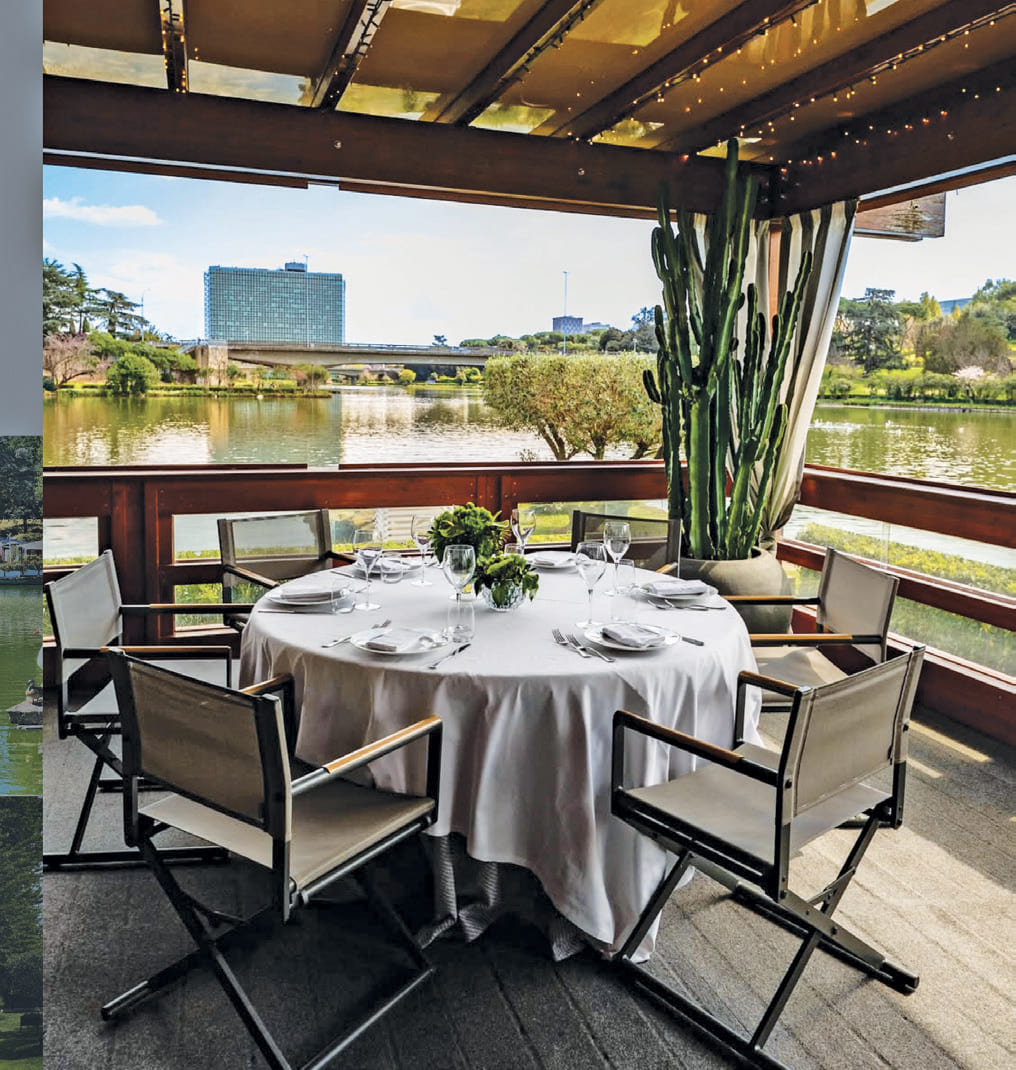
Continue reading

Woven Dreams

Woven Dreams

With more than a century of expertise, Casa del Tessuto has the perfect fabrics to fulfill all your desires


Have you ever dreamed of designing your own custom garment? Then look no further than Casa del Tessuto. Located in the heart of Rome’s eclectic Esquilino neighborhood, this legendary textile boutique has been a fashion destination since 1927, offering a vast array of fabrics designed for every imaginable purpose. From timeless silks to lush velvets, delicate lace to rich cashmere, this shop is a fabric lover’s dream. Whether you’re looking for the perfect cotton for a summer dress, or luxurious wool for a tailored suit, Casa del Tessuto has you covered. It’s a haven for all kinds of materials—think bold prints, understated solids, and even modern, technical fabrics like lycra, faux leather, and microfibre. The store’s offerings cater to a wide range of needs and tastes. Brides-to-be can explore an exquisite selection of fabrics ideal for wedding gowns, while grooms will find an impressive array of high-end suit textiles. But it’s not just about fashion; Casa del Tessuto also provides materials for ecclesiastical vestments, sportswear, and home decor. You’ll find luxurious fabrics for everything from curtains to tablecloths, and even home linens like sheets, towels, and bathrobes, sourced from prestigious brands like Alviero Martini 1° Classe, Missoni, and Nazareno Gabrielli. A standout feature of the store is its exclusively Italian selection of Liberty fabrics, together with the iconic British cottons renowned for their intricate patterns and superb quality. Plus, if you’re in the market for men’s suits, the boutique offers an expertly curated selection from DEA, the manufacturer behind Ermenegildo Zegna’s fabrics.

Via dello Statuto, 64/66. Tel 064872813. casadeltessuto.com

Continue reading

Watching the stars

A day in ancient Rome

The fascinating history of the Monte Mario astronomical observatory


Immersed in the park of the Monte Mario hill in Rome’s north-west is the city’s former astronomical observatory, now housing the headquarters of the Italian Astronomical Society and a museum that showcases the city’s oldest telescopes, binoculars, a number of celestial globes, and many other fascinating stargazing instruments. telescope (34 meters high) that captures the image of the sun and sends it to the base by way of a complicated and very stable system of mirrors that are guaranteed to not move even in the case of very extreme winds. The observatory was first set up in 1938 by astronomer Giuseppe Armellini inside a 17th-century house, Villa Mellini. Armellini chose this location because of its ele- vated position on the hill, dominating the city from its height of 150 meters. This, Throughout the years, atmospheric pollution and the reflections of artificial light coming from the city below have gradually caused observation quality to worsen, so all obser- vation activities were discontinued in 2000. Astronomical studies were transferred to the observatory of Campo Imperatore, at 2,200 m above sea level on the nearby Gran Sasso mountain. together with Rome’s mild climate and its mostly clear skies, would guarantee A climb up Monte Mario, however, is well high-quality observations, he believed. worth the visit: the Copernican Museum (beniculturali.inaf.it/musei/roma) conserves The two domes, which were placed on the antique stargazing instruments that provide building’s terrace, are topped by lightning a glimpse into the evolution of scientific rods and covered in zinc. They were taken research, as well as some curiosities, such as from another observatory on the Capitoline “prohibited” objects and documents that the hill and from the Collegio Romano, which Church disapproved of throughout history. supplied the scientists with remarkably pre- First on the list are the original, handwritten cise star charts. A third dome with a more books by Galileo Galilei, whose revolution- powerful telescope was positioned next to ary ideas are known to have marked the a solar tower, which is an enormous fixed beginning of the scientific modern age.

Continue reading

Sew classy!

Swe classy!

The ultimate shopping experience for elegant and trendy gentlemen


Conceived for all the fashion-conscious men out there, Bazooka has been offering classic and casual Italian menswear since 1974. All products are made with the finest woven fabrics and enhanced by exquisite Italian flair and craftsmanship, for a one-of-a-kind ward- robe experience. Embodying the Italian lifestyle while also embracing both tradition and modern technology, Bazooka has extensive knowledge in the art of crafting classic clothing, and focuses on offering customers a friendly and polite service that often transforms into a long-lasting relation. The shop’s style advisors help customers pick the colors, materials, and fits that best match their client’s personal features, making sure to not only dress the person, but also their personality –– after all each man has his own unique story and style. The collection of this prestigious menswear boutique includes a vast array of men’s suits from the best Italian woolen mill brands and fabrics manufacturers, such as Vitale Barberis Canonico, Reda, Lanificio F.lli Cerruti, Marzotto, Lane Bottoli, and Marlane, just to name a few. If you are looking for other shopping ideas, you will also find cotton and linen shirts, knitwear (from cardigan to jumpers in cashmere, merino wool and cotton), and fine accessories (including belts, hats, socks and bags). Leather shoes are another exciting possibility at this store: here you’ll find derbies and oxfords, monk straps, Chelsea and ankle boots, as well as sport sneakers, classy loafers, and elegant moccasins.

Via delle Quattro Fontane, 114. Tel 064742704. bazookamenswear.com

Continue reading

A holy meal

A holy meal

Sanctify your meal at this modern eclectic restaurant near the Vatican


Just a few steps from St Peter’s you’ll Among the entrées, specialties range from find Gregorio, a modern and functional Danish cut “sakura yoza” beef fillet with red space open all day and serving everywine reduction, or grilled calamari with zucthing from breakfast (including American-style) to dinner, including lunch, snack, and chini, courgette flowers and pecorino romano cheese. To end on a sweet note, the tra-aperitivo. Welcomed by the humorous sloditional tiramisù or mouthwatering caramel gan “Come in peace”, diners enter a spamou and mint cheesecake with chocolate cious and comfortable ambiance decorat- and brownies are exquisite musts. ed with wood and ceramics and painted in white and yellow ––a reference to the papal coat of arms. An image of Pope Gregory revisited in pop style dominates the space, and there’s also a pleasant outdoor garden. To start with, the menu offers mixed platters of cured meats and cheeses, salmon tartare, or crispy fried parmigiana, while the first courses include both Roman classics (carbonara, amatriciana, cacio e pepe) and more original dishes such as tortellone filled with seafood in a mint zucchini cream and lemon crumble; or paccheri with datterini tomatoes, basil and stracciatella cheese. A special mention goes to the pizza selection, which includes different types of pizzas, such as the interesting “pan pizza,” made with sourdough left to rest for twenty-four hours and subjected to double cooking in a pan before being seasoned and stuffed. There is also a pizza bianca split in two halves and filled with cured meats of your choice from the pork butchery. And finally, the classic Roman round pizza, made with a mature dough and prepared with stone-ground flour.

Via della Cava Aurelia, 169. Tel 0687756684. gregoriorestaurant.com

Continue reading

The magic of Cirque Du Soleil

The magic of Cirque Du Soleil

The most mesmerizing circus in the world is back in Rome


This month, Cirque du Soleil is set to enchant the Roman public with Alegría – In A New Light, a stunning revisitation of the internationally acclaimed show that saw its debut back in 1994. The show will take place at the Grand Chapiteau of Tor di Quinto from March 1 to April 13. Alegría (“joy” in Spanish), is one of Cirque du Soleil’s most beloved and iconic productions. It holds a special place in the hearts of fans worldwide, having played a crucial role in cementing the company’s unique style on the global stage. Now, Alegría – In A New Light offers a complete reworking of the original, aiming to resonate with a new generation of theatergoers while preserving the magic and wonder that made the Cirque du Soleil a true masterpiece. Since its world premiere, Alegría – In A New Light has captivated over 2.5 million spectators across dozens of countries. The show’s central theme remains as relevant as ever: a once-glorious kingdom has lost its king, and the battle for power rages between the old order and the young, who seek hope and renewal. Amid this political and social upheaval, the court jester’s clumsy attempts to seize the throne contrast with the growing demand from the streets for change. This uprising challenges the status quo, bringing the promise of joy and transformation to the world. With new direction and renewed musical arrangements, breathtaking acrobatic feats, innovative choreography, and refreshed costumes and makeup, Alegría – In A New Light offers a contemporary take on a timeless classic. The world-class ensemble of 54 acrobats, clowns, musicians, and singers inspiring magic, joy, and energy, will transport audiences into a mystical and poetic universe. Tickets for sale at ticketone.it cirquedusoleil.com

Continue reading

Rome’s ancient guardians

Rome’s ancient guardians

The storied history of the Aurelian Walls


The Aurelian Walls, built between 270 and 275 AD under Emperor Aurelian, span nearly 12 miles and represent a key feat of Roman engineering and defense. Constructed in response to growing threats from barbarian invasions, the walls were a symbol of Rome’s declining imperial power, signaling that even the Eternal City required protection. At first, the walls stood 10 to 13 feet tall, with a deep moat adding an extra 20 feet. They incorporated elements from earlier structures like aqueducts and the Pyramid of Cestius, blending practicality with grandeur. The Aurelian Walls were reinforced over time, with successive emperors raising their height and adding battle- ments for defense. These battlements allowed sol- diers to defend the city using missile weapons, while the walls themselves were nearly impenetra- ble. However, the gates, though secured with heavy iron, remained vulnerable. In 410 AD, the walls were breached during the Sack of Rome by the Visigoths, but this was due to internal betrayal, not a failure of the walls. For over a millennium, the walls largely stood intact. Their final breach occurred in 1870, at Porta Pia. This event marked the end of Rome’s status as a defended city, and the Aurelian Walls, after 1,600 years, ceased to serve their original purpose. Today, the Aurelian Walls remain one of the most striking reminders of Rome’s ancient might. Although weathered by the passage of time, they still stand tall and proud, a visible testament to the city’s ability to endure and adapt. As Rome cel- ebrates its 2778th birthe- day, the walls continue to evoke awe, a silent wit- ness to the cycles of rise and fall that have shaped the Eternal City. Learn more at the Museo delle Mura (Porta Metronia). museodellemura.it
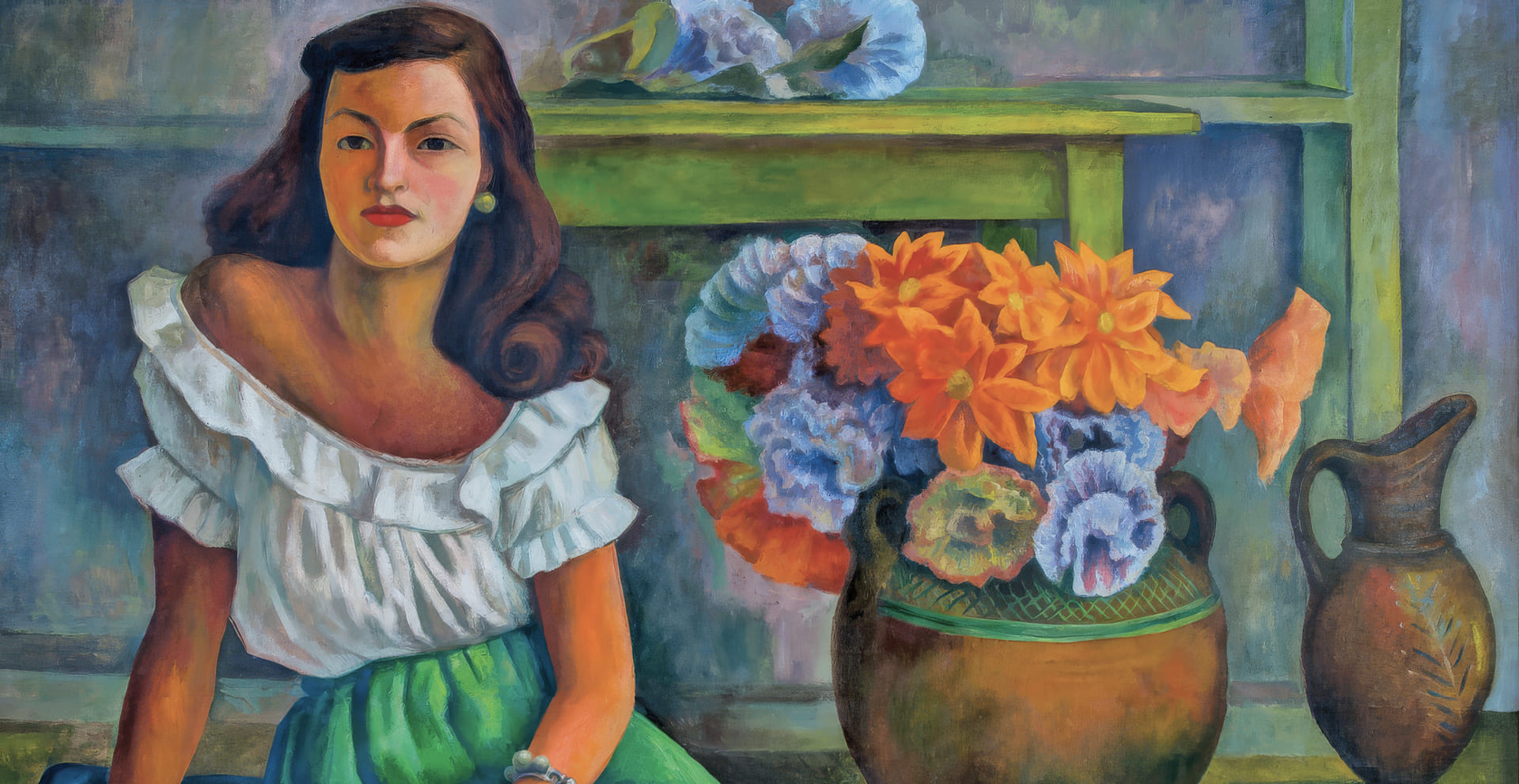
Continue reading

Italians do eat better

Photo by Giggetto al Portico d’Ottavia

Italians do eat better

Italian cuisine is celebrated around the world for good reason, and it’s not just about what Italians eat but also how they eat. At first some of the customs may seem rigid; how-ever, you’ll soon discover that there is a rhyme or reason behind everything Italians do when it comes to food. The following guide should help you make the most of your culinary experiences while in Italy. For breakfast, or colazione, you may need to modify your expectations slightly since eggs, bacon, and pancakes are not part of the standard cuisine. Instead, you can expect to see locals standing up inside one of the city’s many bars, enjoying a cappuccino and a cornetto an Italian croissant. You can have a sit-down breakfast, but your bill will likely double from the table surcharge. Next, lunch or pranzo. For lunch on the go, try pizza al taglio-pizza by the slice. Other quick options include a panino or tramezzino, trapiz-zino (a corner of pizza used like a pocket for various stuffing), a salad, or a combination of fried items, or fritti, such as suppli or arancini fried rice balls filled with mozzarella, meat, or vegetables). Though increasingly less common, it’s still sible to have a multiple-course, sit-down meal at lunch. An Italian menu may seem complex at first, but you’ll soon come to recognize the different sections, which are the same for lunch and dinner-antipasto, primo piatto, secondo piatto, contorni, and dolci. The most common choice for a primo piatto is a plate of pasta, while the secondo piatto is generally meat or fish. For contorni, or side dishes, you’ll often find options for salads and vegetables. Dolci, or desserts, are often made in-house and are a must-try. Finish off your meal with a digestivo, a liquor made with herbs. At last, dinner, or cena. You’ll likely find a greater variety of dishes on the dinner menu than at lunch, but the order of the dishes is still the same. Spaghetti alla carbonara, tonnarelli ca-cio e pepe, bucatini all’amatriciana (pictured above), penne all’arrabbiata (spicy), are just a few names representing traditional Roman pasta dishes. If you want to know more about how to eat like a true Roman, refer to our glossary of gastronomic terms. Last, but certainly not least-gelato. There are endless opportunities to indulge in a cone or cup of your favorite flavors around Rome, an experience you won’t want to miss.
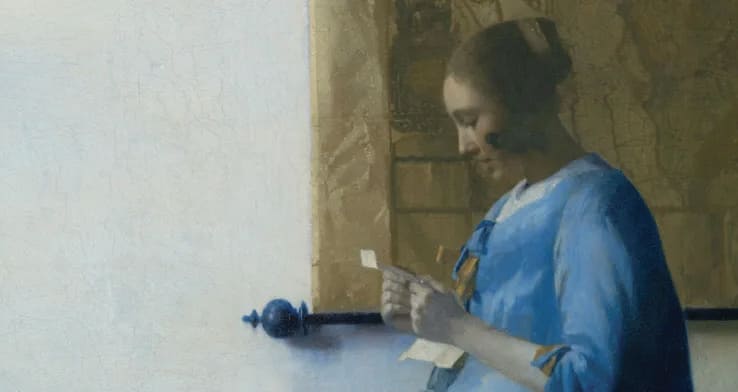
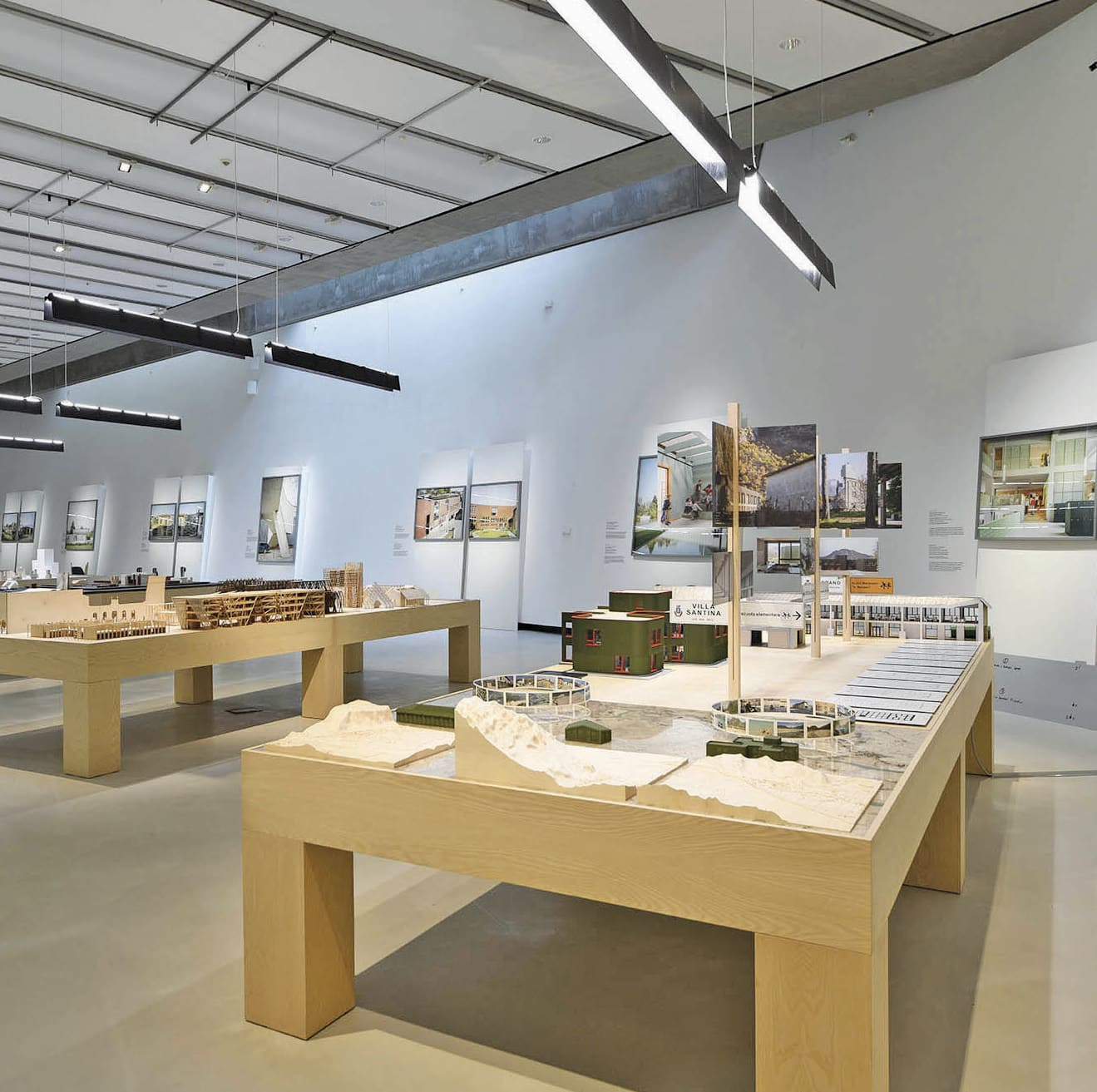
Gastronomic terms commonly used in rome

Roman cuisine has always followed a strictly observed timetable: Thursday, for example, is the day for gnocchi, served with a sauce of meat and tomato or cheese and pepper; on Friday, ravioli filled with ricotta and spinach, or cod stew prepared with tomato, pine seeds and raisin. Saturday is the turn of tripe flavored with typical Roman wild mint, while on Sunday dig into a mouthwatering plate of tagliatelle or lasagne made in different tasty ways.
Photo by Giggetto al Portico d’Ottavia
  • Abbacchio alla romana – Pieces of suckling lamb cooked until brown, then roasted in a sauce of garlic, rosemary, vinegar and anchovy.
  • Bruschetta – Slices of homemade bread, cooked over embers or in the oven, flavored with garlic, sprinkled with oil and salt, and served in various forms, the most popular being with tomato and basil.
  • Bucatini all’amatriciana – Long, tubular pasta with a sauce of guanciale (pork cheek), tomato, olive oil, chili pepper and sheep’s cheese.
  • Bucatini alla gricia – Basically all’amatriciana without tomato.
  • Carciofi alla giudia – Artichokes open like flowers, cooked in hot oil until crisp (pictured top left).
  • Cicoria – Green bitterish leaves, can be savoury – cooked in a pan with garlic, or all’agro – boiled and seasoned with oil, salt and lemon.
  • Coda alla vaccinara – Oxtail and cheek stew with celery, lard, garlic, pepper, salt and white wine.
  • Coratella – Lamb offal (heart, liver and lung) cooked with sliced artichokes, onion, white wine, lemon, parsley, salt and pepper.
  • Costarelle di abbacchio a scottadito – Lamb cutlet basted in roasting fat and lard, cooked on the grill and eaten with hands (literally “burn your fingers”).
  • Crescione – Salad with a strong taste, rare and highly valued.
  • Fior di latte – Fresh cheese, similar to buffalo mozzarella, but made from cow’s milk.
  • Panzanella – Stale bread soaked in water with tomato, oil, salt, vinegar and minced basil.
  • Pajata – Part of the intestines of a suckling calf, served with rigatoni or alla cacciatora (with garlic,
    rosemary and vinegar).
Photo by Giggetto al Portico d’Ottavia
  • Pesce all’acqua pazza – A sauce of water, cubed tomato, oil, garlic, chilli pepper, and parsley cooked primarily with sea bass.
  • Pollo con i peperoni – Chicken pieces basted in roasting fat and stewed in tomato and garnished with red and yellow pepper, the colors of Rome.
  • Porchetta – Roasted pig, sliced and usually served with other specialties from Ariccia in the Castelli Romani.
  • Puntarelle – A particular type of green, seasoned with a garlic and anchovy sauce.
  • Rughetta – A characteristic herb of Rome, very bitter and sharp tasting.
  • Saltimbocca alla romana – One of the most celebrated Roman dishes: skewered veal roll stuffed with ham, and flavoured with sage and butter.
  • Spaghetti cacio e pepe – Pasta sauce consisting of a creamy emulsion of water, grated pecorino cheese and pepper.
  • Spaghetti alla carbonara – Pasta sauce made of eggs, pecorino cheese, pepper a and bits of guanciale.
  • Trippa alla romana – Cow’s stomach (tripe) cleaned, cut into strips and slow cooked with herbs and tomato (pictured top right).
  • Tozzetti – Sweet rectangular cookies made from a mixture of sugar, flour, almonds, toasted nuts, aniseed and Sambuca, served with Vin Santo, a strong sweet wine.
  • Visciole – Sour cherries with dark red color. The jam is used for the famous crostata (ricotta cheese tart).
  • Zuppa di arzilla – A typical soup made with ray fish and broccoli.

Continue reading

A Caravaggio treasure hunt

The Martyrdom of Saint Matthew. Wikipedia

A Caravaggio treasure hunt

Join us on a 120-minute walking tour of the great artist’s masterpieces


Caravaggio, born near Milan in 1571, spent much of his prolific career in Rome, where he created some of the most powerful and innovative works of the Baroque era. His paintings, renowned for their dramatic use of light and shadow (chiaroscuro) and raw, realistic depictions of human emotion, are scattered across the city. From museums to churches, the extraordinary treasure trove of Caravaggio masterpiecesis is literally all over the city. One of the most rewarding ways to explore his legacy is through a 120-minute walk across Rome, following a route that takes you to six of his most celebrated works, all housed in churches that remain free to visit (For opening hours see page 58).
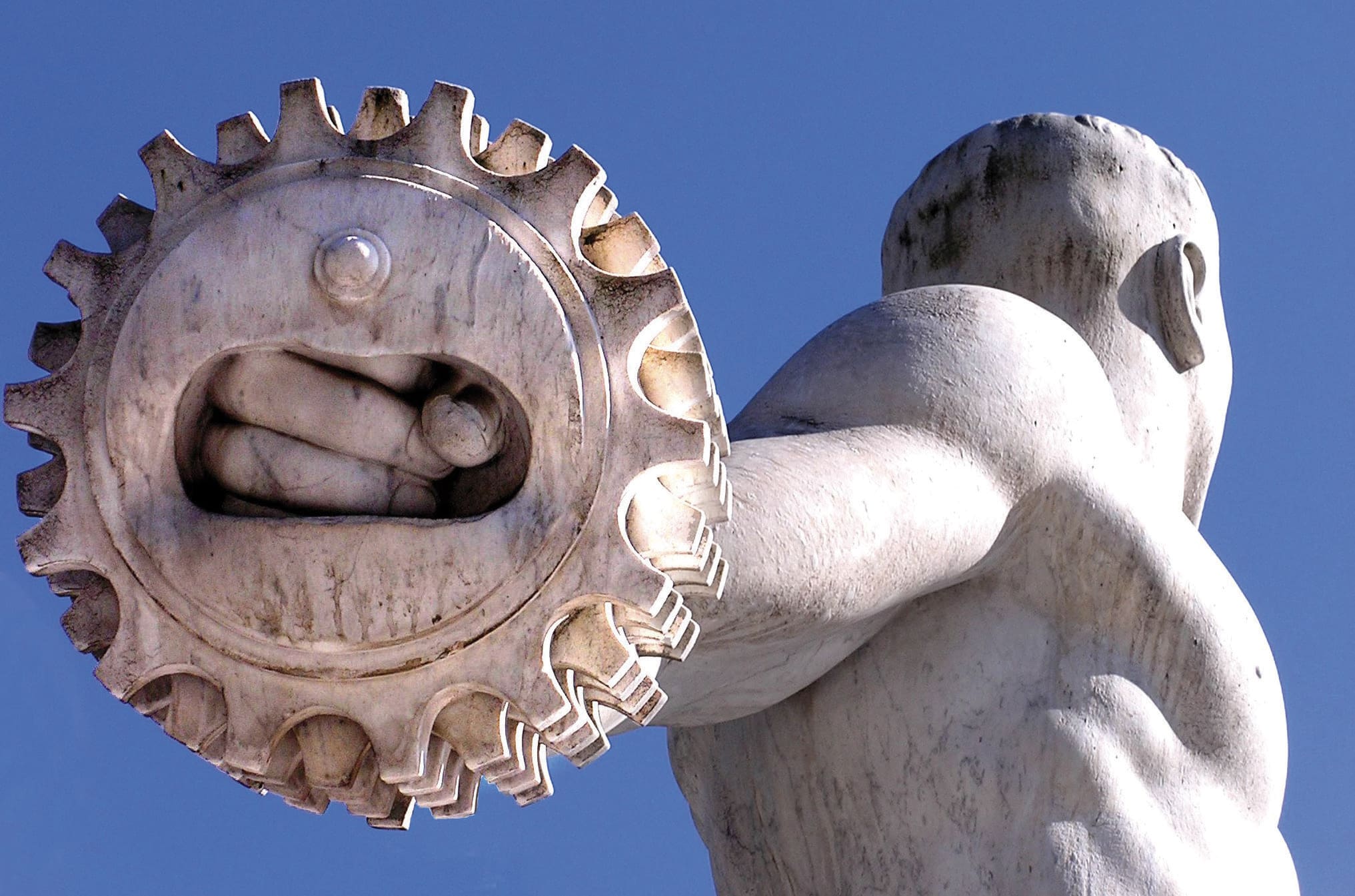
Church of San Luigi dei Francesi Start your journey at the Church of San Luigi dei Francesi, where Caravaggio painted a series of works for the private chapel of French nobleman Mathieu Coyntrel. These three paintings —The Calling of St. Matthew, St. Matthew and the Angel, and The Martyrdom of St. Matthew—stand out for their vivid realism, recently enhanced by a new lighting system. Caravaggio’s mastery of light draws the viewer directly into the action, making the biblical events feel immediate and visceral. The intense drama and psychological depth of these works mark a key moment in the artist’s innovative approach to religious subjects. Basilica of Sant’Agostino A short walk from San Luigi takes you to the Basilica of Sant’Agostino, home to another Caravaggio masterpiece, the Madonna di Loreto or dei Pellegrini. The painting caused
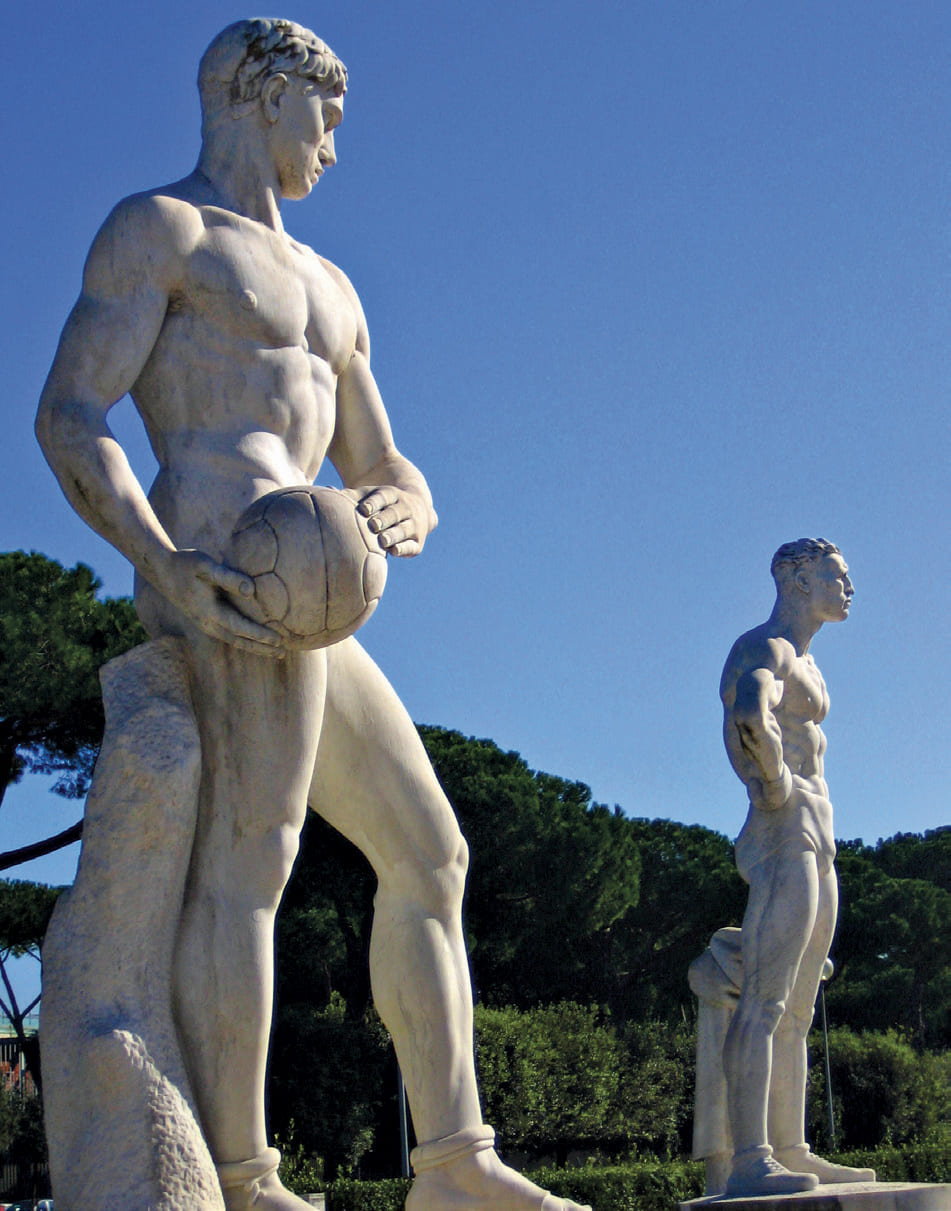
Conversion on the Way to Damascus. Wikipedia
an uproar when it was unveiled, not only because of its emotional intensity but also due to the scandalous realism of the figures. The dirty, calloused feet of the pilgrims depicted in the foreground were seen as shocking for their frankness—Caravaggio’s hallmark was to show humanity, even its flaws, without idealization. The controversy surrounding this painting exemplifies how the artist’s work often pushed boundaries. Basilica of Santa Maria del Popolo Next, take a 15-minute stroll through Rome’s historic center to the Basilica of Santa Maria del Popolo. Here, in the Cerasi Chapel, you’ll find two of Caravaggio’s most celebrated works: The Conversion of St. Paul and The Martyrdom of St. Peter. Both paintings feature the artist’s signature use of tenebrism—a technique that plunges the surrounding space into shadow, focusing a dramatic spotlight on the figures. These intense moments of spiritual and physical transformation demonstrate Caravaggio’s unique ability to blend religious subject matter with gripping human turmoil.
Madonna di Loreto or dei Pellegrini. Wikipedia

The broader Caravaggio legacy in Rome

Beyond the three featured churches, you can continue your Caravaggio pilgrimage at various other sites, such as: • Borghese Gallery: Boy with a Basket of Fruit, Sick Bacchus, Madonna and Child with Saint Anne, Saint Jerome Writing, John the Baptist, and David with the Head of Goliath.

  • Vatican Museums: The Entombment of Christ.
  • Galleria Doria Pamphilj: Rest on the Flight into Egypt and John the Baptist.
  • Capitoline Museums: The Fortune Teller.
  • Palazzo Barberini: Judith Beheading Holofernes.
  • Palazzo Corsini: John the Baptist.

While Caravaggio’s contemporaries criticized his unorthodox style and gritty realism, his influence on the art world was revolutionary. It wasn’t until after his death in 1610 that his genius was fully recognized. Today, Caravaggio’s works continue to captivate viewers with their raw emotional power and technical brilliance. From March 7, Palazzo Barberini will host the major, unmissable exhibition Caravaggio 2025.

Continue reading

A day in ancient Rome

A day in ancient Rome

A voyage back in time to a typical day at the Roman Forum


Thanks to recent Roman Forum restorations and excavations, and to the new ambitious Jubilee project for an extended “archaeological walk”, the Forum is no longer the restricted archaeological site it once was. It is now becoming a living part of Rome’s urban fabric.

The goal of the archaeological park is to invite visitors to walk the ancient paths while also imagining what ancient Rome’s bustling political and social life might have looked like. Back in the day, the Forum was not only the commercial and political heart of ancient Rome, but also the stage for events that would shape the course of world history. Repeatedly burned, looted, and rebuilt, it served as the arena where the Roman elite displayed their wealth, piety, and political ambitions. One can vividly imagine the senatorial class, clad in tunics, walking toward the Curia or the Rostra, where orators engaged in political debates, while the more populist tribunes stirred unrest among the masses. In the midst of the crowd, the procession of the Vestal Virgins, returning to their residence near the Regia, might pause momentarily, adding to the pageantry. The sight of the temples and basilicas, together with their vibrant colors set against the scenic backdrop of the Palatine and Capitoline hills would have been nothing short of spectacular.

Bustling trade activities at Trajan’s Markets

The Roman Day
The Roman concept of time was flexible. Long before the introduction of the Julian calendar, the day was divided into two main parts, with noon marking the midpoint. A messenger from the consul would announce this pivotal moment to the crowds in the Forum, a signal that court cases and official matters could begin. As was customary, the day was split into twelve hours of daylight and twelve hours of darkness, with the length of daylight varying with the seasons. And even in the golden age of the Roman Empire, daily life remained deeply tied to the rhythms of agriculture.

6am
People began their day at dawn, stirred by the noise of a city already in motion that urged them to leave their small, windowless rooms and head out to the Forum to conduct their business.

8pm
By early morning, the Forum was already teeming with activity. State-subsidized idlers, many of whom depended on the generosity of the wealthy, formed a central part of the scene. The sound of greetings and social exchanges filled the air, with many hoping to attract the attention of influential figures. In addition to the political clients, the Forum was alive with craftsmen at their workshops, street vendors selling food and drinks, clerks, and lawyers—many of whom worked from the grand basilicas where justice was dispensed.

Noon
Candidates for public office, easily identifiable by their white garments (from which the term “candidate” originates), were often seen among the crowds during election season. By noon, the pace slowed as many Roman workers took their midday break. The Roman workday was shorter than today’s, leaving the afternoon for leisure and social activities. Lawyers, antique dealers, and merchants, however, continued working until late.

Celebrations at the Temple of Mars Ultor in Augustus’ Forum

Afternoon
In the afternoon, the Forum remained lively, with crowds gathering to watch jugglers or engage in games of chance, as gambling was officially banned in public spaces. Many Romans spent their free time at the baths—central to Roman social life and urban culture. Far more than just places for bathing, the public baths (termae) offered gyms, libraries, massage parlors, and outdoor spaces for exercise. Since the time of Agrippa, the baths were free and open to all, with women using them in the morning and men in the afternoon until nightfall.

Evening
After a hearty dinner, Roman families would retreat to their homes, and by nightfall, the Forum would quieten, returning to its role as a silent witness to the activities of the day. The Imperial city would rest, only to begin anew at dawn.

Flipping through History

ArcheoRome, Archeolibri’s new book that also provided the illustrations for this article, offers pictures of the city’s monuments as they appear today with vivid reconstructive overlays of what the ancient monuments of Imperial Rome once looked like, effectively bringing the past to life. WIth an ideal itinerary through the city, visitors can admire the ancient splendor of today’s ruins. Digital content, including video and augmented reality experiences, offers an additional way to visit to the heart of ancient Rome.

archeolibri.com

Continue reading